Artwork
H Beard Print Collection
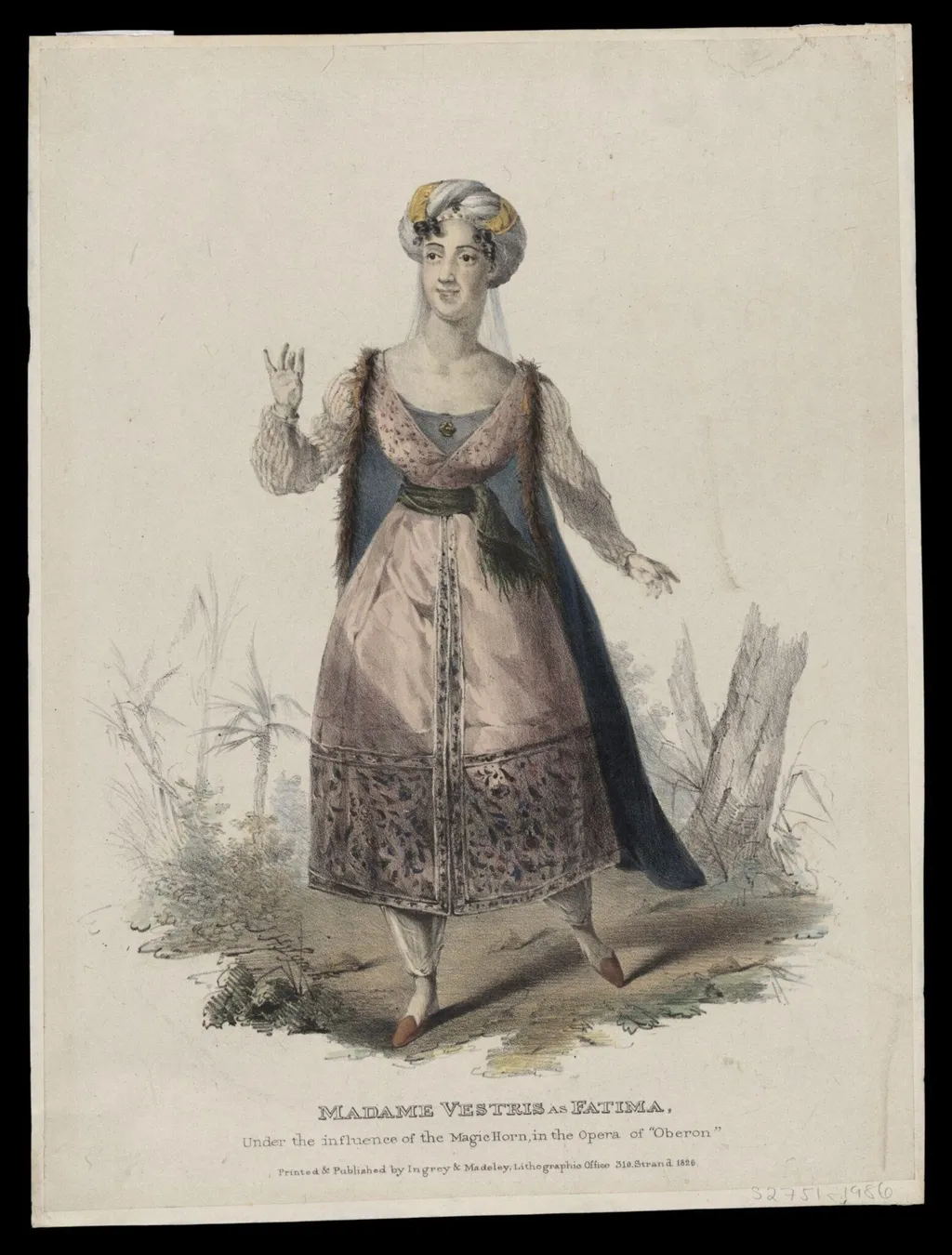
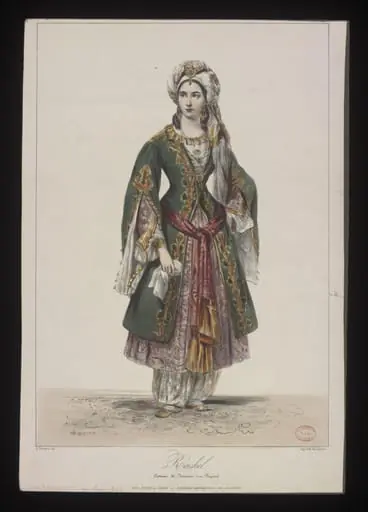
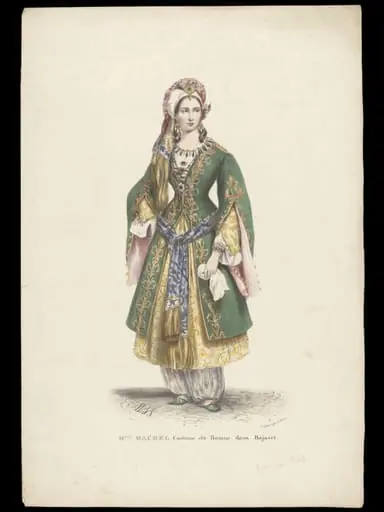
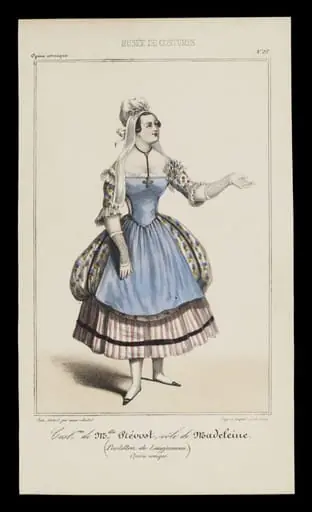
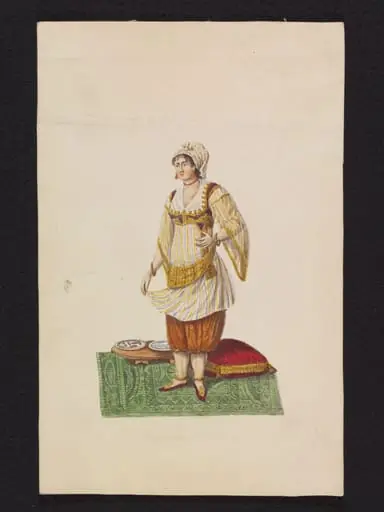
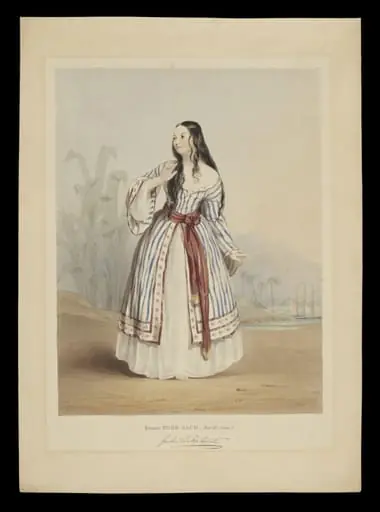
H Beard Print Collection is a print by the Romanticist artist James Henry Lynch. It dates from 1826 and is held in the collection of the Victoria and Albert Museum. This 1826 print captures the actress Madame Vestris in character as Fatima from the opera Oberon.
About this work
Overview
The image reflects the popularity of stage performances and the growing market for printed memorabilia tied to popular actors.
This 1826 print captures the actress Madame Vestris in character as Fatima from the opera Oberon. Published by Ingrey & Madeley, it was produced as a theatrical advertisement, common in early 19th-century Britain. The image reflects the popularity of stage performances and the growing market for printed memorabilia tied to popular actors. Its medium and style align with commercial print culture of the period.
Subject & Meaning
Madame Vestris portrays Fatima, a character from Charles Kemble’s adaptation of Friedrich von Schiller’s Oberon. The role showcased her dramatic presence and vocal range, contributing to her reputation as a leading stage performer. The print immortalizes a moment of theatrical spectacle, emphasizing costume and gesture to convey character rather than narrative context. It served both as promotion and as a keepsake for audiences.
Technique & Style
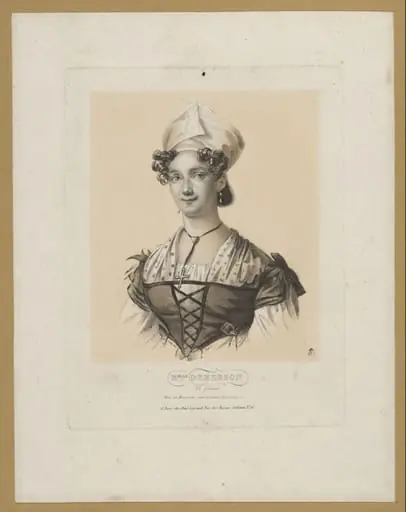
The print employs line engraving with subtle tonal gradations, suggesting an awareness of chiaroscuro effects to model form and depth. Details in costume and facial expression are rendered with precision, typical of commercial theatrical portraiture. While not a fine art lithograph, the work demonstrates skilled craftsmanship aimed at replicating the immediacy of live performance for a domestic audience.
History & Provenance
Produced in London in 1826, the print emerged during Vestris’s peak years at Covent Garden. Ingrey & Madeley specialized in theatrical imagery, distributing such prints widely. The work likely circulated among theatergoers and collectors, preserving a visual record of performances now lost to time. Its survival in collections today reflects its role as cultural documentation rather than artistic novelty.
Context
In the 1820s, London’s theater scene thrived with elaborate spectacles and celebrity performers. Prints like this one bridged the gap between live performance and public memory, catering to a growing middle-class audience eager to engage with culture beyond the stage. Vestris’s prominence as a female lead in operatic roles also reflected shifting norms in gender and performance during the era.
Legacy
This print endures as a tangible artifact of early 19th-century theatrical life, illustrating how performance was commodified and preserved through print. It contributes to scholarly understanding of how actors like Vestris shaped public taste and how visual media extended the reach of the stage. Though not artistically revolutionary, it remains a valuable record of cultural practice.
Artist & collection

![An Apostle, from Albert [sic] Durer, by James Henry Lynch](https://artifactworldgallery.com/img/james-henry-lynch--an-apostle-from-albert-sic-durer--8d1f7b246df4fa78-w320.webp)