Artwork
Untitled
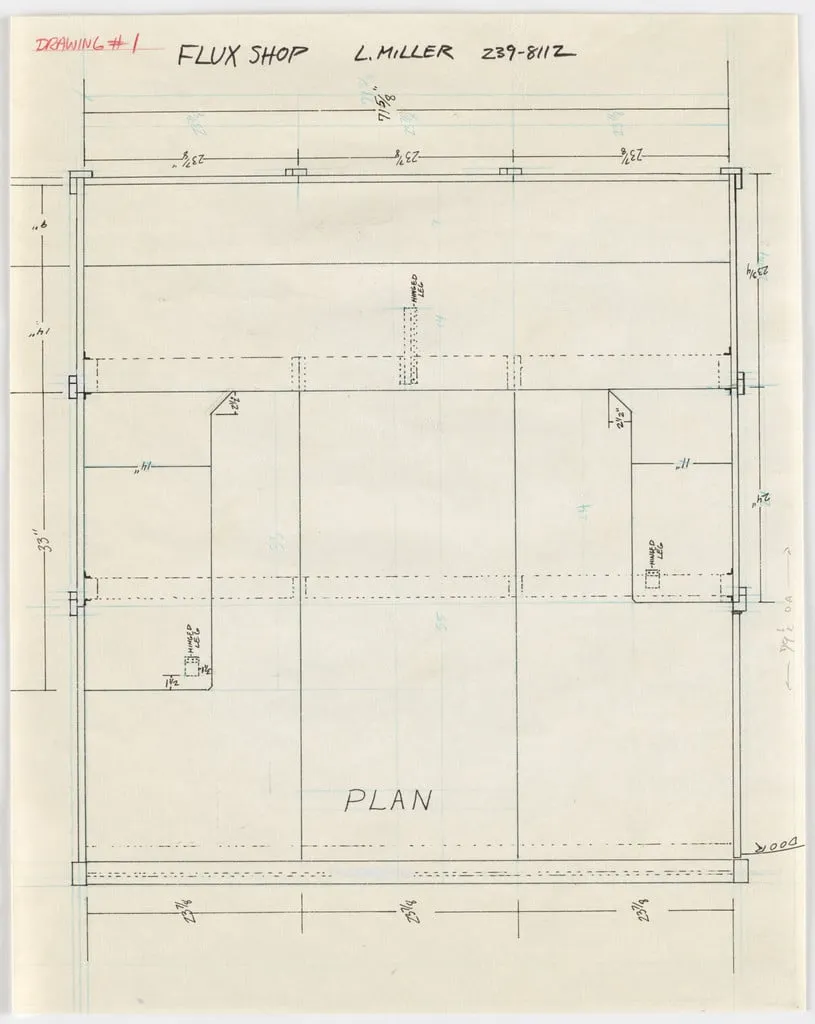
Untitled is a graphite drawing by Larry Miller. It dates from 1985 and is held in the collection of the Museum of Modern Art.
About this work
Overview
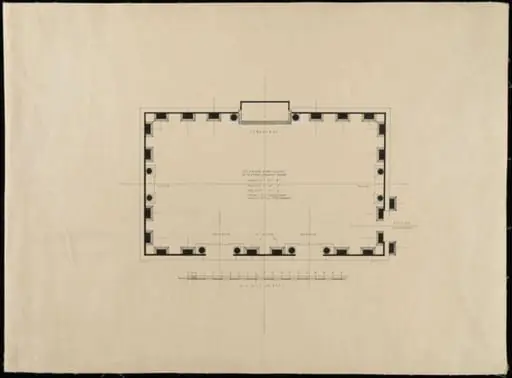
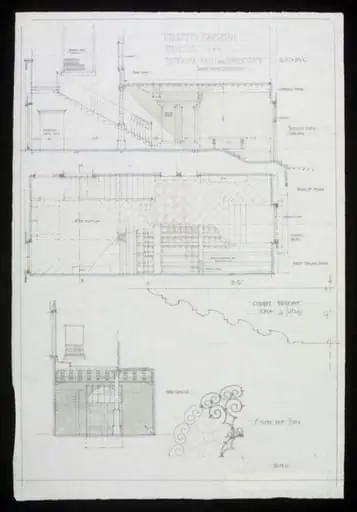
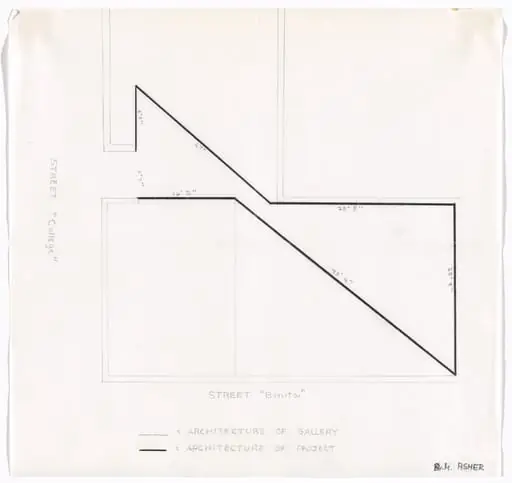
Created in 1985 by Larry Miller, this drawing is executed in pencil, felt-tip pen, colored pencil, and correction fluid on paper. It resides in The Museum of Modern Art’s collection. The work presents a scaled architectural plan labeled 'FLUX SHOP' with the artist’s initials, suggesting a speculative interior design rather than a built environment.
Subject & Meaning
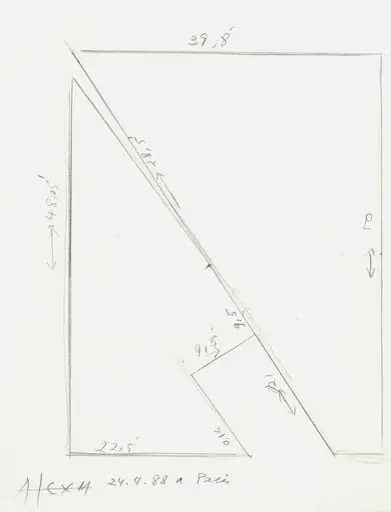
The drawing depicts a rectangular room with a doorway on the left and a window on the right, annotated with measurements and cryptic symbols. These markings function as directives, possibly for spatial organization or material use. The title 'FLUX SHOP' implies a temporary or adaptive space, reflecting themes of impermanence and functional experimentation common in Miller’s practice.
Technique & Style
The drawing combines precise architectural drafting with informal notations, using pencil as the primary medium and correction fluid to modify lines. Felt-tip and colored pencil add emphasis to certain elements, while the layered revisions reveal a process of iterative thinking. The aesthetic is utilitarian, prioritizing clarity over ornamentation.
History & Provenance
The work entered The Museum of Modern Art’s collection as part of its broader interest in conceptual and process-driven drawings from the 1980s. It was likely produced during Miller’s engagement with experimental art and design communities in New York, where boundaries between art, architecture, and performance were frequently blurred.
Context
Emerging from a milieu that included Fluxus and post-minimalist practices, the drawing reflects a shift toward dematerialized art forms. Its technical language echoes architectural blueprints but subverts them by retaining traces of revision and personal annotation, aligning with contemporaneous critiques of institutional and functional norms.
Legacy
The work contributes to an expanded understanding of drawing as a site of inquiry rather than representation. Miller’s integration of planning notation into artistic practice influenced later artists exploring the intersection of labor, space, and documentation, positioning the drawing as a quiet but significant artifact of conceptual art’s material turn.
Artist & collection