Artwork
La scăldat în parc
La scăldat în parc is an unspecified painting by Paul-Albert Laurens. It dates from 1909 and is held in the collection of the National Museum of Art of Romania.
About this work
The focus on water and the rough brushwork make it feel alive, like you’re looking at a snapshot of nature rather than a polished scene.
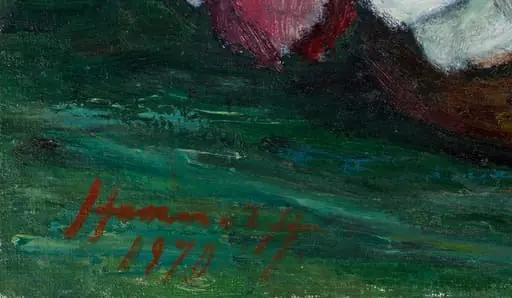
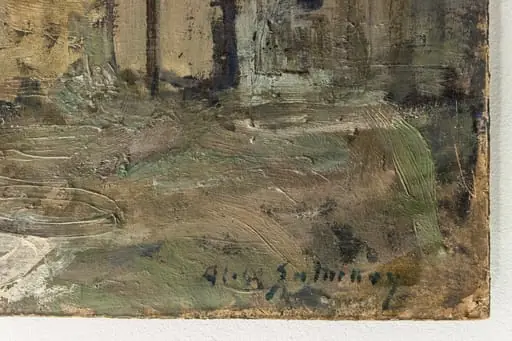
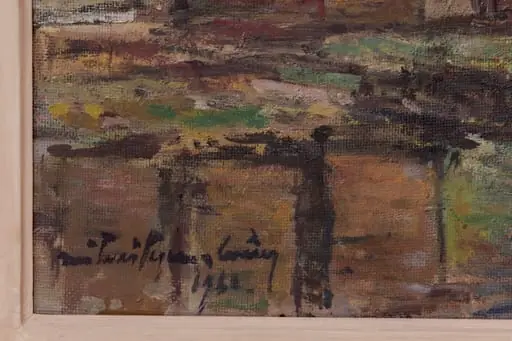
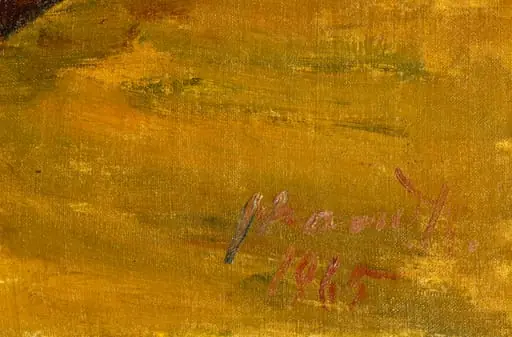
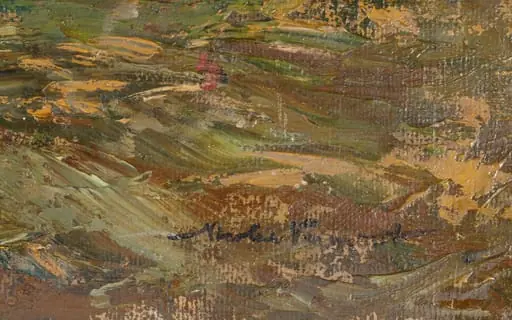
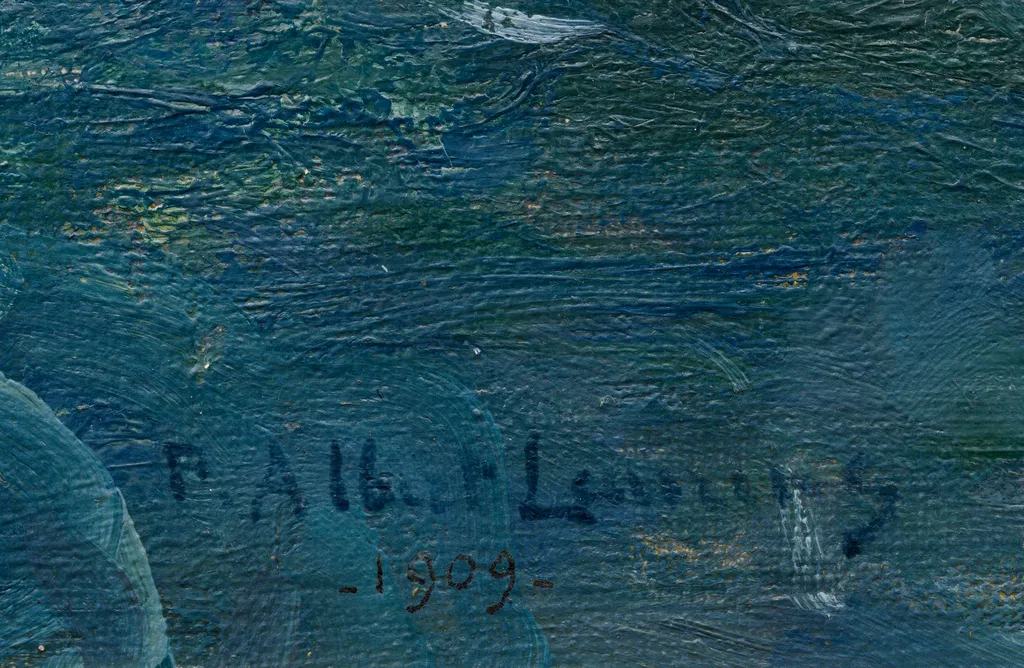
This painting shows a close-up of water with swirling blues and greens. The brushstrokes look thick and textured, almost like the surface of moving water. In the bottom right corner, there’s a faded signature with the year "1909" partially visible.
The focus on water and the rough brushwork make it feel alive, like you’re looking at a snapshot of nature rather than a polished scene. The signature hints this might be from a century ago, but the style feels fresh and immediate.
If you like this, check out impasto—the technique used here to build up thick paint.
Overview
La scăldat în parc is a 1909 oil painting by French artist Paul-Albert Laurens. It captures a fragment of a natural water surface, rendered with dense, tactile brushwork that emphasizes movement and texture. The composition avoids human figures, focusing instead on the play of light and pigment across the water’s surface. The work’s immediacy stems from its unpolished handling, suggesting a direct response to observed nature rather than a staged scene.
Subject & Meaning
The painting presents no narrative or figures, instead isolating the physical presence of water in a park setting. Its subject is the transient quality of light on liquid surfaces—ripples, reflections, and shifting hues. By eliminating context, Laurens invites attention to the materiality of the scene itself, transforming a mundane natural moment into a study of form and motion without symbolic intent.
Technique & Style
Laurens employed thick impasto strokes to build the water’s surface, layering pigments to mimic the turbulence and sheen of moving liquid. Blues and greens are applied with visible texture, creating a tactile quality that resists smoothness. The brushwork is energetic yet controlled, avoiding academic refinement in favor of sensory immediacy. This approach aligns with late 19th-century trends favoring material expression over idealized representation.
History & Provenance
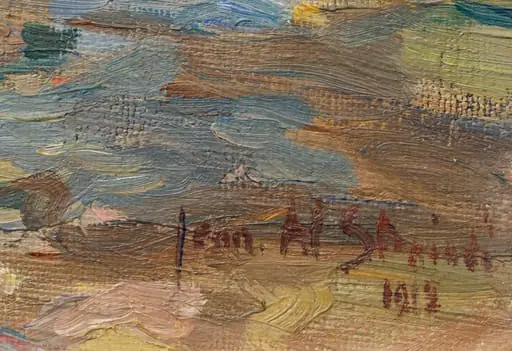
Painted in 1909, the work bears a faint, partially legible signature in the lower right corner, confirming its date and authorship. Its provenance remains undocumented in public records, and it has not been widely exhibited. The painting’s modest scale and non-traditional subject suggest it may have been a private study or sketch, later retained by the artist or a close associate.
Context
Created during a period when French artists were increasingly turning away from academic conventions, this work reflects broader interests in direct observation and material experimentation. Laurens, trained at the École des Beaux-Arts, engaged with modern tendencies without fully abandoning structure. His focus on water aligns with contemporaries like Monet, though his approach is more abstract and less concerned with atmospheric effects.
Legacy
La scăldat în parc remains a lesser-known work within Laurens’s oeuvre, rarely reproduced or discussed in scholarly literature. Its significance lies in its quiet demonstration of how traditional training could accommodate modernist sensibilities—prioritizing sensory experience over narrative or composition. It stands as a subtle example of early 20th-century French painting’s evolving relationship with nature and materiality.
Artist & collection
Artist
Paul-Albert Laurens kept life simple: he painted outdoors every morning, then vanished by noon to play chess in Paris cafés.