Artwork
Vivien Leigh as Blanche Dubois in <i>A Streetcar Named Desire</i> by Tennessee Williams
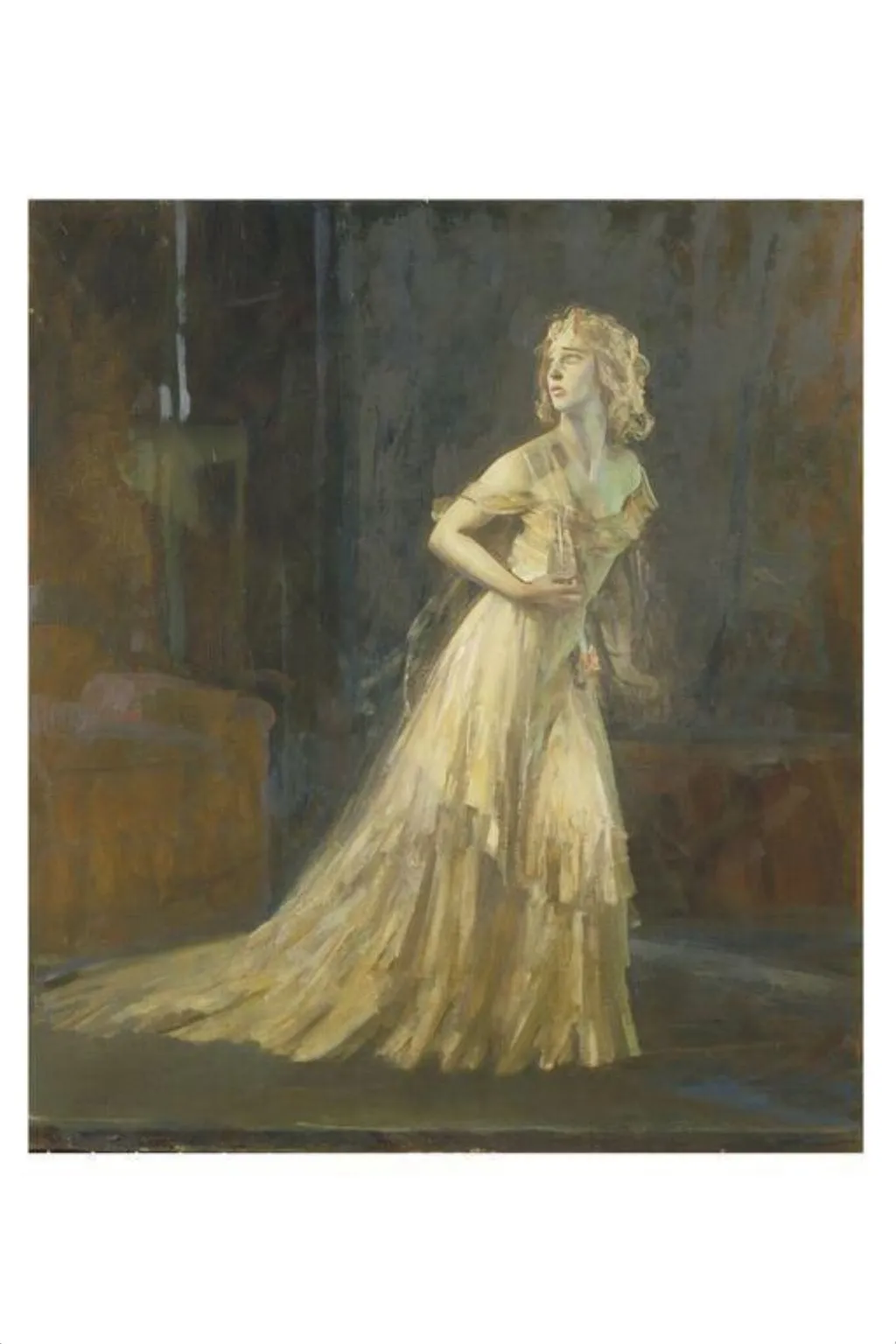
Vivien Leigh as Blanche Dubois in <i>A Streetcar Named Desire</i> by Tennessee Williams is a paint painting by the Realist artist Alfred Kingsley Lawrence. It dates from 1950 and is held in the collection of the Victoria and Albert Museum.
About this work
Overview
This oil painting captures Vivien Leigh in character as Blanche DuBois from Tennessee Williams’s play, rendered in a full-length, three-quarter pose.
This oil painting captures Vivien Leigh in character as Blanche DuBois from Tennessee Williams’s play, rendered in a full-length, three-quarter pose. The figure stands in a shadowed interior, her form defined by subtle contrasts of light and dark. Her posture is poised yet restrained, suggesting inner tension beneath a composed exterior. The palette is muted, dominated by deep browns and blacks, with the dress serving as the sole area of luminous contrast.
Subject & Meaning
Leigh portrays Blanche DuBois at a moment of fragile composure, her expression unreadable but her body language hinting at vulnerability. The glass in her hand, held near her chest, may imply a ritual of self-soothing or evasion. The dim setting and blurred furnishings evoke the psychological isolation central to the character, reflecting Blanche’s retreat from reality into memory and illusion.
Technique & Style
The artist employs soft, blended brushwork to render the dress’s sheer fabric, allowing light to suggest transparency and movement. Chiaroscuro is used deliberately to model the figure against the darkened room, enhancing the sense of psychological depth. The background remains indistinct, with only fragments of furniture and a window hinting at the space, focusing attention entirely on the figure’s presence and emotional state.
History & Provenance
Painted during or shortly after Leigh’s acclaimed stage performance as Blanche in the 1947 London production of A Streetcar Named Desire, the portrait was likely commissioned to commemorate her transformative interpretation. Its provenance traces to theatrical circles, possibly held by the production team or a private collector connected to the West End theater scene of the late 1940s.
Context
The painting emerges from a period when stage acting was increasingly seen as worthy of fine art representation. Leigh’s portrayal of Blanche was widely regarded as definitive, and this portrait aligns with a broader trend of capturing theatrical performances in paint, bridging the ephemeral nature of live drama with the permanence of visual art.
Legacy
The portrait endures as a visual record of one of the most influential stage performances of the 20th century. It anchors Leigh’s interpretation of Blanche DuBois in the cultural imagination, offering a static meditation on a character defined by fragility and illusion. Its quiet intensity continues to resonate with audiences familiar with Williams’s play and its psychological depth.
Artist & collection
Artist
This British painter worked in the mid-20th century, known for portraits of stage and screen actors.

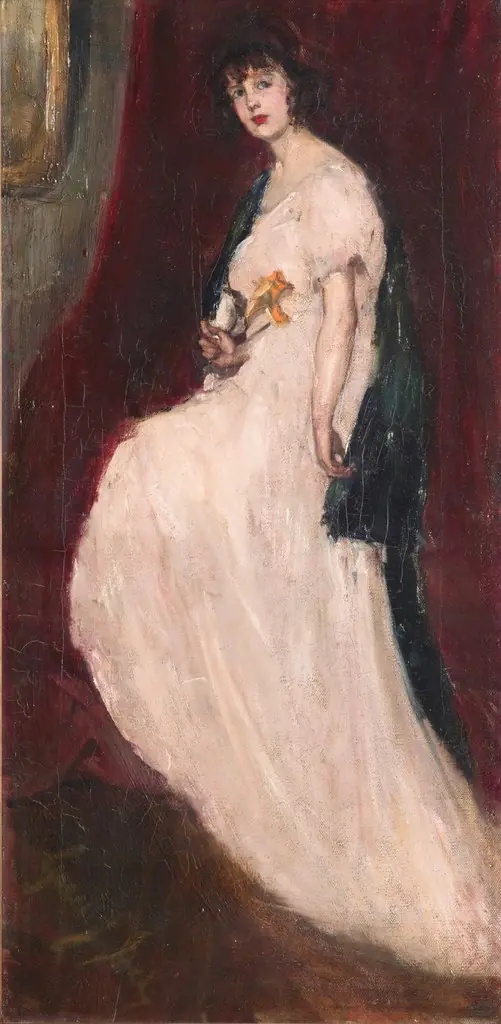 Girl in a pink dress
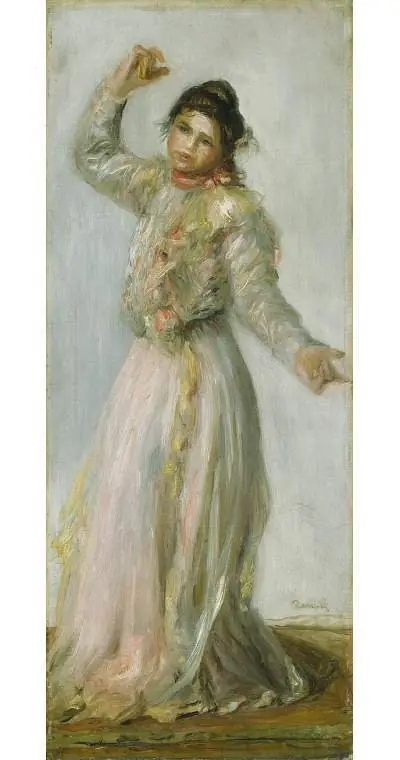 La danse
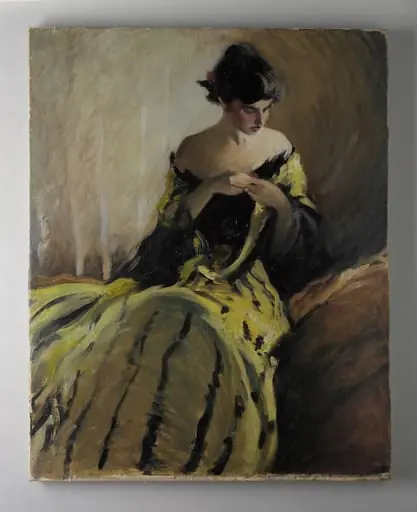 Study in Black and Green (Oil Sketch)
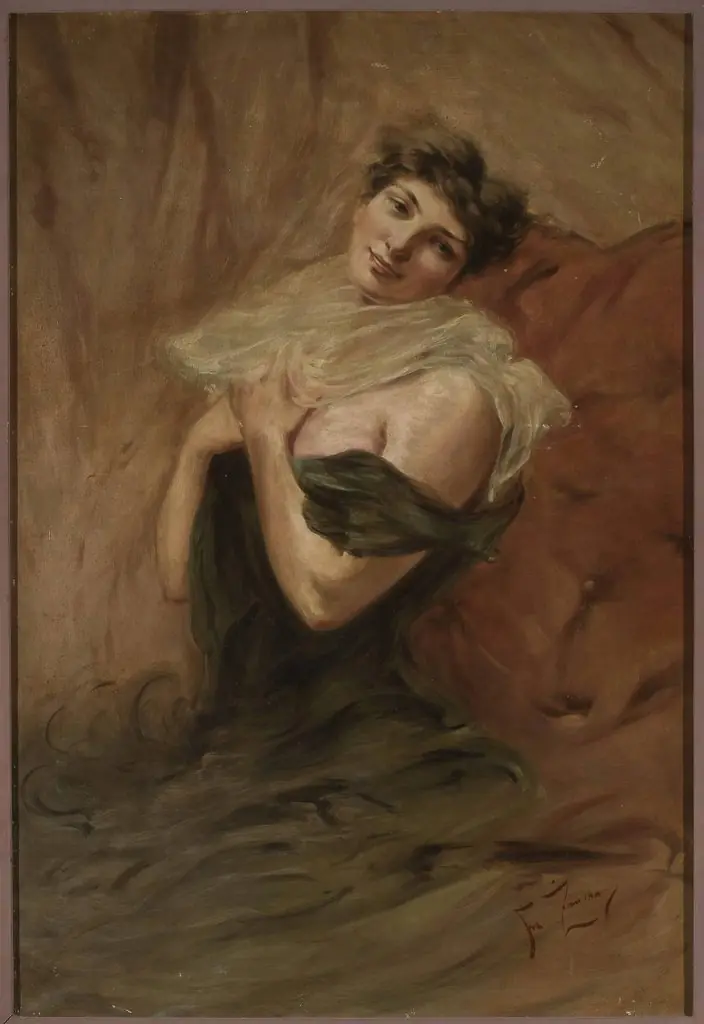 Portrait of a young woman
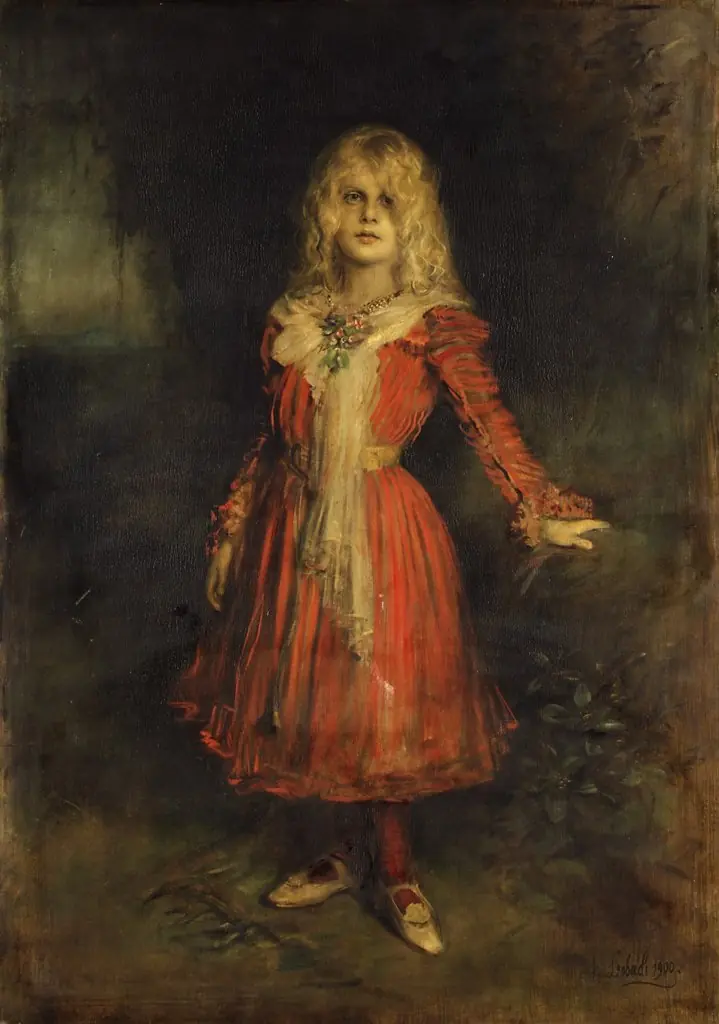 Marion Lenbach (1892–1947), the Artist's Daughter
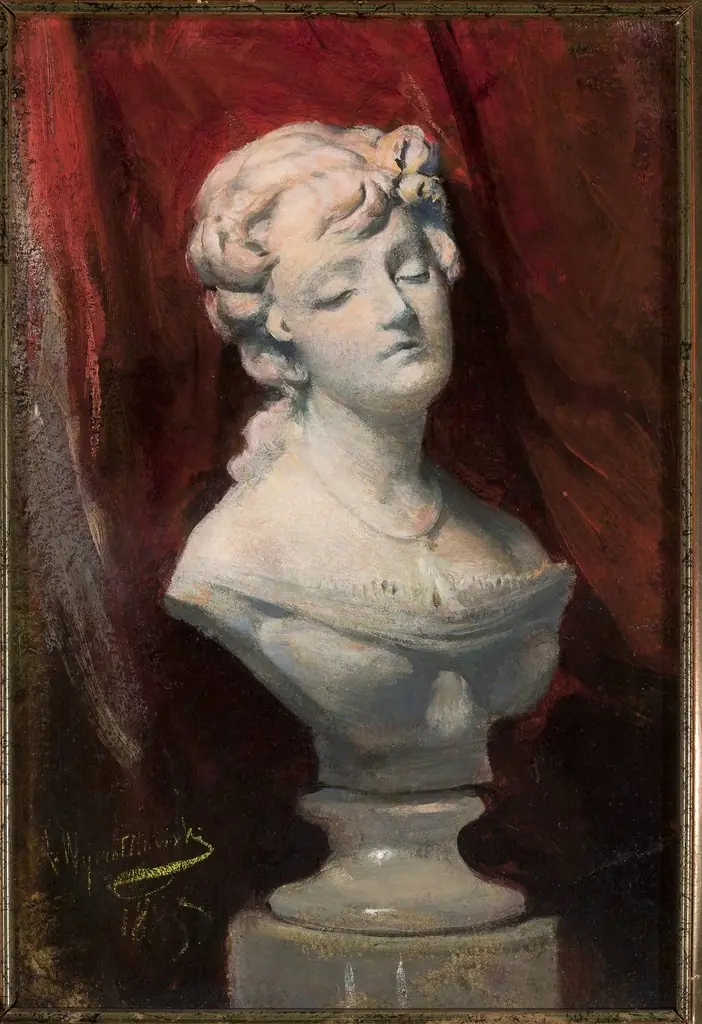 Bust of Helena Modrzejewska
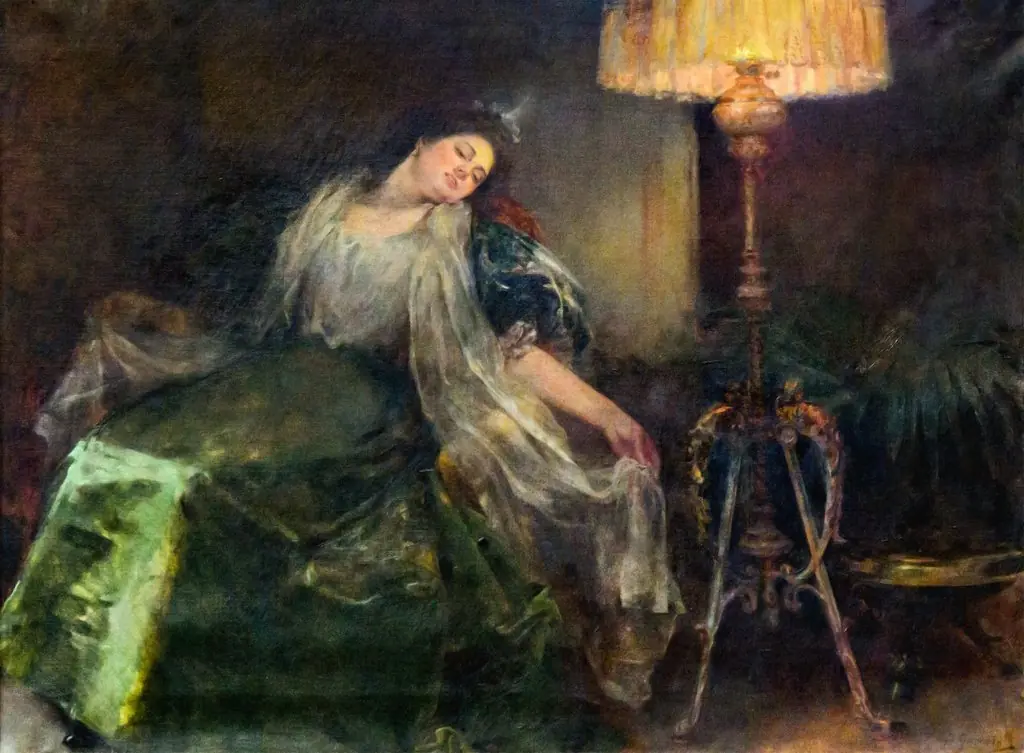 Dona adormida
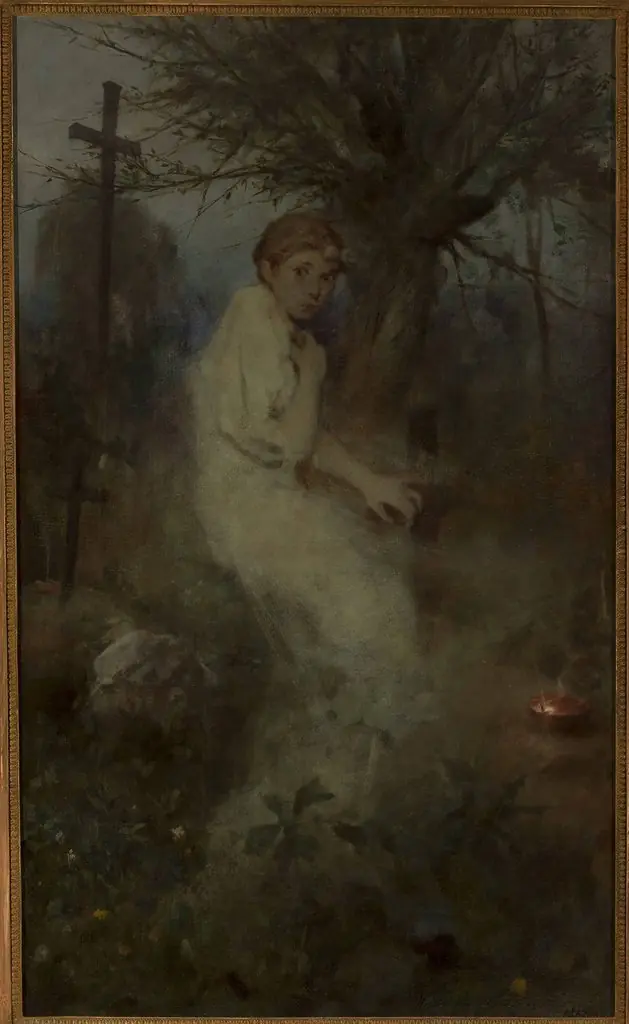 All Souls’ Day, part one of the triptych
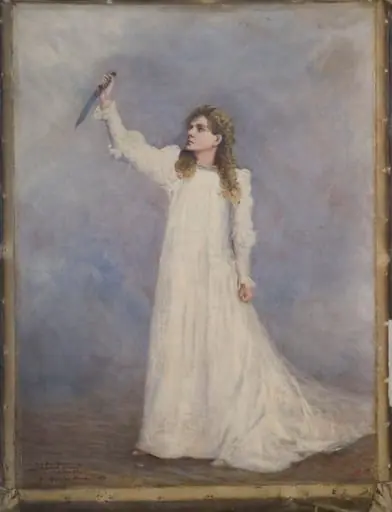 Alma Murray as Beatrice Cenci in 'The Cenci' by Percy Bysshe Shelley
 ‘Arrangement in Yellow and Gray’: Effie Deans
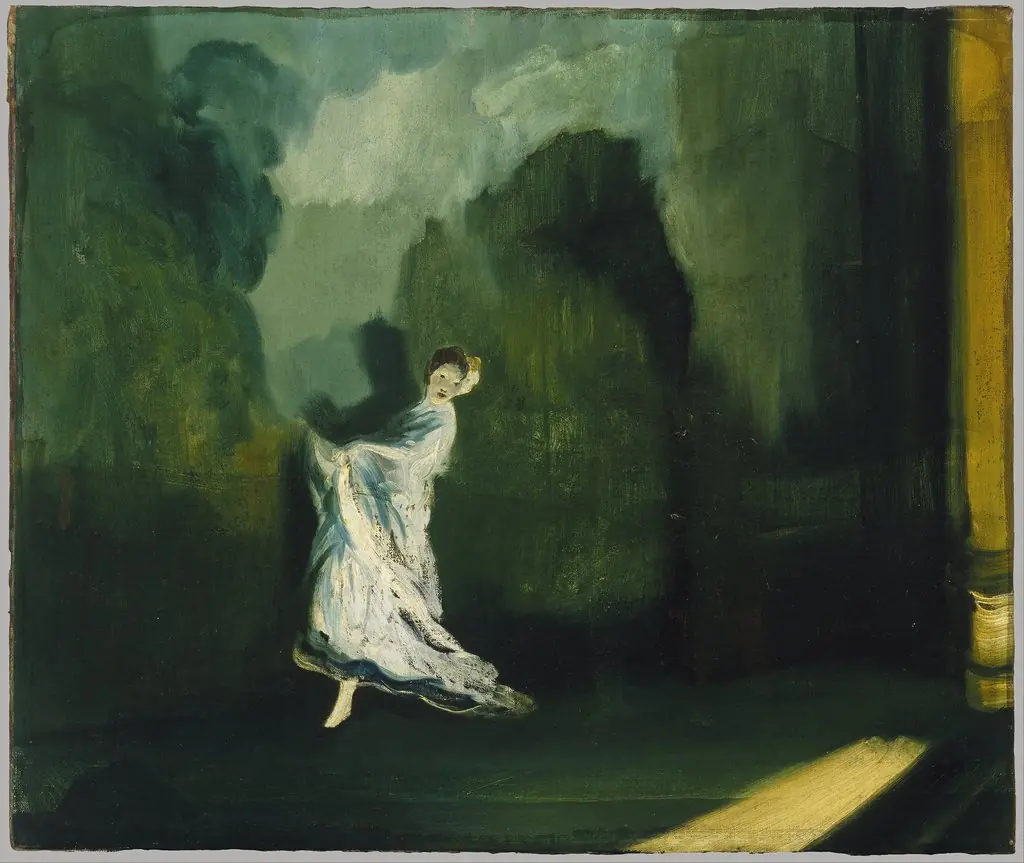 Keith's Union Square
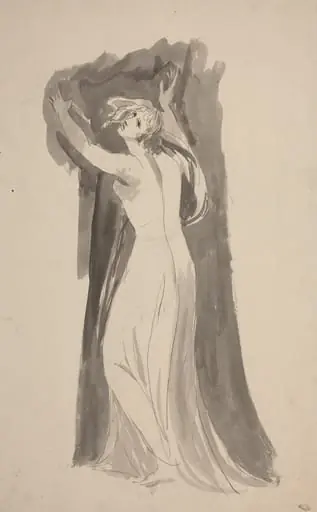 A Study of Miranda for "The Tempest"