Artwork
Crest
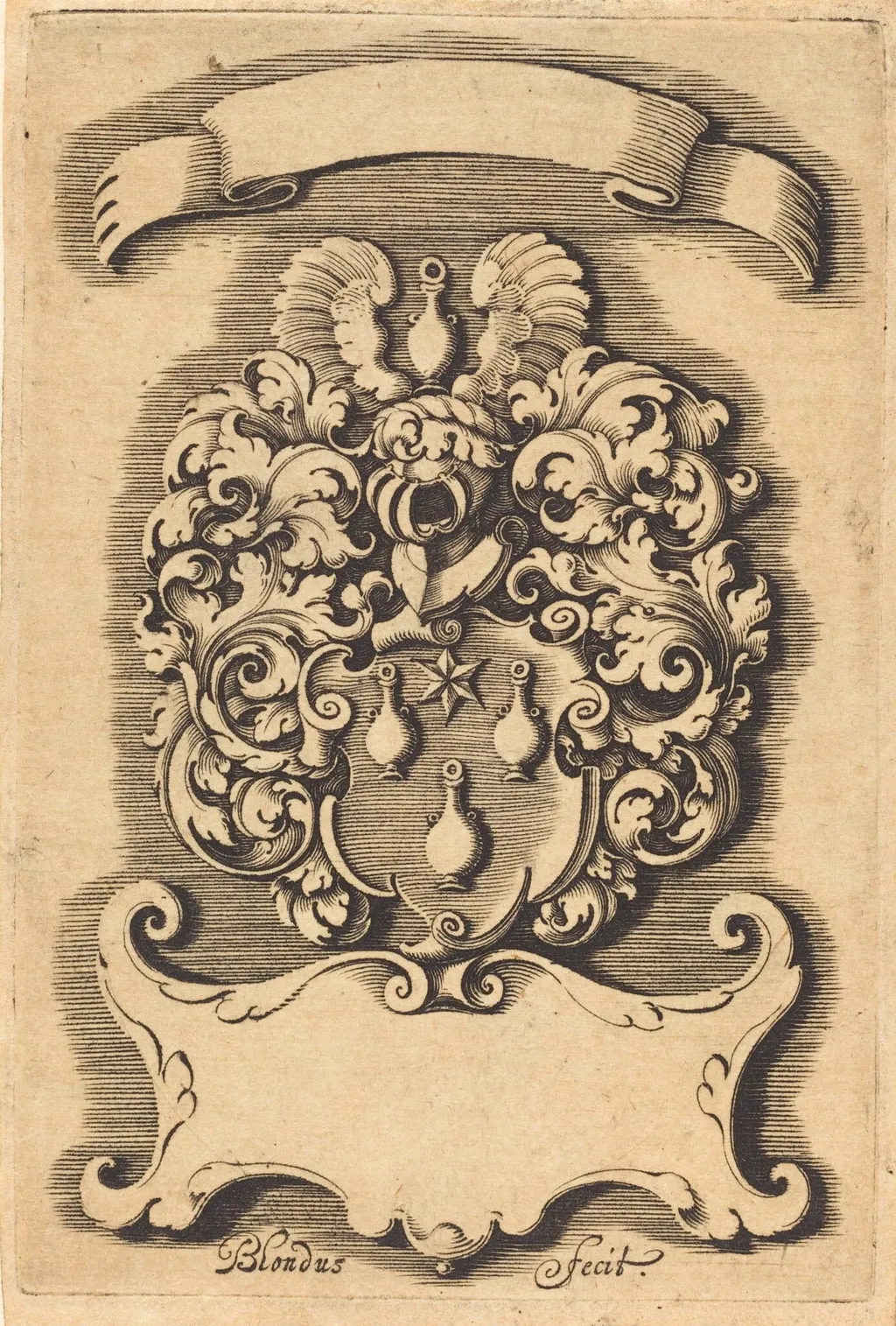
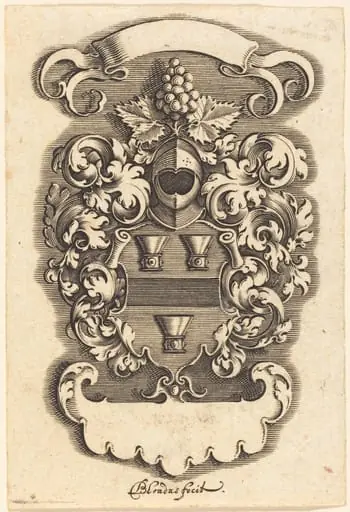
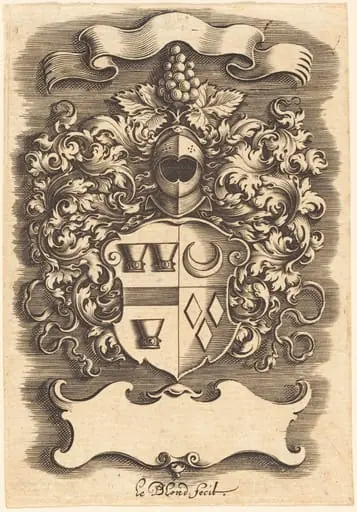
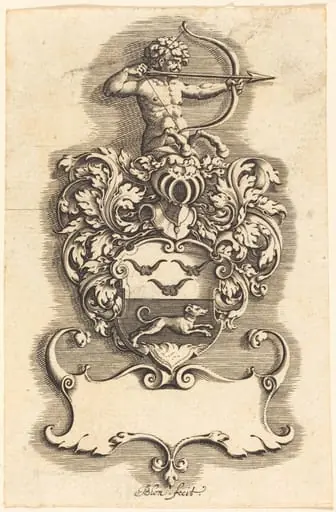
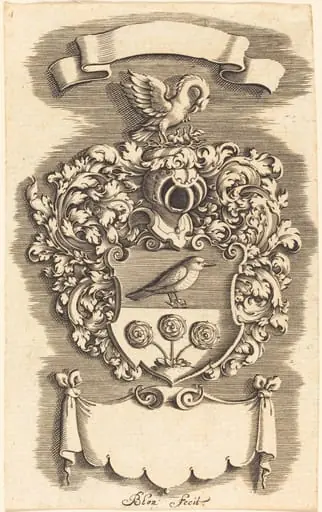
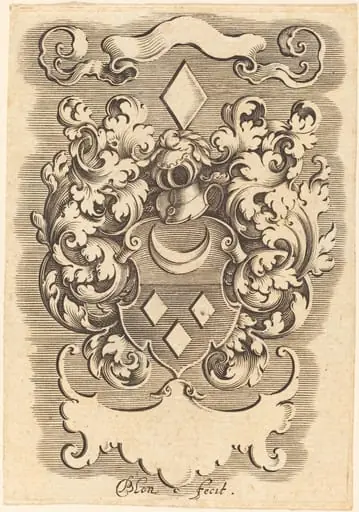
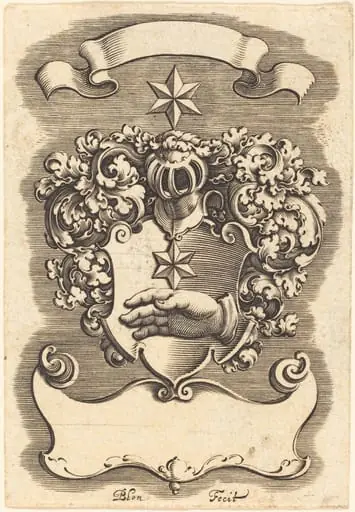
Crest is an ink print by the Renaissance artist Michel Le Blon. It dates from 1622 and is held in the collection of the National Gallery of Art.
About this work
Overview
Created in 1622 by Michel Le Blon, Crest is a black-and-white engraving that presents an ornamental design composed of flowing, vegetal forms.
Created in 1622 by Michel Le Blon, Crest is a black-and-white engraving that presents an ornamental design composed of flowing, vegetal forms. The composition features interwoven vines and leaf motifs, with minute stars and dots concentrated at the center. The decorative border extends beyond the central image, curling along the paper’s edges. As a print made through incised metal plates, it reflects the precision and repetition characteristic of early modern engraving techniques.
Subject & Meaning
The design lacks explicit figural elements, instead relying on abstracted botanical patterns to convey ornamentation. Its structure resembles heraldic crests, suggesting a symbolic or aristocratic function, though no identifiable family or institution is associated with it. The inclusion of stars and dots may imply celestial or divine associations, common in decorative arts of the period. The work functions more as an aesthetic prototype than a narrative piece.
Technique & Style
Executed in the engraving method, the image was produced by incising fine lines into a metal plate, which was then inked and pressed onto paper. The lines are uniform and controlled, demonstrating the artist’s skill in handling the burin. The style is intricate yet restrained, avoiding heavy shading in favor of linear clarity. The repetition of swirling forms creates rhythm, typical of Mannerist and early Baroque decorative traditions.
History & Provenance
The print originates from early 17th-century Europe, a time when engraved ornaments were widely used in book illustration, textiles, and heraldic design. Michel Le Blon, though not a widely documented artist, was active in producing such decorative prints. No known original ownership records survive, but similar works were circulated among artisans and printers as pattern sources, suggesting a utilitarian rather than fine art context.
Context
In the early 1600s, engraved decorative motifs were essential tools for craftsmen across Europe, serving as templates for metalwork, embroidery, and architecture. Crest aligns with a broader trend of standardized ornamental designs disseminated through print. Its lack of text or heraldic identifiers implies it was intended for adaptable reuse, reflecting the commercialization of visual culture in the print economy of the time.
Legacy
Though not attributed to a major artistic figure, Crest exemplifies the quiet influence of anonymous engravers in shaping visual language across disciplines. Its survival offers insight into the working practices of early modern designers who prioritized utility and repetition over individual expression. Such prints formed the unseen backbone of decorative arts, influencing generations of artisans long after their creation.
Artist & collection