Artwork
Head of Medusa
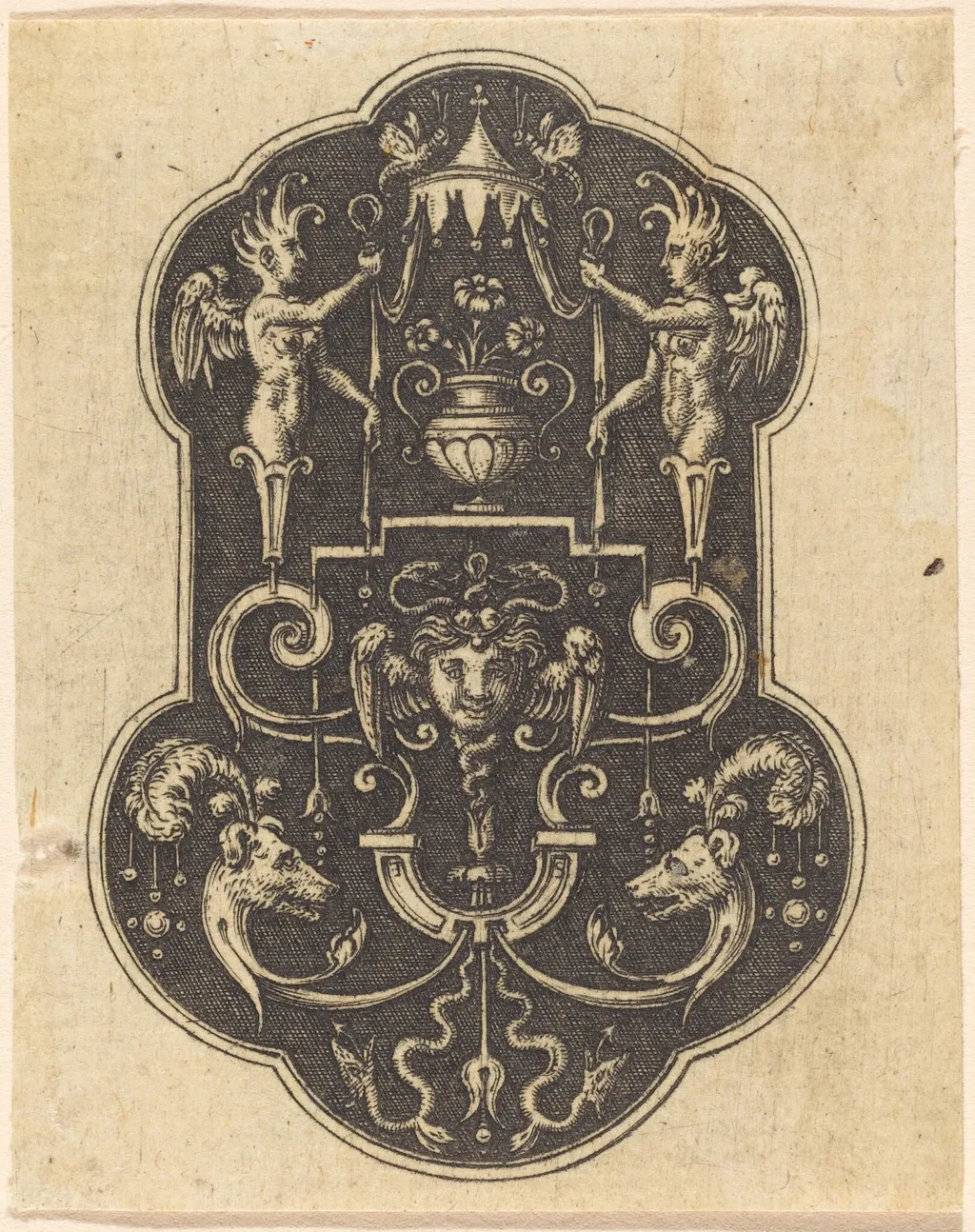
Head of Medusa is an ink print by the Renaissance artist Etienne Delaune. It dates from 1551 and is held in the collection of the National Gallery of Art.
About this work
Overview
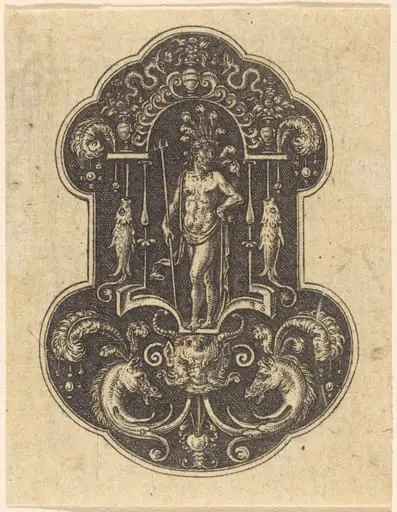
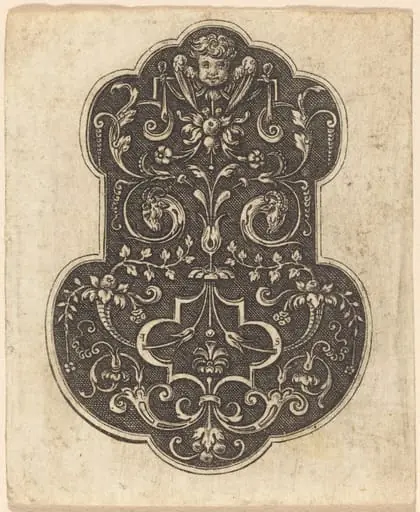
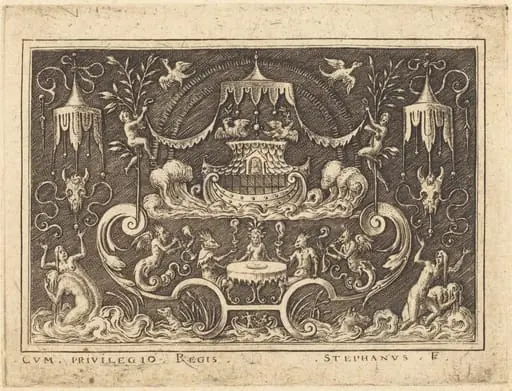
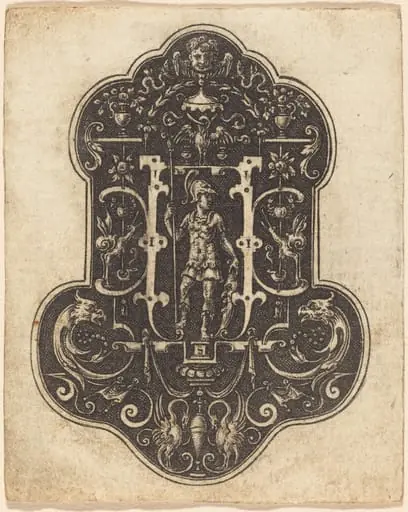
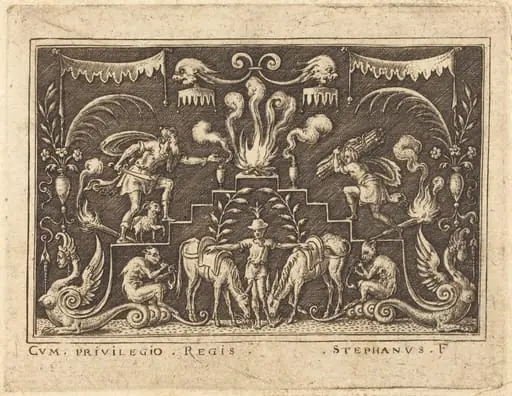
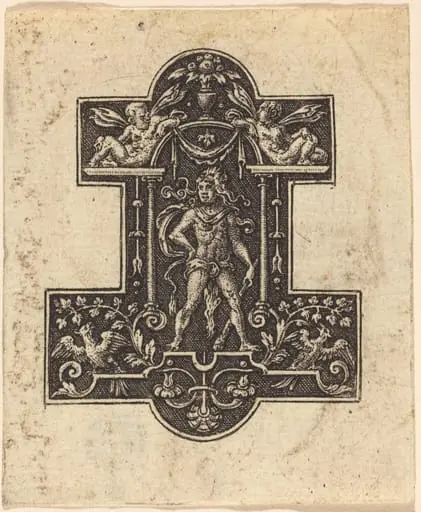
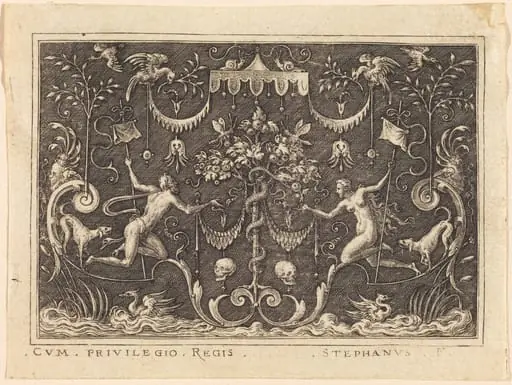
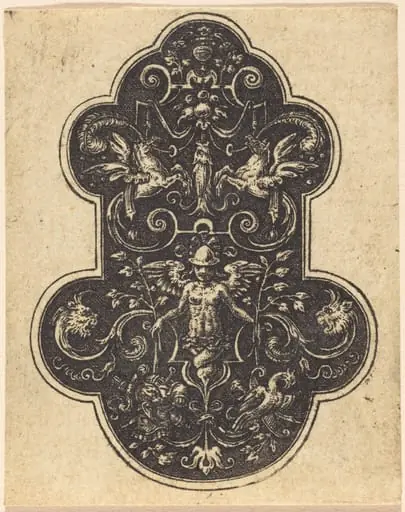
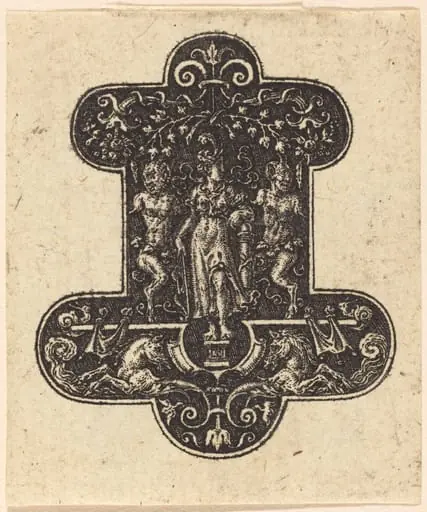
Etienne Delaune’s 1551 engraving presents a compact, shield‑shaped composition rendered entirely in black and white. The design is framed by ornamental scrollwork and populated with a variety of small animal motifs, all executed with precise, incised lines that give the image a crisp, graphic quality.
Subject & Meaning
At the center of the piece, a lion’s head is transformed into the visage of Medusa, linking the classical monster with the heraldic symbolism of a lion. Above, two winged figures support a crown that bears a vase and floral garlands, suggesting a triumphal or protective function often associated with coats of arms.
Technique & Style
The work is an engraving, a printmaking method in which the artist incises the design onto a metal plate with a burin. Delaune’s handling of line creates strong contrasts and fine detailing, especially in the delicate rendering of the winged attendants and the intricate border scrolls.
History & Provenance
Created in the mid‑sixteenth century, the print reflects the period’s fascination with mythological subjects rendered for decorative or emblematic purposes. While specific ownership records are scarce, the work is representative of Delaune’s broader output for the French court and the market for portable, emblematic prints.
Artist & collection