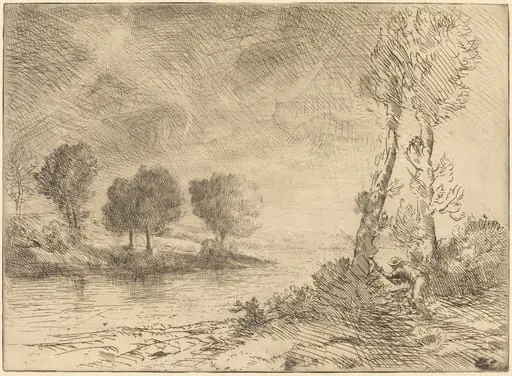
Artwork
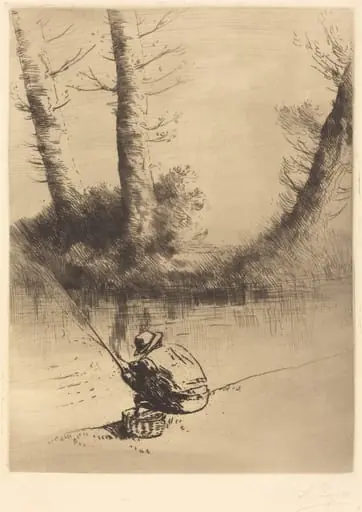
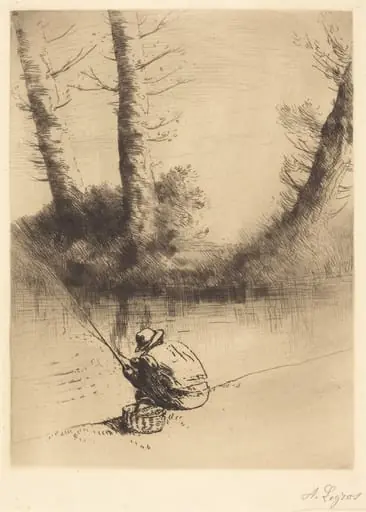
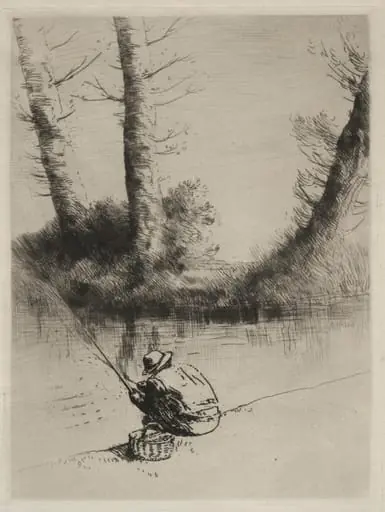
Angler (Le pecheur a la ligne)
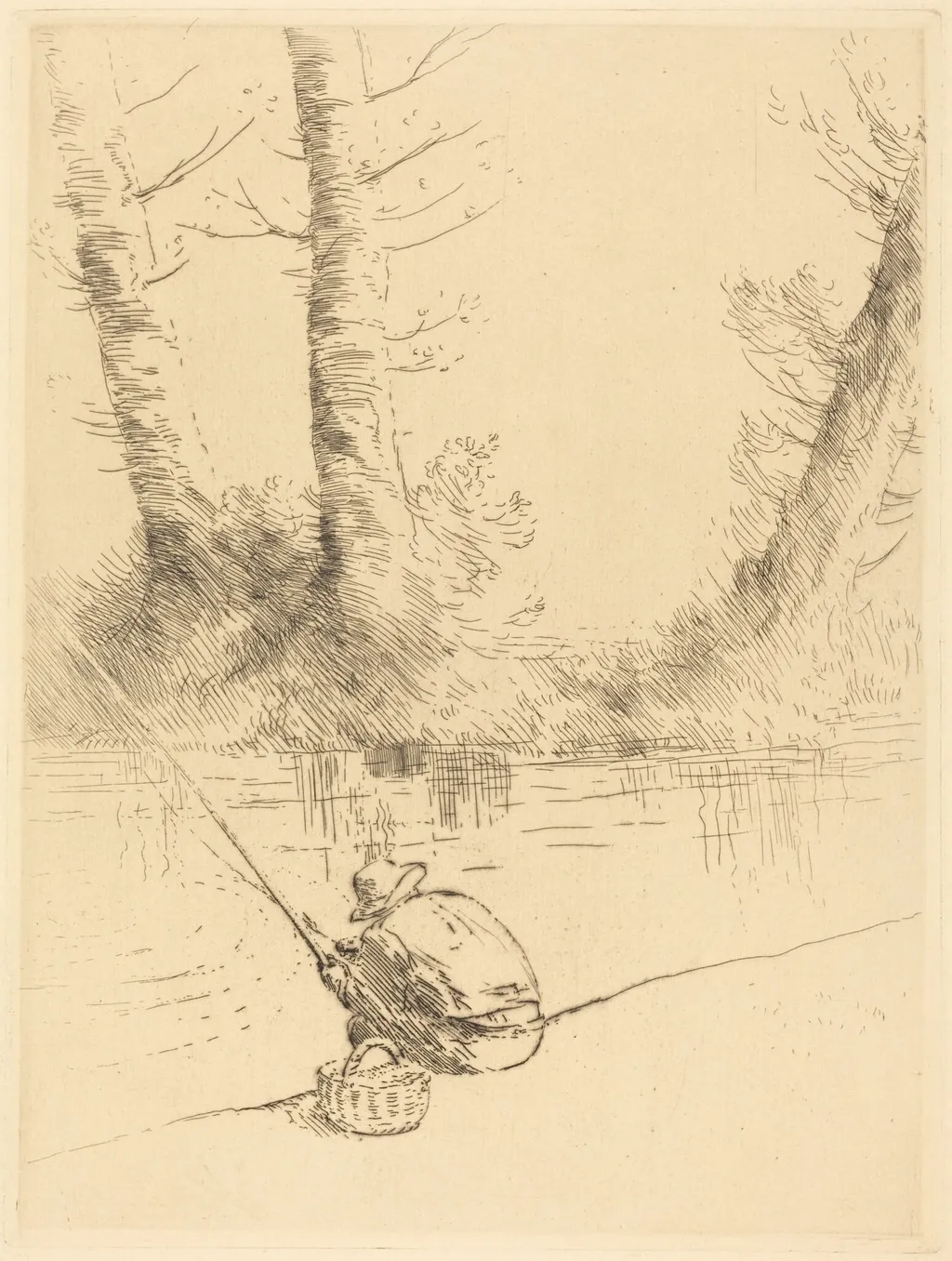
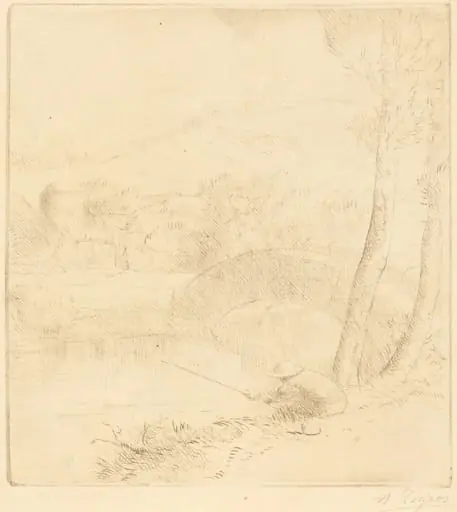
Angler (Le pecheur a la ligne) is an ink print by the Romanticist artist Alphonse Legros. It dates from 1874 and is held in the collection of the National Gallery of Art.
About this work
Overview
Unlike his paintings and sculptures, this piece emphasizes quiet observation, capturing a moment of stillness rather than narrative drama.
Alphonse Legros, a French artist who moved to London in 1863 and later became a British citizen, produced *Angler (Le pêcheur à la ligne)* in 1874 as an etching. This work belongs to his broader engagement with printmaking, through which he helped reinvigorate the medium in Britain. Unlike his paintings and sculptures, this piece emphasizes quiet observation, capturing a moment of stillness rather than narrative drama.
Subject & Meaning
The print shows a lone figure seated by a riverbank, engaged in the patient act of fishing. There is no indication of urgency or emotion—only a calm immersion in the natural environment. The figure’s anonymity and the absence of human activity beyond him suggest a meditation on solitude and rhythm, aligning with 19th-century ideals of nature as a space for reflection rather than spectacle.
Technique & Style
Legros employed fine etching lines to render texture in the foliage, water, and the angler’s clothing, creating subtle tonal gradations without heavy shading. The precision of the lines conveys realism, while the sparse composition avoids ornamentation. The technique reflects his training in traditional printmaking and his interest in the medium’s capacity for quiet, intimate expression over dramatic effect.
History & Provenance
Created during Legros’s early years in Britain, the etching emerged as part of his efforts to elevate printmaking as a serious artistic form. He taught at the Slade School of Art and influenced a generation of British printmakers. While the specific early ownership of this print is undocumented, it was likely circulated among collectors and students who valued his revival of etching as a disciplined art.
Context
In the 1870s, British art was shifting from grand historical themes toward scenes of everyday life. Legros’s work aligned with this trend, though his approach remained rooted in French realism and the quietude of rural labor. Unlike Romantic idealizations, his angler lacks theatricality—his environment is observed, not embellished, reflecting a broader European turn toward naturalism in print.
Legacy
Legros’s etchings, including *Angler*, contributed to the reestablishment of etching as a respected medium in Britain. His emphasis on technical control and understated subject matter influenced later artists and educators. Though less known today than his contemporaries, his prints remain significant for their restraint and their role in bridging French and British artistic traditions in the late 19th century.
Own this work as a print
Artist & collection

Artist
Alphonse Legros (French pronunciation: ; 8 May 1837 – 8 December 1911) was a French, later British, painter, etcher, sculptor, and medallist.


![Fisherman on the Lakeshore [Pescatore sulla riva del lago], by Antonio Fontanesi](https://artifactworldgallery.com/img/antonio-fontanesi--fisherman-on-the-lakeshore-pescatore-sulla-riva-del-lago--ffdfb2d7020ad437-w320.webp)