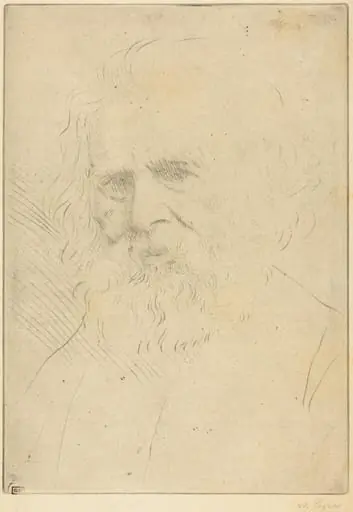
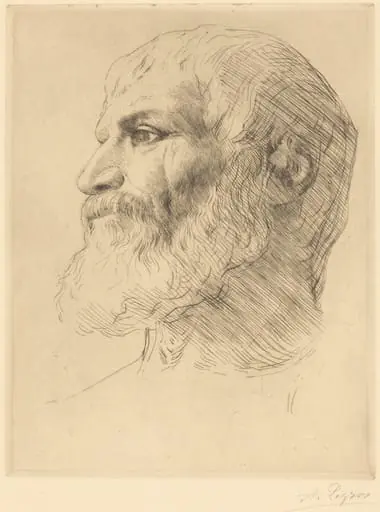
Artwork
Self-Portrait, 12th plate
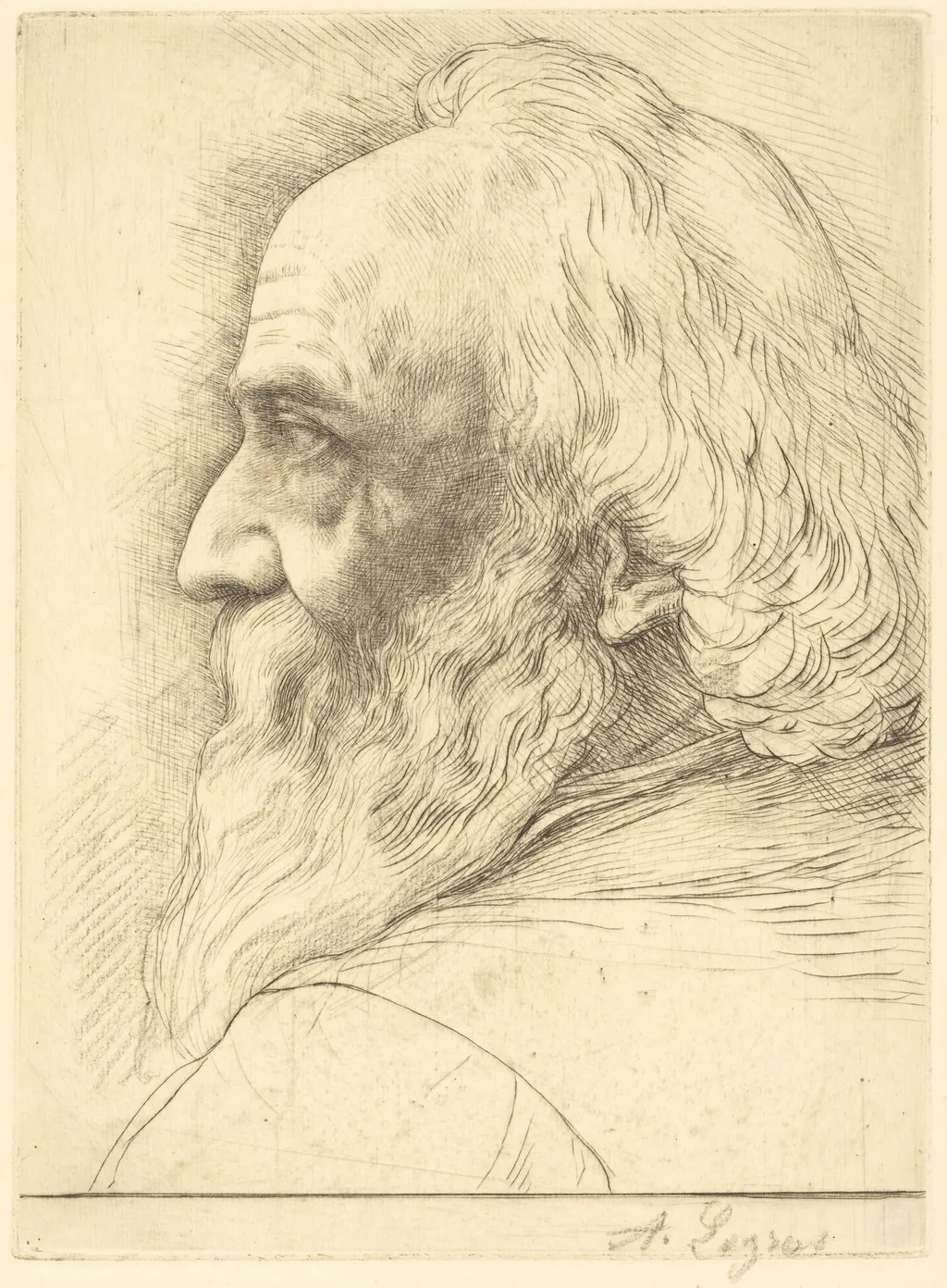
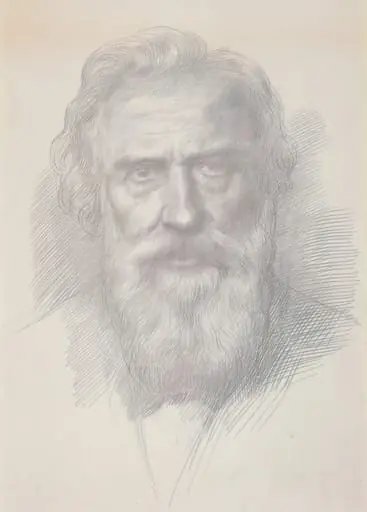
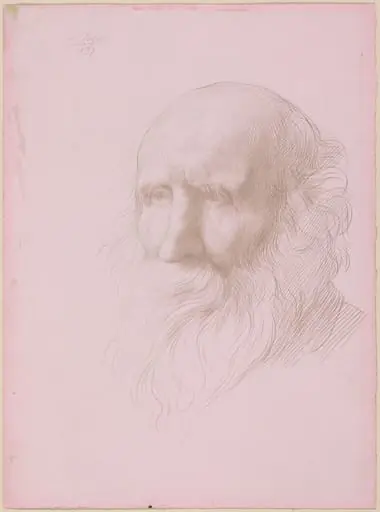
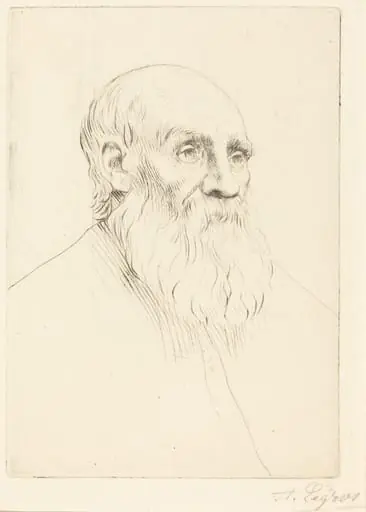
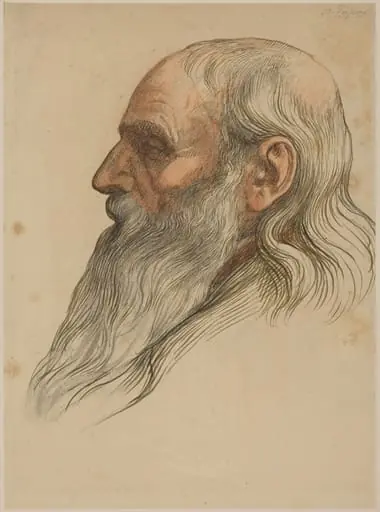
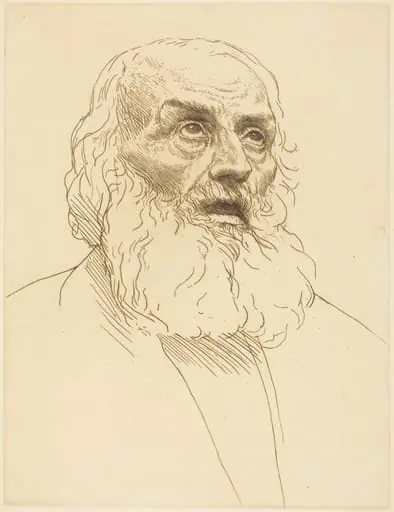
Self-Portrait, 12th plate is a crayon print by the Romanticist artist Alphonse Legros. It dates from 1874 and is held in the collection of the National Gallery of Art.
About this work
Overview
Self-Portrait, 12th plate is a print by Alphonse Legros, created in 1874. The work combines etching, drypoint, and crayon retouching.
Subject & Meaning
The subject is the artist himself, portrayed in a contemplative state. This self-portrait highlights Legros's technical skill in printmaking, a medium he helped revive in Britain.
Technique & Style
The print showcases a mix of techniques: etching for broad lines, drypoint for finer details, and crayon for additional textures and nuances.
History & Provenance
Created in 1874 by Alphonse Legros, a French artist based in London from 1863. His role in Britain's etching revival is notable.
Context
Part of Legros's series of self-portraits, emphasizing his craftsmanship. Reflects the Victorian era's interest in introspective portraiture.
Legacy
Contributes to Legros's reputation as a key figure in 19th-century British printmaking, particularly in the resurgence of etching.
Artist & collection

Artist
Alphonse Legros (French pronunciation: ; 8 May 1837 – 8 December 1911) was a French, later British, painter, etcher, sculptor, and medallist.