Artwork
Self-Portrait, 3rd plate
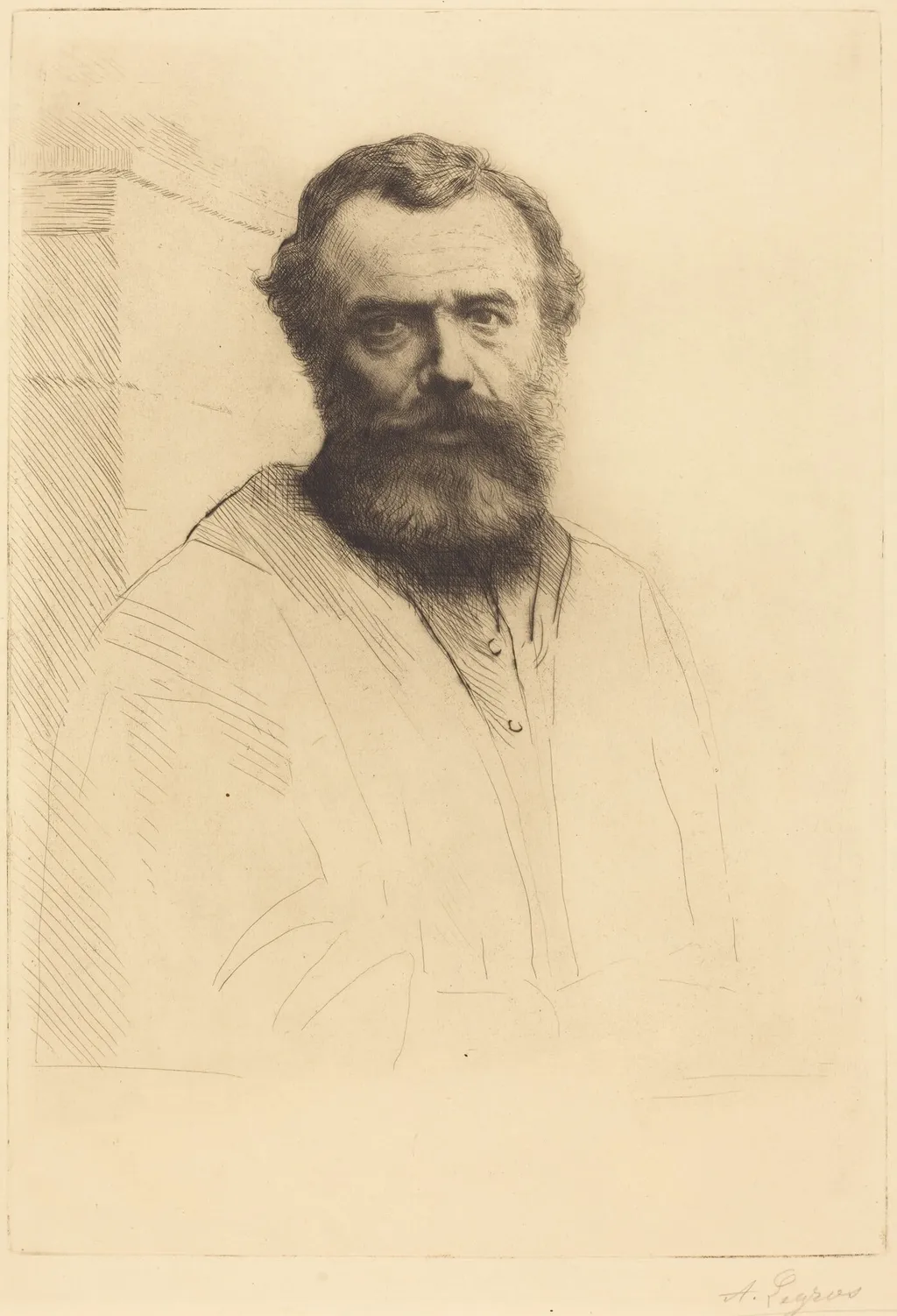
Self-Portrait, 3rd plate is an ink print by the Impressionist artist Alphonse Legros. It dates from 1880 and is held in the collection of the National Gallery of Art.
About this work
Overview
Created in 1880, *Self-Portrait, 3rd plate* is an intaglio print by Alphonse Legros, a French-born artist who lived and taught in London from 1863.
Created in 1880, *Self-Portrait, 3rd plate* is an intaglio print by Alphonse Legros, a French-born artist who lived and taught in London from 1863. The work combines etching and drypoint, two printmaking methods that allow for fine, expressive line work. Legros, known for his contributions to British printmaking, used this portrait to explore personal identity through the tactile qualities of the medium, emphasizing texture over narrative.
Subject & Meaning
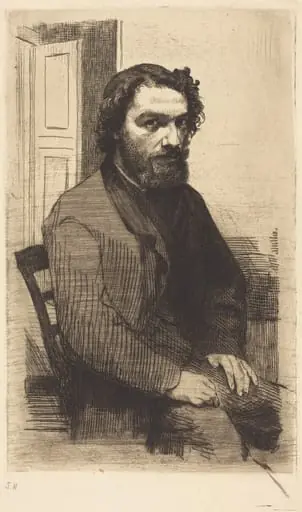
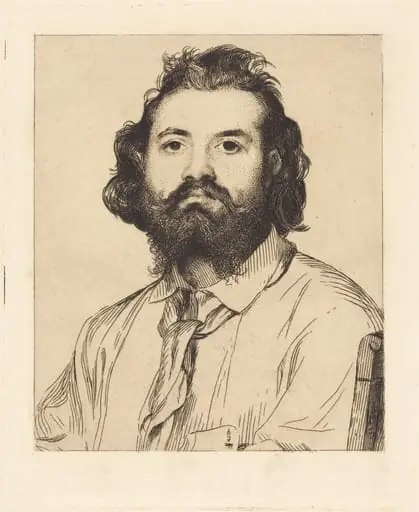
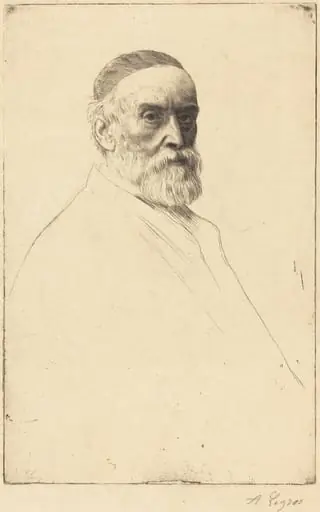
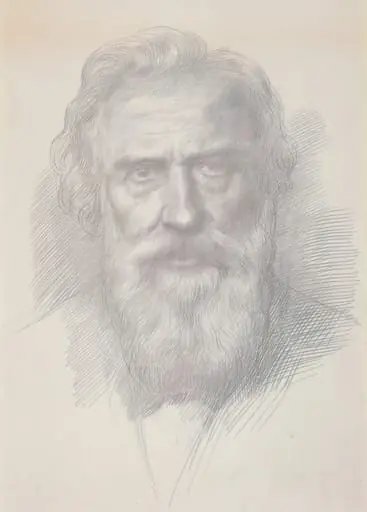
The portrait depicts Legros in mid-life, his face framed by a full beard and mustache, dressed in a plain, dark coat. The absence of background or contextual elements directs focus entirely to his gaze and facial structure. The unadorned presentation suggests introspection rather than public persona, reflecting the artist’s interest in authenticity and the psychological weight of self-representation through print.
Technique & Style
Legros employed drypoint to create dense, velvety lines by scratching directly into the copper plate, producing rich, soft shadows. Etching provided finer, controlled contours. The combination allowed for both precision and spontaneity: the beard and brow are rendered with scratchy, overlapping strokes, while the eyes and nose are defined with sharper, deliberate marks. The blank plate surrounding the face heightens the intimacy of the image.
History & Provenance
This print is the third in a series of self-portraits Legros made during his tenure at the Slade School of Art, where he taught printmaking from the 1870s. It was likely produced for private circulation among students and peers rather than public sale. The plate was reworked over time, indicating Legros’s iterative approach to his own image, a practice consistent with his pedagogical emphasis on revision and technical experimentation.
Context
In late 19th-century Britain, etching was experiencing a revival as artists sought to move beyond mass-produced reproductive prints. Legros, trained in France but active in London, became a central figure in this movement. His self-portraits, including this one, contributed to a broader reevaluation of printmaking as a legitimate medium for personal expression, aligning with European trends in artistic introspection.
Legacy
Legros’s *Self-Portrait, 3rd plate* exemplifies the shift toward artist-led printmaking in Britain. His technical rigor and emphasis on direct, expressive line influenced a generation of British etchers. Though not widely exhibited in his lifetime, the work remains a key example of how printmaking could convey psychological depth, helping to elevate the medium’s status in academic and artistic circles.
Own this work as a print
Artist & collection

Artist
Alphonse Legros (French pronunciation: ; 8 May 1837 – 8 December 1911) was a French, later British, painter, etcher, sculptor, and medallist.

![Self-Portrait [recto], by William E. Winner](https://artifactworldgallery.com/img/william-e-winner--self-portrait-recto--33f2127f07962012-w320.webp)