Artwork
The Prodigal Son, 4th plate (L'enfant prodigue)
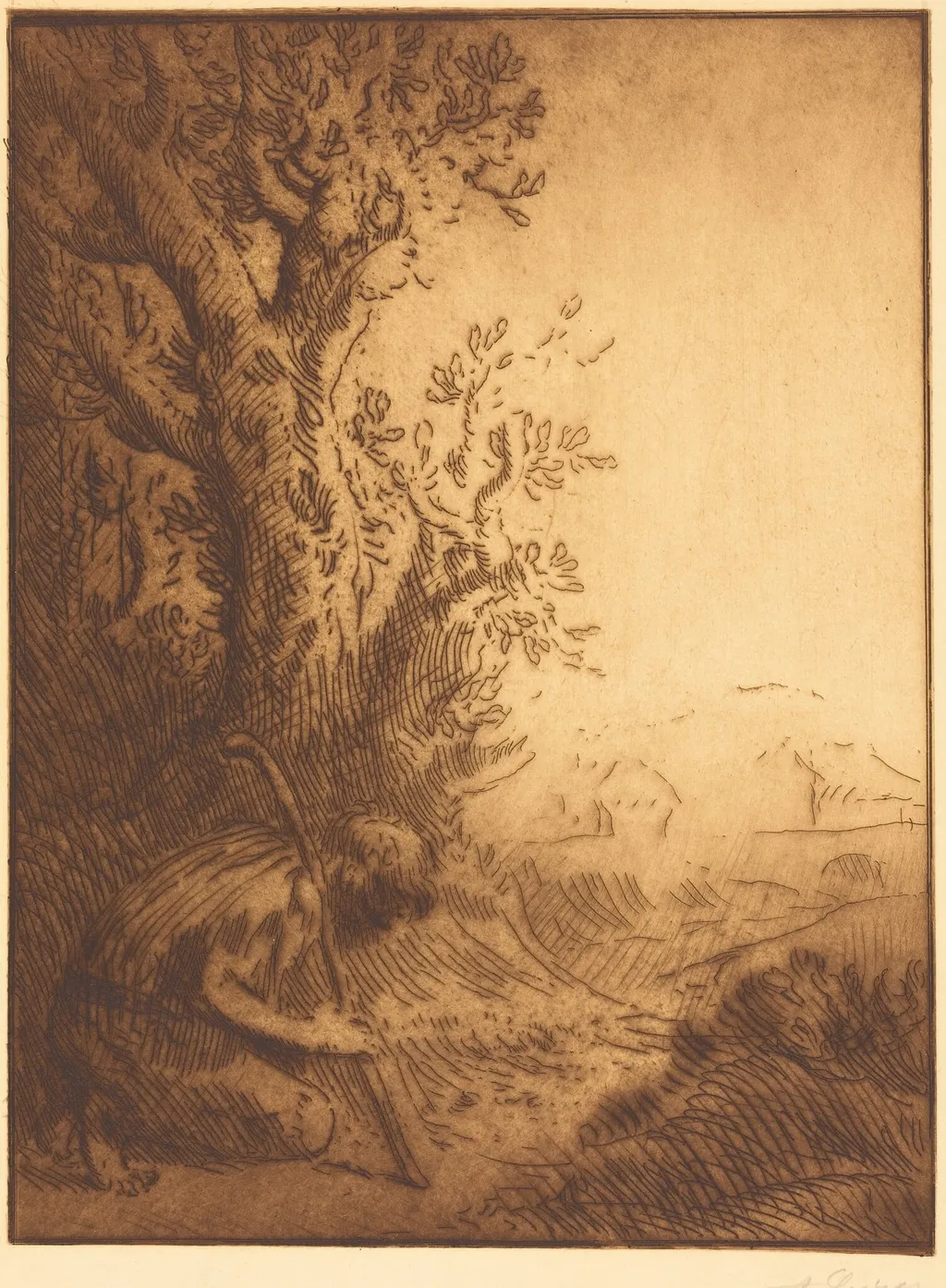
The Prodigal Son, 4th plate (L'enfant prodigue) is an ink print by the Romanticist artist Alphonse Legros. It dates from 1874 and is held in the collection of the National Gallery of Art. Created in 1874, *The Prodigal Son, 4th plate* is a bistre‑toned print that combines etching with drypoint.
About this work
Overview
Created in 1874, *The Prodigal Son, 4th plate* is a bistre‑toned print that combines etching with drypoint. The work belongs to the series interpreting the biblical parable of the wayward son, and it is executed on a single copper plate that was inked and pressed onto paper.
Subject & Meaning
The image isolates a solitary tree whose gnarled limbs and exposed roots dominate a cracked, uneven terrain. The stark, almost desolate setting evokes the isolation and repentance associated with the prodigal’s return, using the barren landscape as a visual metaphor for spiritual desolation.
Technique & Style
Legros employed intaglio methods, first incising the composition with drypoint to achieve deep, textured lines that retain a raw immediacy, then complementing them with etched areas to build tonal depth. The bistre wash, applied through aquatint, unifies the scene in a muted brown, emphasizing the harshness of the environment while preserving fine line work.
History & Provenance
French‑born Alphonse Legros, who settled in Britain and taught at the Royal Academy Schools, was a central figure in the late‑19th‑century British etching revival. This plate was part of his teaching output and was likely circulated among his students and collectors of the period, reflecting his role in promoting printmaking as a serious artistic practice.
Artist & collection

Artist
Alphonse Legros (French pronunciation: ; 8 May 1837 – 8 December 1911) was a French, later British, painter, etcher, sculptor, and medallist.

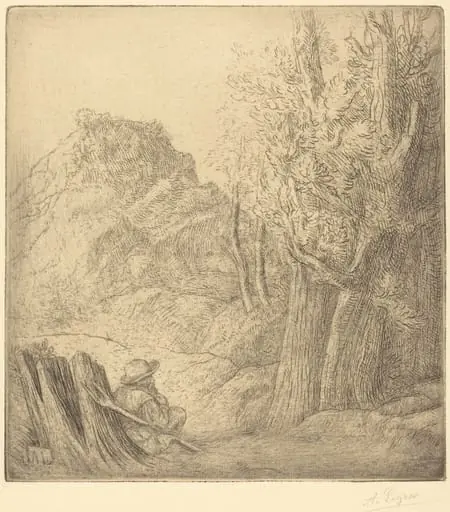 Old Village (Ville vieille)
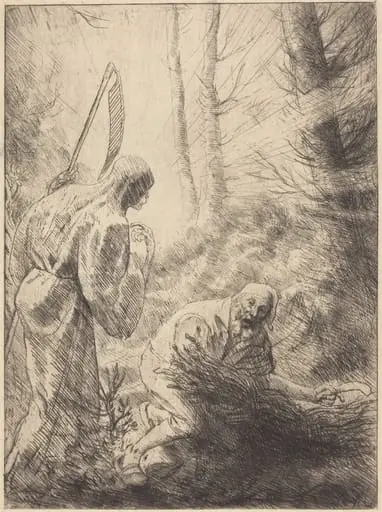 Death and the Woodcutter, 2nd plate (La Mort de le bucheron)
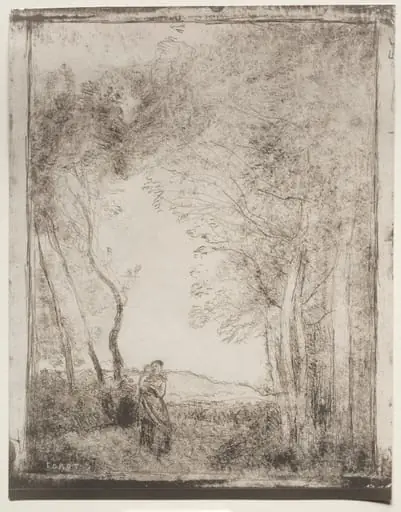 A Young Mother at the Entrance of a Wood
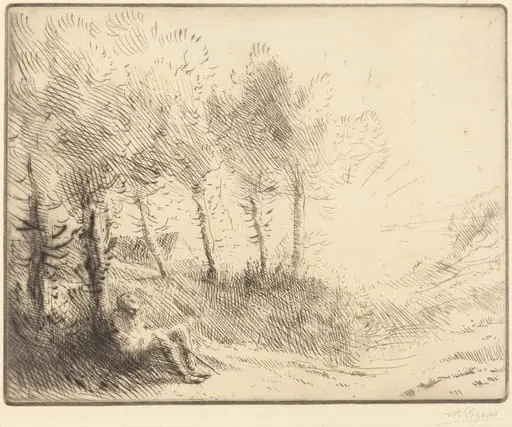 Landscape (Paysage)
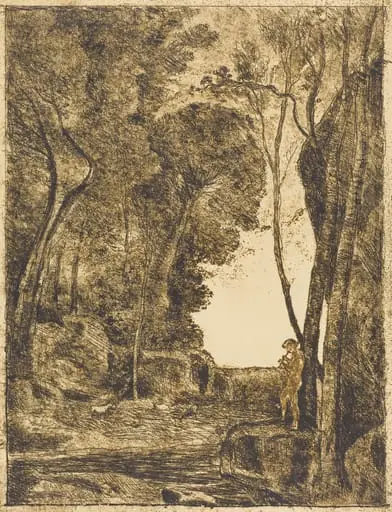 Little Shepherd, 1st Plate (Le Petit Berger)
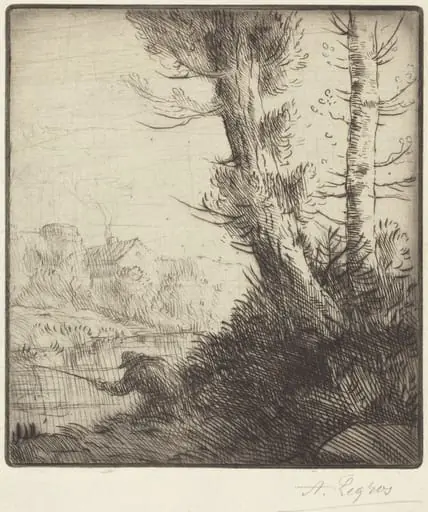 Banks of the Oise (Bord de l'Oise)
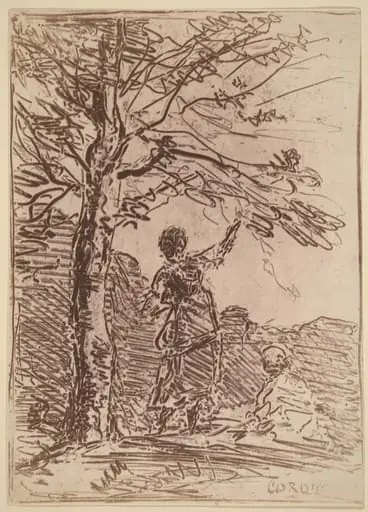 Young Woman and Death (La Jeune Fille et la Mort)
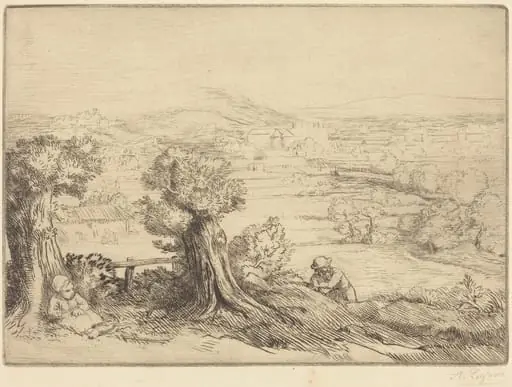 Remembrance of a Valley in Bourgogne (Souvenir d'une vallee en Bourgogne)
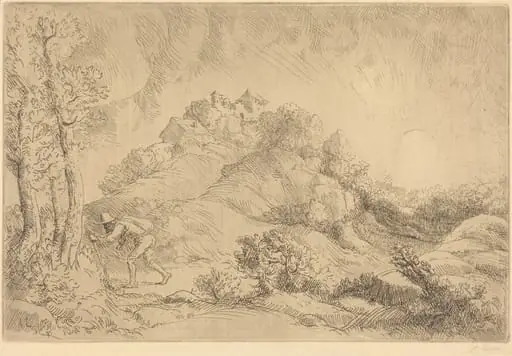 View of a Farm (La ferme de Beauchamp)