Artwork
Japanese Woman
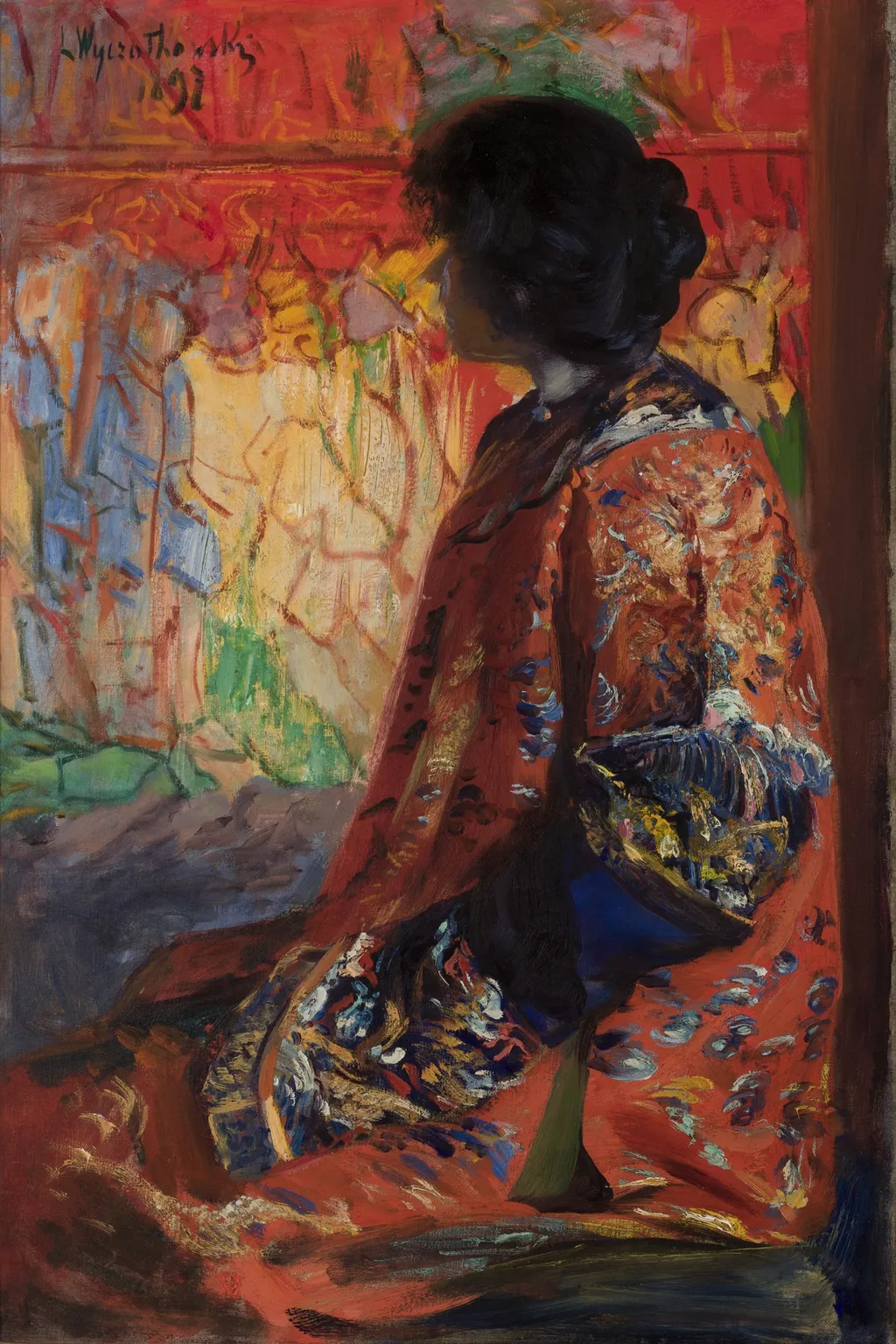
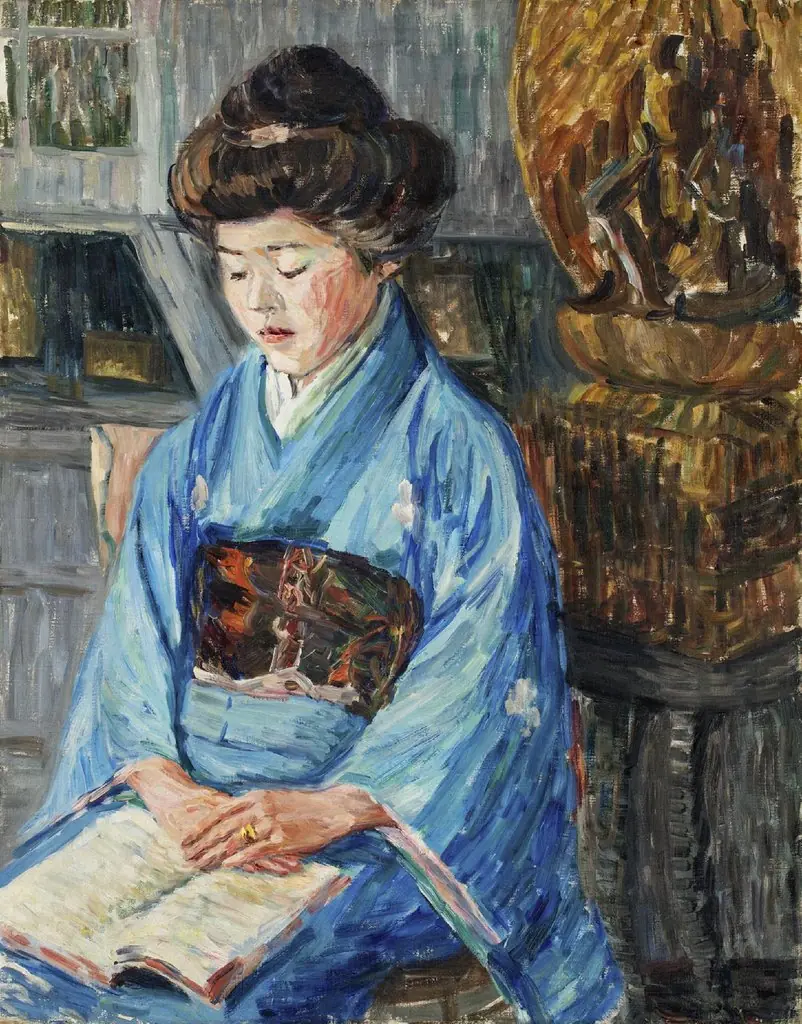
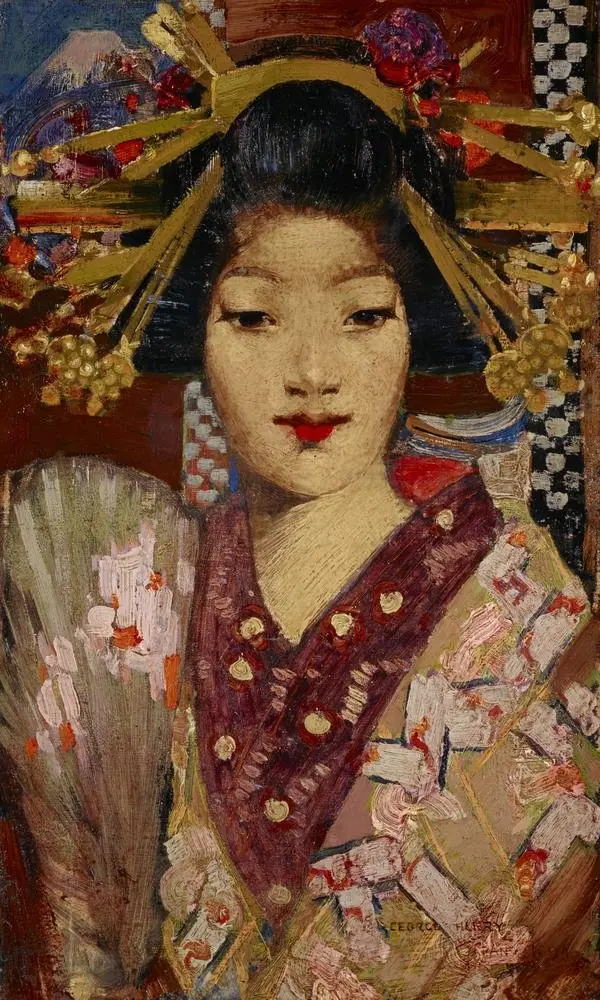
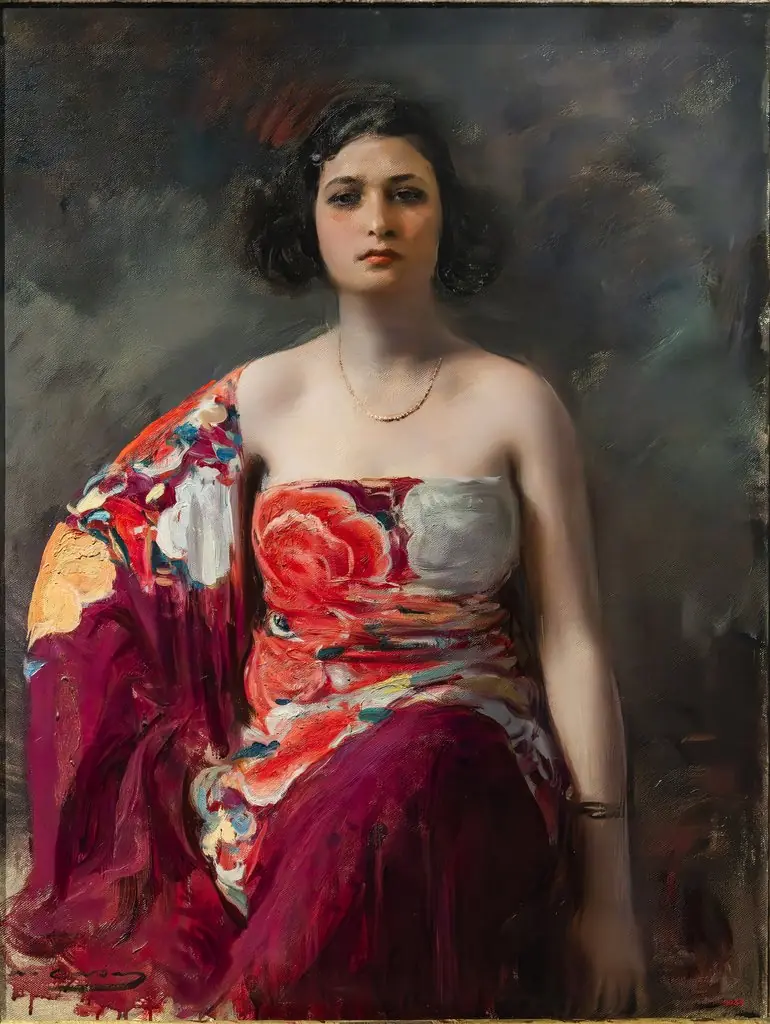
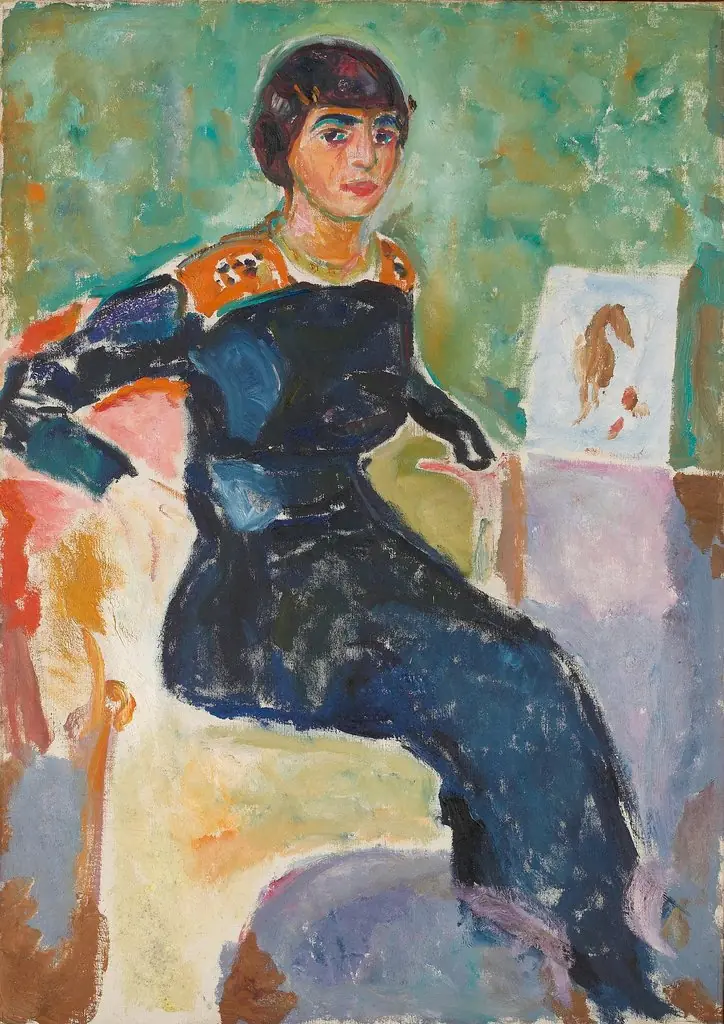
Japanese Woman is an oil painting by Leon Wyczółkowski. It dates from 1899 and is held in the collection of the National Museum in Kraków.
About this work
Overview
Japanese Woman is an 1899 oil painting by Leon Wyczółkowski, a key figure in the Young Poland movement. The work is a portrait of a solitary female subject, characterized by its use of bold colors and expressive brushwork.
Subject & Meaning
The painting depicts a woman dressed in a intricately patterned red kimono with blue, white, and yellow accents, seated on the floor. Her face is partially obscured, while her dark, pulled-back hair is visible. The subject's pose, with her body facing left and head turned back to the right, adds a sense of dynamic movement.
Technique & Style
Wyczółkowski executed the piece using oil paint, emphasizing bold, vivid colors and loose, expressive brushstrokes. The kimono is rendered in detailed, heavy folds, contrasting with the more abstract, boldly brushed background of red, yellow, and green hues.
History & Provenance
Created in 1899, during Wyczółkowski's tenure as a professor at the Jan Matejko Academy of Fine Arts in Kraków (1895-1911), the painting reflects his involvement with the Young Poland movement and the Society of Polish Artists 'Sztuka', of which he was a founding member.
Context
As part of the Young Poland movement, 'Japanese Woman' situates Wyczółkowski within a broader artistic trend that sought to modernize Polish art through experimentation with various styles, including Realism, which influenced the work's approach.
Legacy
While specific details on the painting's direct legacy are not provided, it contributes to Wyczółkowski's overall body of work, which continues to be recognized for its contribution to Polish artistic modernization in the late 19th and early 20th centuries.
Own this work as a print
Artist & collection
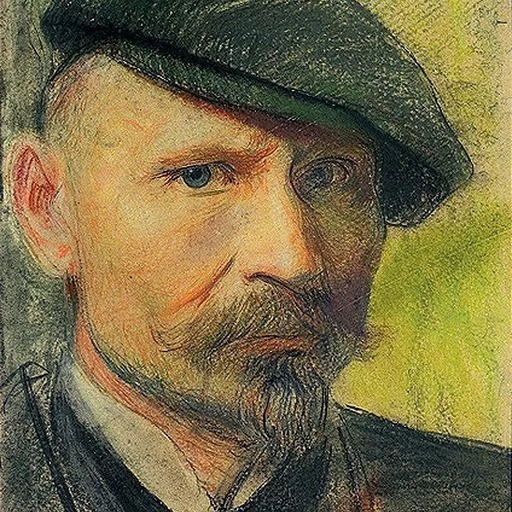
Artist
Leon Jan Wyczółkowski (Polish: ; 11 April 1852 – 27 December 1936) was a Polish painter and educator who was one of the leading painters of the Young Poland movement, as well as the principal representative of Polish Realism in art of the…