Artwork
Les Oeufs de Pâques
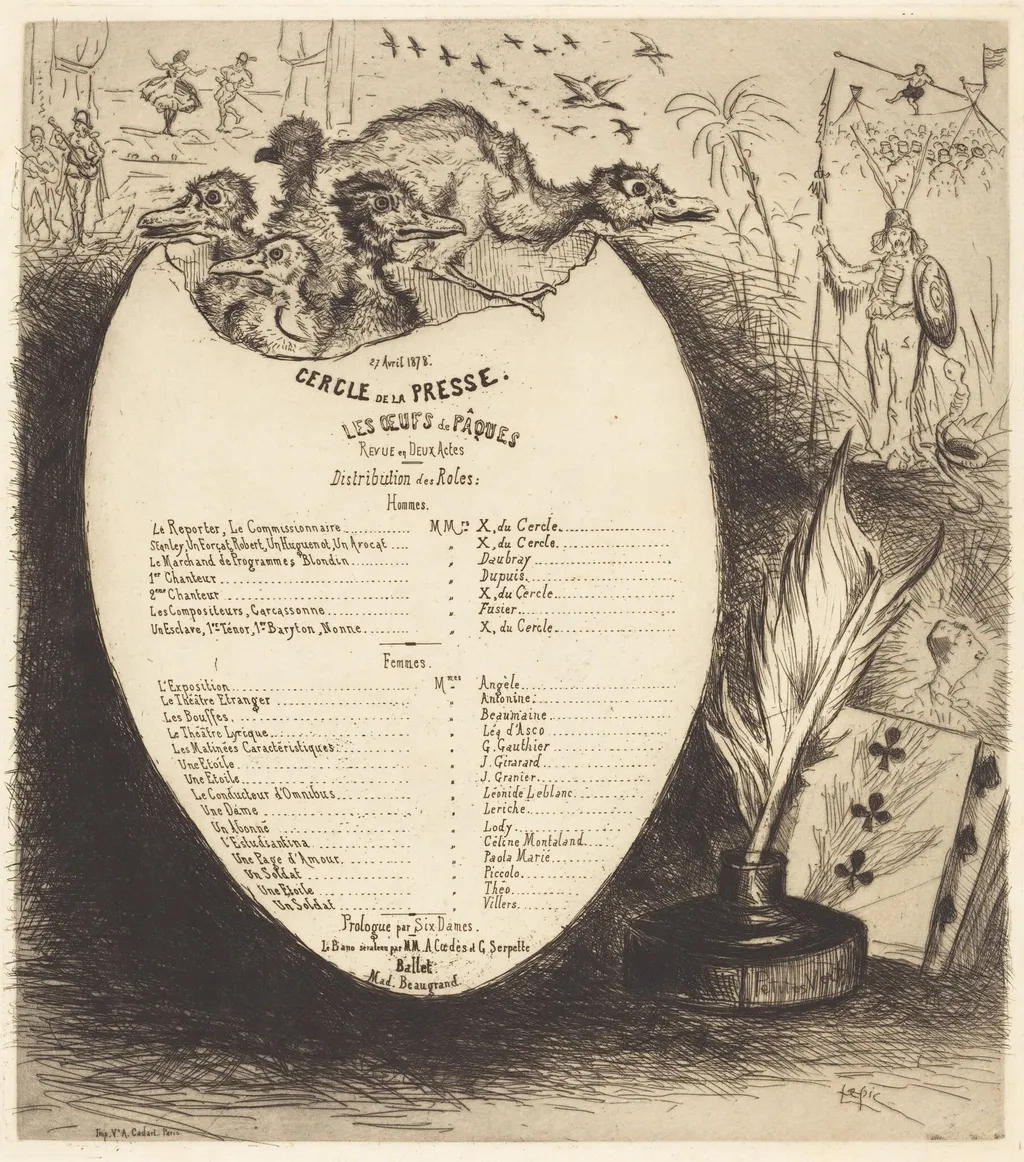
Les Oeufs de Pâques is an ink print by the Impressionist artist Vicomte Ludovic Lepic. It dates from 1878 and is held in the collection of the National Gallery of Art.
About this work
Overview
Created in 1878 by Vicomte Ludovic Lepic, Les Oeufs de Pâques is an etching on laid paper that functions as both a visual scene and a theatrical program.
Created in 1878 by Vicomte Ludovic Lepic, Les Oeufs de Pâques is an etching on laid paper that functions as both a visual scene and a theatrical program. The work depicts a massive Easter egg as the central motif, surrounded by intricate details that suggest a staged performance. Rather than a simple decorative image, it serves as a printed invitation to a two-act play of the same name, integrating narrative and function within a single composition.
Subject & Meaning
The egg, traditionally a symbol of renewal, becomes a microcosm of theatrical life. Inside, miniature figures engage in dancing, musical performance, and processional movement, while external figures and animals populate the surrounding space. A hot-air balloon drifts above, adding a whimsical, almost surreal dimension. The inclusion of actor names and roles transforms the egg into a literal stage program, blurring the line between art and performance documentation.
Technique & Style
Lepic employed etching to achieve fine, controlled lines that capture dense detail without clutter. The laid paper’s texture enhances the tactile quality of the scene, while the precision of the etched lines allows for the clear rendering of hundreds of tiny figures and objects. The composition is densely packed, yet organized through spatial layering—foreground, interior, and background—creating depth within a single plane.
History & Provenance
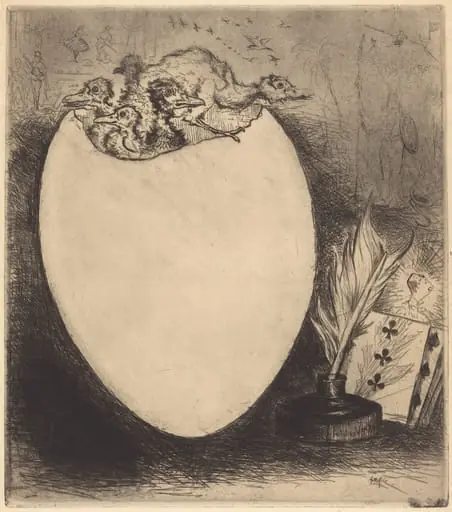
The print was produced as a promotional item for Lepic’s theatrical work, likely distributed to attendees or patrons of the 1878 performance. Its survival in multiple states, including those with inscribed lettering, suggests limited but intentional circulation. The work reflects the 19th-century French tradition of combining printmaking with theatrical culture, though it remains a rare example of such integration.
Context
In late 19th-century Paris, theatrical entertainment and graphic art often intersected, particularly among bohemian and aristocratic circles. Lepic, a known participant in this milieu, used etching to merge his interests in theater, satire, and visual storytelling. The work aligns with contemporary trends in illustrated programs and satirical prints, where humor and complexity were valued over straightforward representation.
Legacy
Les Oeufs de Pâques stands as a distinctive artifact of its time, illustrating how printmaking could extend beyond reproduction into the realm of performance curation. While not widely replicated or influential in mainstream art history, it remains a compelling example of interdisciplinary creativity, offering insight into the social and artistic practices of its era.
Artist & collection


 Title Page
 George Speaight Punch & Judy Collection
 Fairy Connoisseurs Inspecting Mr. Frederick Locker's Collection of Drawings
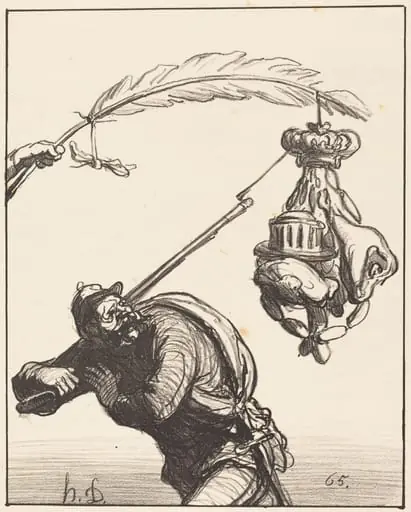 La paix a tout prix
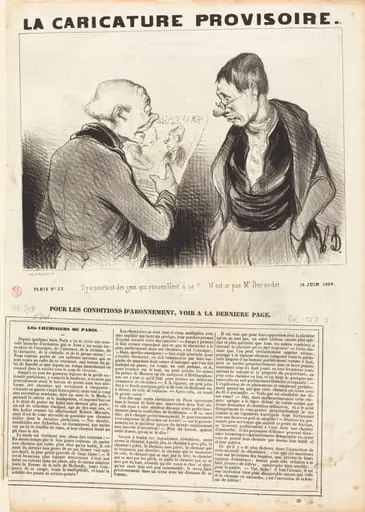 Il y a pourtant des gens qui ressemblent a ça!
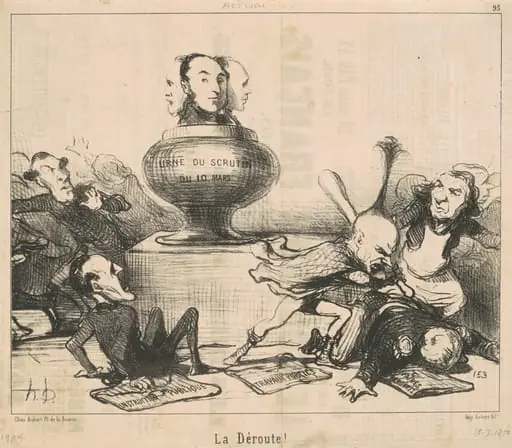 La dêroute!
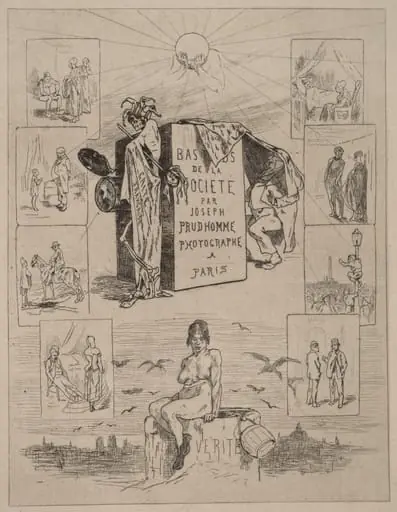 Frontispiece: The Dregs of Society (Las bas-fonds de la societe)
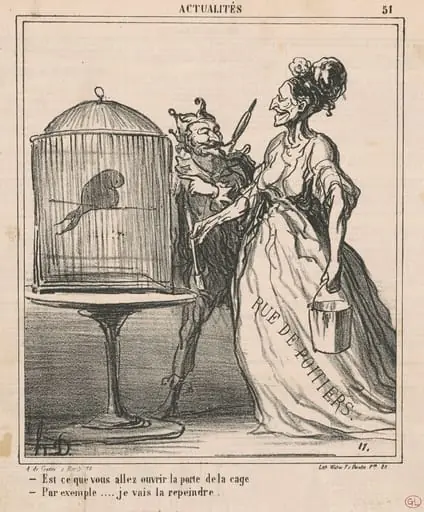 Est-ce que vous allez ouvrir la porte de la cage ...
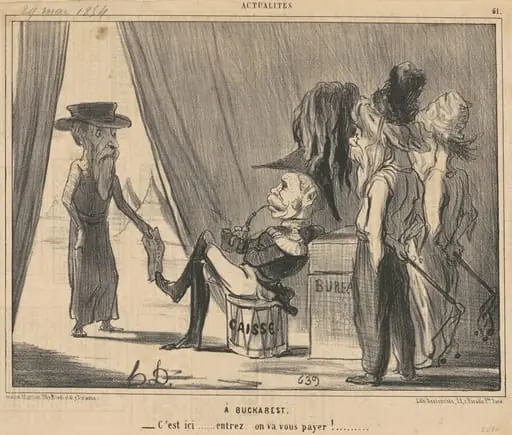 A Bucharest
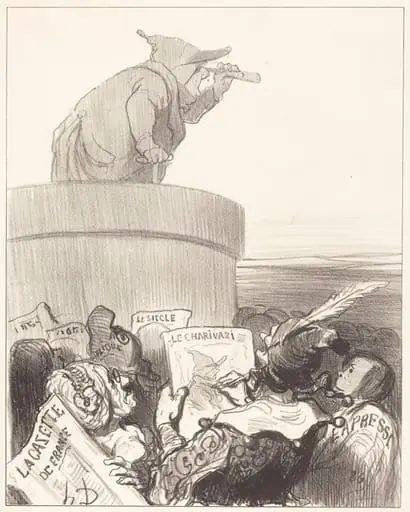 Le Constitutionnel contemplant l'horizon politique
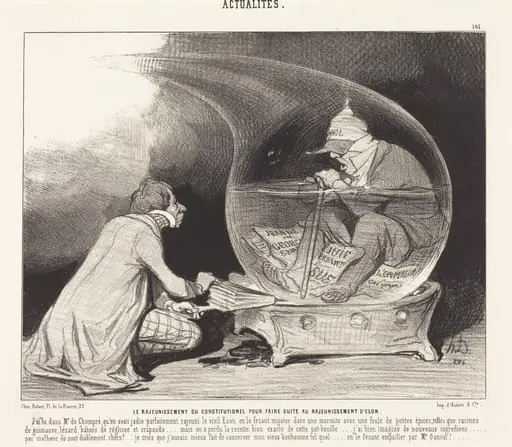 Le Rajeunissement du Constitutionnel