Artwork
Untitled
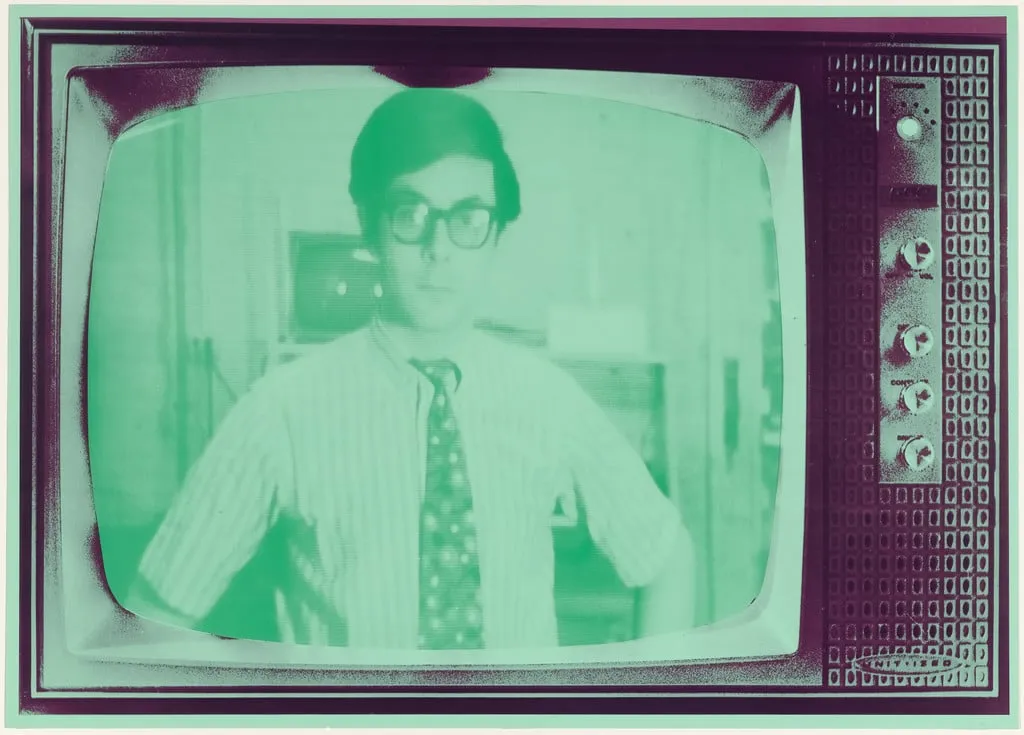
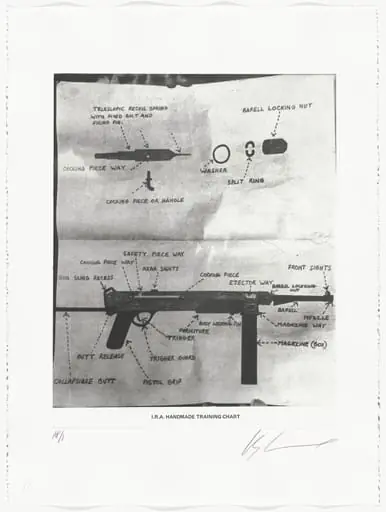
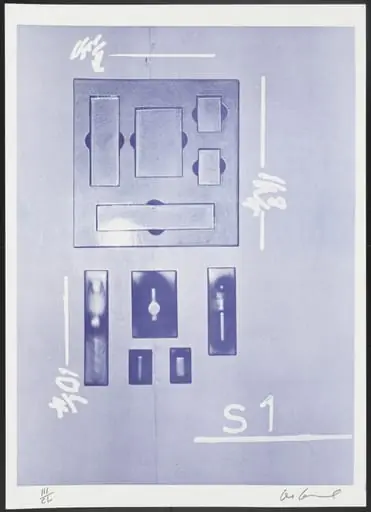
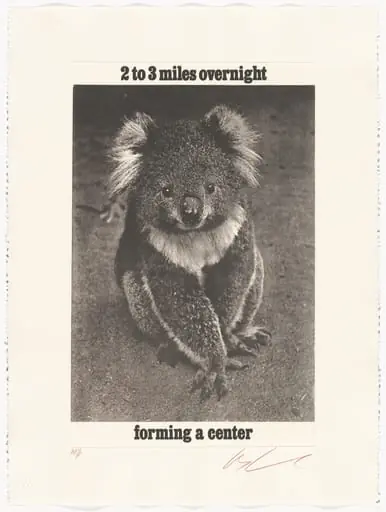
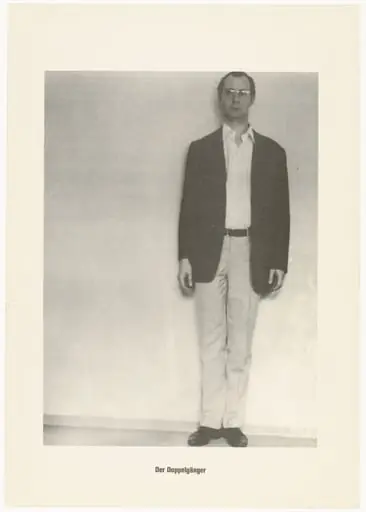
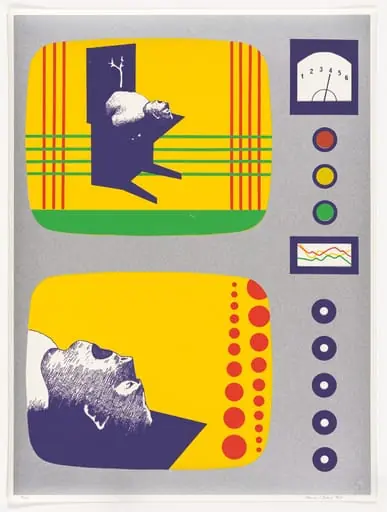
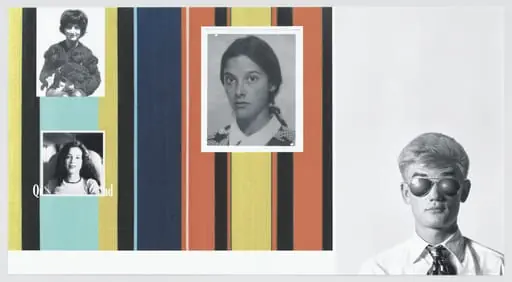
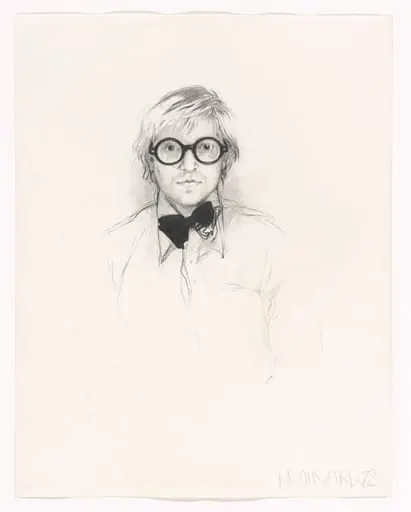
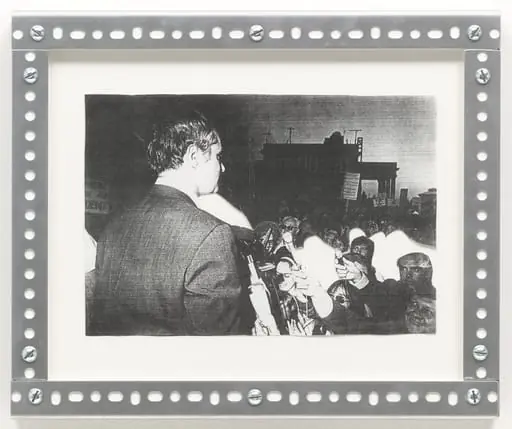
Untitled is an ink print by Les Levine. It dates from 1969 and is held in the collection of the Museum of Modern Art.
About this work
Overview
Its simple composition and limited palette reflect Levine’s interest in the visual language of emerging electronic culture during the late 1960s.
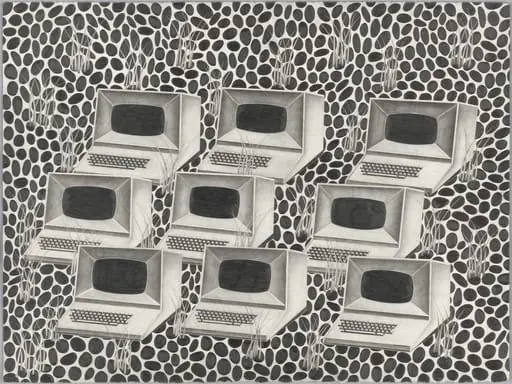
Untitled is one of nine offset lithographs produced by Les Levine in 1969. Part of a cohesive series, the work is held in the collection of The Museum of Modern Art. Unlike traditional paintings, this piece is a printed image, emphasizing reproducibility and mass media aesthetics. Its simple composition and limited palette reflect Levine’s interest in the visual language of emerging electronic culture during the late 1960s.
Subject & Meaning
The image shows a figure in a white shirt and tie, standing before a television with a rounded, early-model screen. The person’s arms are slightly raised, suggesting engagement or hesitation. The television, rendered in pale green, dominates the frame, while the dark brown background isolates it. The scene evokes a quiet, almost ritualistic encounter between individual and machine, hinting at the growing influence of broadcast media on daily life.
Technique & Style
Levine used offset lithography to produce a flat, uniform image with sharp edges and minimal tonal variation. The color palette is restrained: a muted green screen against a deep brown field. The figure is rendered with simplified contours, lacking detail or expression. This deliberate reduction mirrors the impersonal quality of television imagery, reinforcing the work’s commentary on mediated experience over direct perception.
History & Provenance
Created in 1969, Untitled belongs to a series Levine developed during a period of intense exploration into media and technology’s role in society. The work entered The Museum of Modern Art’s collection shortly after its production, reflecting institutional recognition of Levine’s early contributions to conceptual and media-based art. Its preservation as part of a numbered series underscores its significance within his broader practice.
Context
In the late 1960s, television became a dominant cultural force, shaping public perception and domestic routines. Levine’s work responded to this shift, interrogating how screens mediated identity and experience. His use of mass-production techniques like offset lithography aligned with broader conceptual art movements that questioned originality and authorship, positioning the viewer as an active participant in the consumption of media imagery.
Legacy
Untitled contributes to a foundational body of work that anticipated later critiques of television and digital media in art. Levine’s focus on the television as both object and symbol influenced subsequent artists exploring the intersection of technology and the human condition. The work remains a quiet but persistent reference point in discussions of media saturation and the alienation of modern observation.
Artist & collection
Artist
Les Levine is an Irish-born American artist known as a pioneer of video art and as a conceptual artist working with communication media.