Artwork
Labour Deputation: Marine
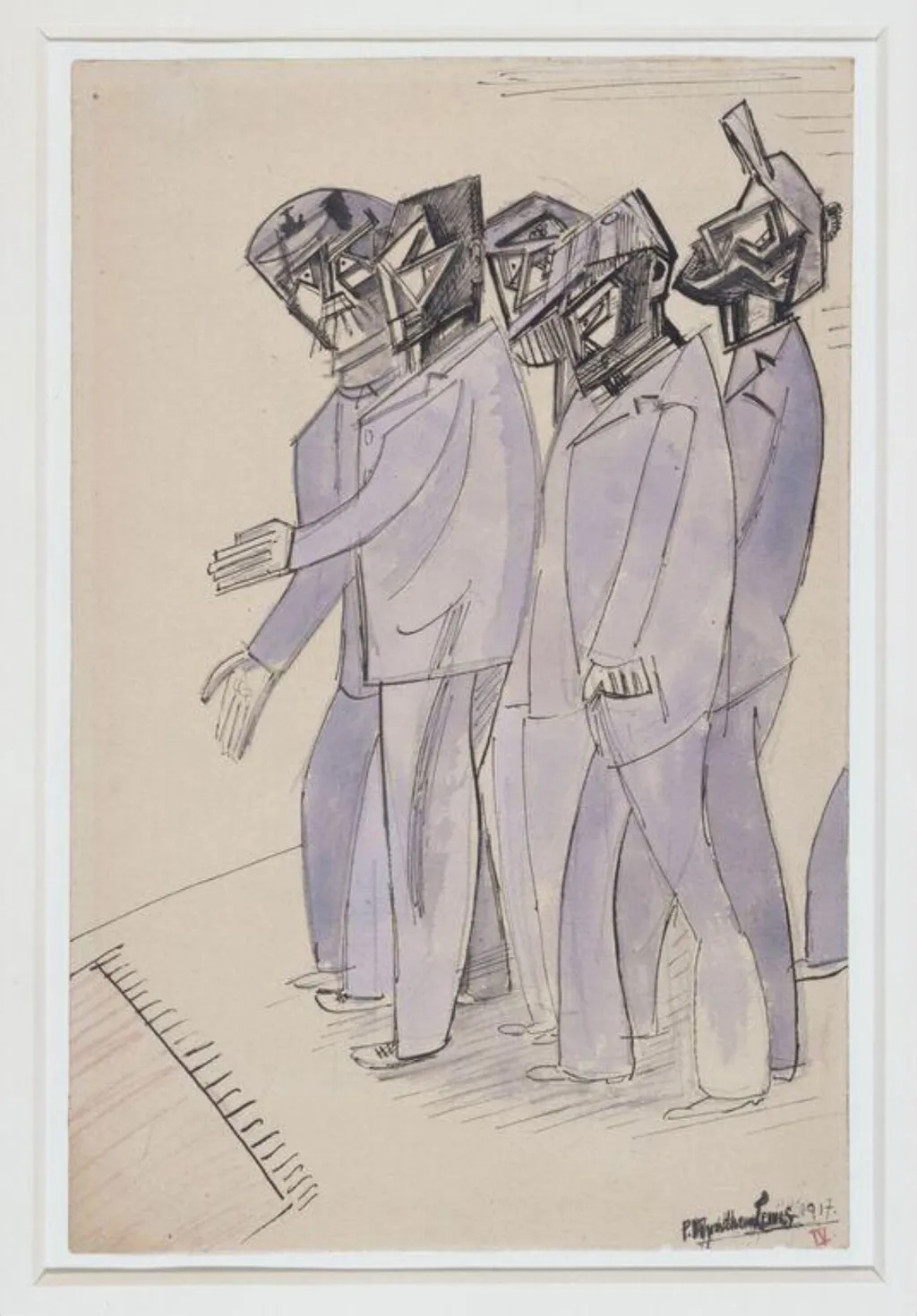
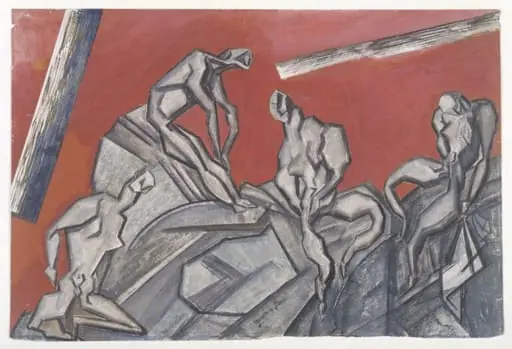
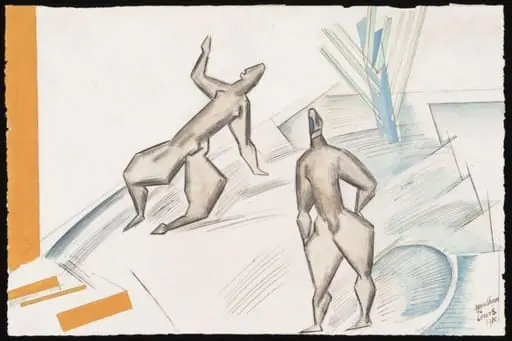
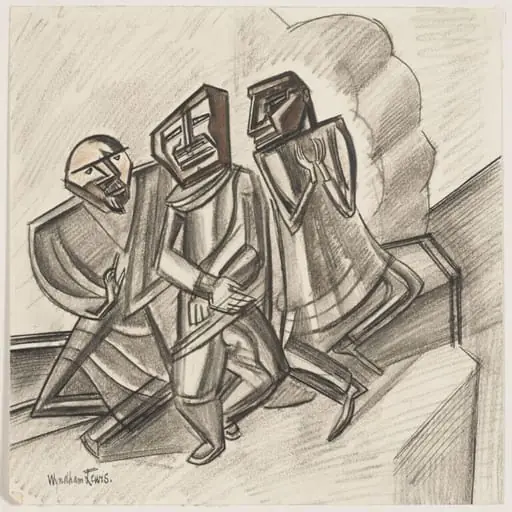
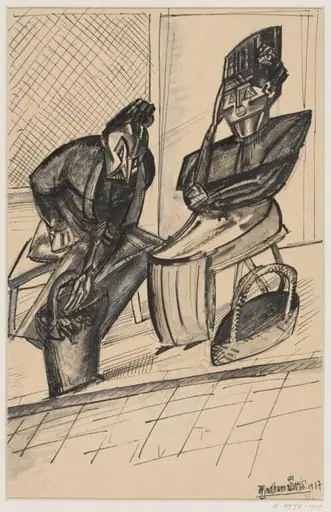
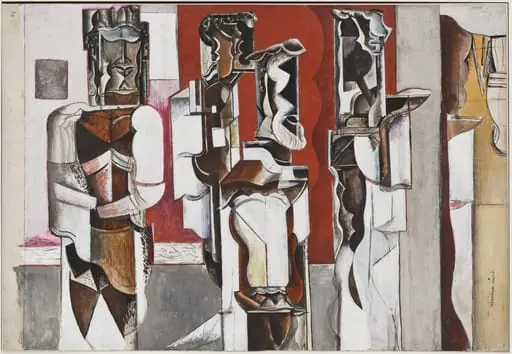
Labour Deputation: Marine is a watercolor work on paper by the Impressionist artist Wyndham Lewis. It dates from 1917 and is held in the collection of the Victoria and Albert Museum.
About this work
Overview
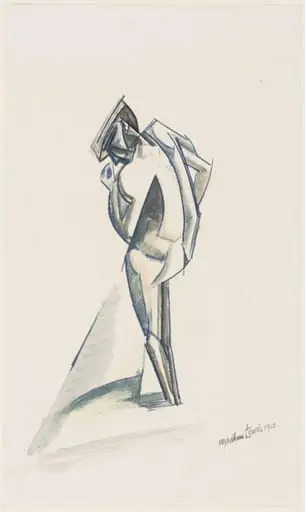
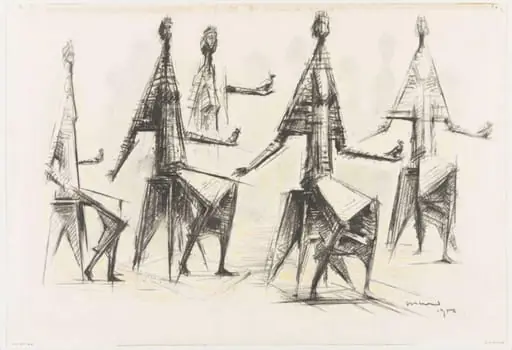
Created in 1917, this watercolour by Wyndham Lewis captures a group of five figures in motion, rendered with swift, economical strokes.
Created in 1917, this watercolour by Wyndham Lewis captures a group of five figures in motion, rendered with swift, economical strokes. The work is executed in light gray-blue washes on paper, emphasizing form over detail. Its minimal background and loose handling suggest a spontaneous observation rather than a polished composition. The piece was later donated to a public collection by the family of Captain Lionel Guy Baker, in accordance with his wishes.
Subject & Meaning
The figures, dressed in dark suits and tall hats, move in a single file, their faces obscured by broad brims. One hand rests near the pocket, hinting at tension or concealment. The anonymity of the group evokes a sense of institutional or bureaucratic presence, possibly referencing labor or civic delegation. The absence of individual features shifts focus to collective posture and movement, suggesting a commentary on uniformity in public roles.
Technique & Style
Lewis employed thin, translucent watercolour washes to define the figures, allowing the paper’s natural tone to serve as the lightest value. Lines are suggestive rather than defined, with minimal contouring and no shading beyond faint shadows beneath the figures. The quick, almost sketch-like execution reflects a modernist tendency to prioritize gesture and essence over finish, aligning with his broader interest in dynamic abstraction.
History & Provenance
The drawing entered a public collection following the death of Captain Lionel Guy Baker, who bequeathed it with specific instructions for its donation. His personal connection to the work remains undocumented, but its inclusion in his estate suggests it held private significance. The transfer was carried out by his family, ensuring its preservation within a institutional context rather than remaining in private hands.
Context
Created during the final year of the First World War, the piece reflects Lewis’s engagement with modernist experimentation and social observation. Though not overtly political, its depiction of anonymous, uniformed figures resonates with wartime themes of order, control, and the erasure of individuality. The work aligns with his broader exploration of mechanized human forms in the years surrounding Vorticism.
Legacy
As a lesser-known work by a major modernist figure, it contributes to understanding Lewis’s range beyond large-scale paintings and manifestos. Its modest scale and informal technique reveal a quieter, observational side of his practice. The drawing remains a quiet example of how early 20th-century artists used rapid sketching to interrogate social structures through subtle formal choices.
Artist & collection
Artist
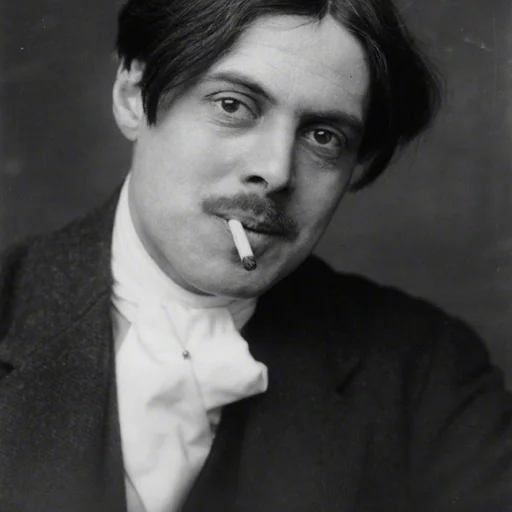
Percy Wyndham Lewis (18 November 1882 – 7 March 1957) was a Canadian-born British writer, painter and critic.