Artwork
Untitled
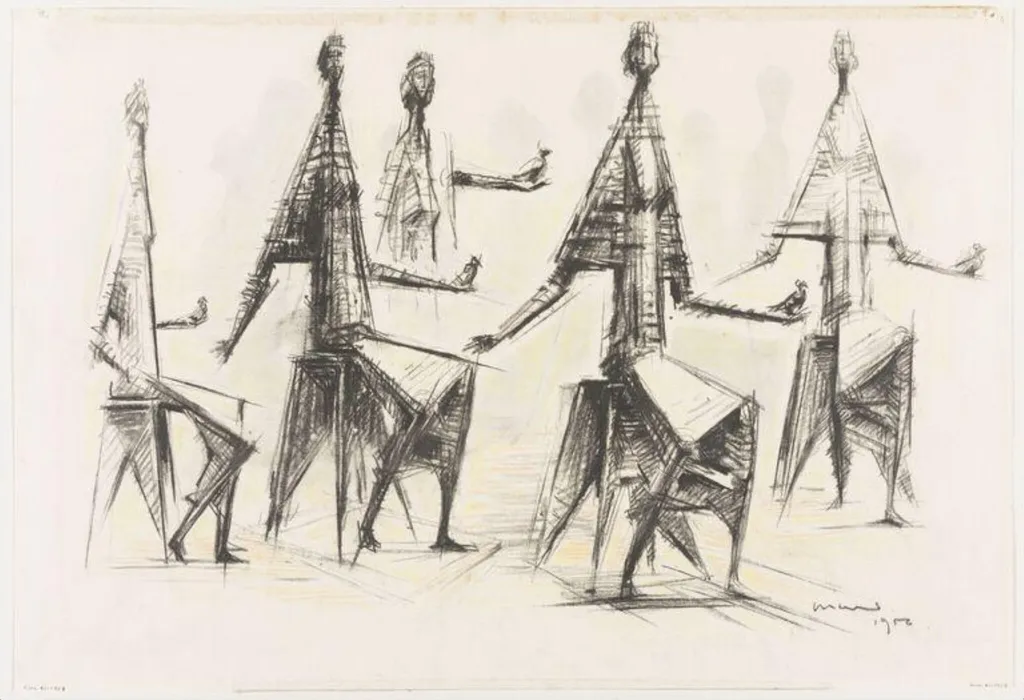
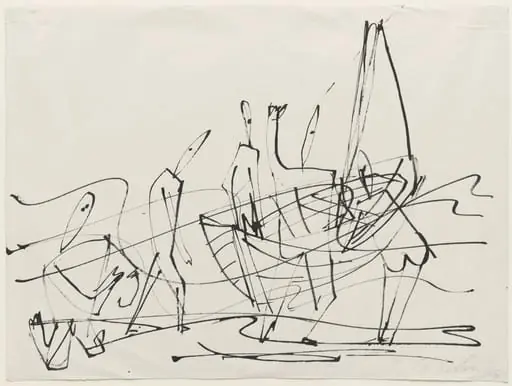
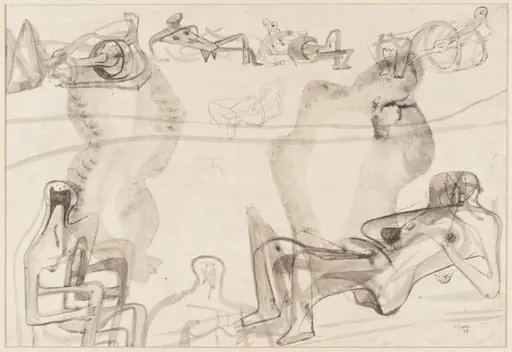
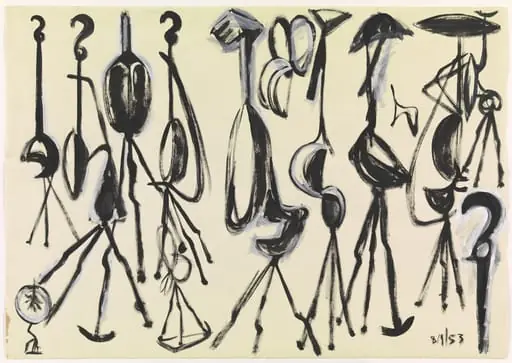
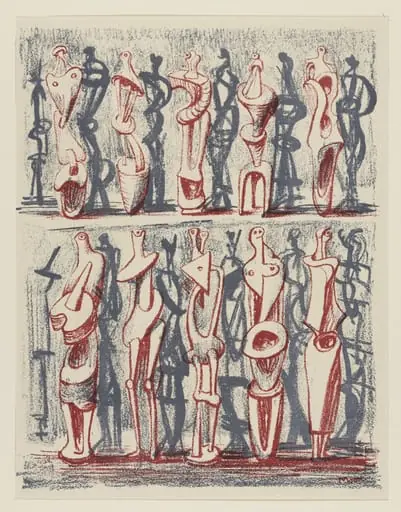
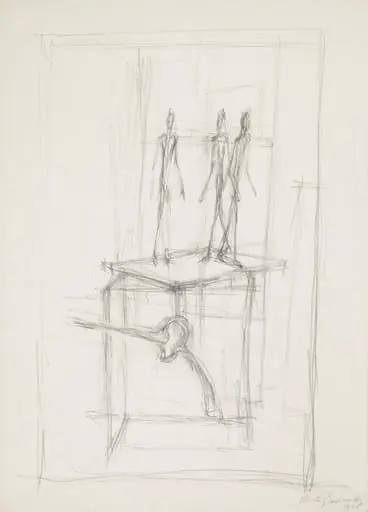
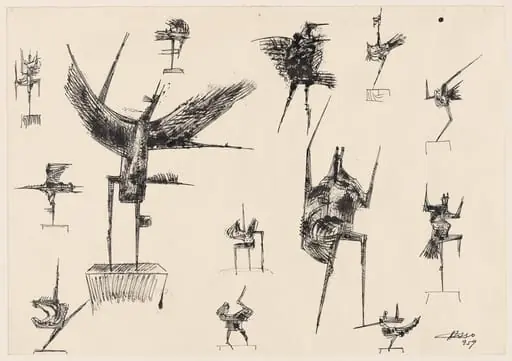
Untitled is a drawing by Unknown. It dates from 1956 and is held in the collection of the Victoria and Albert Museum. Created in 1956, this drawing is a preparatory study for a bronze sculpture by McWilliam.
About this work
Overview
The composition emphasizes verticality and rhythmic repetition, with each form rendered through dense, intersecting lines that suggest volume without color.
Created in 1956, this drawing is a preparatory study for a bronze sculpture by McWilliam. Executed in charcoal and pencil, it captures four elongated figures in a single-file procession. The composition emphasizes verticality and rhythmic repetition, with each form rendered through dense, intersecting lines that suggest volume without color. The work reflects the artist’s process of translating three-dimensional ideas into sculptural form.
Subject & Meaning
The four figures, slender and uniform, move in unison, their postures suggesting ritual or procession. Each bears a tall, pointed hat and one extended arm, as if maintaining balance or gesture. Their angular, geometric bodies evoke a sense of abstraction, distancing them from naturalism. The repetition implies a collective movement, possibly referencing ceremonial or anonymous human behavior rather than individual identity.
Technique & Style
The artist employed charcoal and pencil with heavy cross-hatching to model form and depth. Sharp, angular lines define the figures’ limbs and hats, creating a faceted, almost architectural quality. The dense, overlapping strokes build texture and shadow without gradation, rejecting smooth tonal transitions. This method prioritizes structure over atmosphere, aligning with a modernist interest in simplified, constructed form.
History & Provenance
This drawing was made as part of McWilliam’s development of a bronze sculpture in the mid-1950s. It remained in the artist’s possession until after his death, later entering a public collection through estate acquisition. Its survival as a study offers insight into his working method, revealing how abstract forms were refined from sketch to final sculpture.
Context
In postwar Britain, sculptors like McWilliam engaged with abstraction and archetypal forms, often drawing from ancient or folk traditions. This drawing reflects a broader trend of reducing the human figure to essential shapes, influenced by both modernist geometry and early 20th-century European sculpture. The absence of color and emphasis on line align with contemporary drawing practices focused on process over finish.
Legacy
As a study, this work illuminates McWilliam’s transition from two-dimensional exploration to three-dimensional realization. Its restrained technique and formal discipline have been noted in later analyses of his sculptural output. Though not exhibited publicly during his lifetime, it now serves as a key document in understanding his approach to abstraction and the human silhouette.
Artist & collection

 Domestic Scene
 Giacomo and Cardinal Marco, investing Andrea, Abbot of San Zeno, with his Benefice
 The Nymph of Fontainebleau
 Portrait of a Woman
 Madonna and Child with Saints in the Enclosed Garden
 Venus and Minerva
 Family Group of Four on Sofa
 Wall painting from Room H of the Villa of P. Fannius Synistor at Boscoreale