Artwork
Bust of a Balding Man
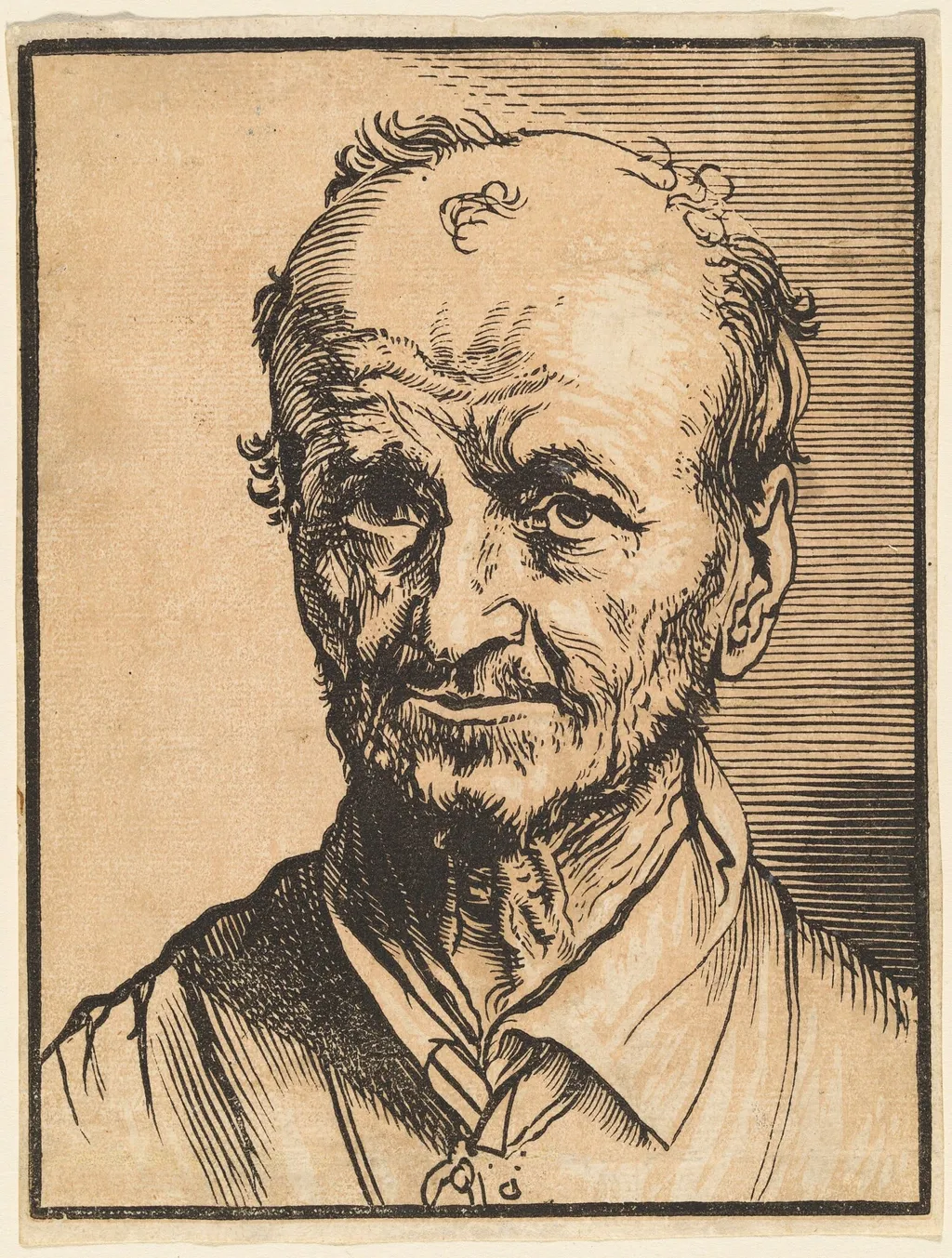
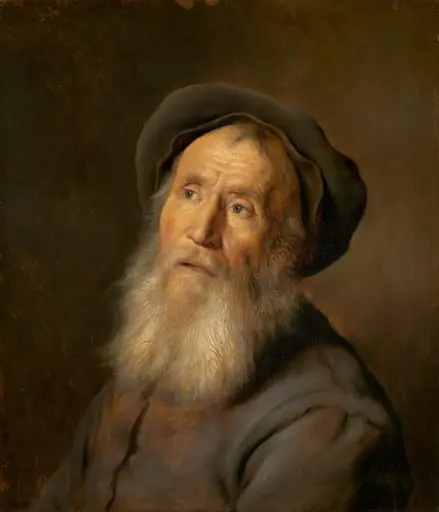
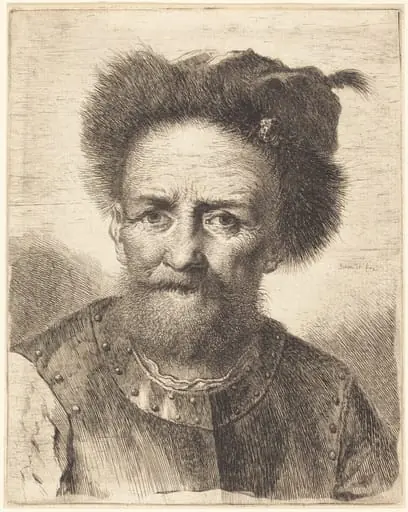
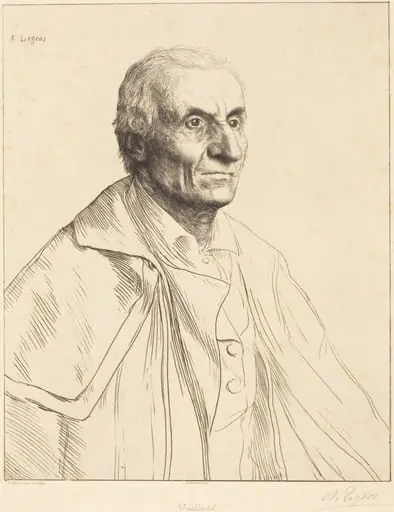
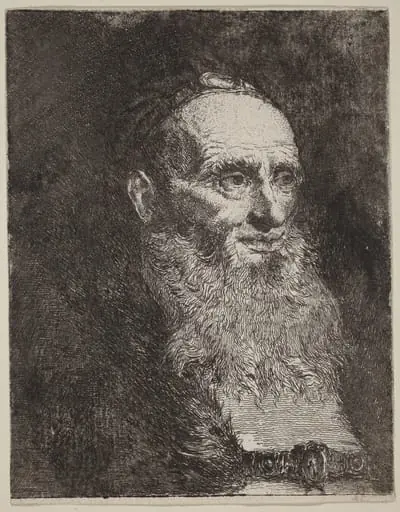
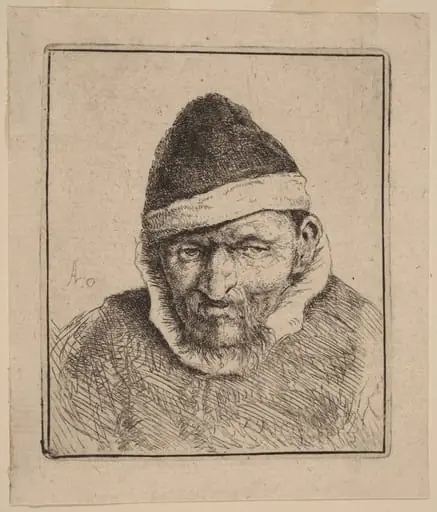
Bust of a Balding Man is an ink print by the Baroque artist Jan Lievens. It dates from 1640 and is held in the collection of the National Gallery of Art. Created in 1640, the print presents a head‑and‑shoulders likeness of a middle‑aged man whose hair recedes at the crown.
About this work
Overview
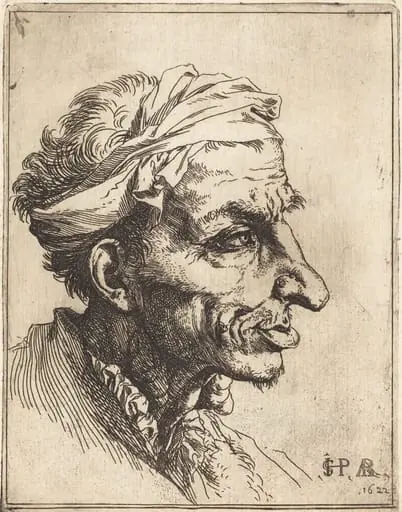
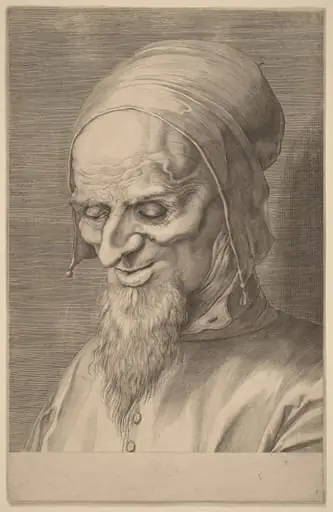
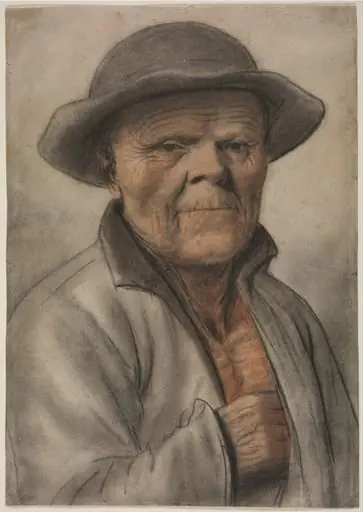
Created in 1640, the print presents a head‑and‑shoulders likeness of a middle‑aged man whose hair recedes at the crown. He gazes forward with a solemn expression, his beard and mustache rendered in fine lines. The composition is framed by a muted, light‑brown ground that accentuates the stark play of light and shadow across his features.
Technique & Style
The work employs the chiaroscuro woodcut method, in which a separate tone block supplies a uniform brown wash while a black block supplies the principal outlines and shading. This dual‑block approach produces a dramatic contrast that models the face in three dimensions, a hallmark of Baroque visual strategies that sought to heighten emotional impact through lighting.
Subject & Meaning
The sitter’s direct stare and serious demeanor suggest a portrait intended to convey personal gravitas or status. The minimal background and focus on facial detail invite viewers to contemplate the individual’s inner character, while the absence of overt symbols leaves the identity open to interpretation.
History & Provenance
Dutch artist Jan Lievens, a contemporary of Rembrandt, produced the print during a period when he was expanding his practice beyond painting into printmaking. Though specific ownership records are scarce, the piece reflects Lievens’s broader engagement with the commercial and artistic possibilities of reproducible images in the mid‑seventeenth century.
Context
The chiaroscuro woodcut emerged in the early 1600s as a response to the demand for affordable yet richly toned images. Lievens’s use of the technique aligns with the Baroque fascination with dramatic illumination, situating the bust within a wider European movement that emphasized visual intensity and emotional resonance.
Artist & collection
Artist
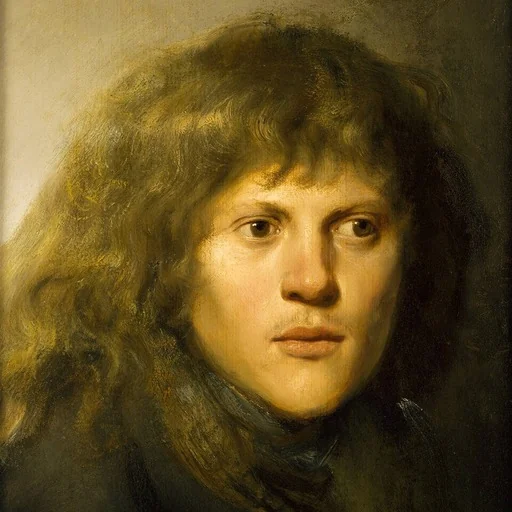
Jan Lievens (24 October 1607 – 4 June 1674) was a Dutch Golden Age painter who was associated with his close contemporary Rembrandt, a year older, in the early parts of their careers.