Artwork
Bust of a Peasant in a Pointed Fur Cap
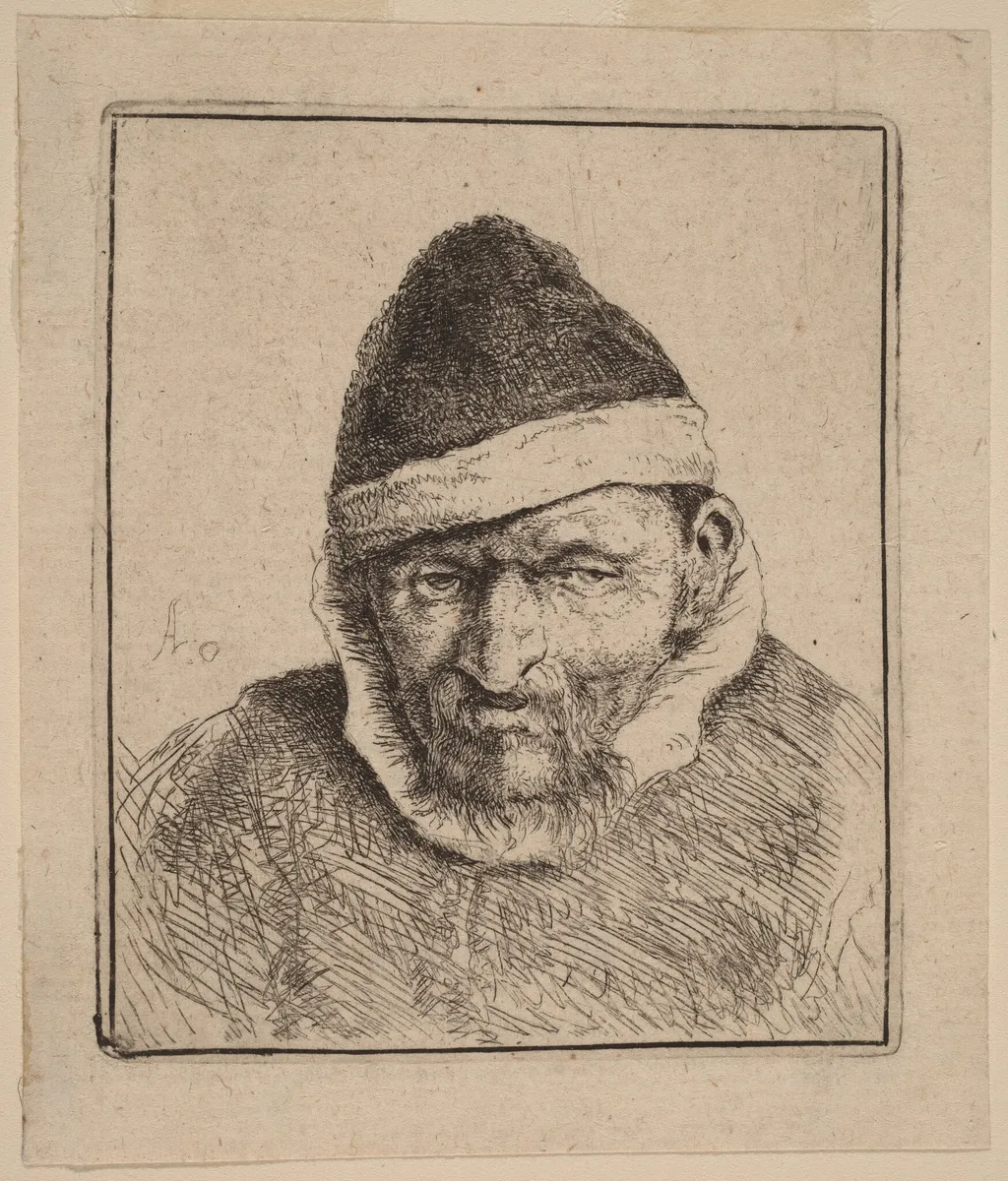
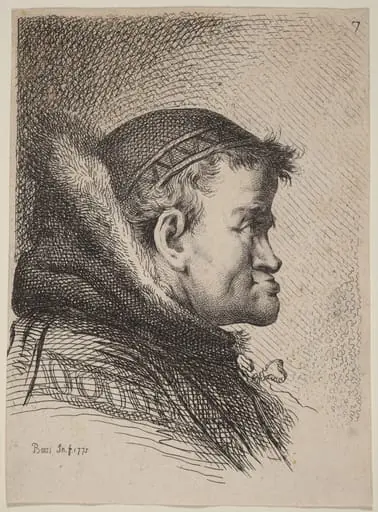
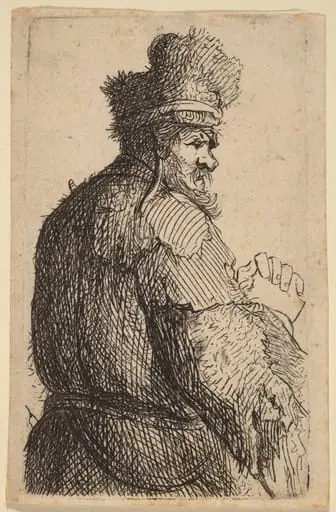
Bust of a Peasant in a Pointed Fur Cap is an ink print by the Baroque artist Adriaen van Ostade. It dates from 1647 and is held in the collection of the National Gallery of Art.
About this work
Overview
Created around 1647, this print by Adriaen van Ostade captures a solitary peasant in profile, rendered in etching with selective drypoint accents on laid paper.
Created around 1647, this print by Adriaen van Ostade captures a solitary peasant in profile, rendered in etching with selective drypoint accents on laid paper. Unlike his larger genre paintings, this work focuses intensely on a single head and shoulders, emphasizing character over narrative. The medium’s capacity for fine line and shadow suits the quiet intimacy of the subject, reflecting van Ostade’s interest in the dignity of rural life.
Subject & Meaning
The figure is a bearded peasant, his head bowed and gaze lowered, wearing a pointed fur cap common among laborers in 17th-century Holland. His posture suggests introspection rather than hardship, avoiding caricature. Van Ostade presents him not as a comic type but as a person absorbed in thought, inviting quiet empathy. The absence of context isolates the individual, reinforcing a sense of inner life.
Technique & Style
Van Ostade employed etching to define the contours and drypoint to deepen shadows, particularly around the beard and cap’s fur. Cross-hatching builds texture and volume without heavy ink, preserving the paper’s natural tone. The contrast between dark lines and pale ground enhances the sculptural quality of the face, while the loose, deliberate strokes convey immediacy and observation over polish.
History & Provenance
The print was made during van Ostade’s mature period, when he increasingly turned to intimate portraits and smaller-scale works. It circulated among collectors and print enthusiasts in the Netherlands and beyond, likely through artist networks and print dealers. No definitive early ownership records survive, but its survival in multiple museum collections attests to its enduring recognition among connoisseurs of Dutch graphic art.
Context
In mid-17th-century Holland, prints of ordinary people were valued for their realism and moral resonance. Van Ostade’s peers, including Rembrandt, explored similar themes, but his focus remained on the rural poor rather than urban types. This work aligns with a broader cultural interest in the individuality of common folk, reflecting both humanist curiosity and the rising market for accessible art among the middle class.
Legacy
Though less famous than his paintings, this etching exemplifies van Ostade’s skill in conveying psychological depth through minimal means. It influenced later generations of printmakers interested in portraiture of the working class. Today, it is studied for its technical restraint and its quiet challenge to idealized representations of labor, offering a grounded vision of humanity.
Own this work as a print
Artist & collection
Artist
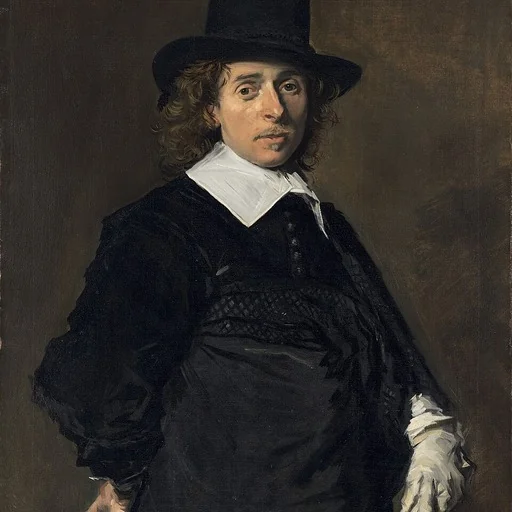
Adriaen van Ostade (baptized as Adriaen Jansz Hendricx 10 December 1610 – buried 2 May 1685) was a Dutch Golden Age painter of genre works, showing the everyday life of ordinary men and women.