Artwork
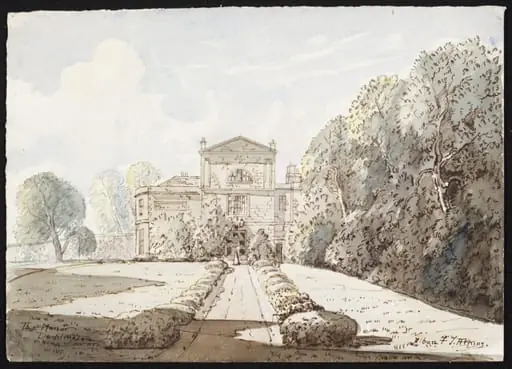
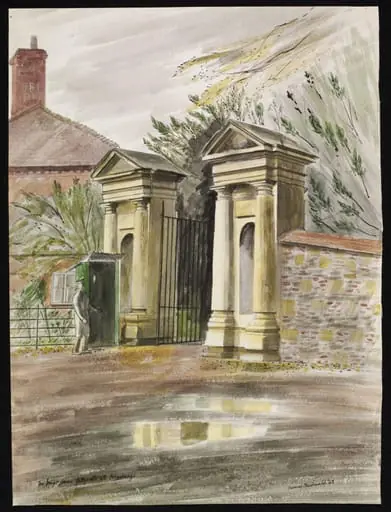
Entrance to Ramsbury Manor
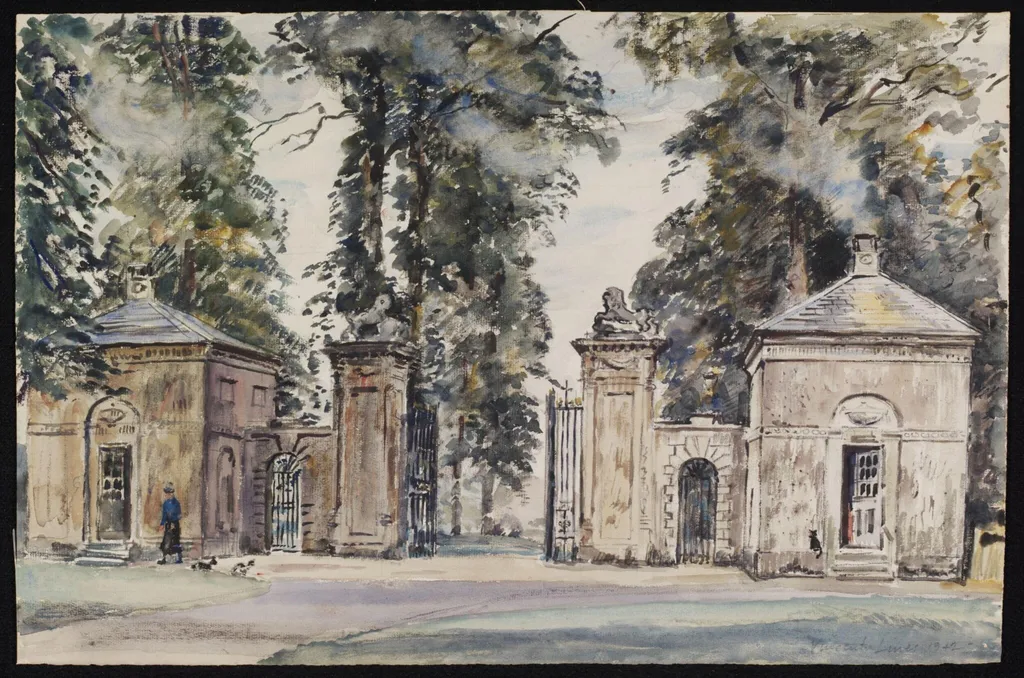
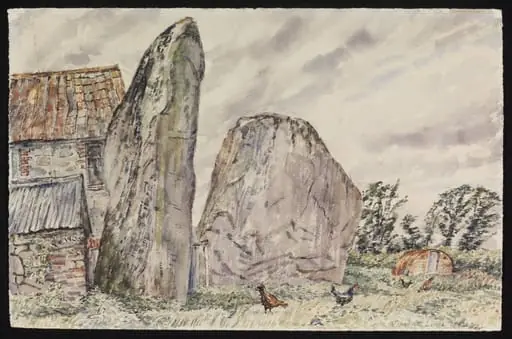
Entrance to Ramsbury Manor is a watercolor work on paper by Lines. It dates from 1942 and is held in the collection of the Victoria and Albert Museum.
About this work
Overview
Initiated during the Second World War, the initiative sought to visually archive vulnerable aspects of the British landscape.
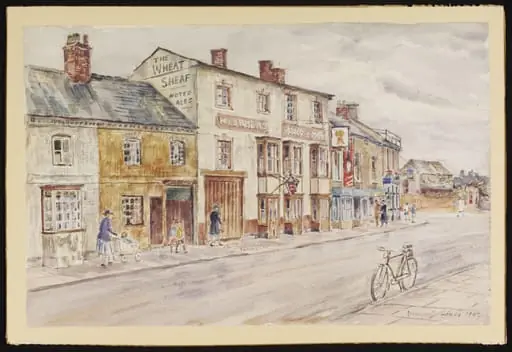
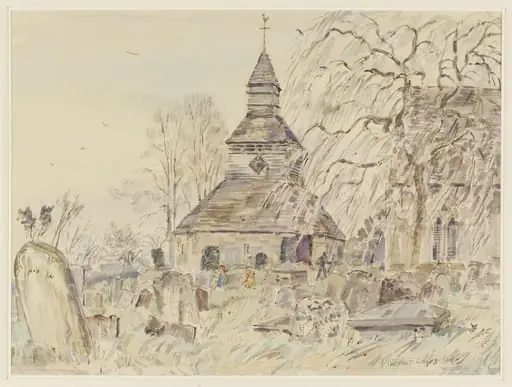
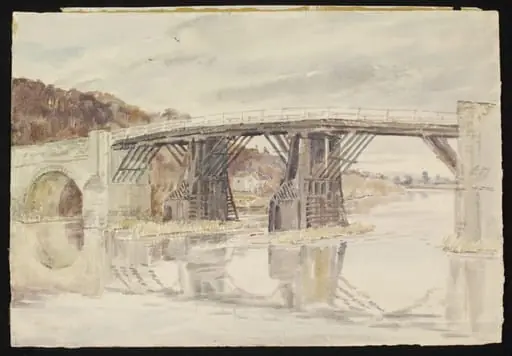
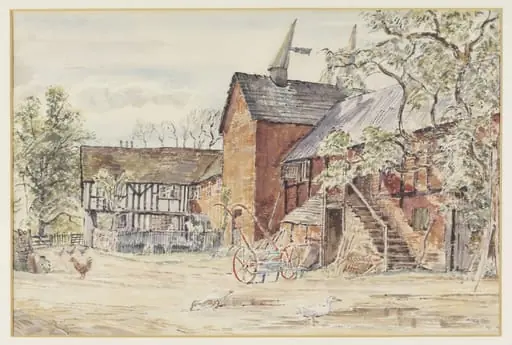
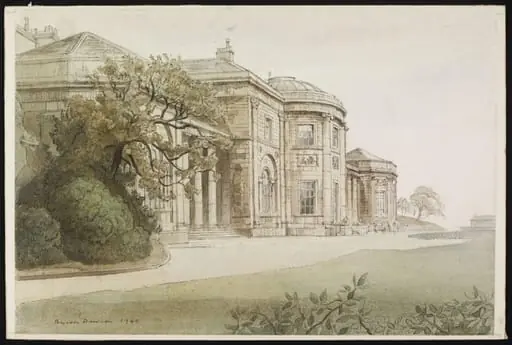
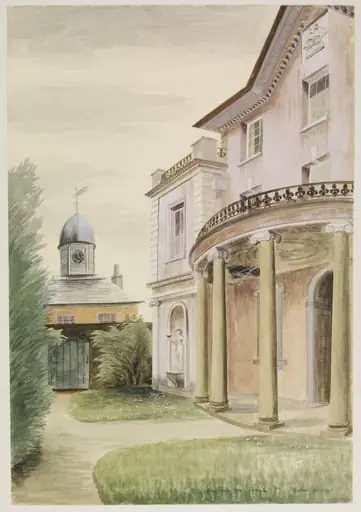
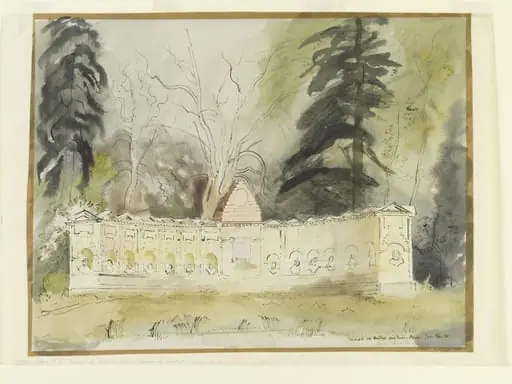
Created in 1942, this watercolour captures the entrance to Ramsbury Manor as part of the Recording Britain project. Initiated during the Second World War, the initiative sought to visually archive vulnerable aspects of the British landscape. The work is one of more than 1,500 pieces produced by nearly 100 artists, all contributing to a collective effort to preserve visual records of places deemed at risk from conflict or change.
Subject & Meaning
The scene centers on the symmetrical stone gatehouses flanking the approach to Ramsbury Manor, framed by trees and a soft, overcast sky. A solitary figure and scattered animals introduce quiet human and animal presence, grounding the architecture in daily life. The composition avoids grandeur, instead emphasizing the dignity of ordinary rural structures, reflecting the project’s aim to honor modest, enduring elements of the English countryside.
Technique & Style
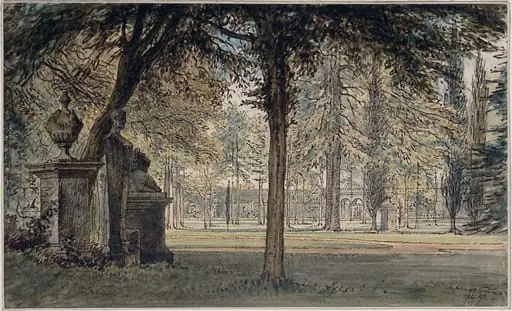
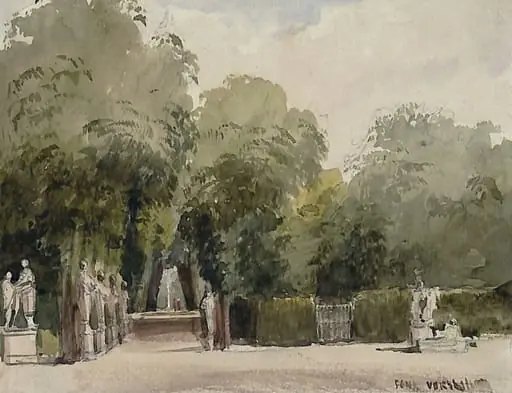
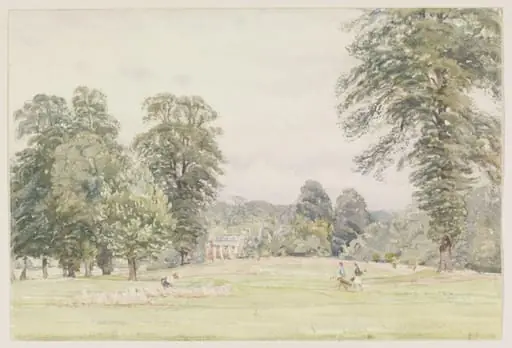
Rendered in watercolour, the piece employs translucent layers to suggest subtle shifts in light and texture. The stone portals are built with warm, muted tones, while the surrounding foliage is rendered in cool greens and greys, creating a gentle contrast. Delicate brushwork captures the softness of foliage and the weathered quality of stone, reinforcing the medium’s suitability for intimate, observational recording rather than dramatic effect.
History & Provenance
Commissioned by the Pilgrim Trust under the direction of Sir Kenneth Clark, this watercolour was produced during a national effort to document Britain’s architectural heritage amid wartime uncertainty. The Recording Britain collection was assembled with the intention of safeguarding visual memory, and this work entered institutional holdings shortly after completion, later becoming part of the Victoria and Albert Museum’s permanent archive.
Context
During the war, many historic sites faced threats from military activity, neglect, or redevelopment. The Recording Britain project responded by mobilizing artists to record vernacular architecture and rural scenes before they disappeared. This work reflects a broader cultural anxiety about loss, not through overt nationalism, but through quiet, attentive observation of everyday places that embodied continuity.
Legacy
The Recording Britain collection remains a vital historical resource, offering a nuanced portrait of the English countryside during a time of upheaval. This watercolour, like others in the series, continues to inform studies of wartime cultural policy, architectural preservation, and the role of art in documenting social memory. Its quiet realism endures as a testament to the value placed on ordinary places during extraordinary times.
Artist & collection