Artwork
Monoliths in a farmyard, Avebury
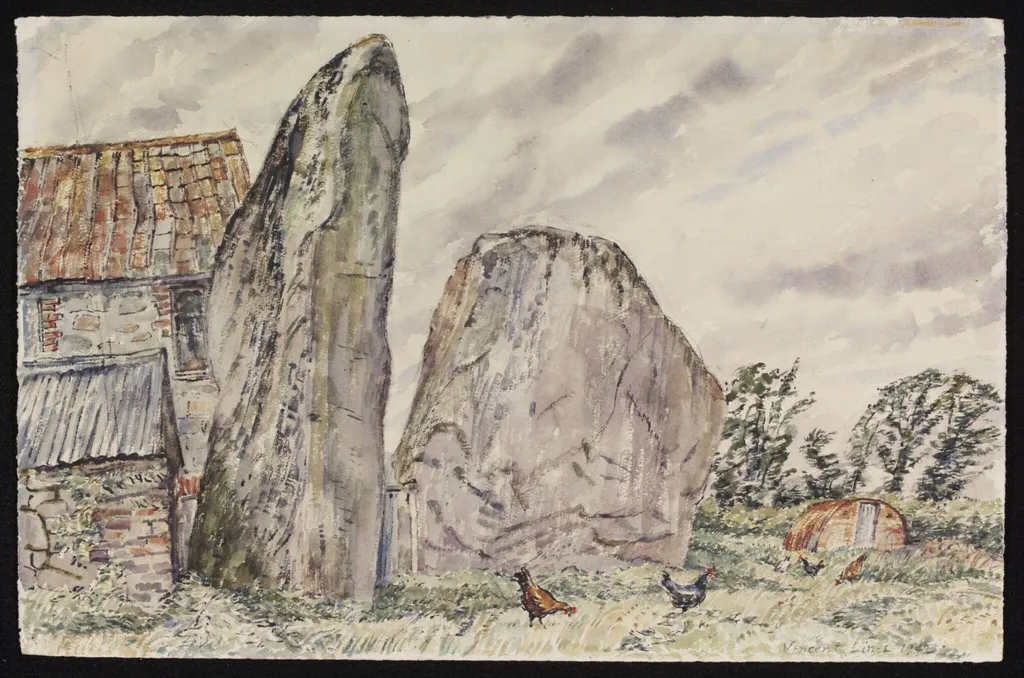
Monoliths in a farmyard, Avebury is a watercolor work on paper by the British Romanticist artist Lines. It dates from 1942 and is held in the collection of the Victoria and Albert Museum.
About this work
Overview
Monoliths in a farmyard, Avebury is a 1942 watercolour by Lines, created as part of the Recording Britain project.
Subject & Meaning
The painting depicts Avebury's standing stones within a rural farmyard, featuring weathered buildings, a small tree, and a rooster. The juxtaposition of ancient monuments and everyday agricultural life captures a moment in time.
Technique & Style
Loose, quick watercolour strokes convey the texture of the stones and the unevenness of the surrounding buildings, creating a quiet, introspective atmosphere.
History & Provenance
Commissioned during World War II, the work was part of a larger initiative to document Britain's landscapes and heritage, funded by the Pilgrim Trust and overseen by Sir Kenneth Clark.
Context
The Recording Britain project aimed to preserve a visual record of traditional British scenes, driven by concerns about cultural loss amid wartime destruction and modernization.
Artist & collection

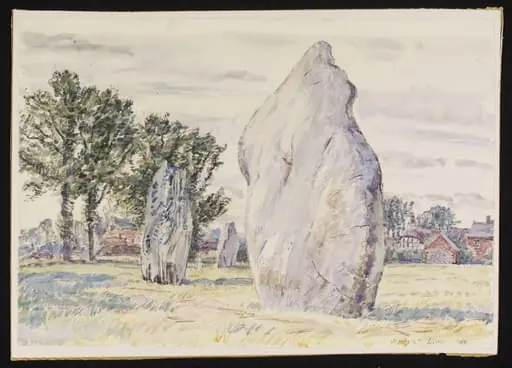 The Southern Circle and Village, Avebury
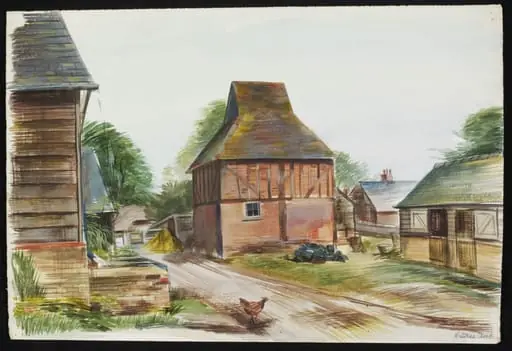 Sixteenth Century Dovehouse, Offley
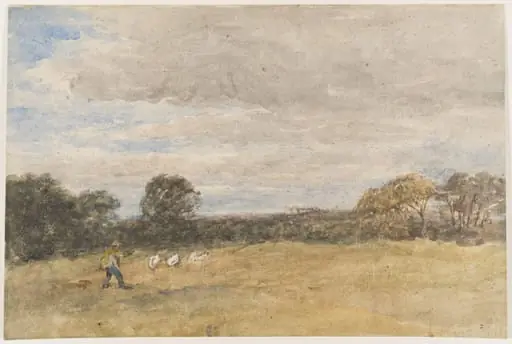 Distant View of Windsor
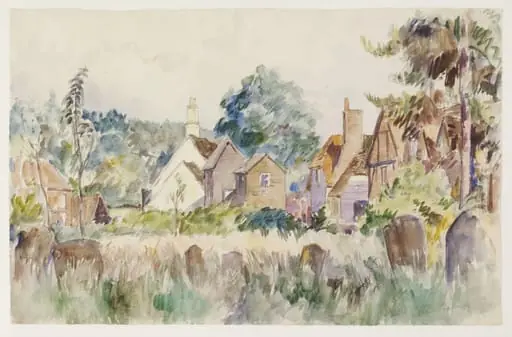 Princes Farm, Fingest
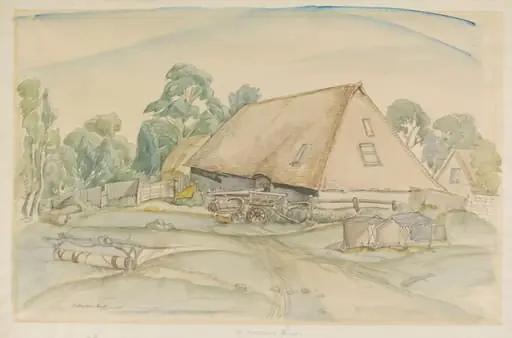 Madams Farm, West Sussex
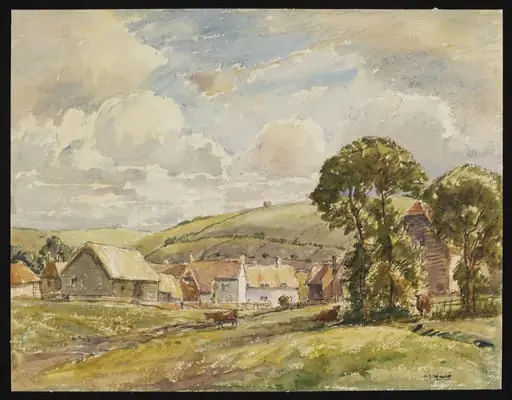 Wishford, Wylye Valley
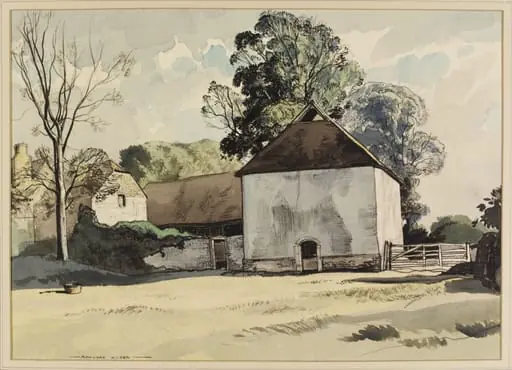 Saxon Dovecote, Lullington, near Alfriston, Cuckmere Valley
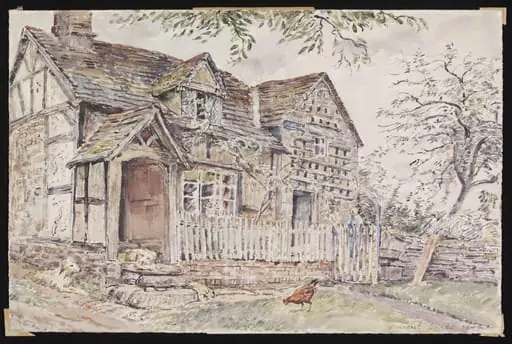 Pigeon House and Post Office, Mansel Lacy
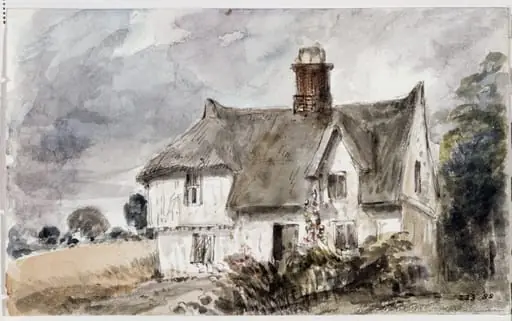 A cottage near a cornfield
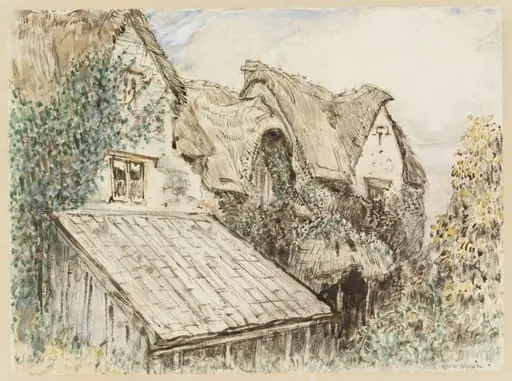 "The Haunted Manor," Clapton-in-Gordano
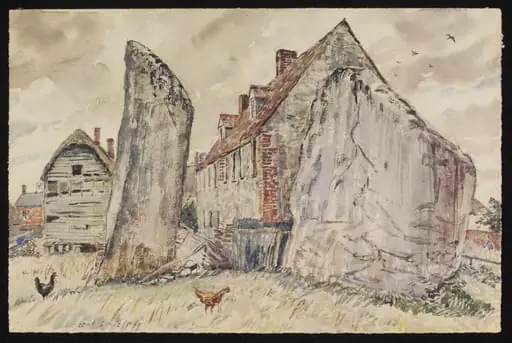 "Adam and Eve," Monoliths, Avebury
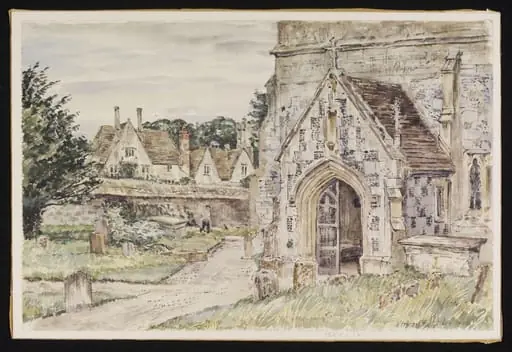 Church Porch and Manor, Avebury