Artwork
The White Bark, Evening Effect
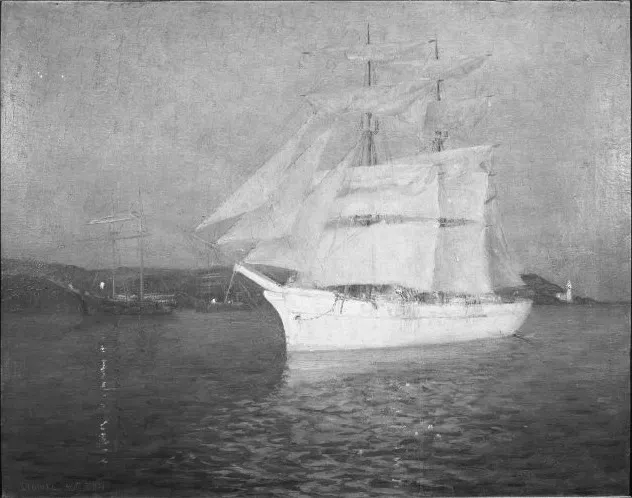
The White Bark, Evening Effect is an oil painting by the Impressionist artist Lionel Walden. It dates from 1907 and is held in the collection of the Brooklyn Museum.
About this work
Overview
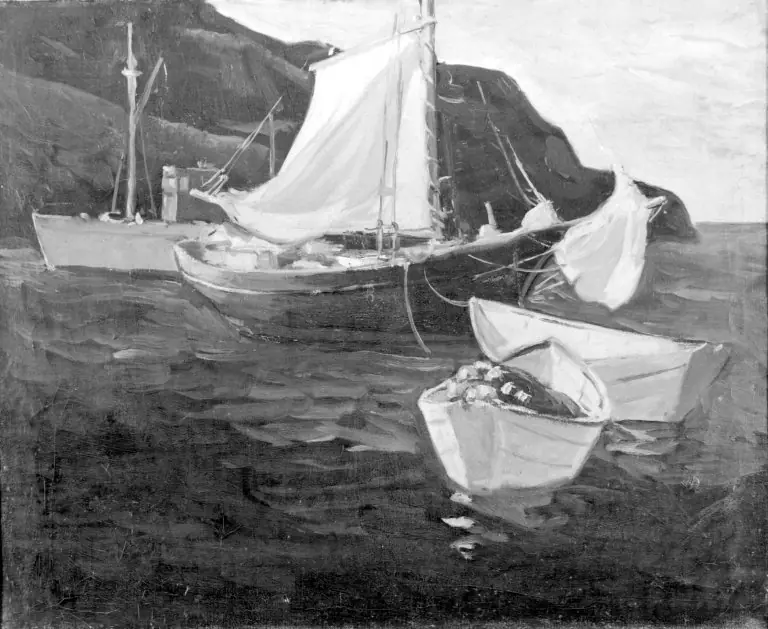
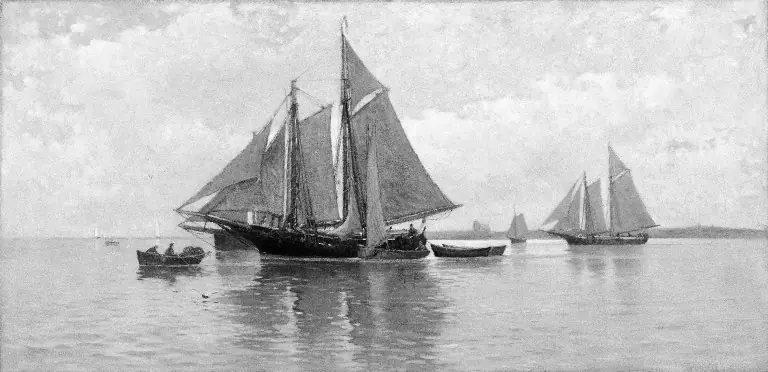
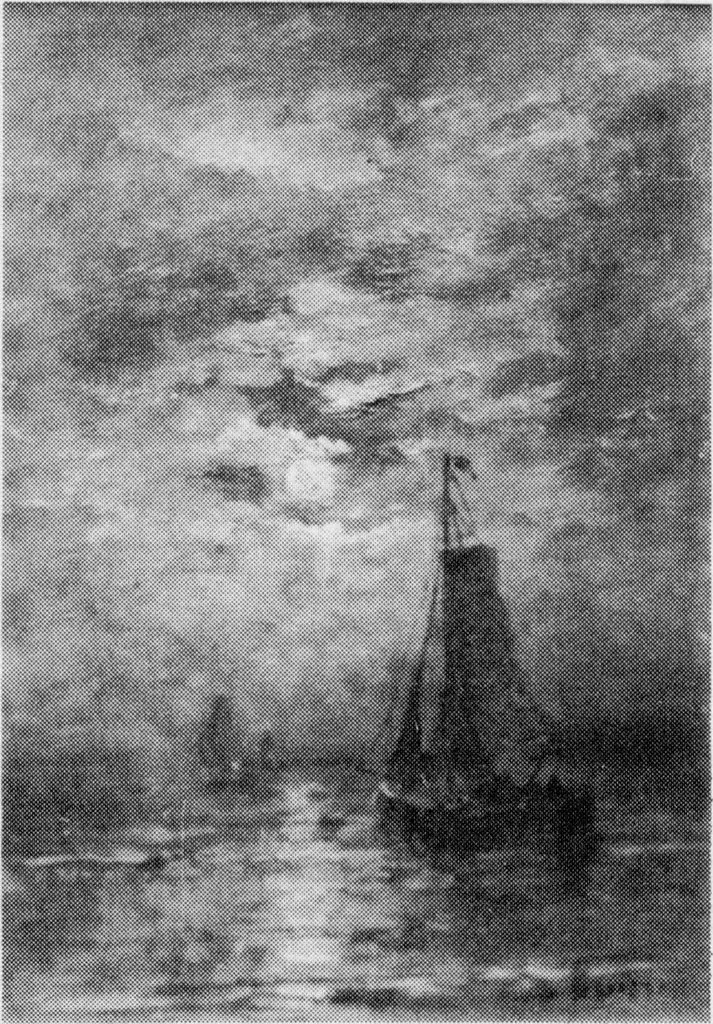
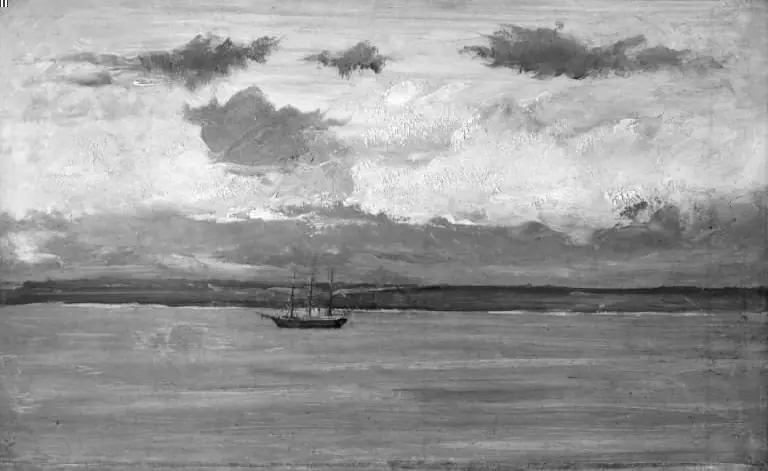
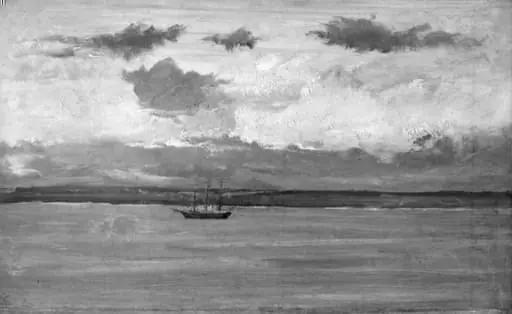
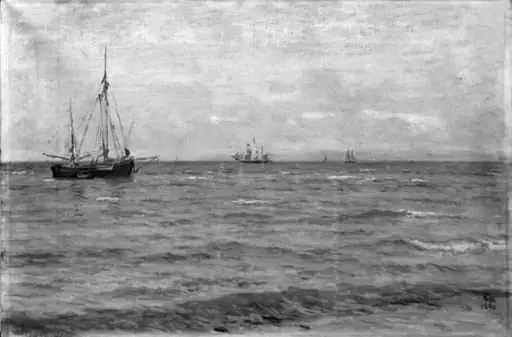
Lionel Walden’s 1907 oil work titled The White Bark, Evening Effect resides in the collection of the Brooklyn Museum. The canvas presents a solitary three‑masted vessel rendered in stark white against a dimly lit seascape, its sails angled toward the right. The composition balances the illuminated ship with a somber horizon and a muted landform that looms in the distance.
Subject & Meaning
The central figure is a white sailing ship, its hull and canvas catching the fading light of evening. The surrounding water, rendered in deep grays, conveys a sense of stillness punctuated by subtle ripples, suggesting a quiet moment of transition between day and night. The distant, dark landmass adds a hint of isolation, emphasizing the vessel’s solitary passage.
Technique & Style
Walden employs oil paint to achieve a nuanced palette of whites, grays, and muted blues, allowing for delicate gradations of tone that suggest atmospheric depth. Fine brushwork delineates the ship’s rigging and the water’s surface texture, while broader, blended strokes create the enveloping dusk. The contrast between luminous and shadowed areas enhances the painting’s spatial recession.
History & Provenance
Created in 1907, The White Bark, Evening Effect entered the Brooklyn Museum’s holdings at an unspecified later date, becoming part of the institution’s early‑twentieth‑century American art collection. The work has remained in the museum’s permanent display, providing viewers with a representative example of Walden’s maritime subjects.
Context
Walden’s oeuvre frequently explored nautical themes, reflecting a broader American fascination with maritime commerce and exploration at the turn of the century. This painting aligns with contemporaneous trends that emphasized atmospheric effects and the interplay of light and water, situating the work within early modernist investigations of natural phenomena.
Artist & collection