Artwork
Moonlight In Holland
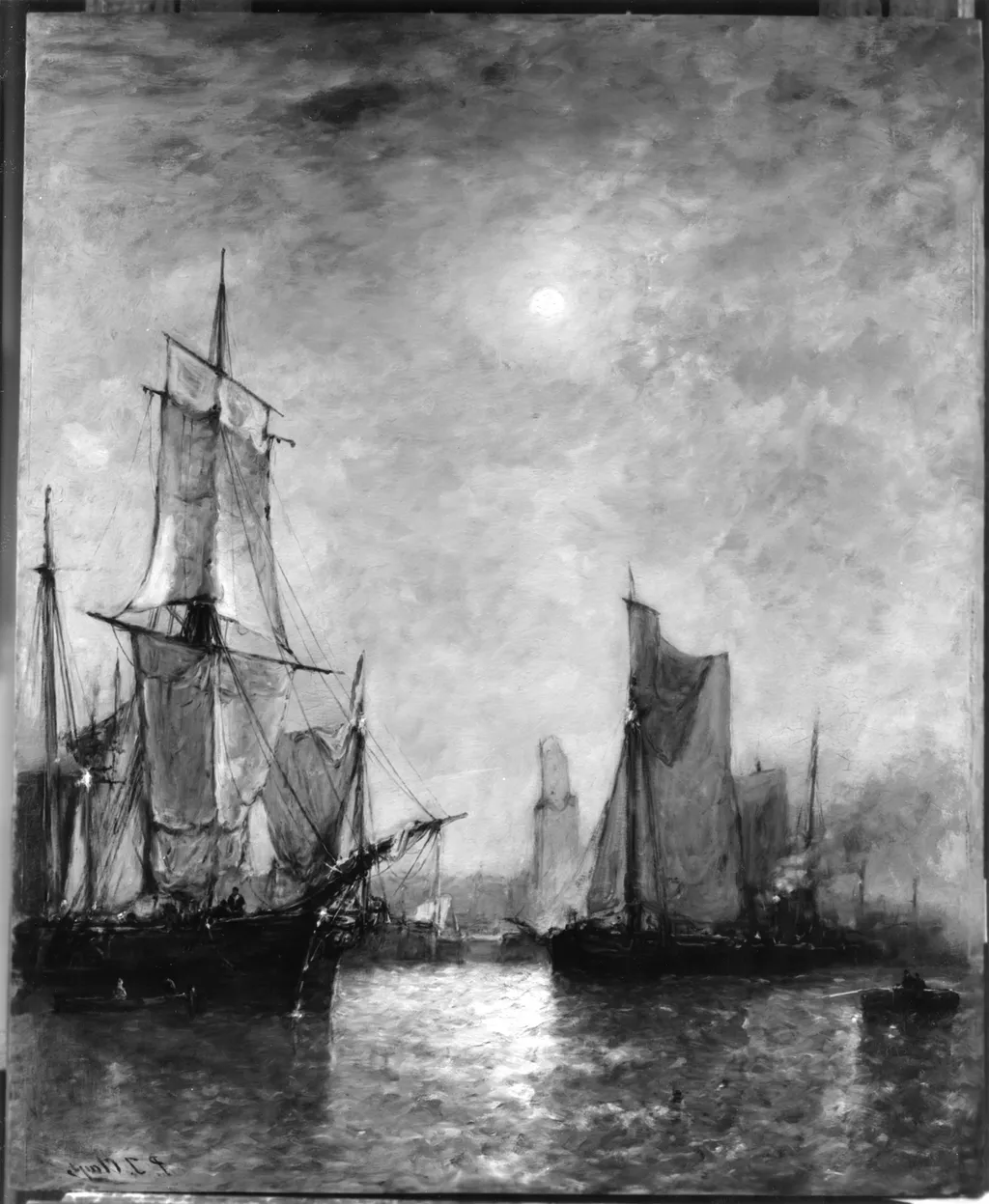
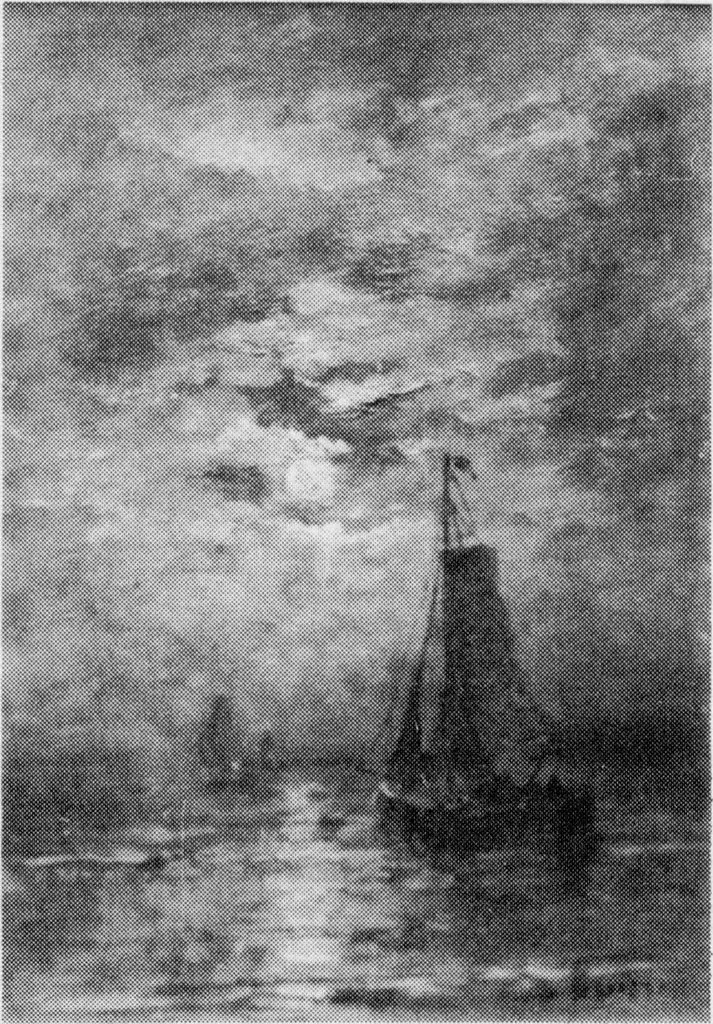
Moonlight In Holland is an oil painting by the Realist artist Paul Jean Clays. It dates from 1850 and is held in the collection of the Walters Art Museum.
About this work
Overview
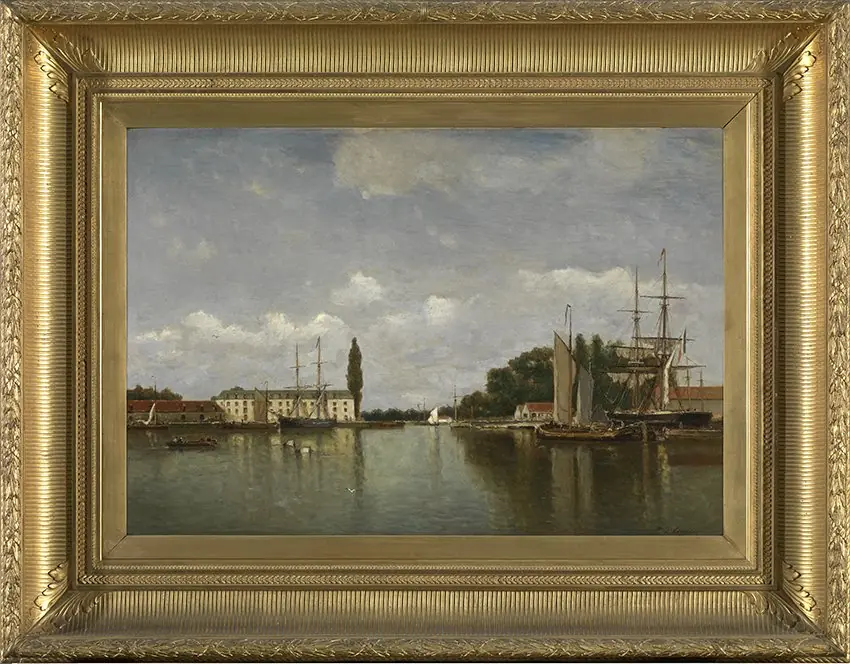
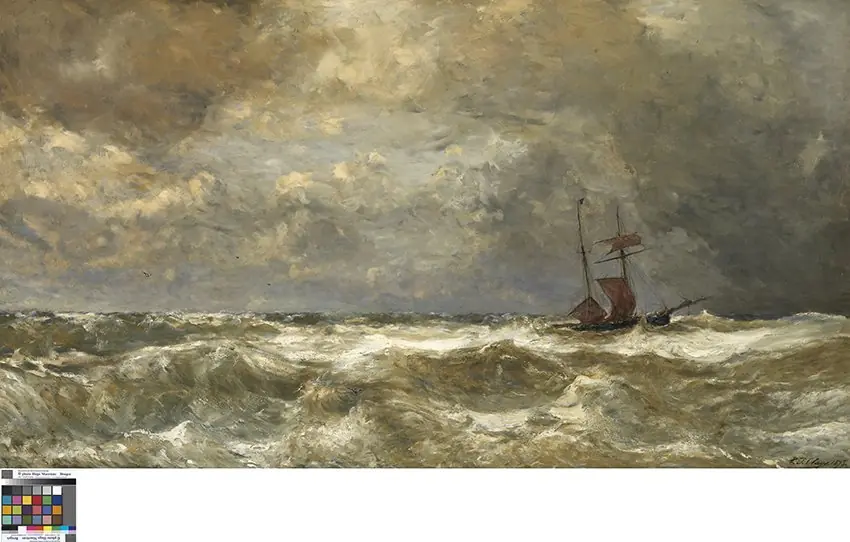
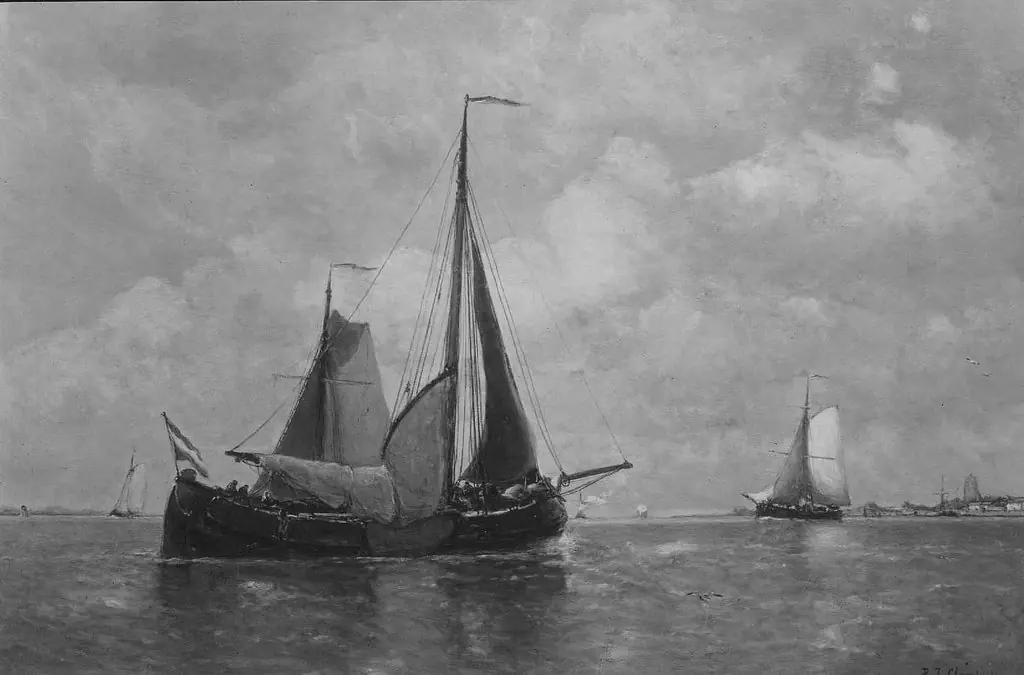
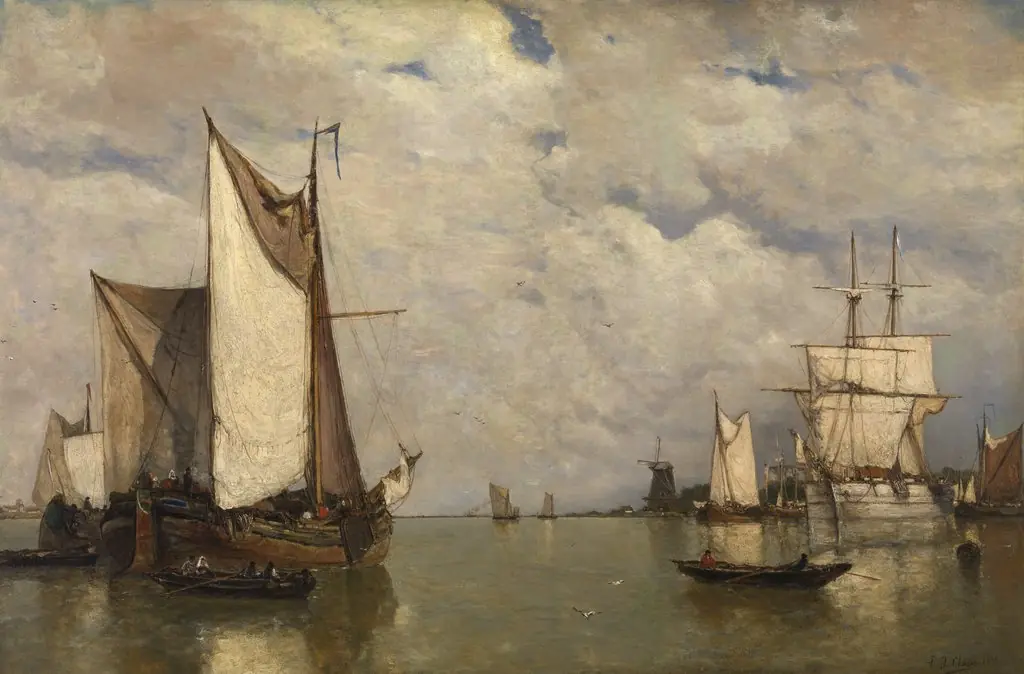
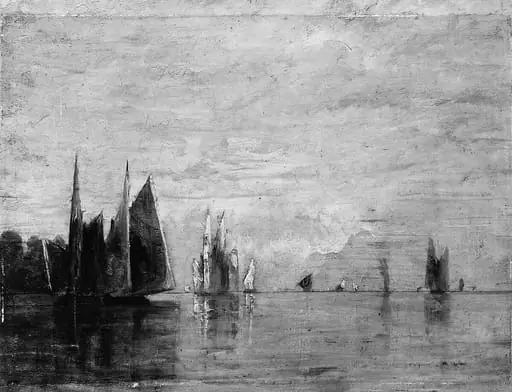
Painted around 1850 by Belgian artist Paul Jean Clays, this oil work depicts a quiet harbor under moonlight. It captures the stillness of water and sky with restrained detail, emphasizing the interplay of light and shadow. The painting resides in the Walters Art Museum, where it represents Clays’s interest in atmospheric marine scenes during the mid-nineteenth century.
Subject & Meaning
The scene centers on a group of sailboats resting in a calm harbor, their forms rendered as dark silhouettes against a pale, cloud-dappled sky. The moon, though not directly centered, casts a broad glow across the water, suggesting quietude and solitude. There is no human presence, reinforcing a sense of natural tranquility and the passage of time in a maritime setting.
Technique & Style
Rigging and sails are indicated with minimal detail, prioritizing mood over precision, aligning with Romantic-era sensibilities toward nature’s subtleties.
Clays employs chiaroscuro to define form and space, using subtle gradations of tone to model the boats and water. The sky is rendered with soft, diffused brushwork, while the water’s surface is suggested through delicate highlights that mimic moonlight’s reflection. Rigging and sails are indicated with minimal detail, prioritizing mood over precision, aligning with Romantic-era sensibilities toward nature’s subtleties.
History & Provenance
Created in the early 1850s, the painting entered the Walters Art Museum’s collection in the early twentieth century. It was acquired alongside other works by Clays, reflecting the museum’s interest in European maritime art. Its provenance traces back to private European collections, though specific ownership records prior to its acquisition remain limited.
Context
Clays worked during a period when Belgian artists were increasingly drawn to landscape and seascape themes, influenced by Dutch and French precedents. Moonlight scenes were popular among Romantic painters seeking to evoke emotion through natural phenomena. This work aligns with broader trends in Northern European art that valued atmospheric effects over narrative content.
Legacy
Though not widely exhibited outside institutional settings, the painting remains a representative example of Clays’s mature style. It contributes to the understanding of 19th-century Belgian marine painting, illustrating how artists of the time used light and silence to convey emotional resonance without dramatic action or human figures.
Artist & collection