Artwork
Porträt der Theresa, Gräfin Kinsky
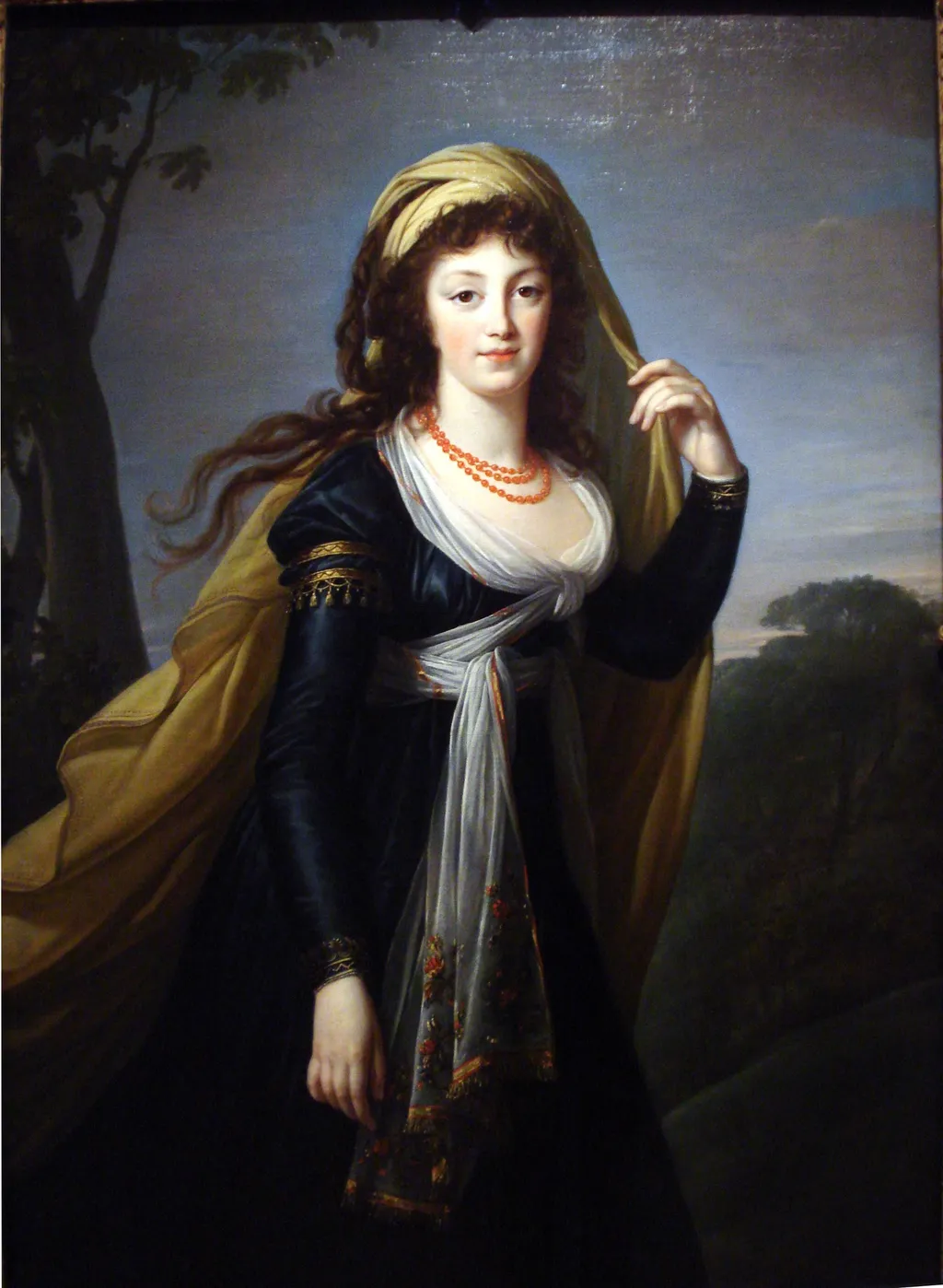
Porträt der Theresa, Gräfin Kinsky is an oil painting by the Neoclassicist artist Élisabeth Louise Vigée Le Brun. It dates from 1797 and is held in the collection of the Norton Simon Museum.
About this work
The dark colors of her dress are offset by the lighter tones of her sash and headscarf, creating a sense of contrast in the painting.
The painting depicts a woman standing in a landscape, wearing a dark dress with a white sash and a yellow headscarf. She is adorned with a coral necklace and has long, dark hair. Her right hand is raised, holding the edge of her headscarf.
The woman's attire and hairstyle suggest a sense of elegance and refinement. The dark colors of her dress are offset by the lighter tones of her sash and headscarf, creating a sense of contrast in the painting.
The painting is a portrait of Theresia of Dietrichstein, created by Élisabeth Louise Vigée Le Brun in 1793. To learn more about the artist's work, look up Élisabeth Louise Vigée Le Brun.
Overview
Painted in 1797, *Porträt der Theresa, Gräfin Kinsky* is an oil-on-canvas portrait by French artist Élisabeth Louise Vigée Le Brun. It portrays Theresia of Dietrichstein, who became Countess Kinsky through marriage. The work resides in the Norton Simon Museum’s collection and exemplifies Vigée Le Brun’s mature style, blending the grace of Rococo with the restrained elegance of Neoclassicism.
Subject & Meaning
The sitter, Theresia of Dietrichstein, is depicted standing in a soft landscape, conveying quiet dignity. Her pose—hand lightly holding the edge of a yellow headscarf—suggests poise and composure. The attire, though fashionable, avoids overt opulence, reflecting a shift toward understated aristocratic identity in post-revolutionary Europe. The portrait emphasizes personal refinement over social display.
Technique & Style
Vigée Le Brun employs delicate brushwork to render textures: the silk of the dress, the softness of the headscarf, and the sheen of the coral necklace. Contrasts between the dark gown and the pale sash and scarf create visual harmony. The background is loosely painted, suggesting a garden setting without distracting from the figure. Her technique balances precision with atmospheric subtlety.
History & Provenance
Commissioned during Vigée Le Brun’s years abroad following the French Revolution, the portrait was likely painted in Vienna, where she worked for aristocratic patrons. Theresia’s marriage into the Kinsky family placed her within influential Central European circles. The painting entered the Norton Simon Museum’s collection in the 20th century, having passed through private European hands.
Context
Created during a period of political upheaval, the portrait reflects aristocratic resilience through visual restraint. While French revolutionary ideals rejected extravagance, European nobility still valued refined portraiture as a marker of identity. Vigée Le Brun’s ability to adapt her Rococo-trained style to Neoclassical sensibilities made her a favored painter among exiled and continental elites.
Legacy
This portrait stands as a testament to Vigée Le Brun’s skill in capturing individual character within evolving artistic norms. Though less known than her French royal commissions, works like this demonstrate her international influence and adaptability. It remains a key example of how female artists navigated shifting cultural landscapes in late 18th-century Europe.
Own this work as a print
Artist & collection
Artist
Élisabeth Louise Vigée Le Brun
Élisabeth Louise Vigée Le Brun (French: ; née Vigée; 16 April 1755 – 30 March 1842), also known as Louise Élisabeth Vigée Le Brun or simply Madame Le Brun, was a French painter who mostly specialized in portrait…

 Madame Grand (Noël Catherine Verlée, 1761–1835)
 Comtesse de la Châtre (Marie Charlotte Louise Perrette Aglaé Bontemps, 1762–1848)
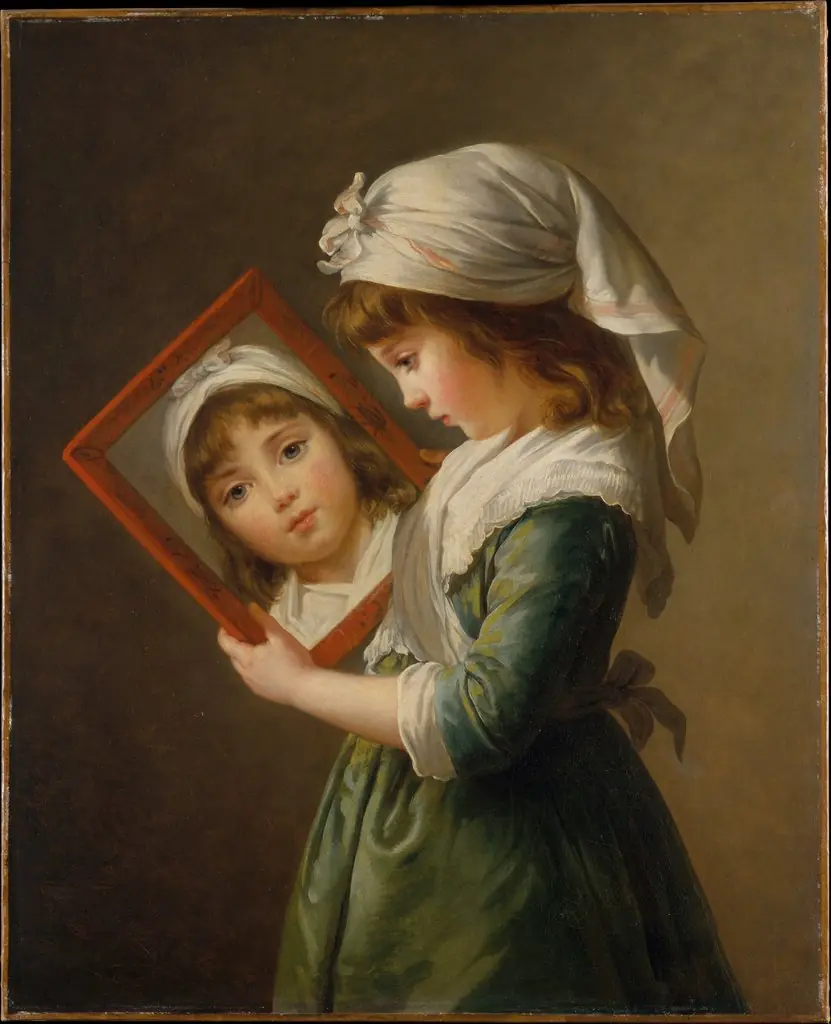 Julie Le Brun (1780–1819) Looking in a Mirror
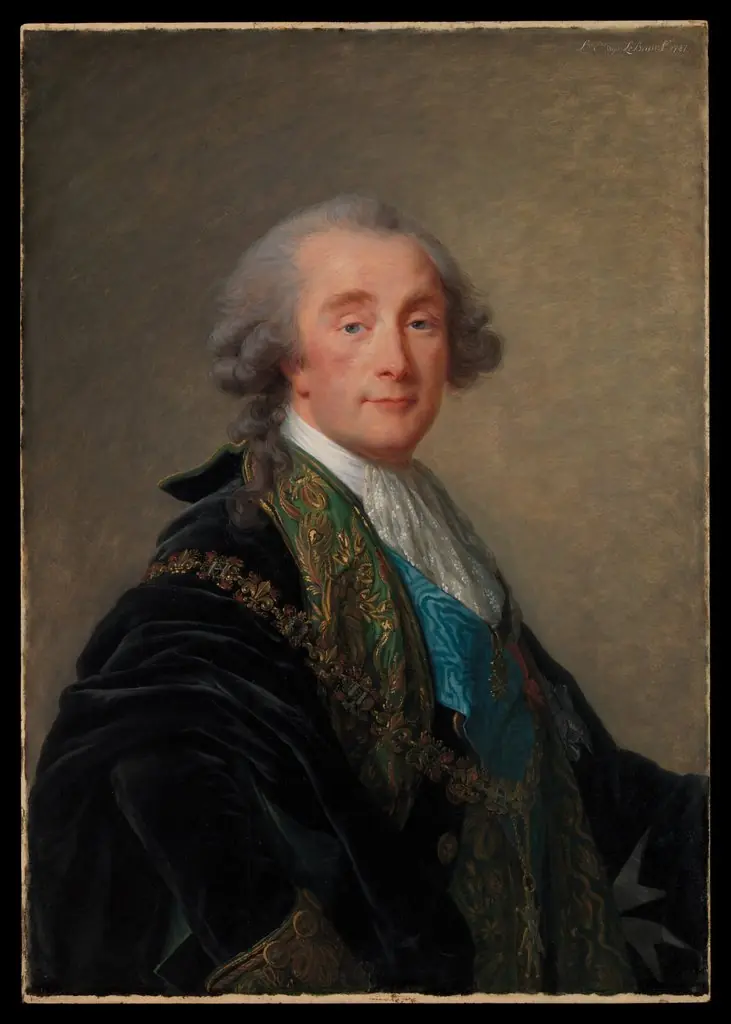 Alexandre Charles Emmanuel de Crussol-Florensac (1743–1815)
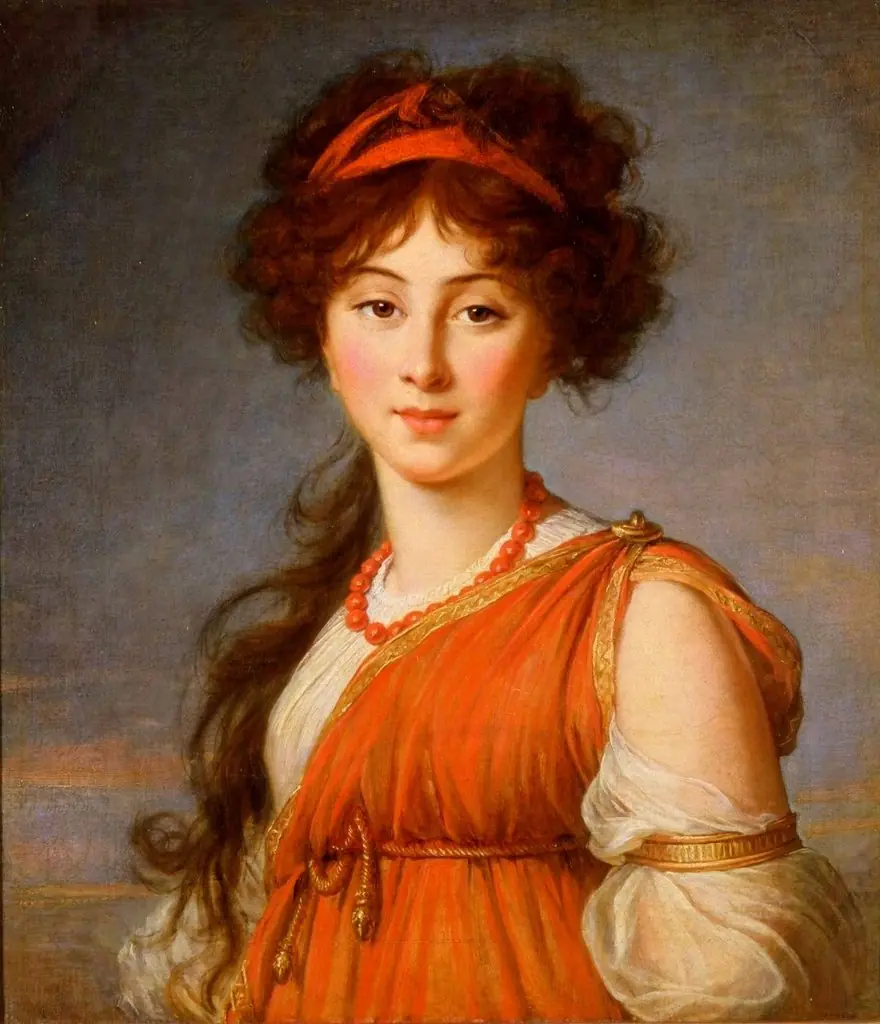 Varvara Ivanovna Ladomirsky
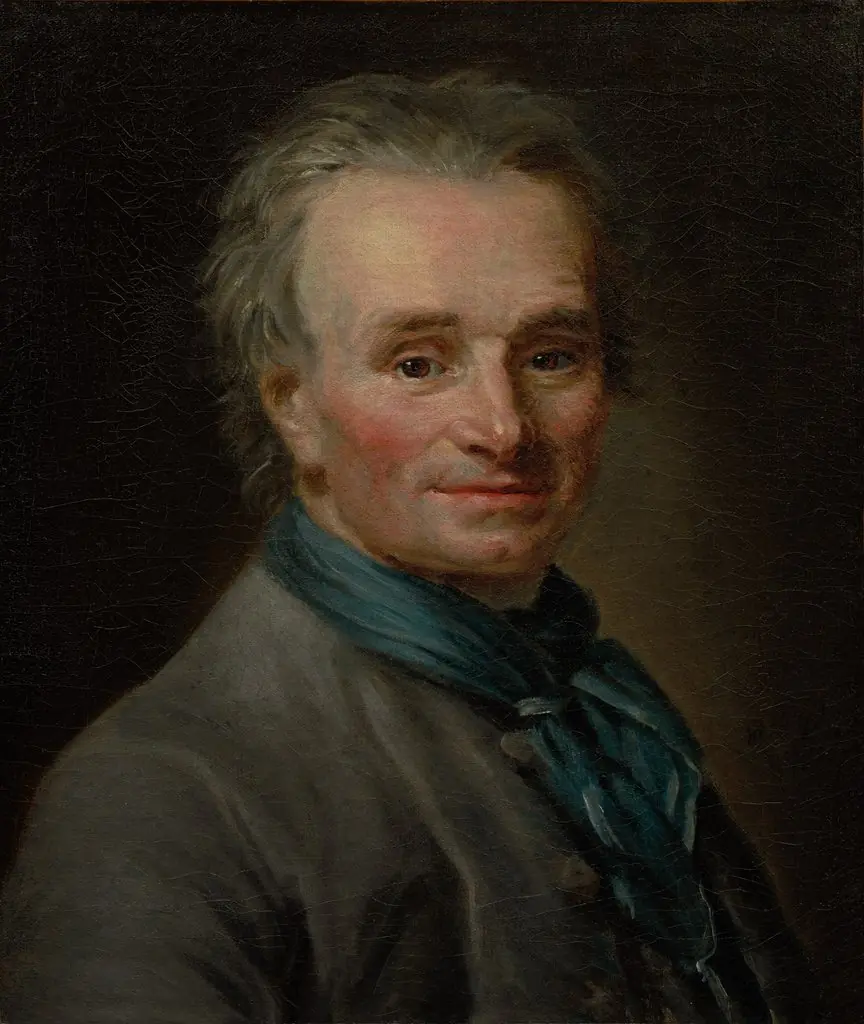 Portrait of Jean-Baptiste Lemoyne the Younger
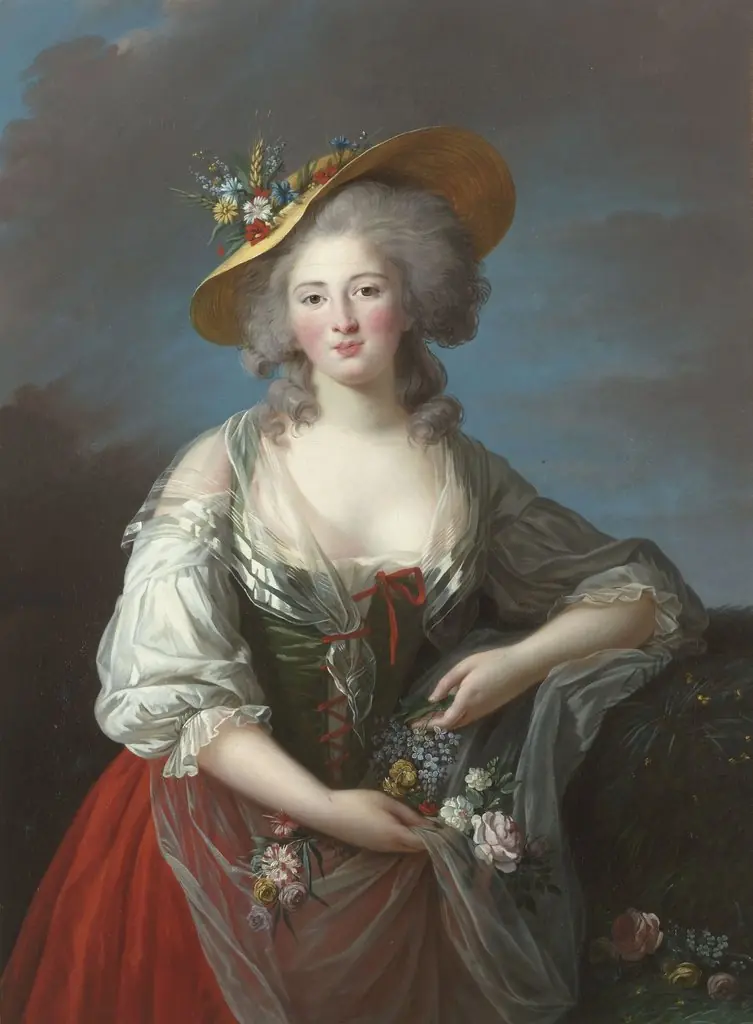 Elisabeth-Philippe-Marie-Hélène de France, dite Madame Elisabeth
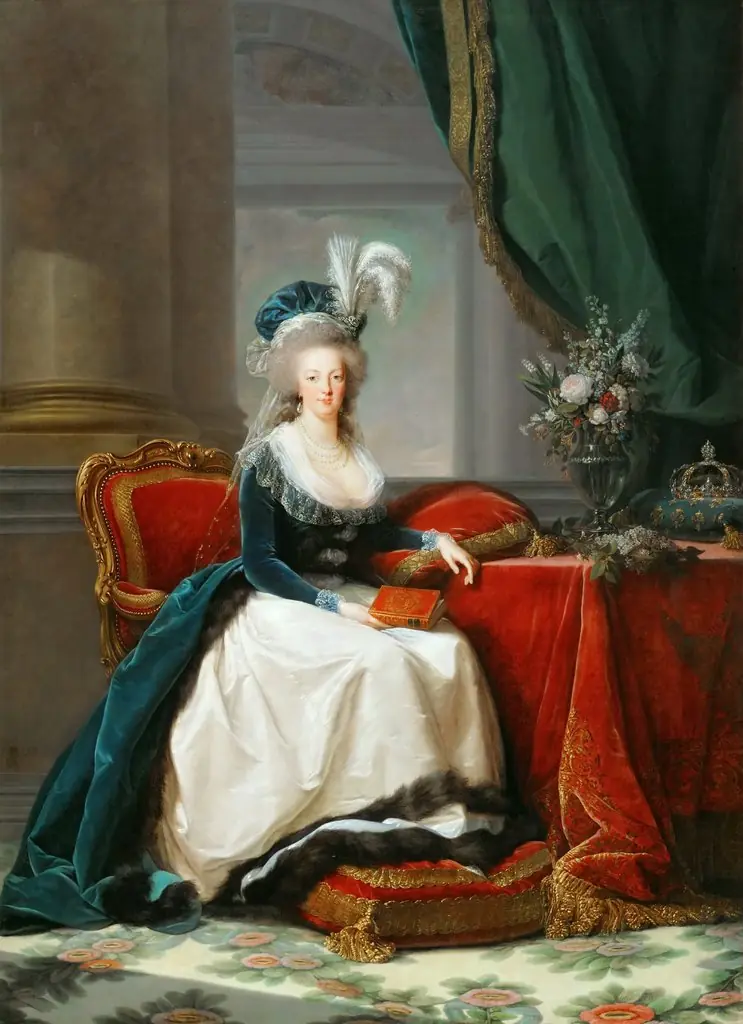 Marie-Antoinette seated, in blue coat and white dress, holding a book in her hand
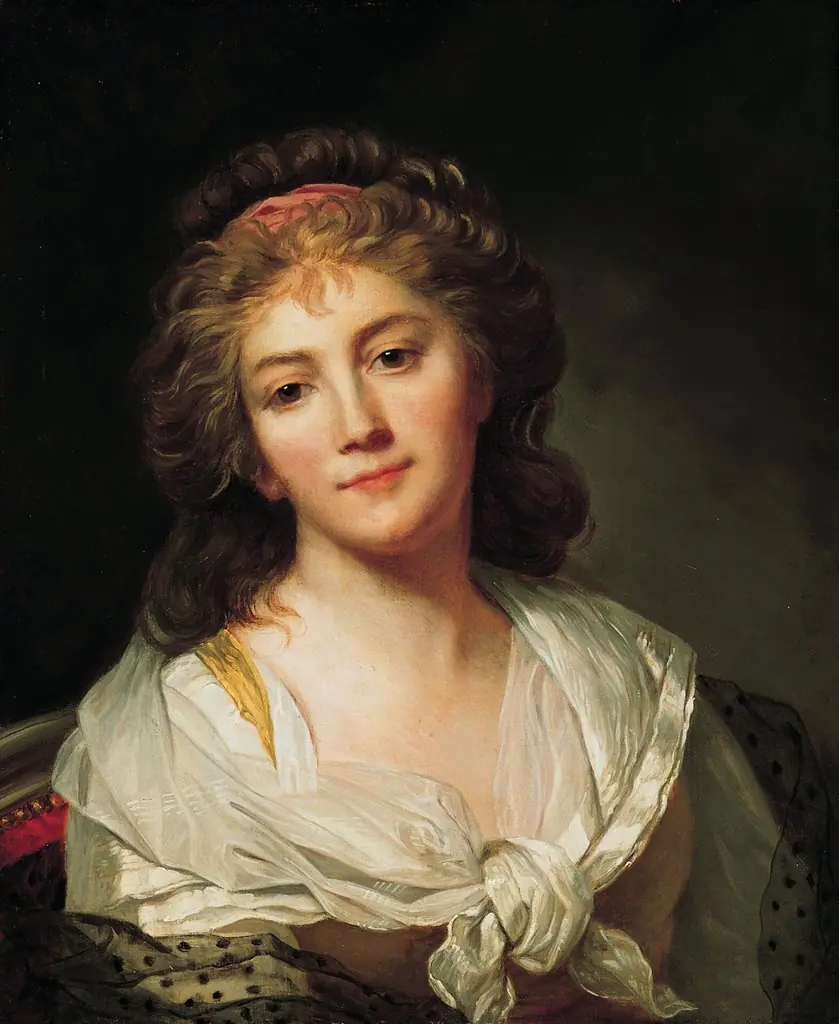 Self-portrait
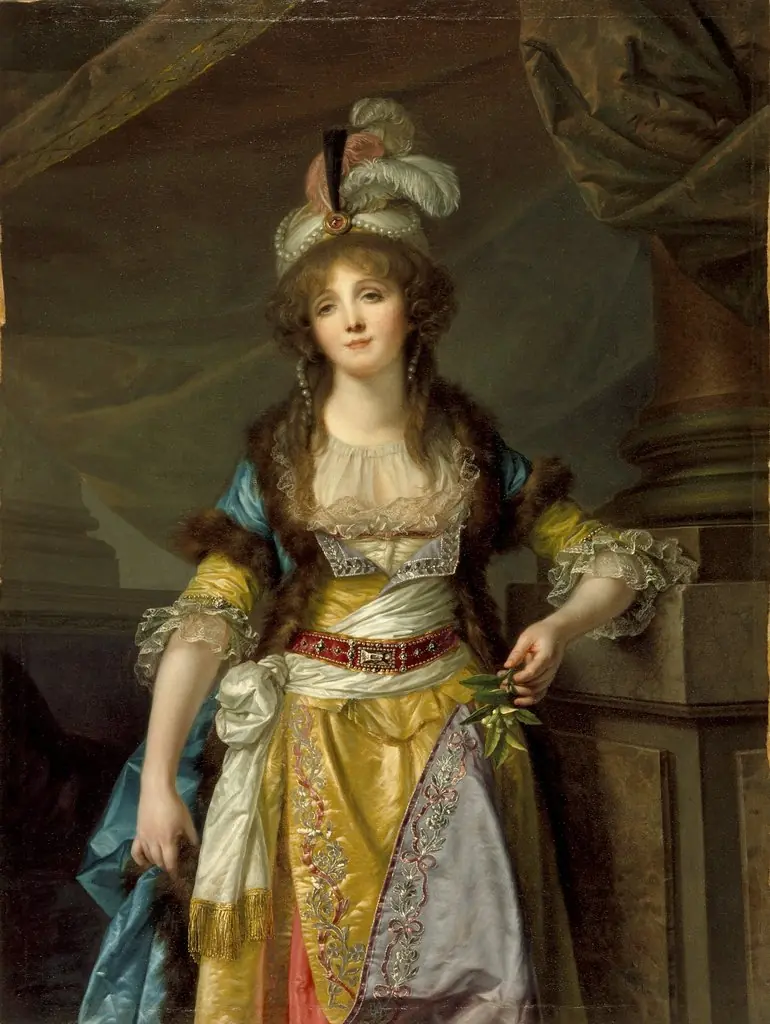 Portrait of a Lady in Turkish Fancy Dress
 Portrait of Izabela Ogińska née Lasocka
 Portrait of a Young Woman
 Madame d'Aguesseau de Fresnes
 Yolande-Martine-Gabrielle de Polastron, Duchess de Polignac
 Portrait of Joanna Dzierzbicka
 Портрет Д.С. Яковлевой
 Portrait of Mme de Staël
 Porträt der Elizaveta Grigorevna Temkina (b.1775)
 Pauline Bonaparte-Borghese, Duchess of Guastalla (1780-1825)
 Porträt der Varvara Shidlovskaya