Artwork
Les Artistes Contemporaines
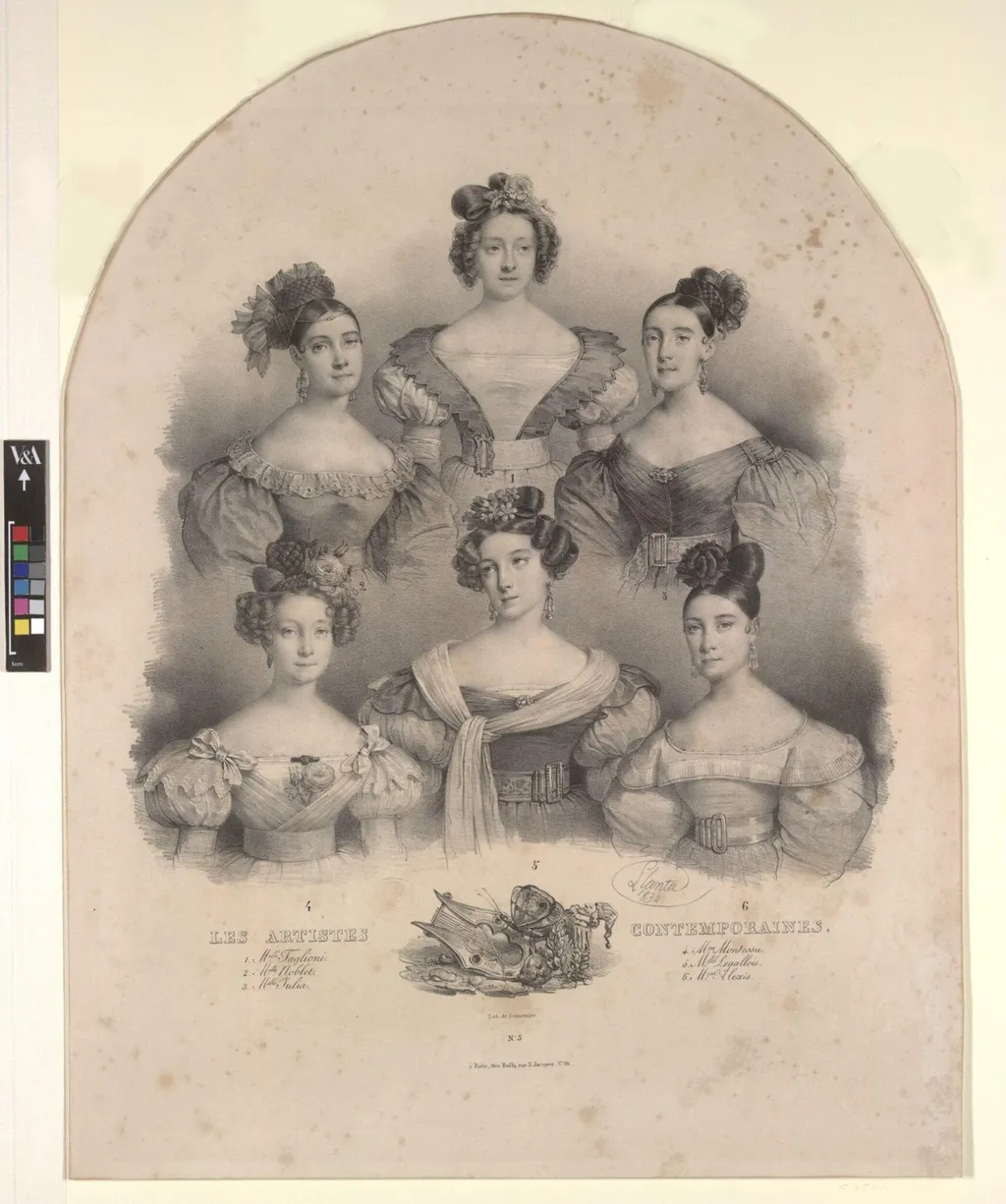
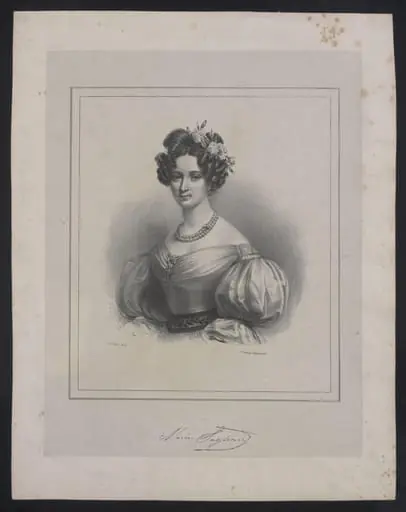
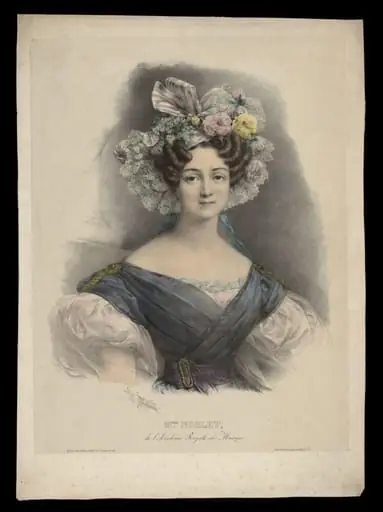
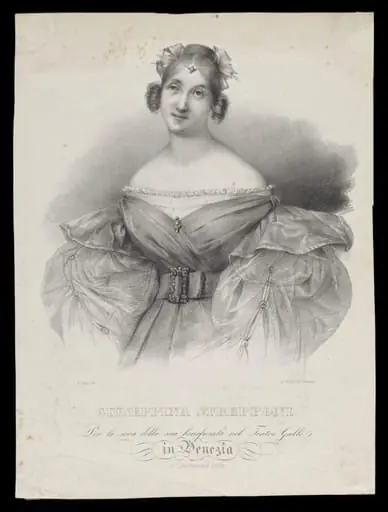
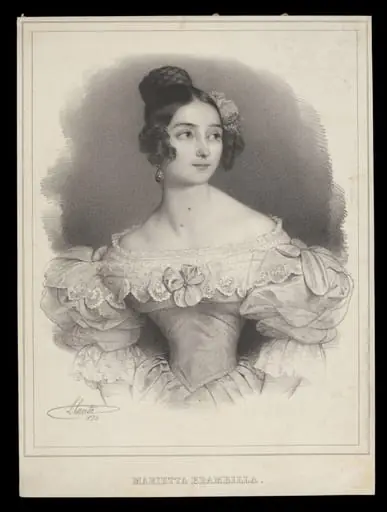
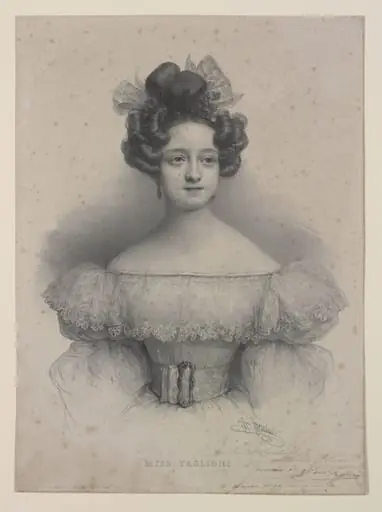
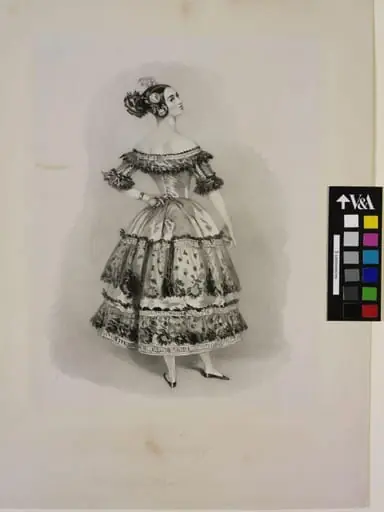
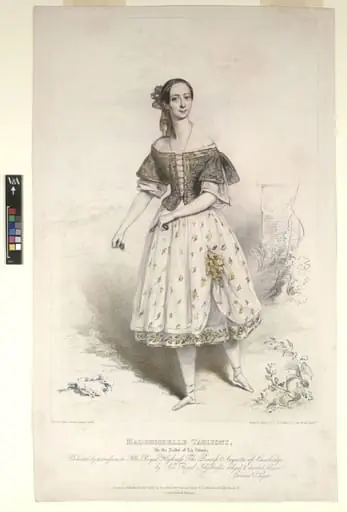
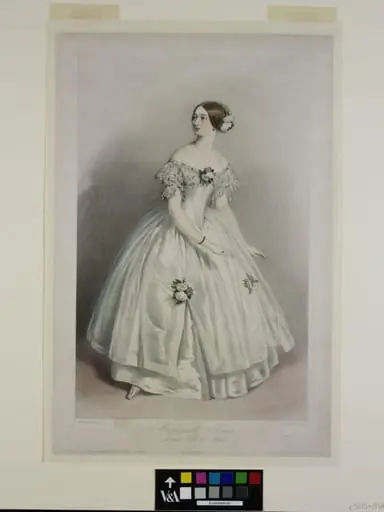
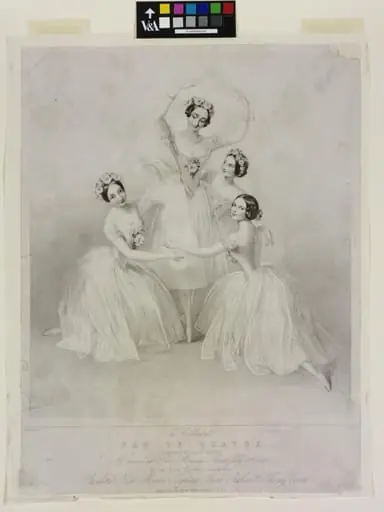
Les Artistes Contemporaines is a print by the Romanticist artist Llanta. It dates from 1832 and is held in the collection of the Victoria and Albert Museum. This print, part of a series created in 1832, depicts five leading dancers of the Paris Opéra Ballet in informal, off‑stage poses.
About this work
This print shows five ballet dancers from the Paris Opéra in 1832, all caught in fancy hair styles that would never work on stage.
This print shows five ballet dancers from the Paris Opéra in 1832, all caught in fancy hair styles that would never work on stage. Only two names are famous today: Marie Taglioni and Lise Noblet.
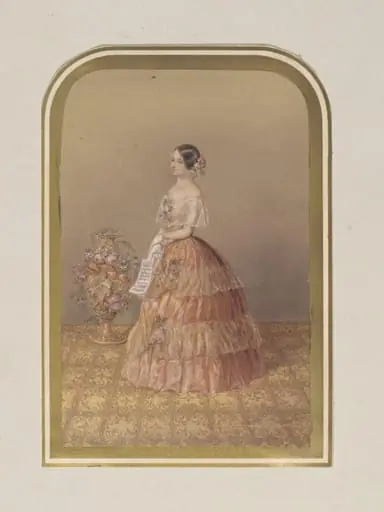
These off-stage portraits show how dancers posed for prints even when not performing. The hair fashions of the early 1830s were all curls and volume, far from the tight buns that later became standard.
Look next at Llanta.
Overview
This print, part of a series created in 1832, depicts five leading dancers of the Paris Opéra Ballet in informal, off‑stage poses. The work records the performers’ appearance at a time when elaborate, voluminous hairstyles were fashionable, even though such styles were impractical for the stage.
Subject & Meaning
The figures represent Marie Taglioni, Lise Noblet, Pauline Montessu, Amélie Legallois and Alexis Dupont, all prominent members of the company. Taglioni and Noblet later achieved international renown, while the others remained known chiefly within the French ballet milieu.
Technique & Style
Executed as a print, the image captures the intricate curls and height of early‑1830s coiffure, contrasting sharply with the later, streamlined buns that became standard in ballet. The composition emphasizes the contrast between theatrical performance and private presentation.
Context
During the early 1830s, ballet dancers adhered to contemporary civilian fashion, which favored elaborate hair arrangements. These styles proved cumbersome for dancing, prompting a shift in the mid‑Victorian era toward tighter, functional hairstyles that eventually became the uniform look for ballet worldwide.
Legacy
The series offers valuable visual documentation of a transitional moment in ballet costume history, illustrating how external fashion trends influenced dancers before practical considerations reshaped their appearance for the stage.
Artist & collection
Artist
Llanta made prints in the 1830s, mostly portraits of working artists in their studios.