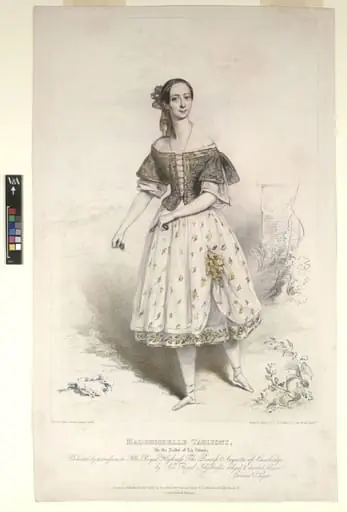
Artwork
'Marie Taglioni'
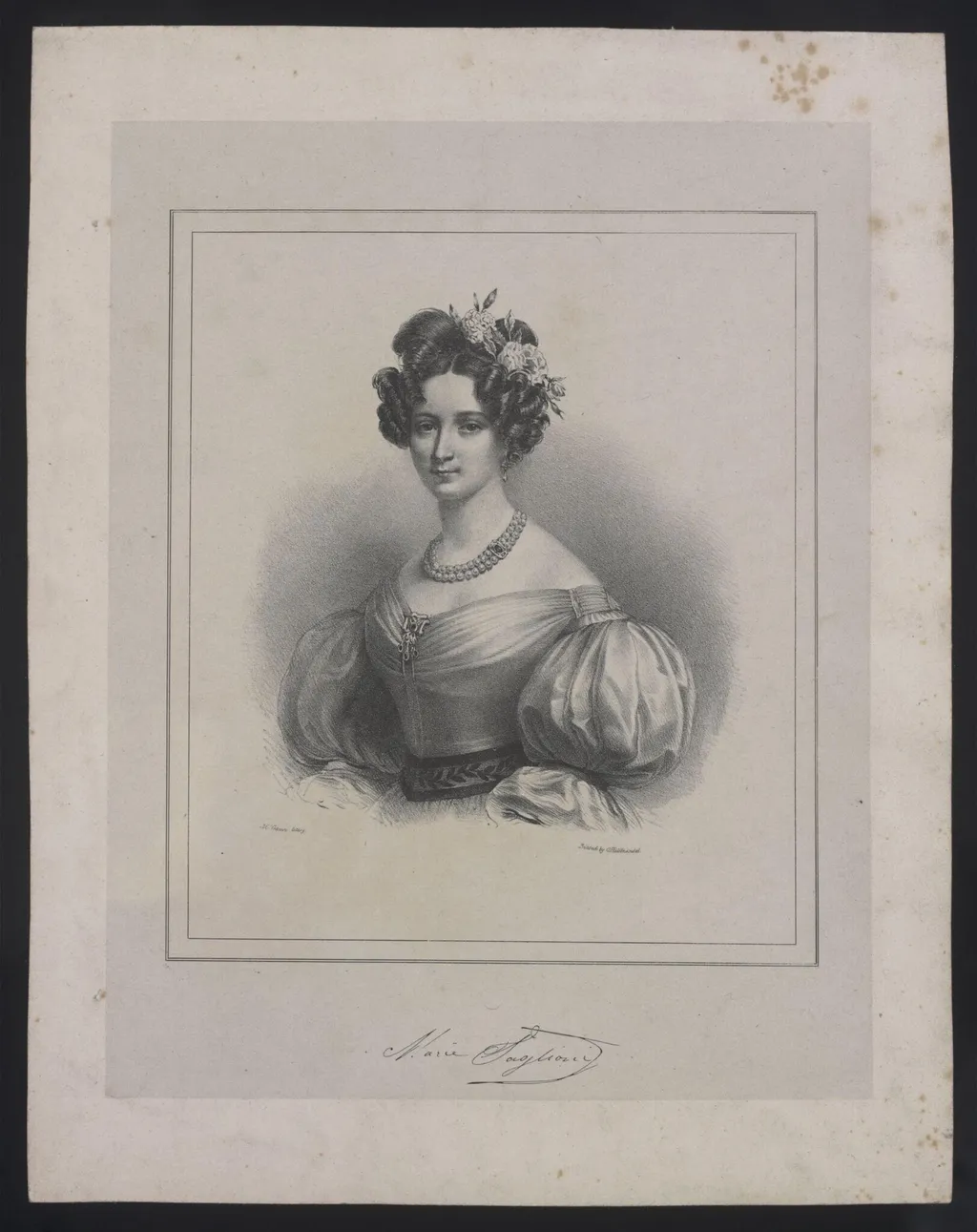
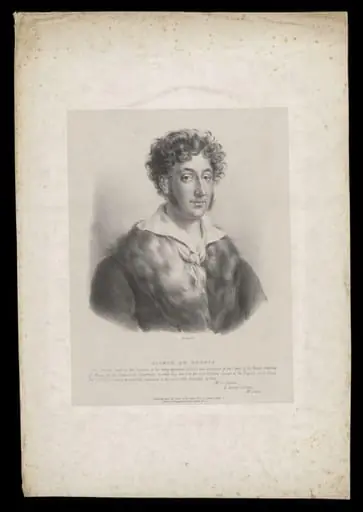
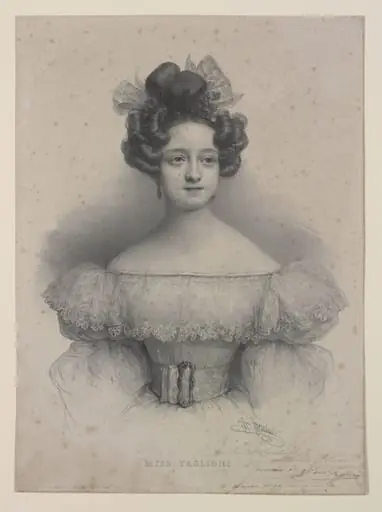
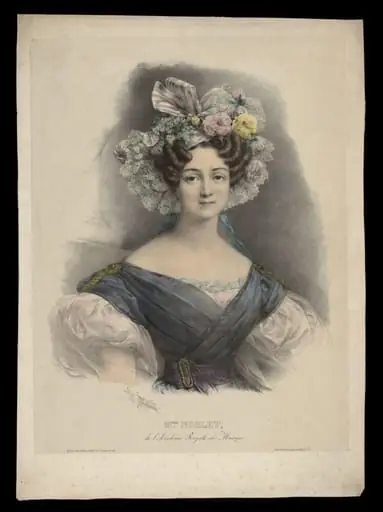
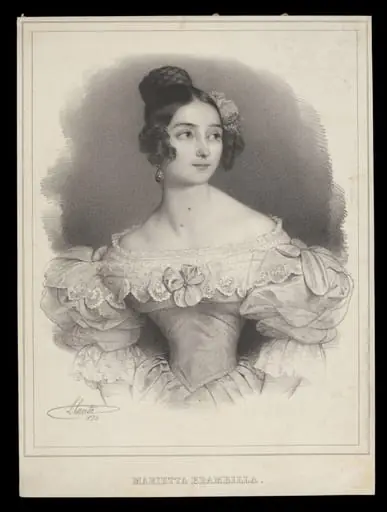
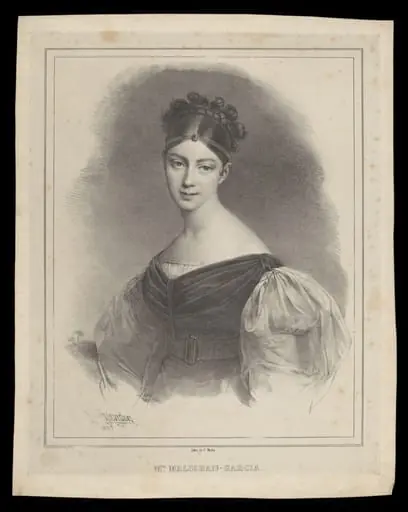
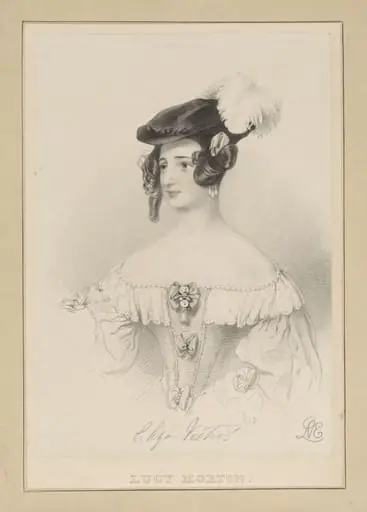
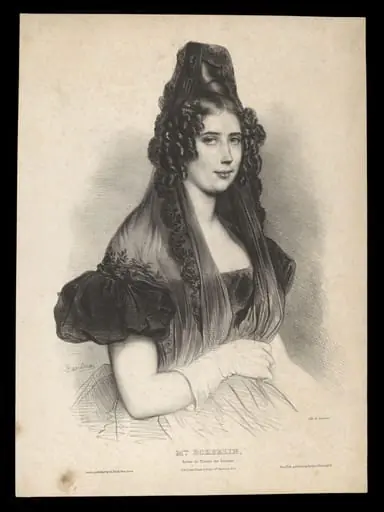
'Marie Taglioni' is a print by Maxim Gauci. It dates from 1824 and is held in the collection of the Victoria and Albert Museum. This black-and-white lithograph presents a half-length portrait of the ballerina Marie Taglioni, created in the 1830s.
About this work
Overview
Hulinadel, and entered the museum’s collection through the Cyril Beaumont Bequest, a significant donation of dance-related materials.
This black-and-white lithograph presents a half-length portrait of the ballerina Marie Taglioni, created in the 1830s. Rendered with delicate tonal gradations, the image captures her in formal attire typical of the period. The print was produced by M. Gauci, with printing handled by C. Hulinadel, and entered the museum’s collection through the Cyril Beaumont Bequest, a significant donation of dance-related materials.
Subject & Meaning
Marie Taglioni, a pioneering figure in Romantic ballet, is depicted not in motion but in stillness, emphasizing her status as a cultural icon. Her composed posture and refined attire reflect the era’s idealization of female grace and modesty. The inclusion of floral accents and pearls suggests both elegance and the romanticized notion of the dancer as an ethereal being, elevated beyond the ordinary.
Technique & Style
The portrait employs lithographic techniques to achieve soft, blended shadows and subtle transitions between light and dark. Fine lines and muted contrasts define the contours of her face and gown, avoiding harsh edges. This atmospheric rendering enhances the gentle, contemplative mood, aligning with the Romantic aesthetic that favored emotional nuance over sharp detail.
History & Provenance
Produced during the height of Taglioni’s fame, the print was likely distributed as a popular image among admirers. It was later acquired by Cyril Beaumont, a noted dance historian and collector, whose bequest brought numerous theatrical and ballet-related artifacts into the museum. The print’s survival reflects its role as both a commemorative object and a historical document of 19th-century performance culture.
Context
In the 1830s, lithographs of celebrated performers were widely circulated, serving as visual souvenirs for audiences who could not attend live performances. Taglioni’s image, reproduced in this format, contributed to the growing cult of celebrity around ballerinas. The portrait’s restrained composition contrasts with the theatricality of her stage presence, offering a private, idealized version of her public persona.
Legacy
This print endures as a record of how ballet was visualized and consumed in the early Victorian era. It preserves the visual language through which Taglioni’s artistry was memorialized—quiet, dignified, and imbued with poetic restraint. As part of a broader collection of dance ephemera, it continues to inform scholarly understanding of performance history and media representation.
Artist & collection

Artist
Maxim Gauci, born Massimo Gauci, was a Maltese lithographer and painter who was active in the United Kingdom in the 19th century. He was an early exponent of lithography for botanical illustration.