Artwork
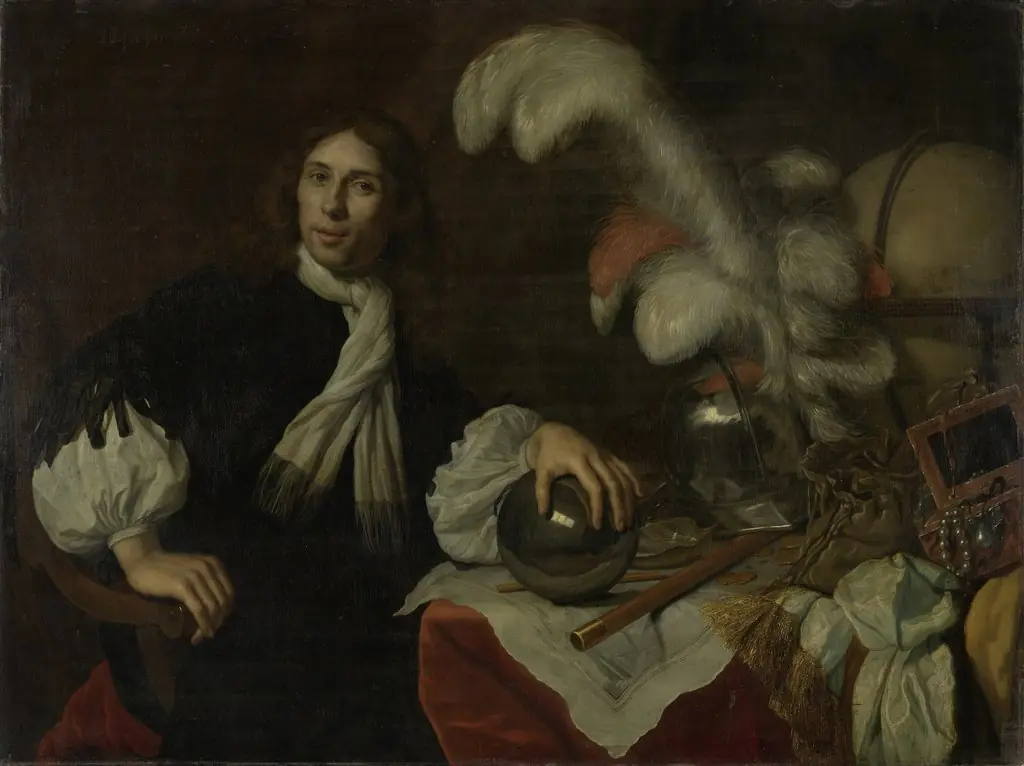
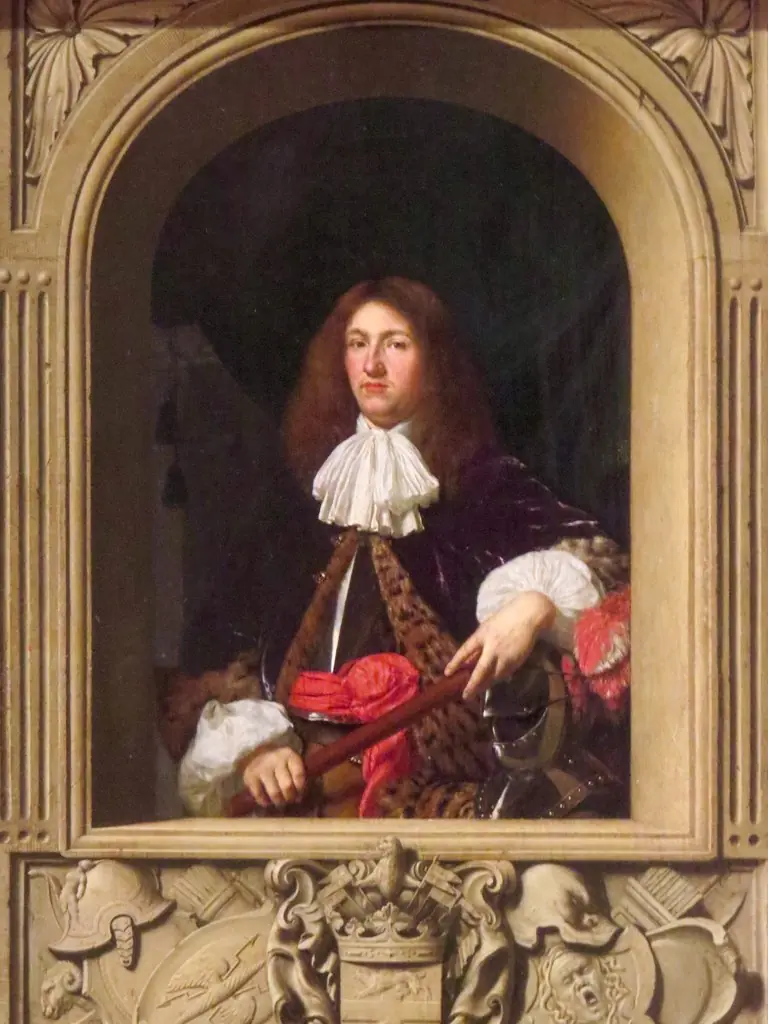
Posthumous Portrait of Aucke Stellingwerff, Admiral of Friesland, Killed in 1665 at Lowestoft by a Cannonball
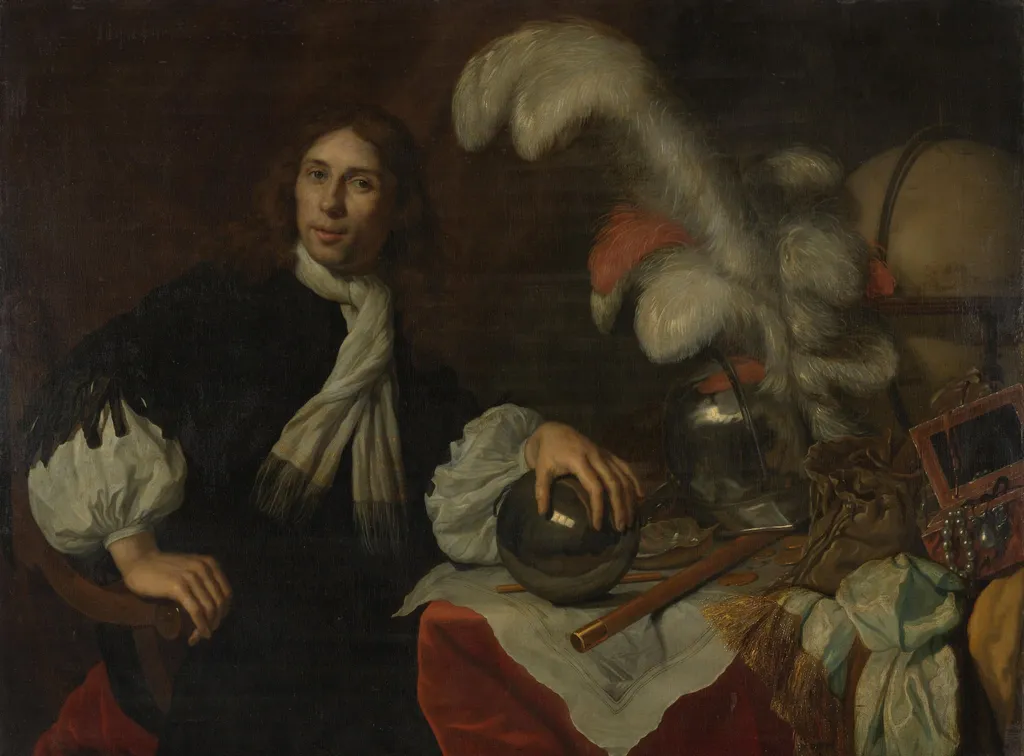
Posthumous Portrait of Aucke Stellingwerff, Admiral of Friesland, Killed in 1665 at Lowestoft by a Cannonball is an unspecified painting by the Dutch Golden Age artist Lodewijk van der Helst. It dates from 1670 and is held in the collection of the Rijksmuseum. The work is a half‑length portrait of Aucke Stellingwerff, who served as admiral of the Frisian Admiralty.
About this work
Overview
The work is a half‑length portrait of Aucke Stellingwerff, who served as admiral of the Frisian Admiralty. Rendered after his death at the 1665 Battle of Lowestoft, the painting shows him seated, his left hand placed on a cannonball that caused his fatal wound.
Subject & Meaning
Stellingwerff is depicted surrounded by symbols of his naval career and personal wealth: a feathered helmet, a command staff, coins, a map or print, a small pouch, a jewelry box, and a globe. The cannonball functions as a visual reminder of the violent circumstances of his demise, a common device in posthumous portraiture to link identity with the manner of death.
Technique & Style
Executed in oil on canvas, the portrait employs a restrained palette of dark fabrics against a relatively plain background, emphasizing the figure’s dignified posture. Careful attention to the texture of metal objects and the reflective surfaces of the globe and jewelry box demonstrates the artist’s skill in rendering material detail.
History & Provenance
Created shortly after 1665, the painting was likely commissioned by the Frisian Admiralty or Stellingwerff’s family to commemorate his service. It entered the collection of the Rijksmuseum, where it remains part of the institution’s holdings of Dutch naval portraiture.
Context
The portrait belongs to a tradition of 17th‑century Dutch commemorative works that combine realistic likeness with allegorical attributes. By integrating items such as the helm, staff, and globe, the image situates Stellingwerff within the broader maritime and mercantile culture of the Dutch Republic during its Golden Age.
Own this work as a print
Artist & collection