Artwork
Sleeping Peasant
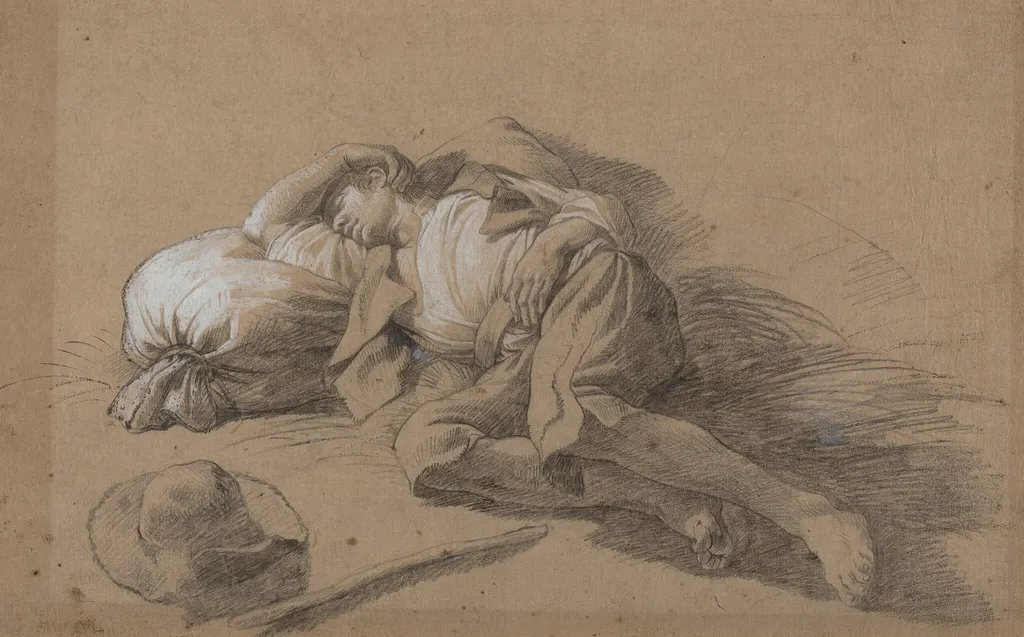
Sleeping Peasant is a charcoal drawing by the Baroque artist Francesco Londonio. It dates from 1753 and is held in the collection of the National Gallery of Art.
About this work
Overview
Executed in charcoal with white chalk highlights on brown laid paper, the work exemplifies Londonio’s skill in capturing quiet, everyday moments.
Created in 1753, *Sleeping Peasant* is a drawing by Francesco Londonio, an Italian artist active in Milan during the mid-18th century. Executed in charcoal with white chalk highlights on brown laid paper, the work exemplifies Londonio’s skill in capturing quiet, everyday moments. His training under Ferdinando Porta and Giovanni Battista Sassi, along with exposure to Roman and Neapolitan traditions, informed his sensitive approach to rural subjects.
Subject & Meaning
The drawing portrays a peasant man asleep on his side beneath a tree, his head resting on his arm, garments plain and unadorned. The scene avoids narrative drama, instead focusing on stillness and solitude. The figure’s vulnerability and the absence of idealization suggest a quiet dignity in labor and rest, reflecting a broader 18th-century interest in the authenticity of rural life among Northern Italian patrons.
Technique & Style
Londonio employed charcoal for its soft, malleable tones, using white chalk to accentuate light falling on the sleeper’s face and shirt. The brown paper serves as a mid-tone ground, allowing the contrast between shadow and highlight to define form without outline. This method creates a sense of immediacy and atmosphere, transforming a simple pose into a luminous, intimate study of light and rest.
History & Provenance
The drawing’s early ownership is undocumented, but it aligns with Londonio’s known body of work produced in Milan during the 1750s. His reputation as a draftsman and engraver, later refined through collaboration with Benigno Bossi, suggests this piece may have served as a preparatory study or independent work for collectors drawn to genre scenes. No record of its exhibition prior to the 20th century exists.
Context
In mid-18th-century Lombardy, depictions of peasants and animals gained favor among urban elites seeking pastoral escape from city life. Londonio’s work responded to this taste, avoiding moralizing or caricature. His drawings, including this one, reflect a shift toward naturalism in Northern Italian art, influenced by broader European trends while retaining local sensibilities.
Legacy
Though Londonio is not widely known outside specialist circles, *Sleeping Peasant* exemplifies the quiet power of 18th-century Italian draftsmanship. His ability to convey humanity through minimal means influenced later artists interested in rural realism. The drawing remains a testament to the artistic value placed on unembellished observation during a period of increasing social and aesthetic change.
Artist & collection

Artist
Francesco Londonio (1723–1783) was an Italian painter, engraver, and scenographer, active mainly in his native Milan in a late-Baroque or Rococo style.

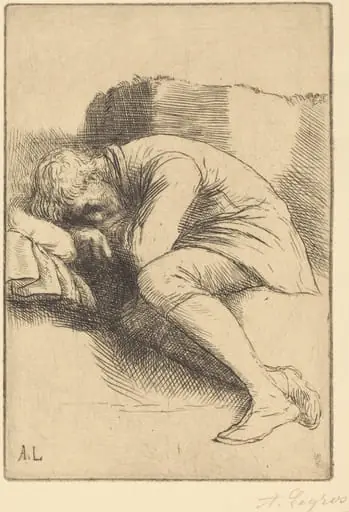 Sleeper (Un dormeur)
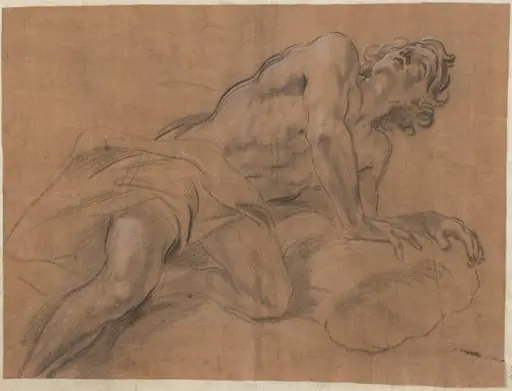 Nude Youth Leaning on a Cloud and Gazing Upward
![Two Reclining Figures [verso], by French 17th Century](https://artifactworldgallery.com/img/french-17th-century--two-reclining-figures-verso--06163eb1c0b367f2-w320.webp) Two Reclining Figures [verso]
Two Reclining Figures [verso]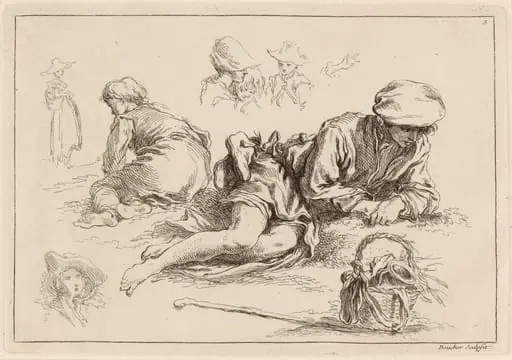 Figure Studies including Reclining Boy
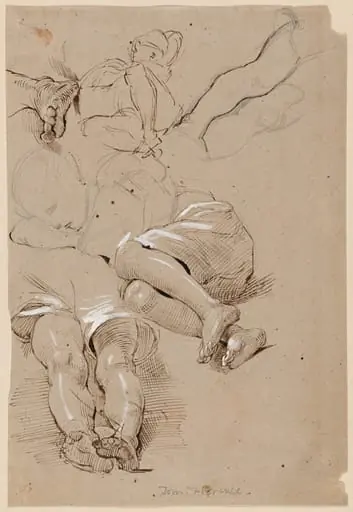 Tom -- Florence
![Man Reclining on the Ground and the Corner of a Bed [verso], by Jean-Baptiste Deshays](https://artifactworldgallery.com/img/jean-baptiste-deshays--man-reclining-on-the-ground-and-the-corner-of-a-bed-verso--3e054816ddd681bf-w320.webp) Man Reclining on the Ground and the Corner of a Bed [verso]
Man Reclining on the Ground and the Corner of a Bed [verso]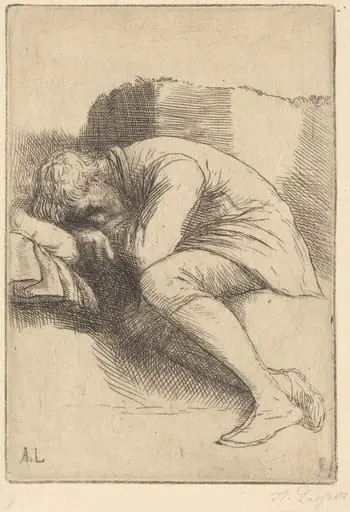 Sleeper (Un dormeur)
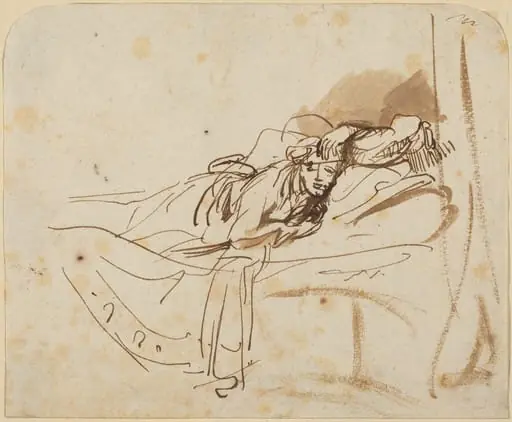 Saskia(?) Lying in Bed
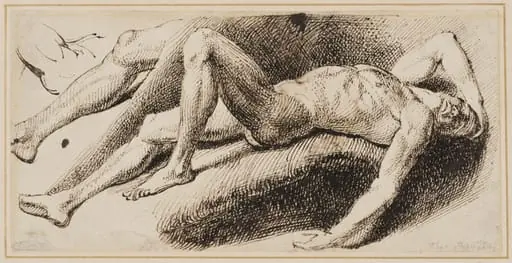 Study of a male nude
![Young Woman Kneeling and Reaching Forward [verso], by Charles de La Fosse](https://artifactworldgallery.com/img/charles-de-la-fosse--young-woman-kneeling-and-reaching-forward-verso--dad9d34b84dadb6d-w320.webp) Young Woman Kneeling and Reaching Forward [verso]
Young Woman Kneeling and Reaching Forward [verso]