Artwork
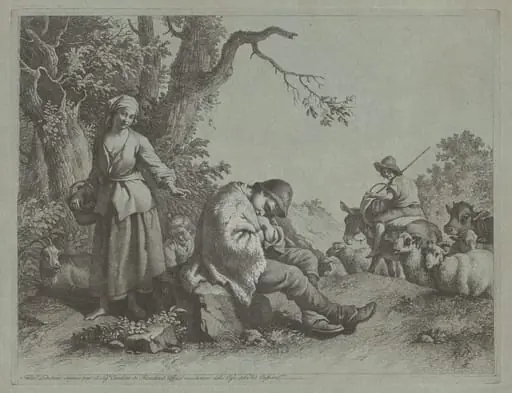
Old, Bald-headed Shepherd, Seated Shepherd Boy and Flock
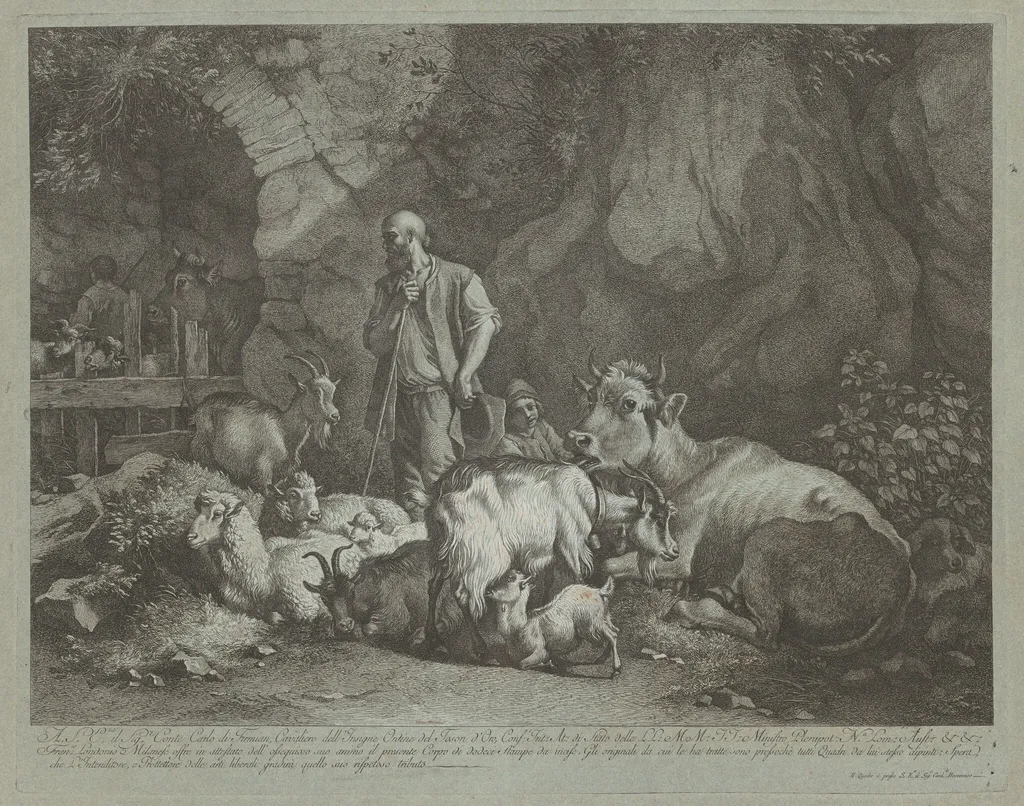
Old, Bald-headed Shepherd, Seated Shepherd Boy and Flock is an ink print by the Romanticist artist Francesco Londonio. It dates from 1766 and is held in the collection of the National Gallery of Art.
About this work
Overview
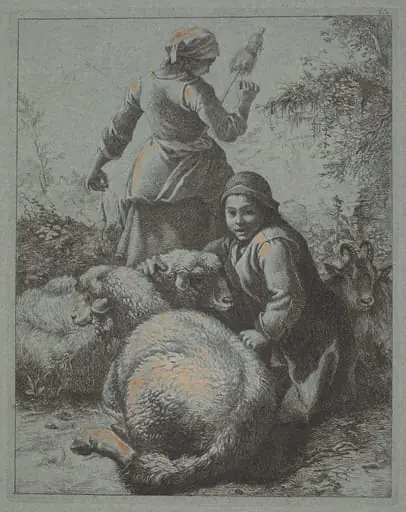
The work captures a quiet moment in pastoral life, rendered with delicate contrast between dark engraved lines and applied white pigment.
Created in 1766, this etching with white heightening on blue laid paper is one of Francesco Londonio’s rural genre scenes. The work captures a quiet moment in pastoral life, rendered with delicate contrast between dark engraved lines and applied white pigment. Londonio, active in Milan, specialized in depictions of shepherds and livestock, often tailored to the tastes of Northern Italian collectors seeking idealized rural imagery.
Subject & Meaning
The scene centers on an elderly shepherd, staff in hand, observing his flock alongside a young boy seated with a goat. Animals—sheep, goats, and a large ox—are scattered across a rocky, tree-dappled landscape, suggesting a moment of rest. No narrative climax is present; instead, the image conveys endurance and quiet companionship between humans and animals in a timeless countryside setting.
Technique & Style
Londonio employed etching to define forms with fine, expressive lines, then added white gouache highlights to enhance texture and luminosity against the blue paper. The animals’ wool and fur are suggested through rapid, stippled strokes, while the rocky terrain and foliage are rendered with loose, atmospheric marks. The blue ground subtly unifies the composition and evokes the cool tones of twilight or distant sky.
History & Provenance
Trained in Milan under Ferdinando Porta and Giovanni Battista Sassi, Londonio further studied engraving with Benigno Bossi and traveled to Rome and Naples, absorbing regional influences. His prints, including this one, circulated among affluent patrons in Lombardy and beyond, valued for their detailed observation of rural labor and animal anatomy. Few of his works survive in public collections, making this piece a rare example of his graphic output.
Context
In mid-18th century Northern Italy, interest in pastoral themes grew among aristocratic collectors, who favored scenes of unspoiled countryside life as a counterpoint to urban refinement. Londonio’s prints aligned with this trend, blending Rococo delicacy with Baroque attention to natural detail. His focus on shepherds and livestock reflected both a broader European fascination with the noble peasant and the region’s agricultural economy.
Legacy
Though not widely known today, Londonio’s prints contributed to the documentation of rural life in Lombardy during the Enlightenment. His technical skill in combining etching with white heightening influenced later Italian printmakers interested in tonal effects and naturalistic rendering. His work remains a quiet testament to the dignity of pastoral labor in 18th-century visual culture.
Artist & collection

Artist
Francesco Londonio (1723–1783) was an Italian painter, engraver, and scenographer, active mainly in his native Milan in a late-Baroque or Rococo style.

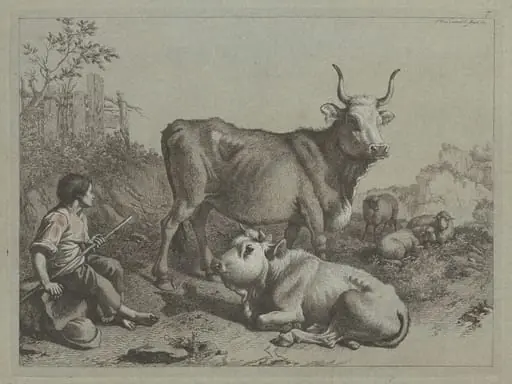
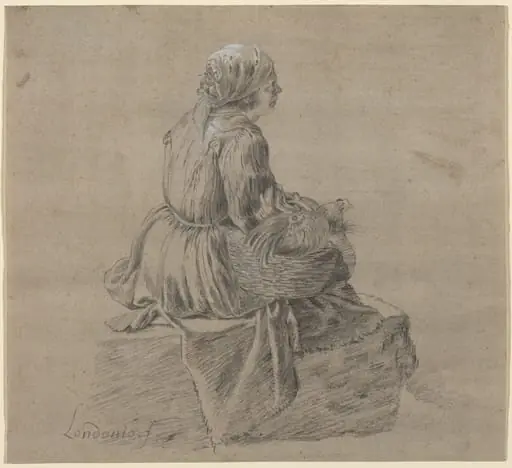
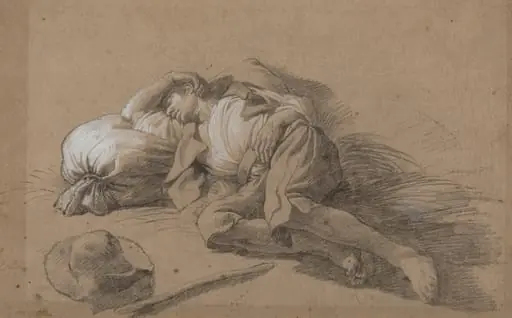
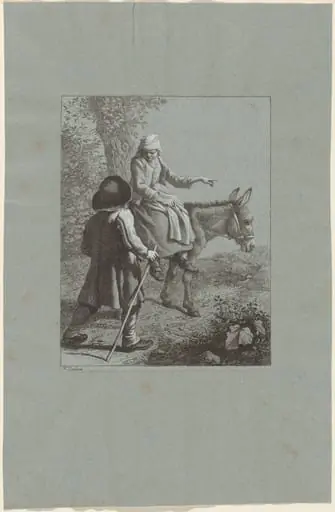
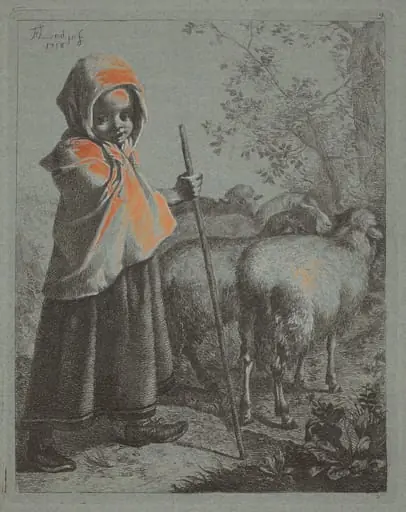
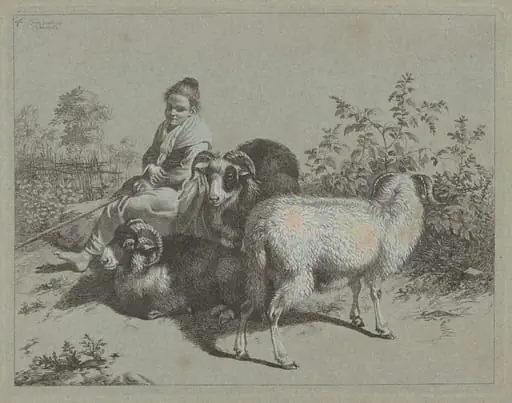
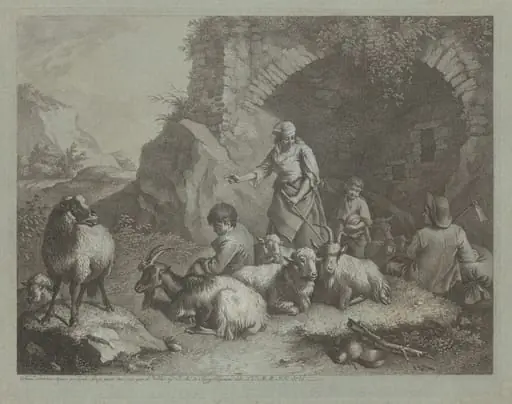 Woman, Shepherd Boys, and Sheep near an Arch
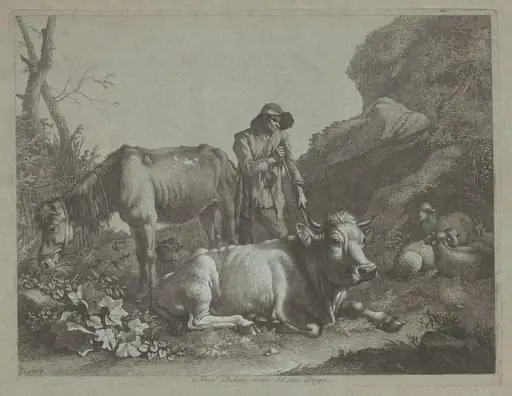 Shepherd Resting on a Walking Stick with an Old Horse and a Reclining Bull
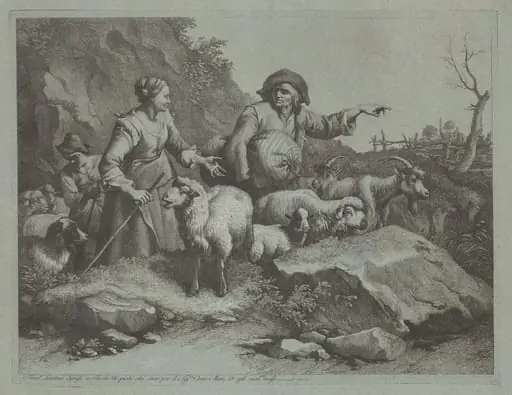 Peasant Man with a Sack and Two Shepherdesses
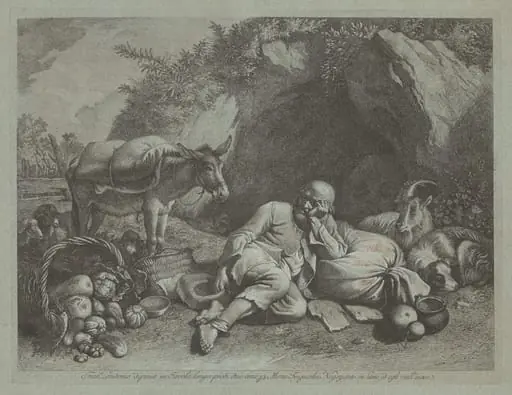 Old Man Leaning against a Sack
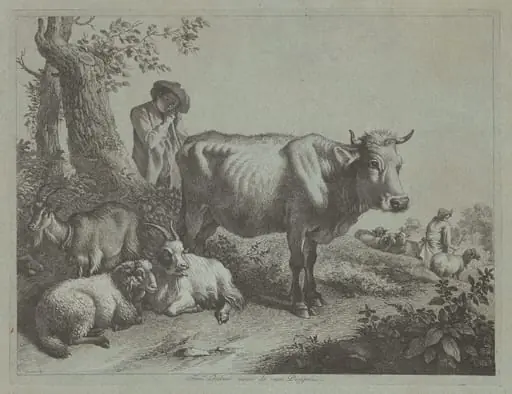 Standing Cow and a Shepherd Boy with Flock
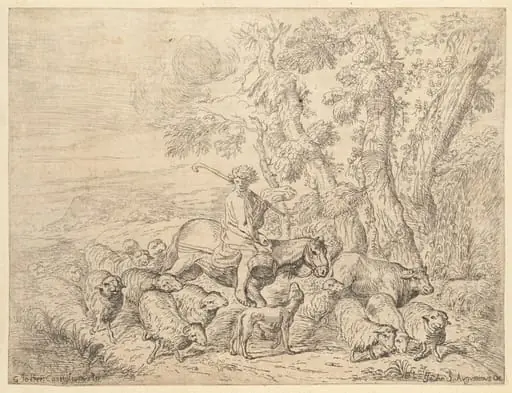 Shepherd on Horseback
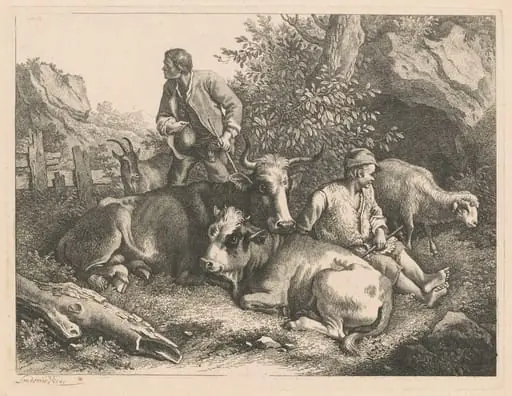 Two Shepherds with a Cow and Calf
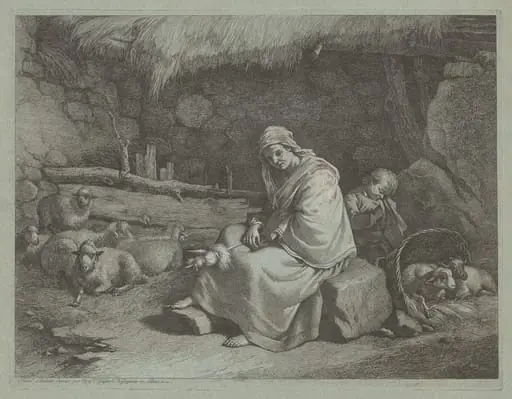 Interior of a Stable with a Seated Spinner and Sleeping Child