Artwork
Corfe Castle
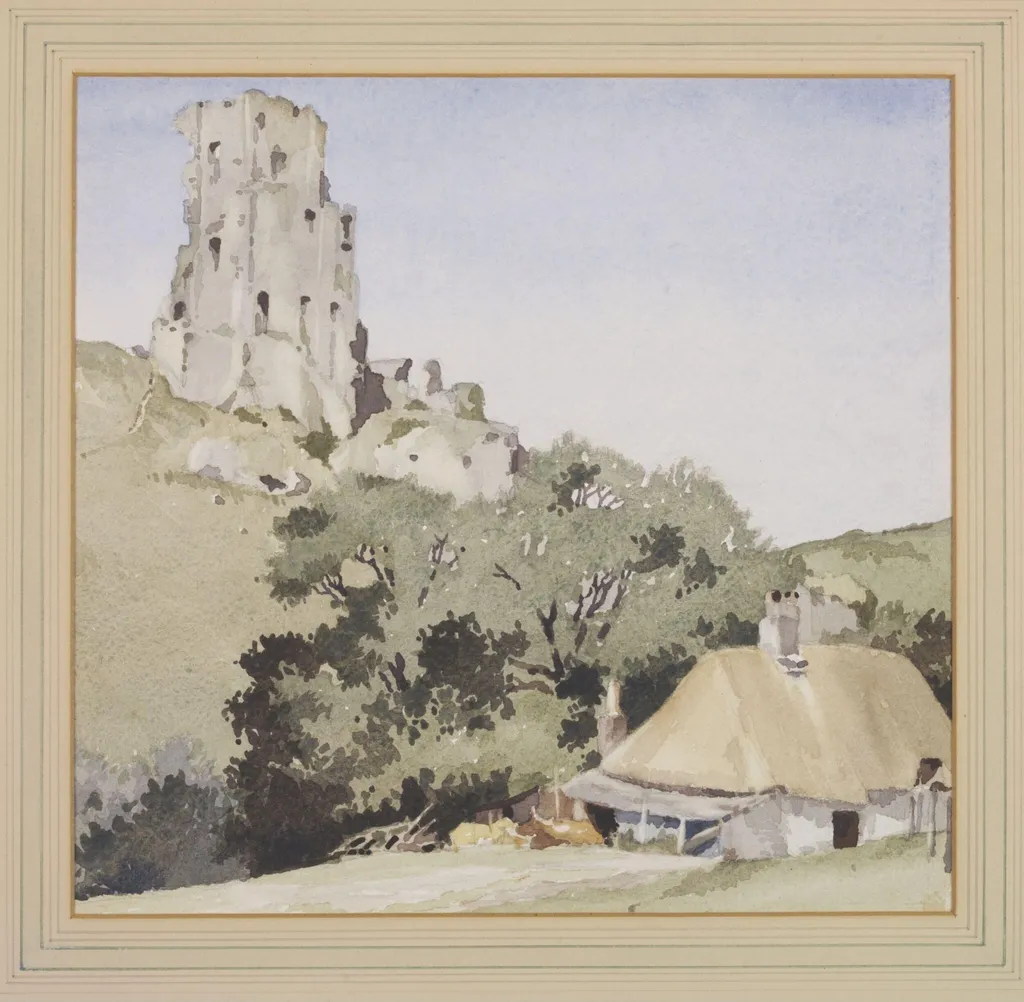
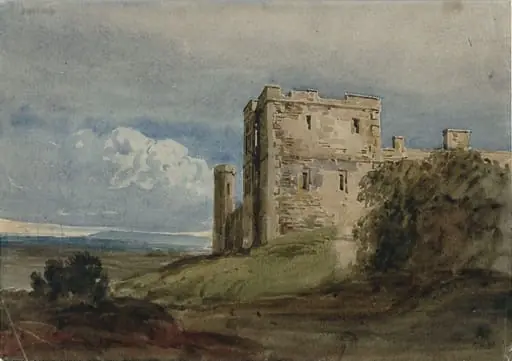
Corfe Castle is a watercolor work on paper by Longley. It dates from 1940 and is held in the collection of the Victoria and Albert Museum.
About this work
Overview
The project, backed by the Pilgrim Trust and directed by Sir Kenneth Clark, commissioned artists to document landscapes at risk during wartime.
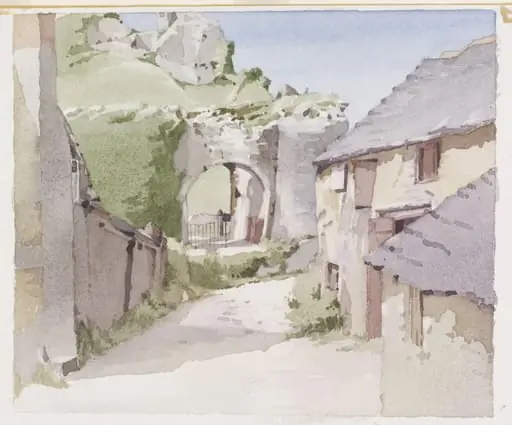
Created in 1940, this watercolour by Longley captures Corfe Castle in Dorset as part of the 'Recording Britain' initiative. The project, backed by the Pilgrim Trust and directed by Sir Kenneth Clark, commissioned artists to document landscapes at risk during wartime. This piece contributes to a broader effort to preserve visual records of England’s rural and historic sites, emphasizing their quiet endurance amid national uncertainty.
Subject & Meaning
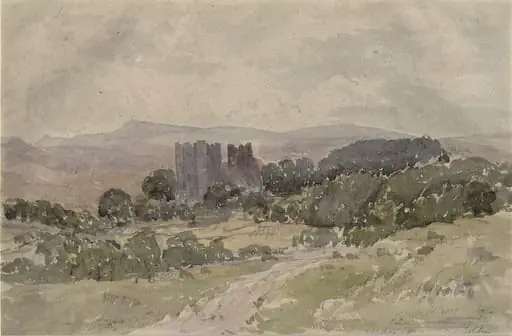
The painting presents Corfe Castle as a ruinous stone structure perched on a hill, its fragmented walls suggesting centuries of decay. Below, a modest village with scattered dwellings and a white tent hints at ongoing human presence. The contrast between the abandoned fortress and the lived-in hamlet conveys a sense of continuity — not of grandeur, but of quiet resilience in everyday life during a time of upheaval.
Technique & Style
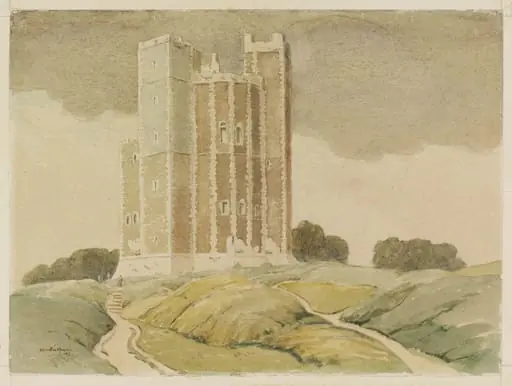
Longley employed loose, fluid watercolour techniques to evoke atmosphere rather than detail. Soft washes of gray, pale blue, and muted green blend seamlessly, suggesting diffused daylight and weathered stone. The brushwork is deliberate yet unforced, capturing light on crumbling masonry and the subtle textures of foliage. The absence of sharp outlines reinforces the work’s contemplative tone and adherence to traditional watercolour methods.
History & Provenance
The work was produced under the 'Recording Britain' scheme, which ran from 1939 to 1942, and entered the Victoria and Albert Museum’s collection as part of the project’s archive. It reflects the initiative’s goal of safeguarding visual records of at-risk sites. Longley’s contribution, like others in the series, was selected for its documentary value and artistic sensitivity, ensuring its preservation within a national cultural record.
Context
During the early years of World War II, fears of aerial bombardment and rapid modernization prompted efforts to visually document England’s historic landscapes. 'Recording Britain' emerged as a cultural response, uniting artists, institutions, and patrons to record places deemed vulnerable. This watercolour is one of hundreds created to affirm a shared heritage when physical preservation seemed uncertain.
Legacy
The 'Recording Britain' collection endures as a significant archive of 20th-century British topographical art. Longley’s watercolour remains a quiet testament to the project’s mission: not to glorify, but to observe. Its inclusion in the V&A’s holdings ensures continued access for scholars and the public, offering insight into how art served as a form of cultural memory during wartime.
Artist & collection
Artist
A watercolour artist active around 1940, Longley painted quiet English landmarks in soft washes.