Artwork
The Holy Family with Saint Catherine of Alexandria
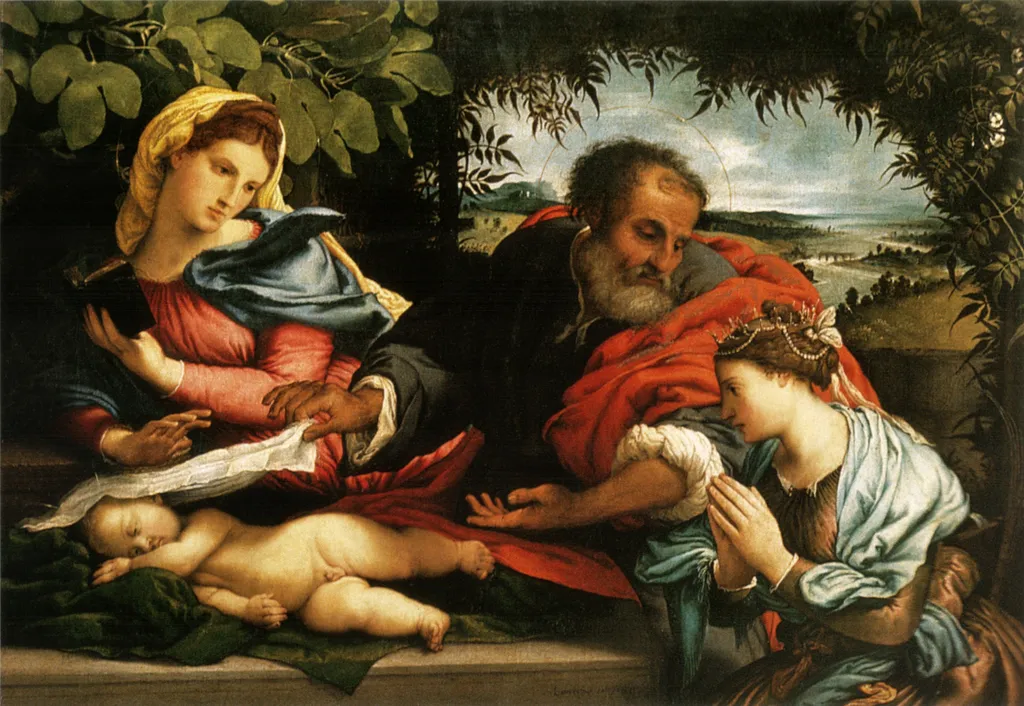
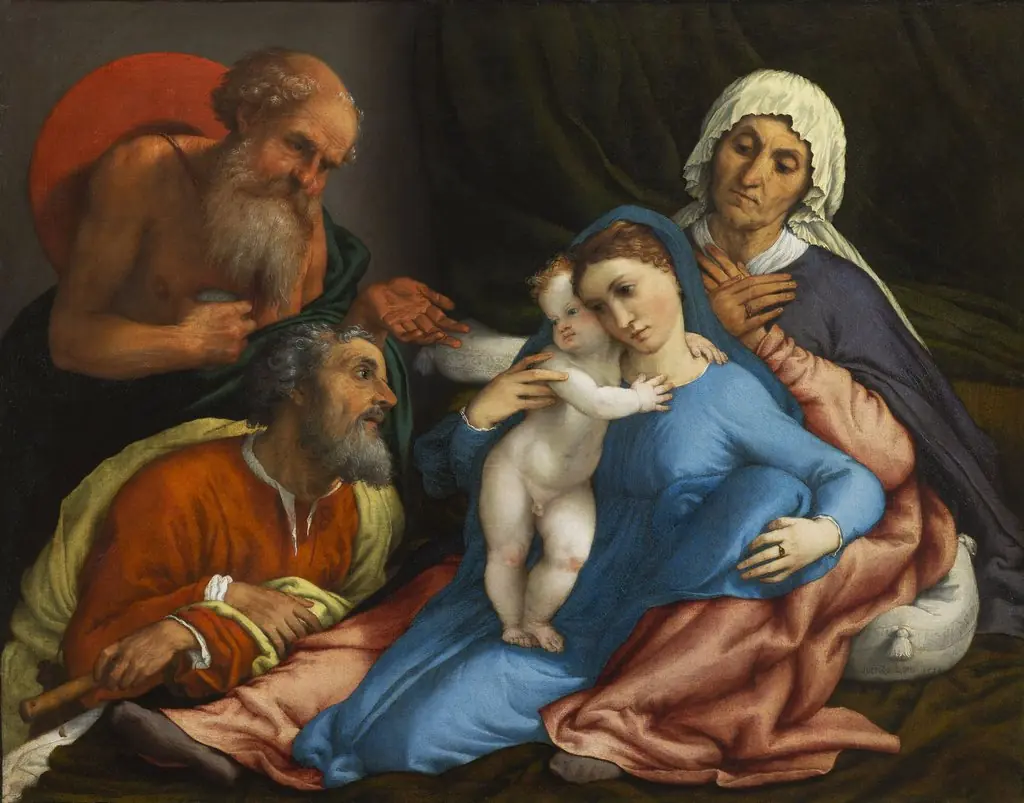
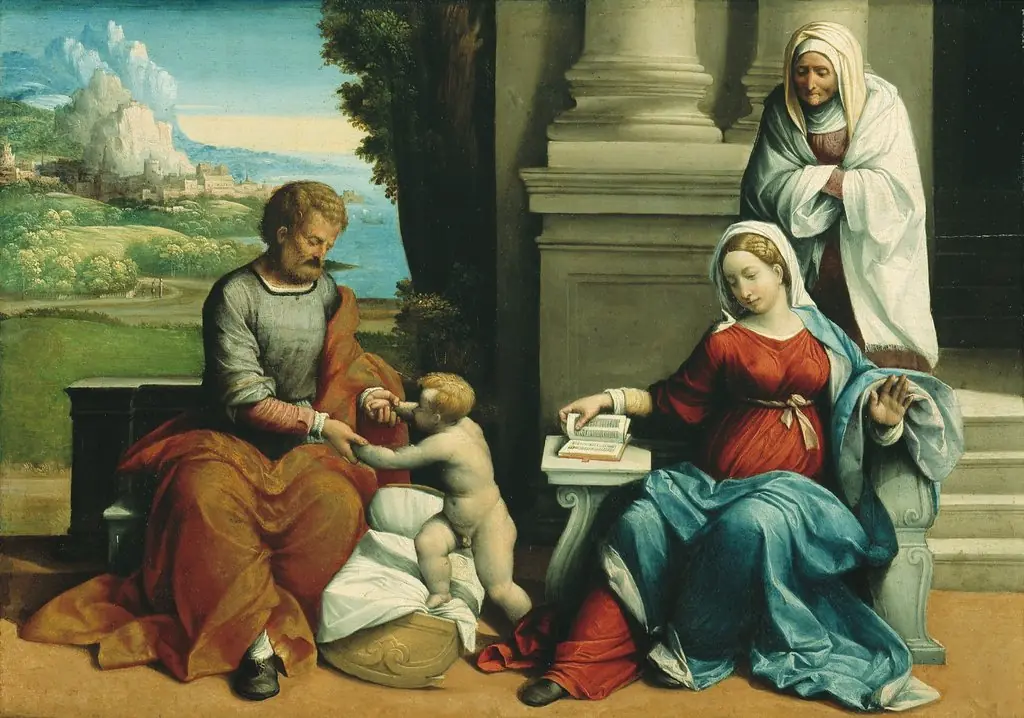
The Holy Family with Saint Catherine of Alexandria is an oil painting by the Mannerist artist Lorenzo Lotto. It dates from 1533 and is held in the collection of the Accademia Carrara.
About this work
Overview
Painted in 1533 by Lorenzo Lotto, this oil-on-canvas work depicts the Holy Family alongside Saint Catherine of Alexandria.
Painted in 1533 by Lorenzo Lotto, this oil-on-canvas work depicts the Holy Family alongside Saint Catherine of Alexandria. Signed and dated by the artist, it is the earliest known version of the composition. Measuring 85.7 by 110.8 centimeters, it resides in the Accademia Carrara in Bergamo. Six subsequent copies exist, but this original is recognized for its refined execution and compositional clarity.
Subject & Meaning
The painting unites the Virgin Mary, the Christ Child, and Saint Joseph with Saint Catherine, a learned martyr often associated with divine wisdom. Catherine, identifiable by her wheel and crown, stands beside the family, her presence suggesting a bridge between earthly devotion and spiritual knowledge. The grouping reflects devotional ideals of the period, emphasizing familial tenderness and the intercession of saints.
Technique & Style
Lotto employed subtle tonal transitions and delicate brushwork to render textures—fabric, skin, and metal—with quiet realism. The figures are arranged in a compact, intimate group, avoiding grandeur in favor of psychological presence. Light falls naturally across the scene, enhancing the sense of quiet contemplation. His palette, though restrained, includes rich reds and deep blues that anchor the composition without overwhelming it.
History & Provenance
The painting entered the Accademia Carrara’s collection in the 19th century, having likely remained in northern Italian private hands since its creation. Its signature and date confirm Lotto’s direct authorship, distinguishing it from later replicas. The exceptional preservation and lack of significant alterations support its status as the original prototype, with copies circulating in other collections across Lombardy and the Veneto.
Context
Created during Lotto’s mature period in northern Italy, the work reflects his engagement with Venetian colorism and the devotional trends of the Counter-Reformation. Though not part of a major commission, it aligns with private patronage practices where saints were included in domestic religious imagery. Lotto’s focus on individual expression and emotional nuance sets it apart from more formulaic contemporaries.
Legacy
Though not widely reproduced in its time, the painting influenced regional artists through its intimate portrayal of sacred figures. The six known copies attest to its resonance among collectors seeking devotional imagery with personal depth. Today, it stands as a key example of Lotto’s ability to merge spiritual themes with human tenderness, offering a quiet counterpoint to the grander narratives of the High Renaissance.
Own this work as a print
Artist & collection
Artist
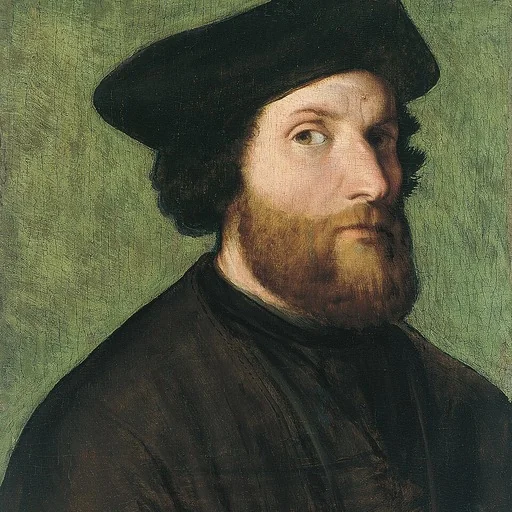
Lorenzo Lotto (c. 1480 – 1556/57) was an Italian Renaissance painter, draughtsman, and illustrator, traditionally placed in the Venetian school, though much of his career was spent in other north Italian cities. He…