Artwork
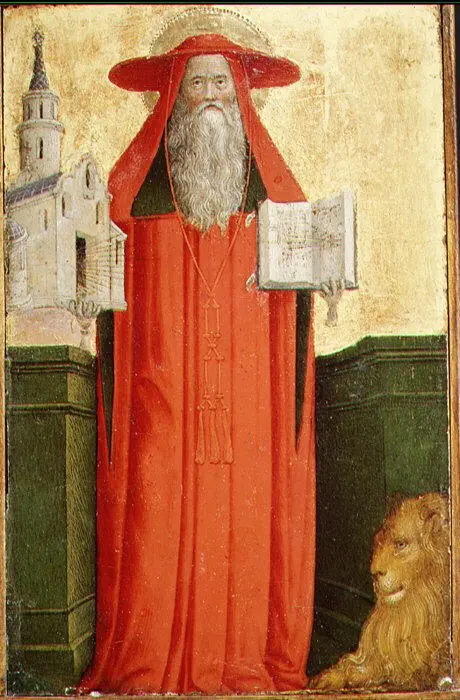
Saint Jerome in his Study
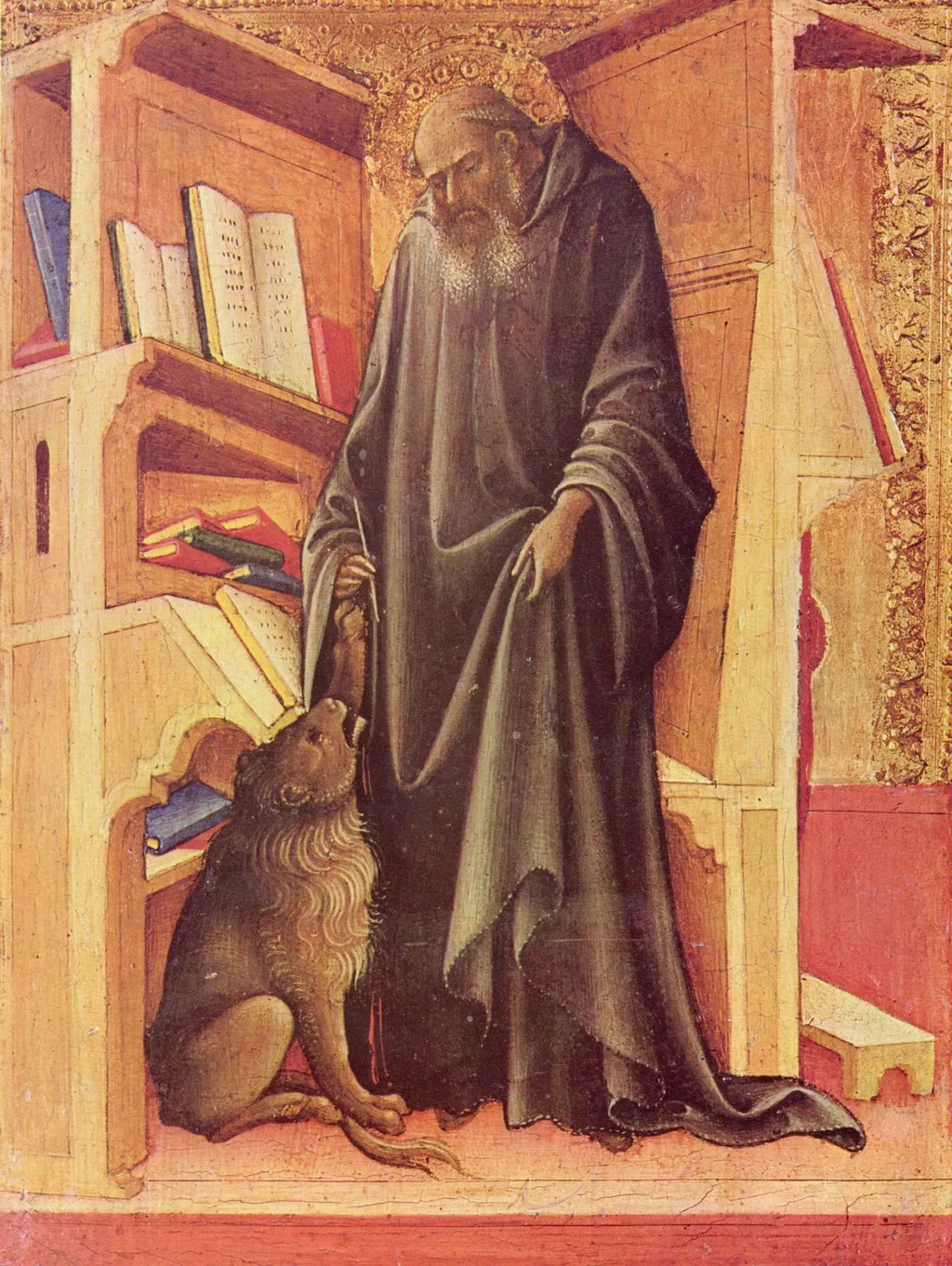
Saint Jerome in his Study is a tempera painting by the Byzantine icon painting artist Lorenzo Monaco. It dates from 1400 and is held in the collection of the Rijksmuseum.
About this work
Overview
Lorenzo Monaco’s tempera work titled *Saint Jerome in his Study* dates from around 1400 and is part of the Rijksmuseum collection. The composition presents the saint within a modest interior, surrounded by shelves of books and a lion at his feet, conveying an atmosphere of scholarly solitude and devotion.
Subject & Meaning
The figure is Saint Jerome, the 4th‑century biblical scholar famed for translating the Bible into Latin. He is shown in a dark, flowing robe, his hand holding a strip of cloth, while a halo marks his sanctity. The lion, a traditional attribute, underscores his legendary encounter with the animal, symbolising the harmony between learning and nature.
Technique & Style
Executed in egg tempera, the painting achieves fine, layered coloration that renders the textures of wood, fabric, and fur with subtle depth. Monaco’s handling of light creates a gentle illumination that highlights the saint’s face and the spines of the books, while the overall palette remains restrained, emphasizing contemplation over drama.
History & Provenance
Created at the turn of the 15th century, the work reflects the devotional art commissioned for private chapels or scholarly patrons. It entered the Rijksmuseum’s holdings in the 20th century, where it remains on display as an example of early Italian tempera painting and the iconography of Saint Jerome.
Own this work as a print
Artist & collection

Artist
Lorenzo Monaco was a Sienese painter and miniaturist of the late Gothic to early Renaissance age, active principally in Florence.