Artwork
Shepherd and Shepherdess Conversing in a Landscape (Berger et bergère conversant)
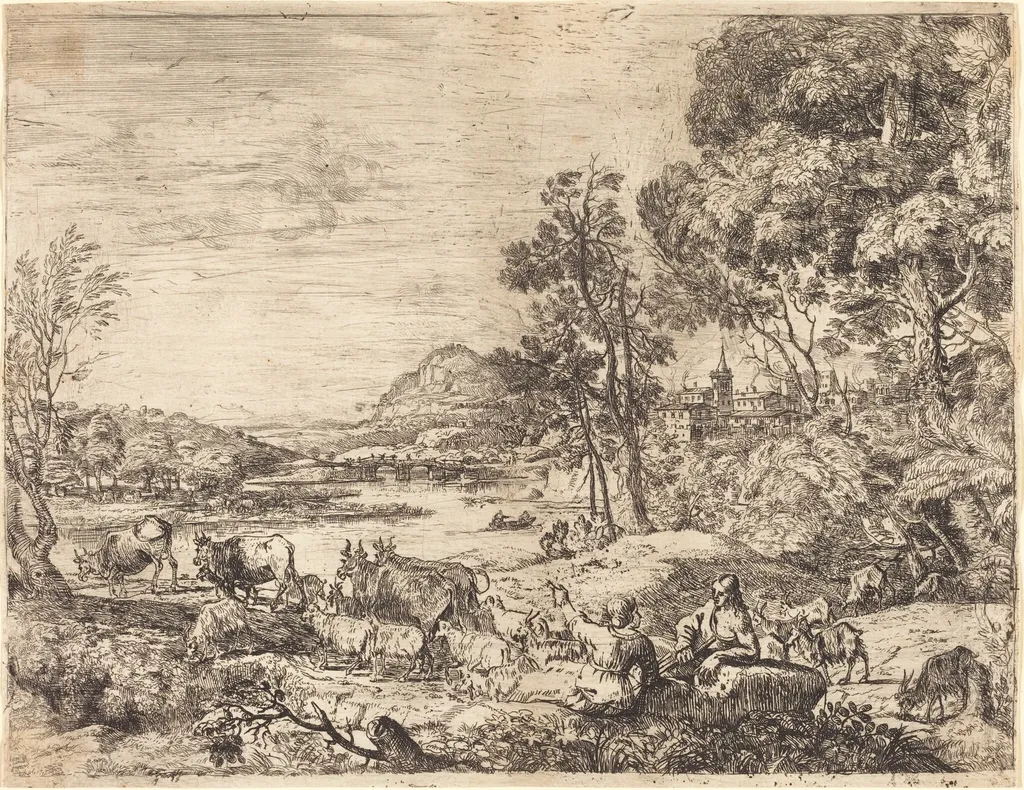
Shepherd and Shepherdess Conversing in a Landscape (Berger et bergère conversant) is an ink print by the Baroque artist Claude Lorrain. It dates from 1651 and is held in the collection of the National Gallery of Art. Created around 1651, this etching presents a tranquil rural tableau in which a shepherd and shepherdess engage in quiet conversation.
About this work
Overview
Created around 1651, this etching presents a tranquil rural tableau in which a shepherd and shepherdess engage in quiet conversation. The composition is framed by a gently flowing river, a line of trees, and a distant settlement capped by a church spire, all rendered in a soft, atmospheric light that typifies the artist’s approach to landscape.
Subject & Meaning
The work foregrounds two modestly clothed figures—a seated man on a rock and a standing woman—whose interaction suggests a moment of pastoral intimacy. By placing human activity within an expansive natural setting, the image elevates everyday rural life to the level of historical narrative, a strategy common in the artist’s oeuvre.
Technique & Style
Executed in etching, the piece relies on the gradual accumulation of ink to model forms, producing delicate gradations of shadow and texture. Fine, linear strokes delineate the foliage, giving the trees a lively, almost tactile presence, while the overall tonal harmony conveys a serene ambience.
History & Provenance
The print originates from the French-born, Italy‑based Baroque painter and draughtsman Claude Lorrain, who spent most of his career in Rome. Though primarily known for oil paintings, Lorrain produced a limited number of prints, and this work reflects his mature period of landscape experimentation.
Context
During the mid‑17th century, artists increasingly used idealized countryside scenes to explore themes of harmony between humanity and nature. Lorrain’s inclusion of small figures within grand vistas aligns with contemporary trends that sought to blend genre subjects with the gravitas of history painting.
Own this work as a print
Artist & collection
Artist
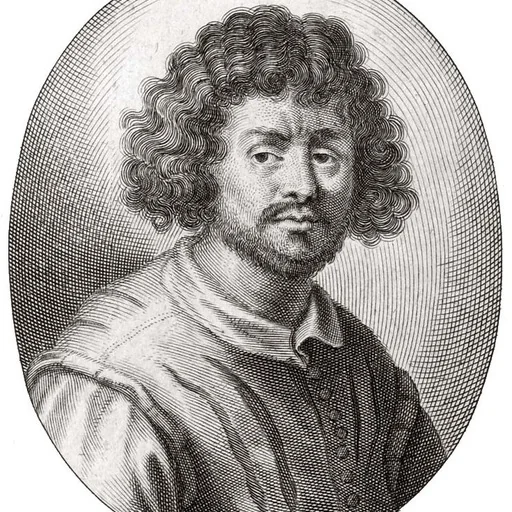
Claude Lorrain (French: ; born Claude Gellée , called le Lorrain in French; traditionally just Claude in English; c.

 Landscape with Fortress and River
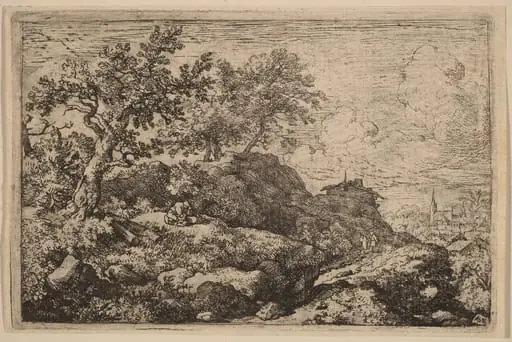 Two Peasants Seated on a Hill
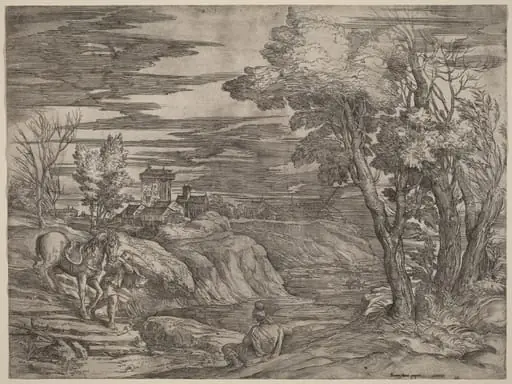 Landscape with a Man Leading a Horse
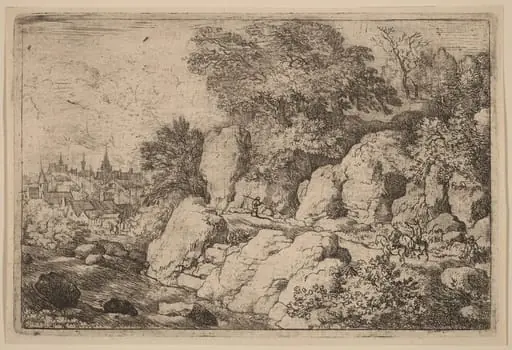 Two Horsemen on a Rocky Path
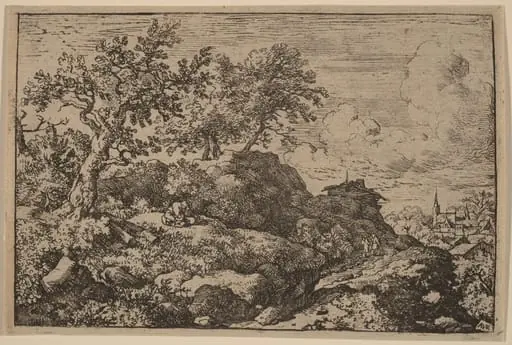 Two Peasants Seated on a Hill
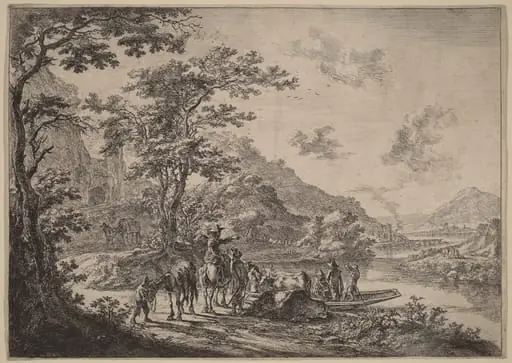 View of the Tiber in the Campagna
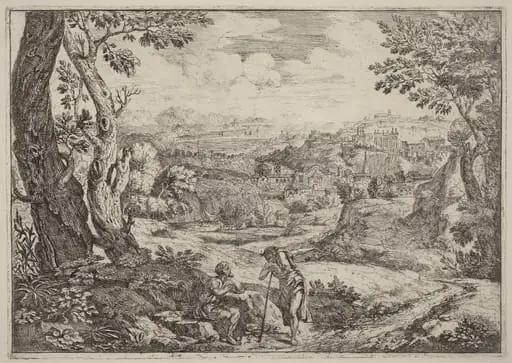 Two Men in Conversation
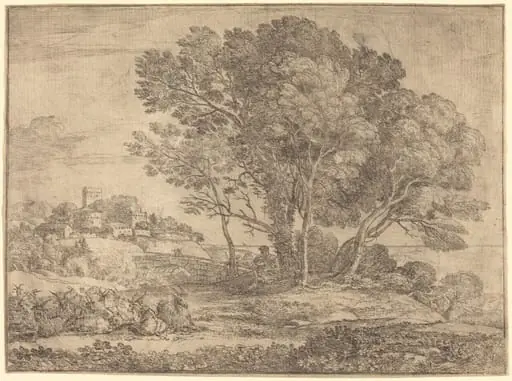 The Goatherd (Le chevrier)
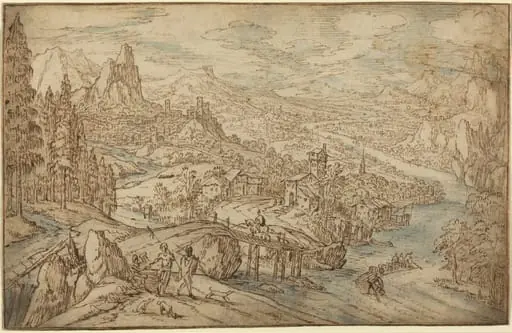 River Landscape
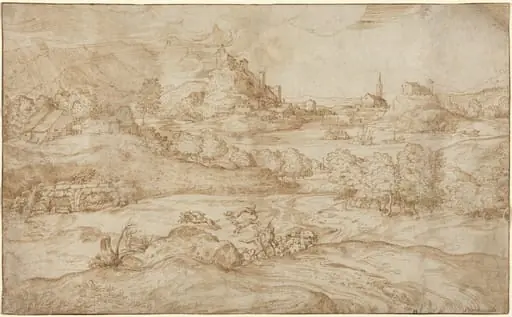 Landscape with Shepherds Driving Away a Wolf
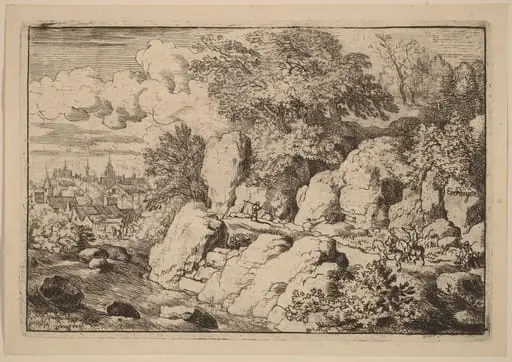 Two Horsemen on a Rocky Path
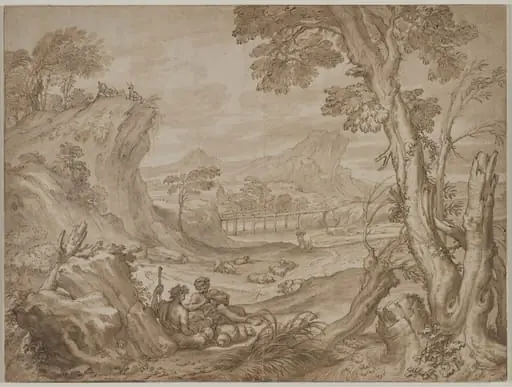 Landscape with Shepherds