Artwork
Two Horsemen on a Rocky Path
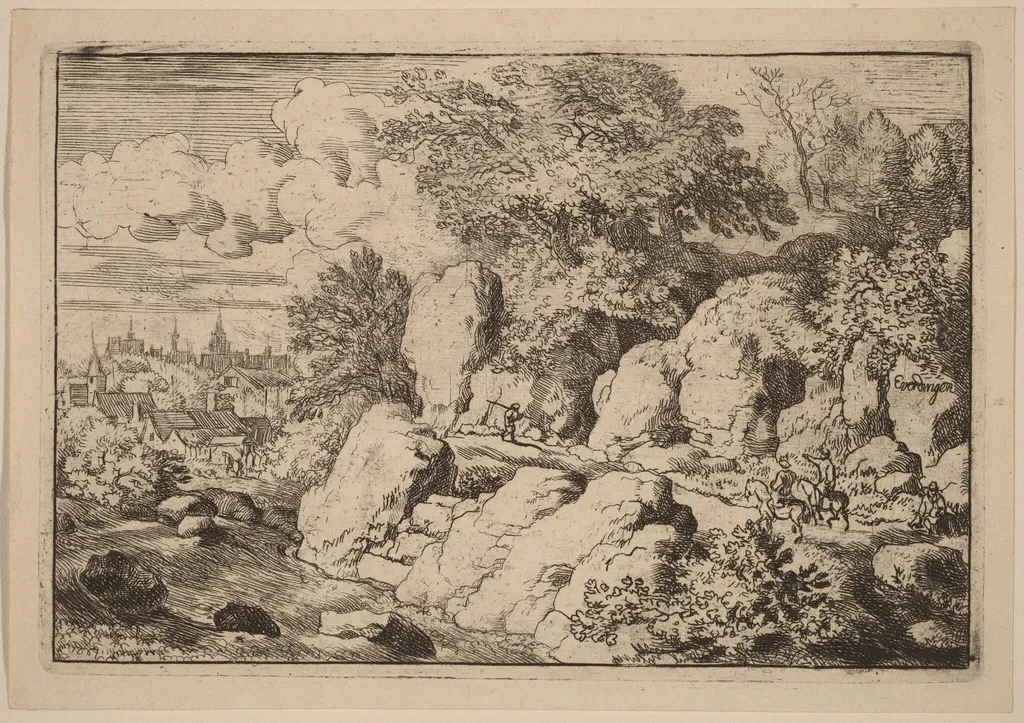
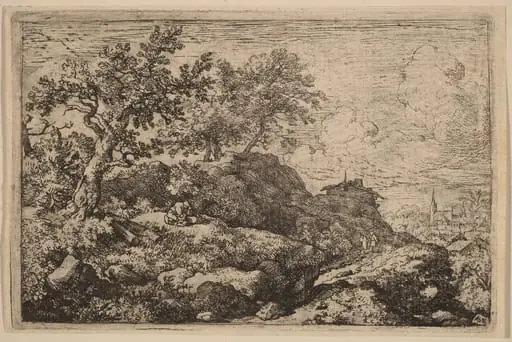
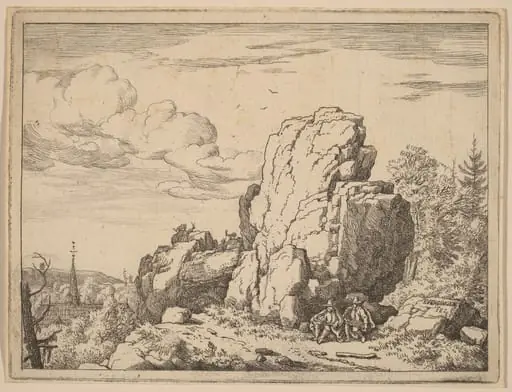
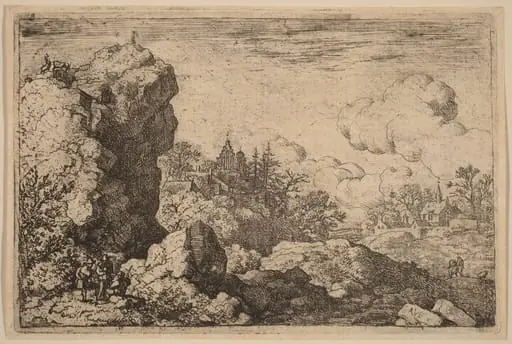
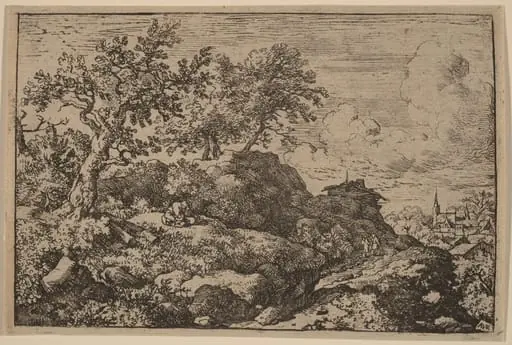
Two Horsemen on a Rocky Path is an ink print by the Baroque artist Allart van Everdingen. It dates from 1650 and is held in the collection of the National Gallery of Art. Created around 1650, this etching with drypoint by Allaert van Everdingen captures a rugged landscape traversed by two riders.
About this work
Overview
Created around 1650, this etching with drypoint by Allaert van Everdingen captures a rugged landscape traversed by two riders.
Created around 1650, this etching with drypoint by Allaert van Everdingen captures a rugged landscape traversed by two riders. As a Dutch Golden Age printmaker, Everdingen specialized in techniques that emphasized texture and atmosphere. The work exemplifies his mastery in translating natural terrain into intricate linear patterns, using the drypoint method to deepen shadows and enhance the tactile quality of the scene.
Subject & Meaning
Two solitary horsemen navigate a narrow, winding path through an untamed rocky environment. Their small scale relative to the imposing landscape suggests human vulnerability against nature’s grandeur. There is no narrative or symbolic intent beyond the quiet passage of travelers through a wild, unyielding terrain, reflecting a broader Dutch interest in the sublime qualities of the natural world.
Technique & Style
Everdingen employed drypoint to scratch fine, burr-rich lines directly into a metal plate, creating soft, velvety darks that hold ink exceptionally well. Combined with etching, this allowed him to define jagged cliffs, gnarled trees, and uneven ground with precision. The dense, overlapping strokes build depth and texture, giving the impression of rough stone and tangled vegetation without relying on tonal washes.
History & Provenance
The print was produced during Everdingen’s mature period, following his travels through Scandinavia, which deeply influenced his landscape sensibility. Though no specific early ownership records are widely documented, the work appears in major European collections by the 18th century, indicating its early recognition among print collectors for its technical finesse and atmospheric effect.
Context
In mid-17th century Holland, landscape prints flourished as both artistic expression and commercial products. Everdingen’s work stood apart for its emphasis on dramatic, untamed terrain rather than cultivated countryside. His focus on rocky, northern vistas aligned with a growing fascination among Dutch artists for wilder, more emotionally charged natural settings beyond the familiar lowlands.
Legacy
Everdingen’s use of drypoint in this print influenced later generations of printmakers seeking to convey texture and mood through direct, expressive line work. While not widely imitated in his time, his approach to landscape as an immersive, tactile experience contributed to the evolution of Romantic-era printmaking, where nature’s rawness became a central theme.
Artist & collection
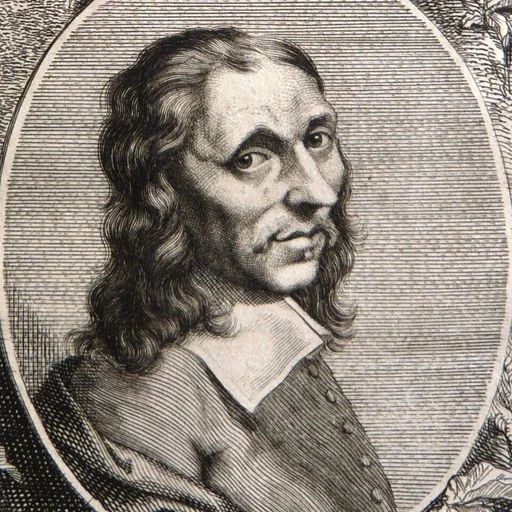
Artist
Allaert van Everdingen (Dutch pronunciation: ; bapt. 18 June 1621 – 8 November 1675 (buried)), was a Dutch Golden Age painter and printmaker in etching and mezzotint.