Artwork
Family Group
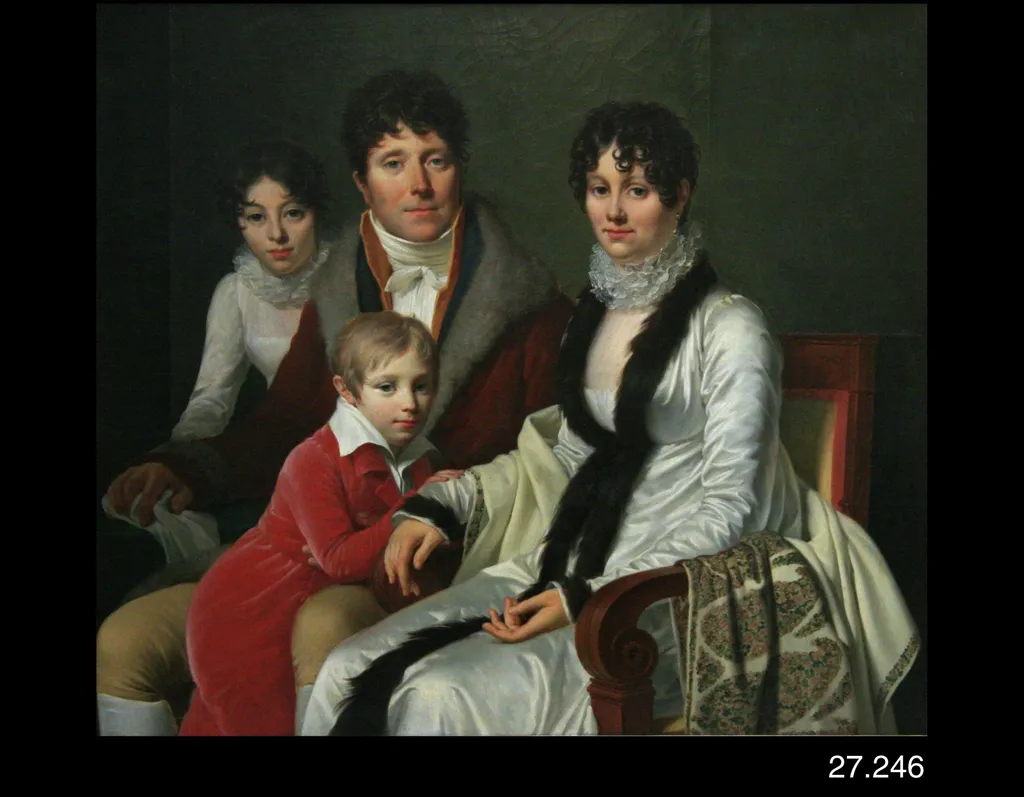
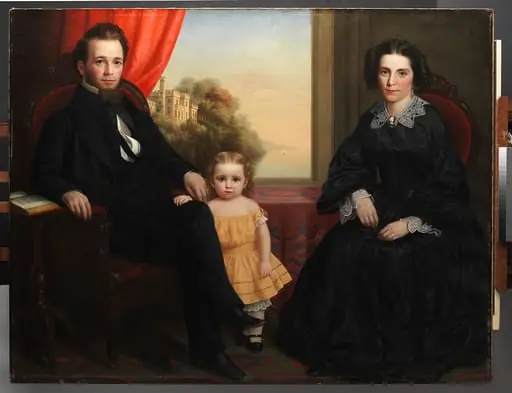
Family Group is an oil painting by the Neoclassicist artist Louis-André-Gabriel Bouchet. It dates from 1812 and is held in the collection of the Detroit Institute of Arts.
About this work
To his right, a woman in a white dress with a black shawl sits, while a young girl in a white dress with a red vest sits to the left of the father.
The painting "Family Group" by Louis-André-Gabriel Bouchet, created in 1812, features a family of four seated together. The father, dressed in a red coat with a white shirt and black vest, sits with his arm around a young boy in a red coat. To his right, a woman in a white dress with a black shawl sits, while a young girl in a white dress with a red vest sits to the left of the father.
The family is depicted in a formal yet intimate setting, with the father's arm around the young boy conveying a sense of warmth and closeness. The woman's gentle gaze towards the viewer adds a sense of serenity to the scene.
For more information on the artist's use of chiaroscuro, explore Louis-André-Gabriel Bouchet's works.
Overview
Louis-André-Gabriel Bouchet painted *Family Group* in 1812 using oil on canvas. A student of Jacques-Louis David, he was trained in the neoclassical tradition and won the Prix de Rome in 1797. The work belongs to the collection of the Detroit Institute of Arts and reflects his broader practice of blending portraiture with historical and domestic themes, moving beyond grand narratives to quieter, personal moments.
Subject & Meaning
The painting depicts a nuclear family of four seated in a composed, interior setting. The father, clad in a red coat, embraces his young son, while a mother and daughter sit nearby, dressed in white with dark accents. The arrangement suggests domestic harmony, with the father’s gesture and the mother’s quiet gaze reinforcing emotional connection. There is no overt symbolism; the meaning lies in the restrained intimacy of everyday familial bonds.
Technique & Style
Bouchet employs a refined neoclassical style with controlled brushwork and balanced composition. Figures are rendered with clarity and soft modeling, avoiding dramatic lighting in favor of even illumination. The palette is muted yet deliberate, with reds and whites creating subtle focal points. While chiaroscuro is present, it is subdued, serving to define form rather than heighten emotion, aligning with the calm tone of the scene.
History & Provenance
Created in 1812, the painting emerged during Bouchet’s mature period, after his studies in Rome and return to France. It was likely commissioned by a bourgeois family seeking to document their status and kinship. The work remained in private hands until entering the Detroit Institute of Arts’ collection, where it has been held since the early 20th century, representing a rare example of French domestic portraiture from the era.
Context
In early 19th-century France, neoclassicism dominated official art, favoring historical and mythological subjects. Bouchet’s *Family Group* stands apart as a quiet counterpoint—part of a growing trend among artists to depict private life with dignity. This shift mirrored broader social changes, as the bourgeoisie increasingly sought visual representation of their values: order, virtue, and familial continuity.
Legacy
Though Bouchet is less known today than his mentor David, *Family Group* endures as a thoughtful example of how neoclassical technique could be adapted to intimate subjects. It contributes to the understanding of how portraiture evolved beyond aristocratic grandeur to include middle-class domesticity, influencing later 19th-century genre painting without overtly breaking from academic conventions.
Own this work as a print
Artist & collection
Artist
Louis-André-Gabriel Bouchet (1759 – 7 July 1842) was a French historical painter and a pupil of Jacques-Louis David.

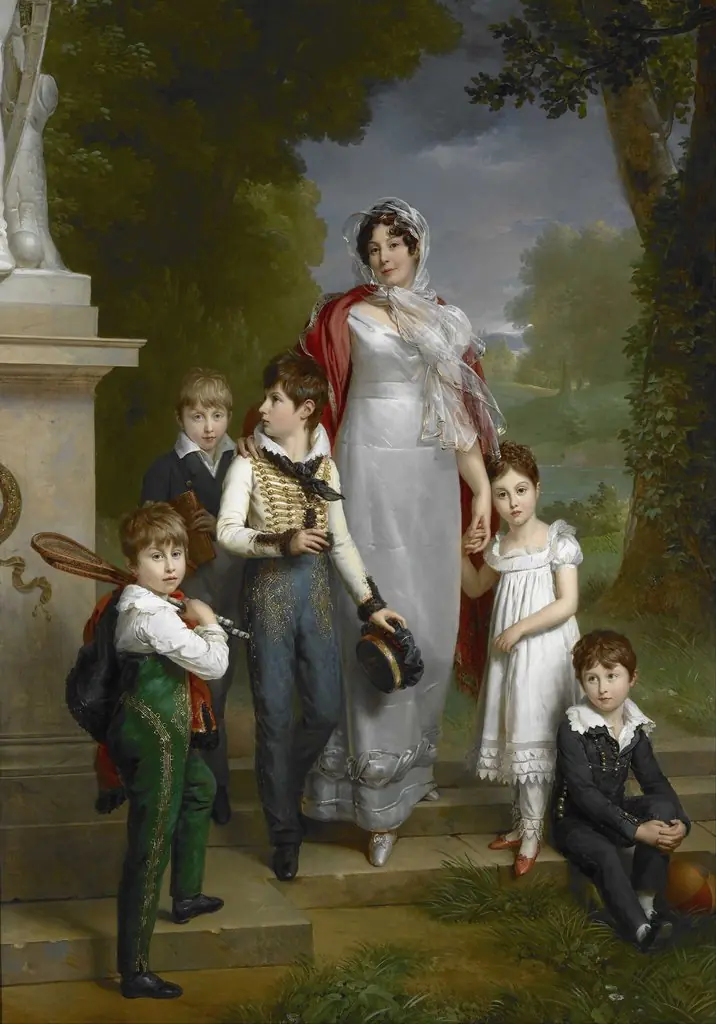 Portrait of Louise-Antoinette-Scholastique Guéhéneuc, Madame la Maréchale Lannes, Duchesse de Montebello, with her Children
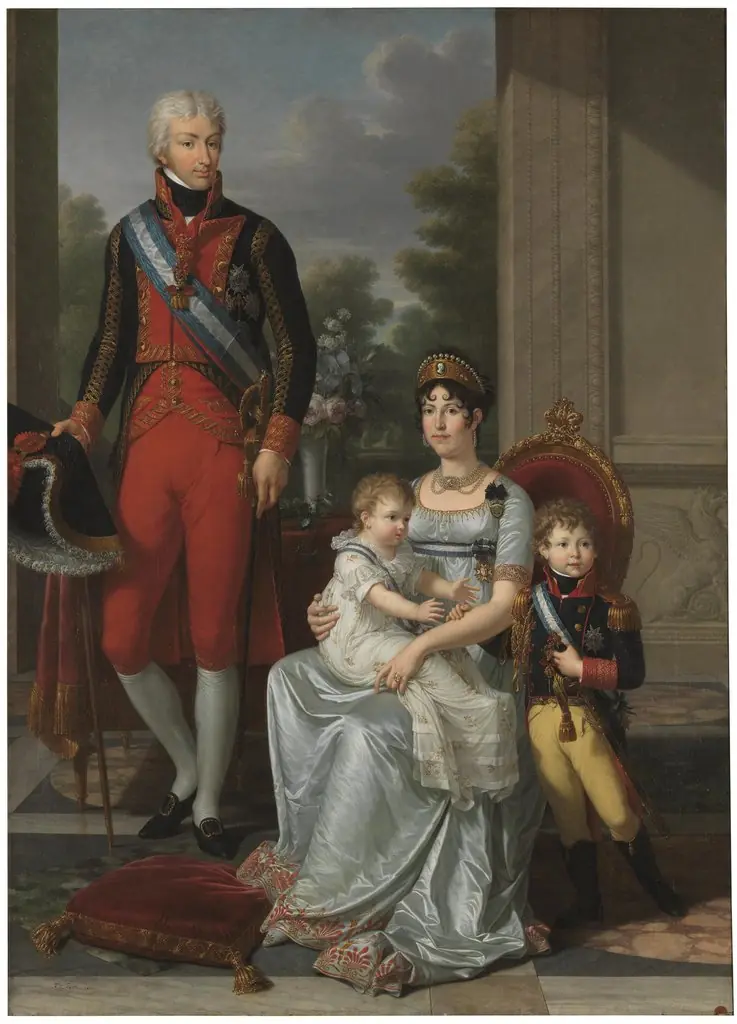 The Etrurian Royal Family
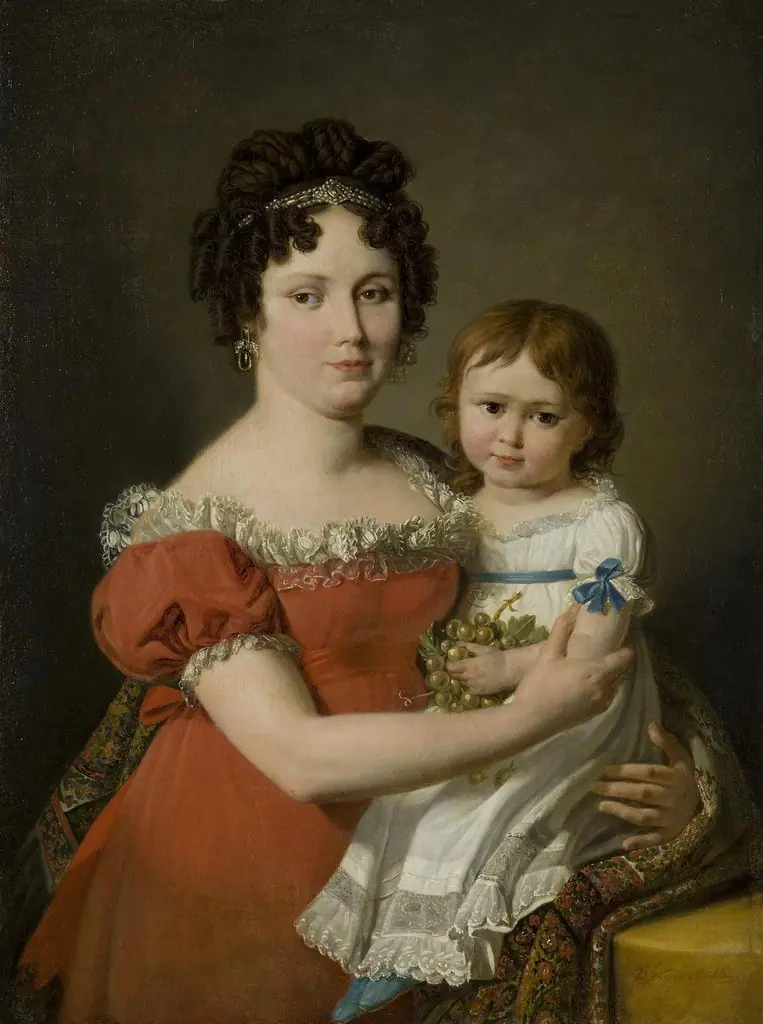 Portrait of A.P. Mailevskaya with Her Daughter
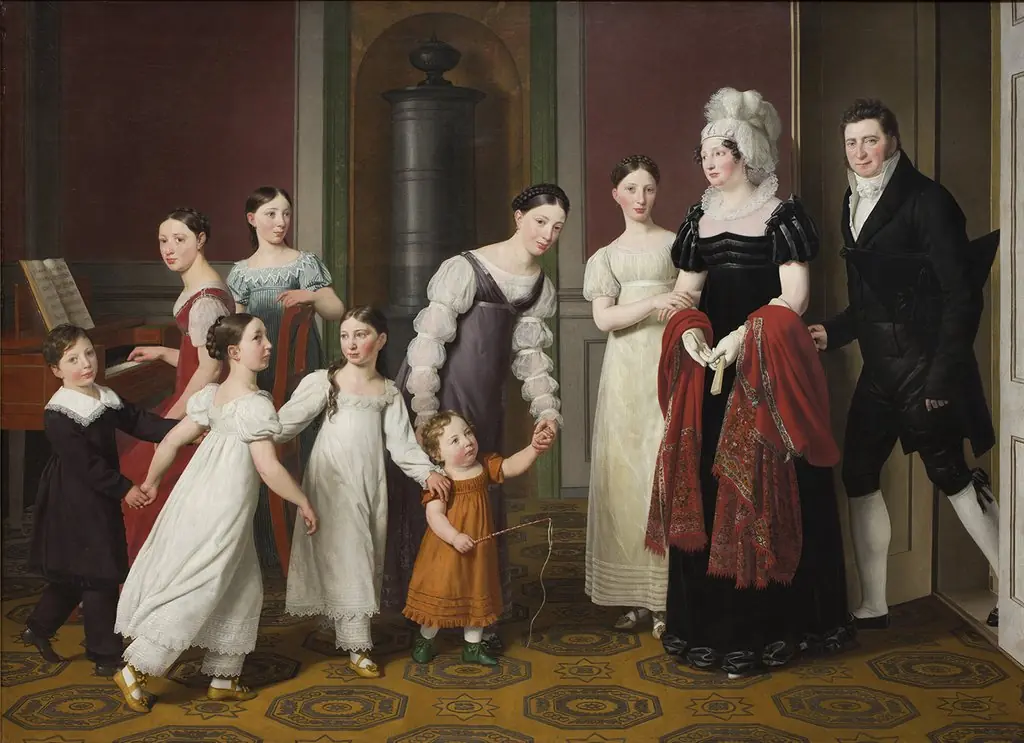 Familien Nathanson
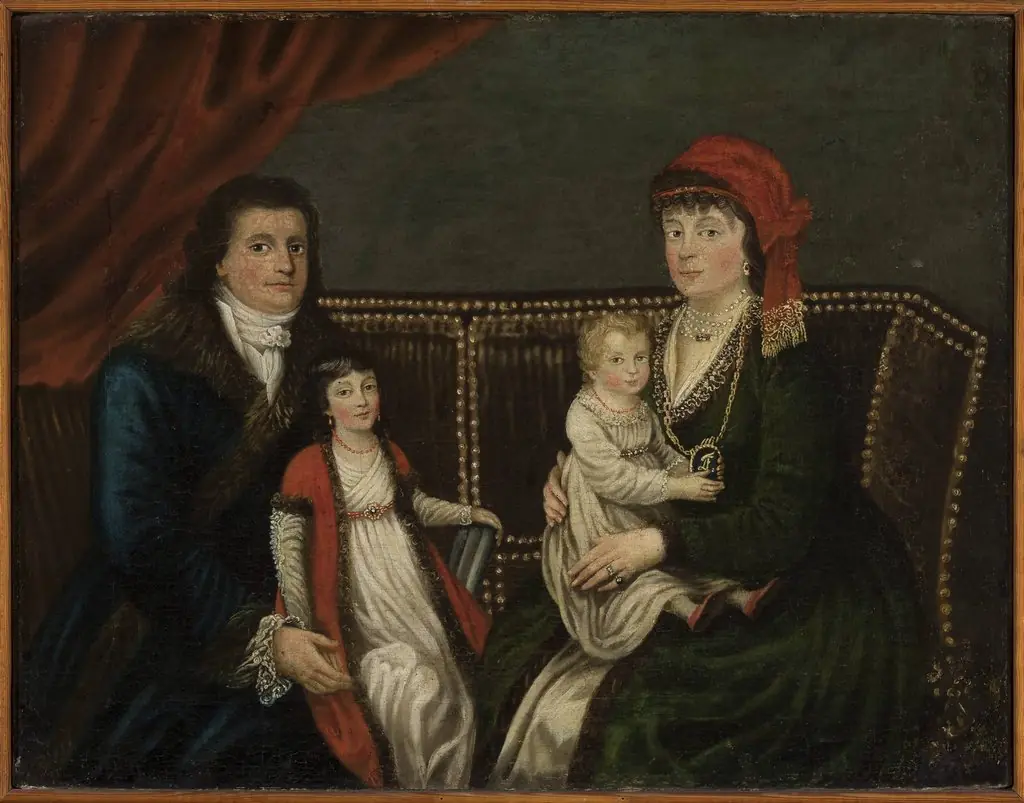 Portrait of the Lafontaine family, Leopold (1756–1812), surgeon, with his wife Teresa née Korneli (1768–1827) and daughters, Zofia (?–1831) and Wiktoria (1800–1849)
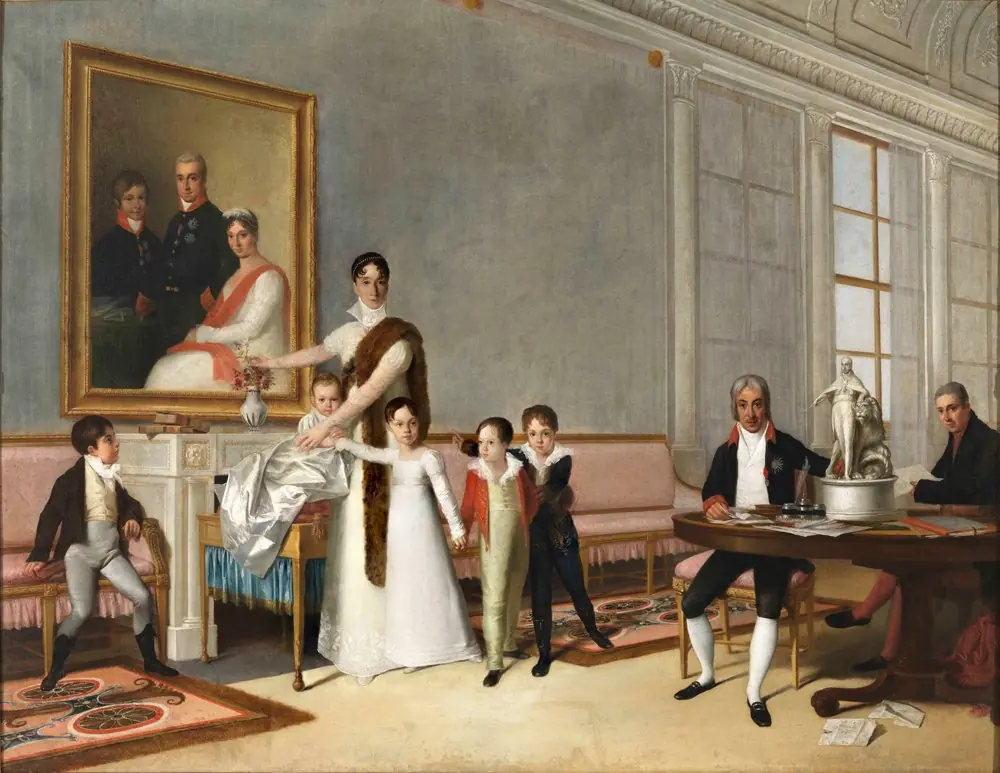 Portrait of the Family of the 1st Viscount of Santarém
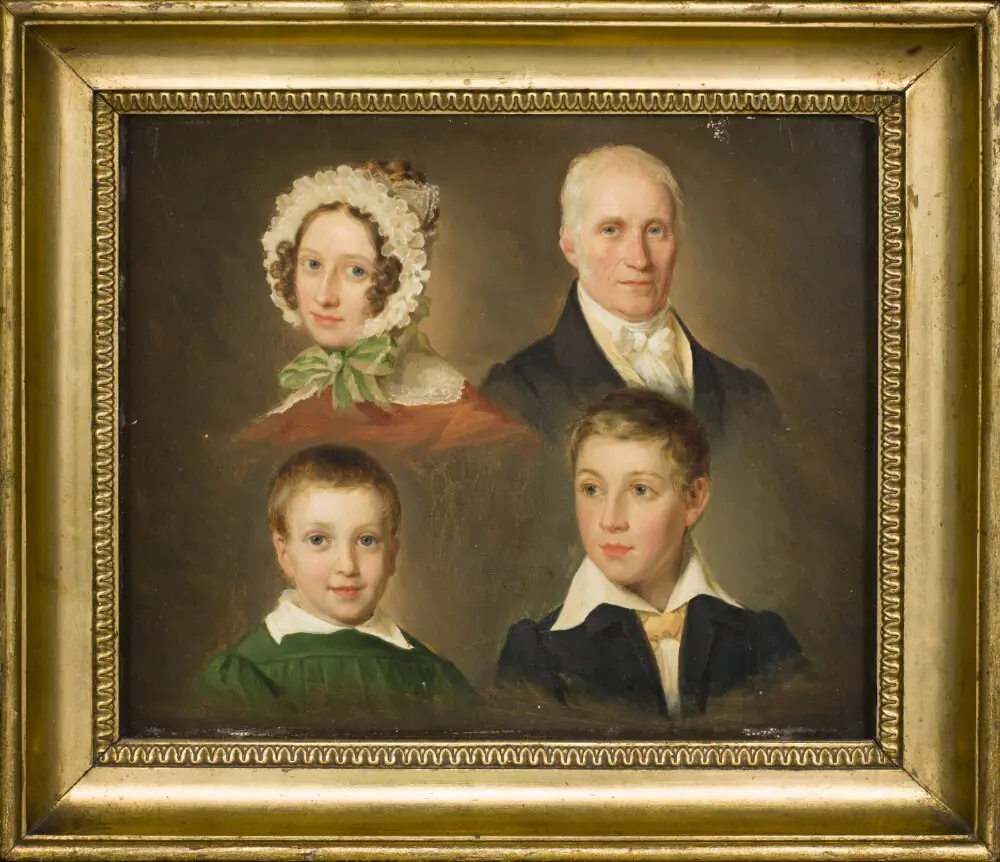 The Artist’s Father, Wife, Son and Foster Son
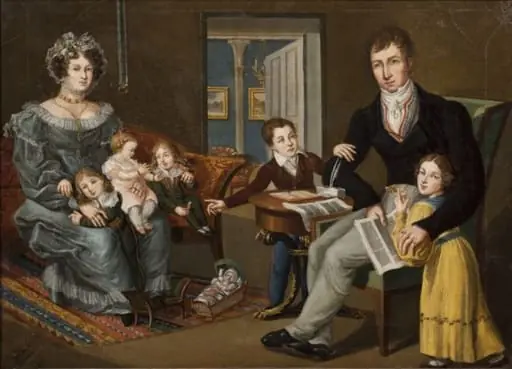 Familia unui librar sas în interior Biedermeier
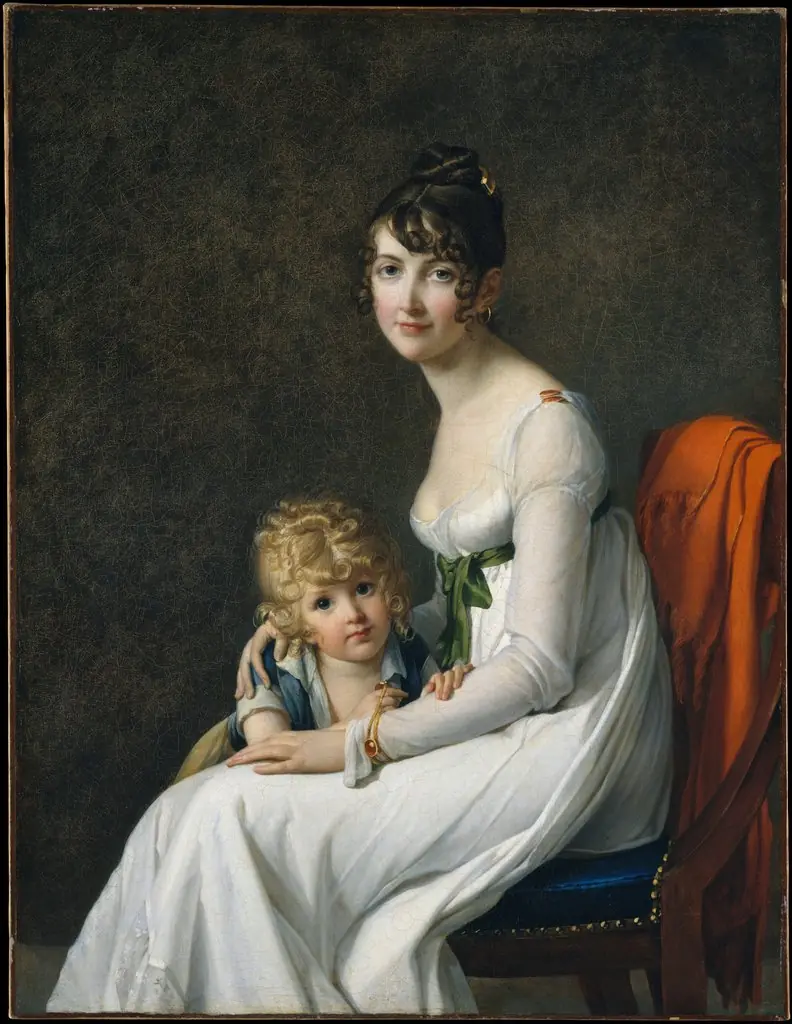 Madame Philippe Panon Desbassayns de Richemont (Jeanne Eglé Mourgue, 1778–1855) and Her Son, Eugène (1800–1859)
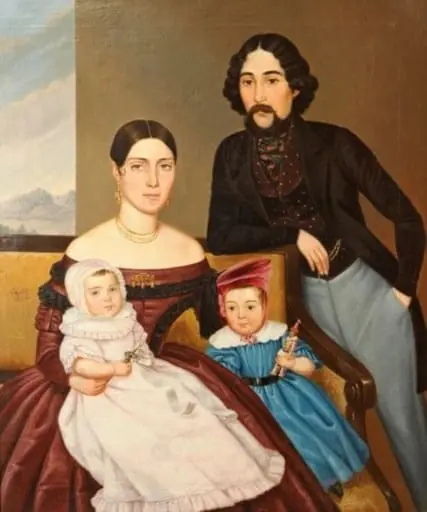 Portret de familie
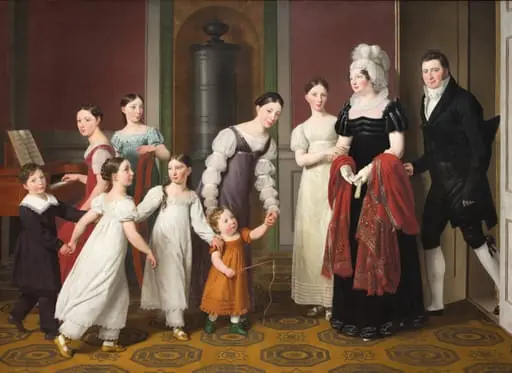 The Nathanson Family
 A Family Group