Artwork
Egypt and Nubia, Volume II: Fragments of the Great Colossi at the Memnonium, Thebes
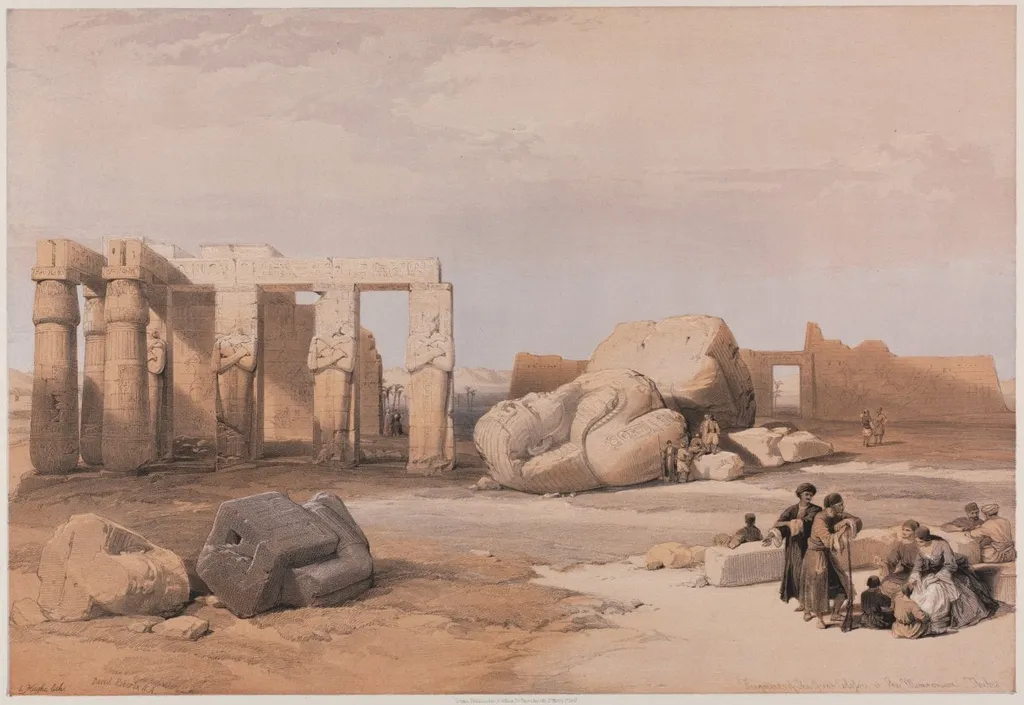
Egypt and Nubia, Volume II: Fragments of the Great Colossi at the Memnonium, Thebes is a print by the Romanticist artist Louis Haghe. It dates from 1847 and is held in the collection of the Cleveland Museum of Art. This print is part of a mid-19th-century series documenting Egyptian monuments, produced through advanced color lithography.
About this work
You see a detailed print of ancient Egyptian ruins, with big stone statues.
The print is special because it shows a place that was hard for Europeans to visit at the time. It's based on watercolors made by another artist, David Roberts, who traveled to Egypt.
Check out the work of artist Louis Haghe (British, 1806–1885) for more images like this.
Overview
The work belongs to a broader effort to visually record sites in Egypt and Nubia, then largely inaccessible to most Europeans.
This print is part of a mid-19th-century series documenting Egyptian monuments, produced through advanced color lithography. Based on watercolors by David Roberts, the image was translated into print by Louis Haghe, a skilled British lithographer. The work belongs to a broader effort to visually record sites in Egypt and Nubia, then largely inaccessible to most Europeans. Its scale and precision reflect the technical achievements of the period’s printmaking.
Subject & Meaning
The print depicts fragments of the colossal statues at the Memnonium near Thebes, ancient ruins that had long fascinated European travelers. These monumental remains symbolized the grandeur and mystery of Egypt’s past. By capturing their scale and decay, the image conveys both awe and the passage of time, offering viewers a tangible connection to a distant civilization through accurate topographical detail.
Technique & Style
Executed in color lithography, the print combines multiple stone plates to achieve subtle tonal gradations and rich hues. Haghe’s meticulous draftsmanship translates Roberts’s watercolor studies into precise, layered imagery. The technique allowed for fine detail in architectural forms and atmospheric effects, distinguishing this series from earlier, more schematic depictions of Egyptian sites.
History & Provenance
The print was produced between 1838 and 1846 as part of a multi-volume publication based on Roberts’s travels. John Bonebrake’s collection of 134 such prints was later acquired by the Cleveland Museum of Art, significantly enriching its holdings of 19th-century Orientalist imagery. A portion of these prints was included in the museum’s 1992 exhibition on 19th-century views of Egypt.
Context
During the 1830s and 1840s, European interest in Egypt surged following Napoleon’s campaign and the decipherment of the Rosetta Stone. Travel to the region remained difficult, making illustrated accounts vital for public understanding. Haghe’s prints, grounded in firsthand observation, served as authoritative visual references for scholars and the public alike.
Legacy
The series established a new standard for archaeological illustration, influencing later documentation of ancient sites. Haghe’s fidelity to Roberts’s observations helped preserve visual records of monuments before extensive restoration or damage. These prints remain important historical documents, bridging 19th-century exploration and modern Egyptology.
Artist & collection
Artist
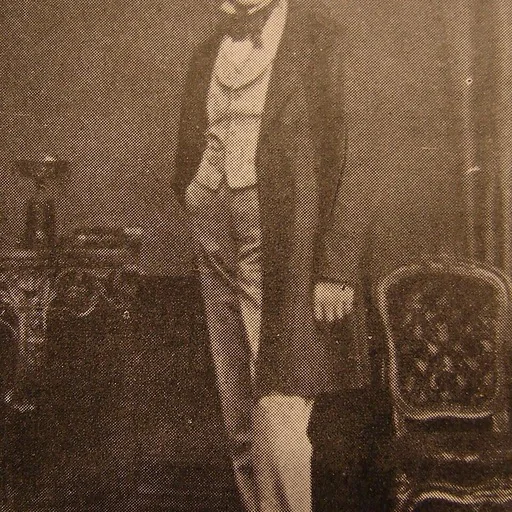
Louis Haghe (17 March 1806 – 9 March 1885) was a lithographer and watercolourist from the Netherlands and then the United Kingdom.

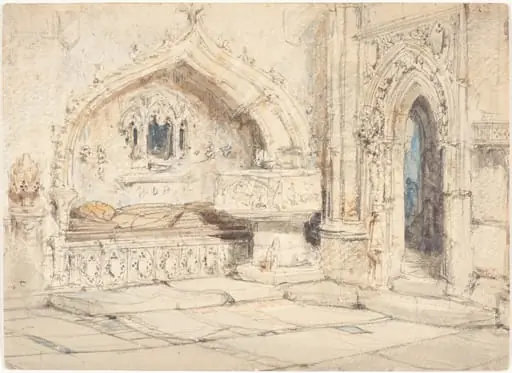 Interior of a Church with a Wall Tomb and Medieval Font
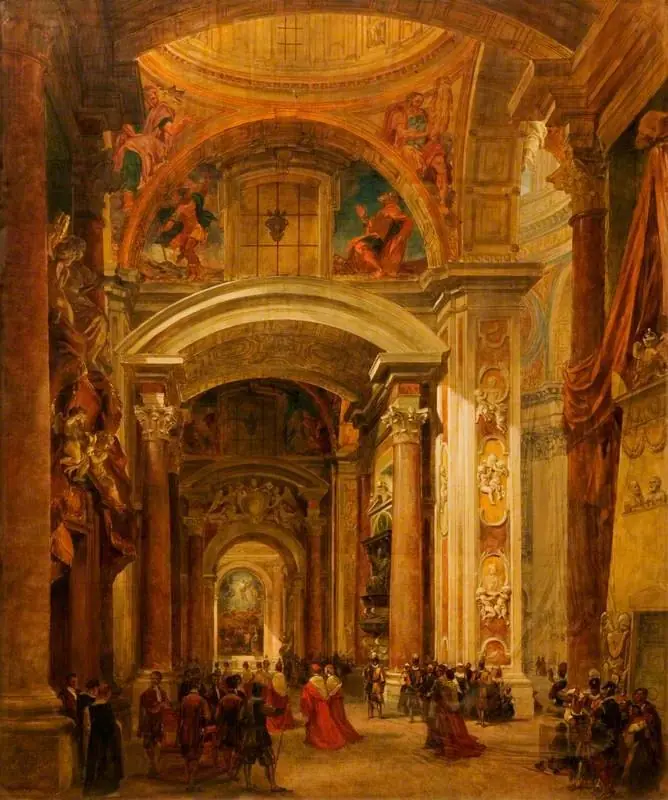 Interior of St Peter's, Rome
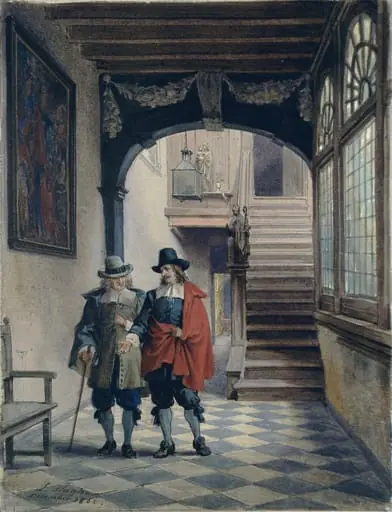 The Corridor, Brewer's Hall, Antwerp
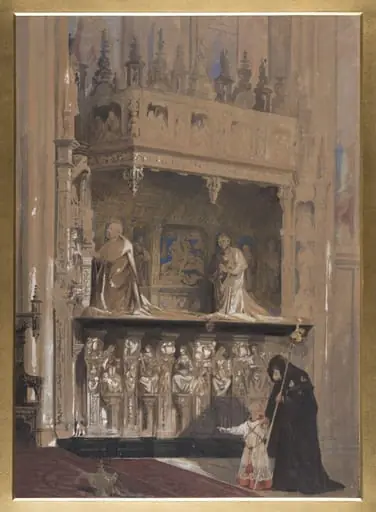 Monument of the Cardinald D'Amboise in Rouen Cathedral
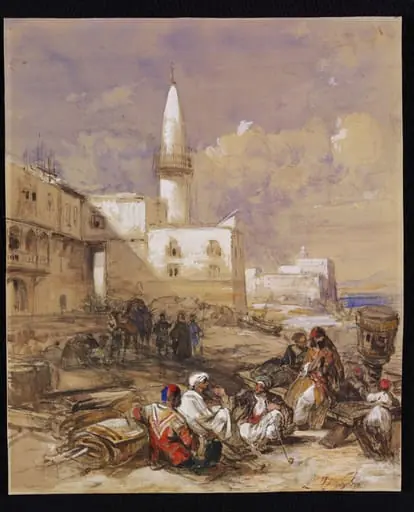 The Quay at Suez
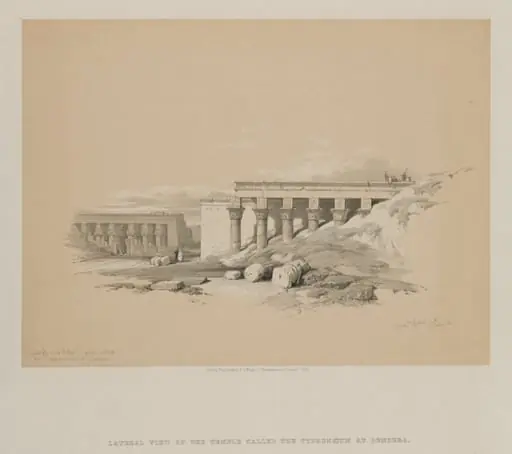 Egypt and Nubia, Volume II: Lateral View of the Temple called The Typhonoeum at Dendera
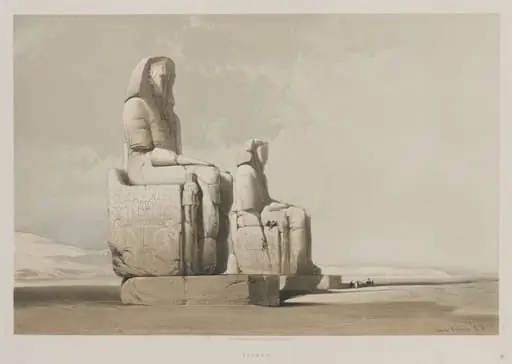 Egypt and Nubia, Volume I: Thebes
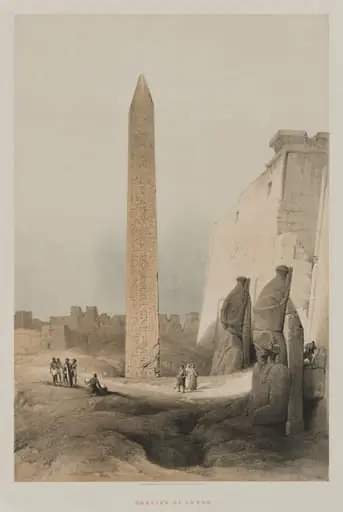 Egypt and Nubia, Volume I: Luxor
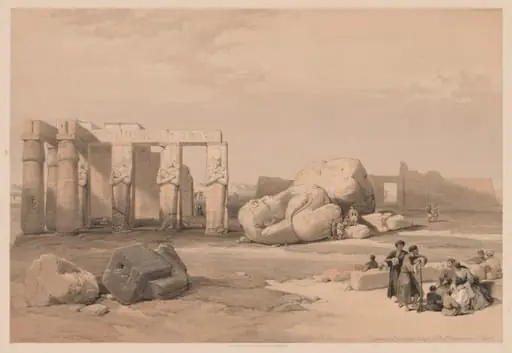 Egypt and Nubia: Volume II - No. 4, Fragments of the Great Colossi, at the Memnonium
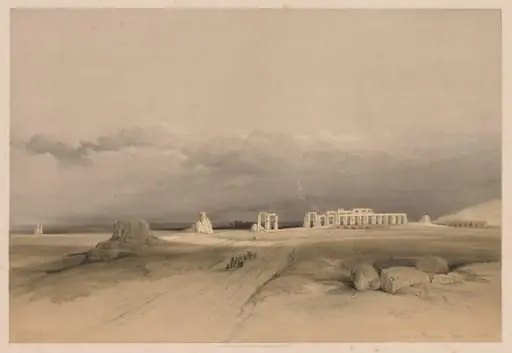 Egypt and Nubia: Volume II - No. 8, Ruins of the Memnonium, Thebes
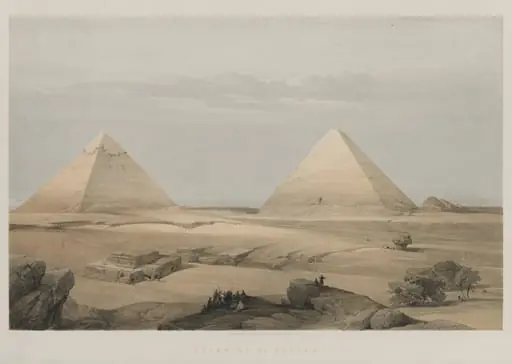 Egypt and Nubia, Volume II: Pyramids of Geezeh
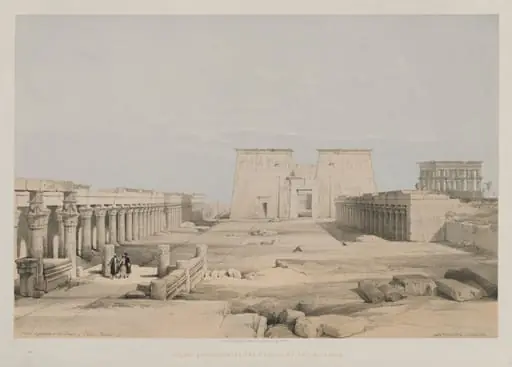 Egypt and Nubia, Volume I: Grand Approach to the Temple of Philae, Nubia
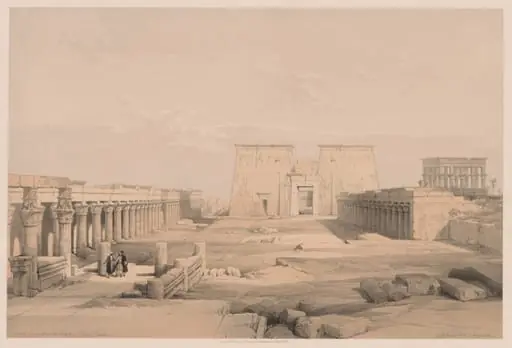 Egypt and Nubia: Volume I - No. 42, Grand Approach to the Temple of Philae, Nubia
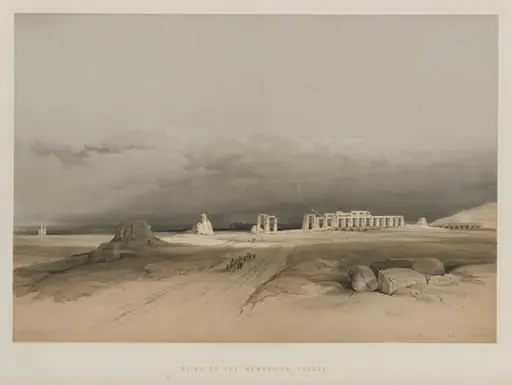 Egypt and Nubia, Volume II: Ruins of Memnonium, Thebes