Artwork
Monument of the Cardinald D'Amboise in Rouen Cathedral
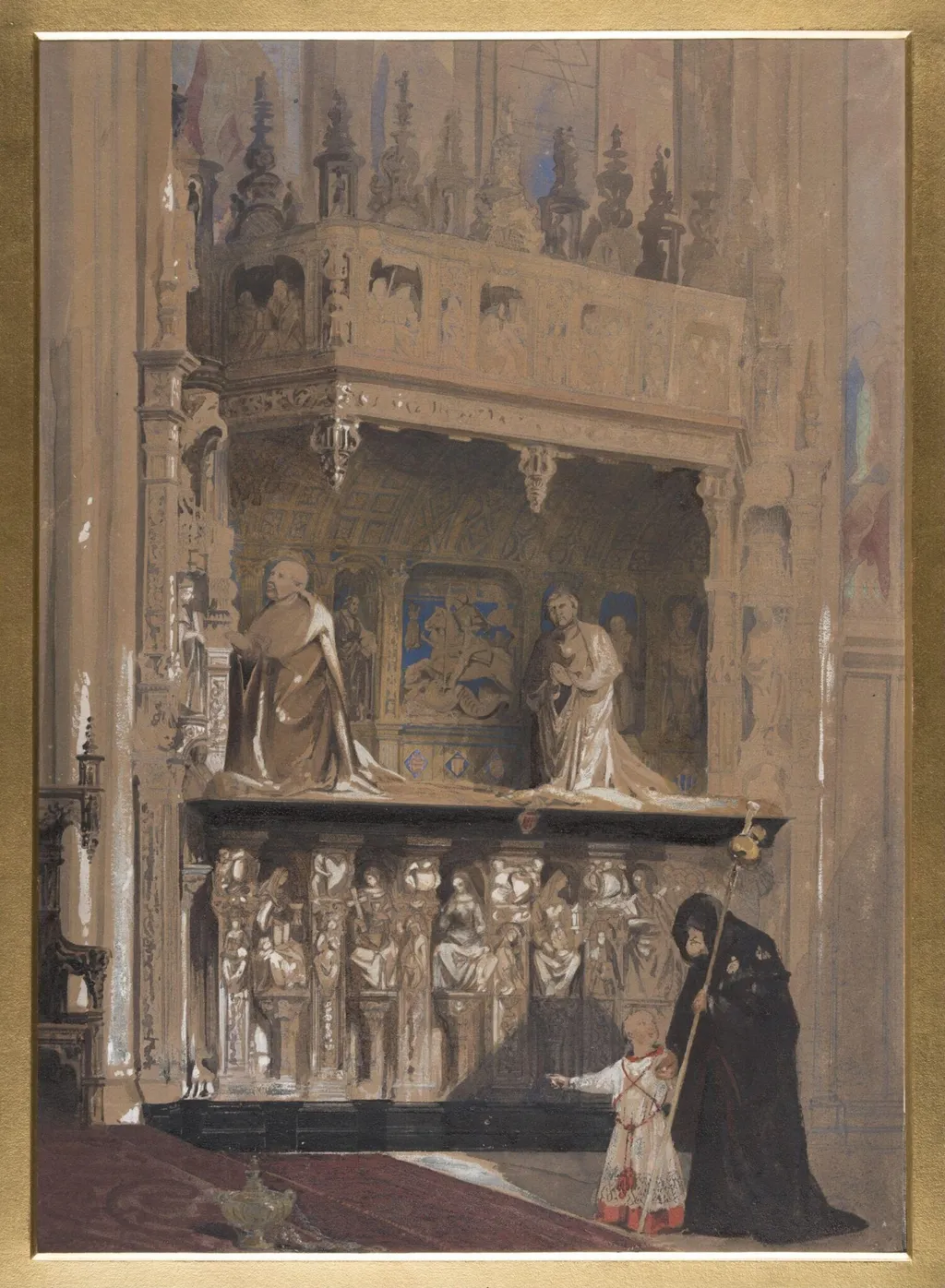
Monument of the Cardinald D'Amboise in Rouen Cathedral is a watercolor work on paper by Louis Haghe. It dates from 1850 and is held in the collection of the Victoria and Albert Museum.
About this work
Overview
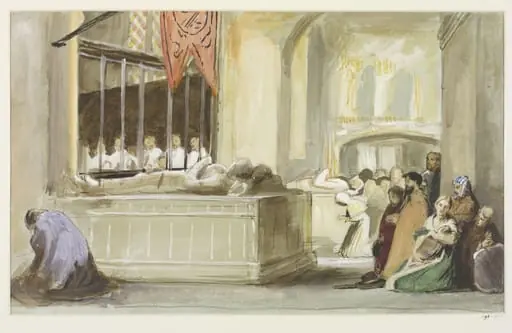
This watercolour captures the monument of Cardinal D'Amboise within Rouen Cathedral, rendered in delicate washes that emphasize atmospheric depth.
This watercolour captures the monument of Cardinal D'Amboise within Rouen Cathedral, rendered in delicate washes that emphasize atmospheric depth. The composition centers on a sculpted funerary structure beneath a stained-glass window, with two human figures placed in the foreground to scale the monument’s grandeur. The work was acquired by its current owner in April 1904 from a sale of the Seale-Hayne collection, having passed through private hands before entering institutional custody.
Subject & Meaning
The monument honors Cardinal D'Amboise, a prominent church figure of the late 15th century, commemorated through elaborate stone carving. Two figures—a robed adult holding a staff and a child in white—frame the scene, suggesting reverence and continuity. Their presence implies ritual observation, reinforcing the monument’s role as a site of spiritual remembrance rather than mere decoration.
Technique & Style
The artist employs translucent watercolour layers to suggest the play of colored light from the cathedral’s stained glass, casting soft hues across stone surfaces. Subtle contrasts of light and shadow model the monument’s relief, enhancing its three-dimensionality without heavy outline. The delicate handling of the figures’ drapery and the luminous glow on the stonework reflect a sensitivity to ecclesiastical atmosphere over topographical precision.
History & Provenance
The watercolour entered its current collection on 20 April 1904, acquired from Agnew & Sons following its appearance in the auction of the Rt. Hon. C. Seale-Hayne’s art holdings on 18 April. Prior ownership is unrecorded, but its subject and execution suggest it was likely made in the 19th century by a British artist documenting continental religious monuments during a period of heightened interest in Gothic architecture.
Context
In the 19th century, watercolours of cathedral monuments were common among antiquarians and travelers documenting medieval heritage. Rouen Cathedral, a key example of Norman Gothic, attracted artists drawn to its sculptural richness and luminous interiors. This work aligns with a broader trend of topographical watercolours that sought to preserve architectural detail through intimate, observational rendering rather than grand historical narrative.
Legacy
Though unsigned and unattributed to a major artist, the watercolour endures as a quiet record of how 19th-century viewers engaged with medieval ecclesiastical monuments. Its preservation in institutional collections reflects an enduring interest in the visual documentation of religious architecture, serving as a material trace of historical perception rather than artistic innovation.
Artist & collection
Artist
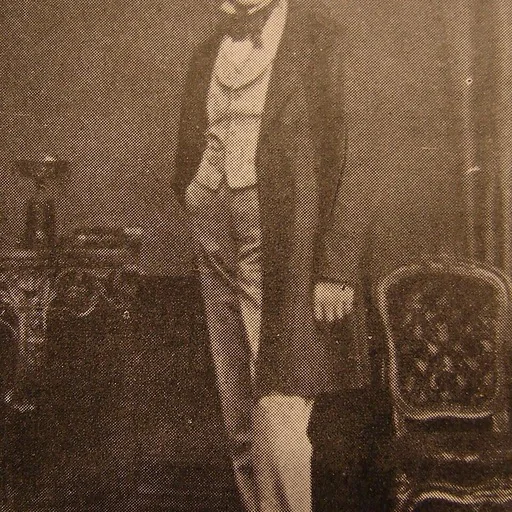
Louis Haghe (17 March 1806 – 9 March 1885) was a lithographer and watercolourist from the Netherlands and then the United Kingdom.

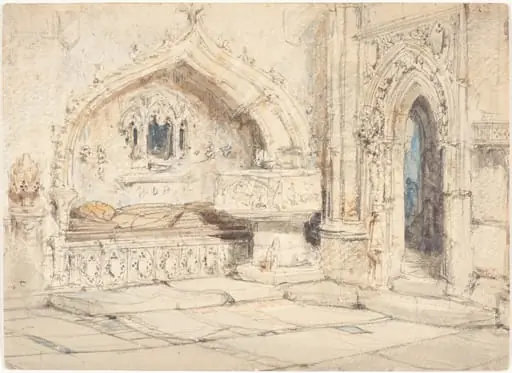 Interior of a Church with a Wall Tomb and Medieval Font
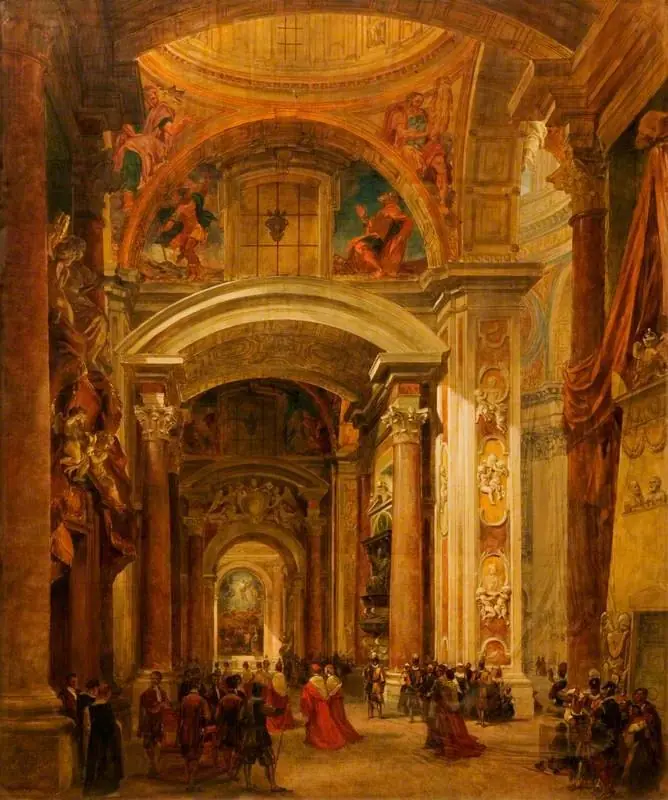 Interior of St Peter's, Rome
 The Corridor, Brewer's Hall, Antwerp
 The Quay at Suez
 Egypt and Nubia, Volume II: Lateral View of the Temple called The Typhonoeum at Dendera
 Egypt and Nubia, Volume I: Thebes
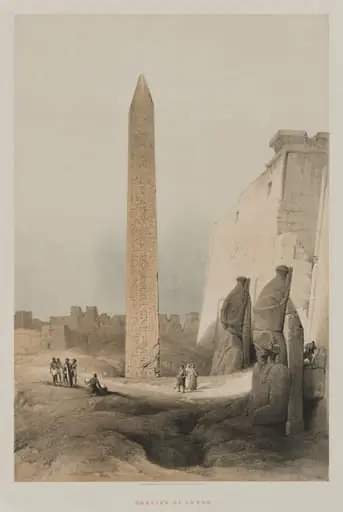 Egypt and Nubia, Volume I: Luxor
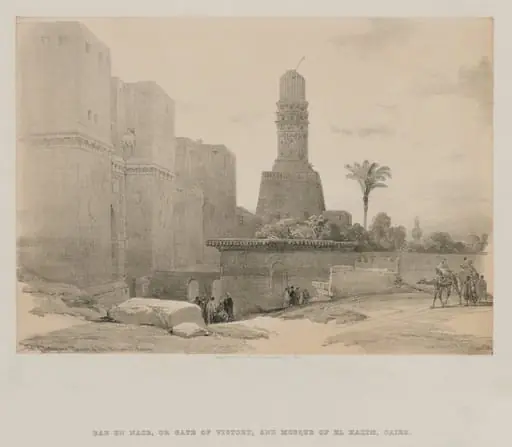 Egypt and Nubia, Volume III: Gate of Victory and Minaret of the Mosque El Hakim
 Untitled
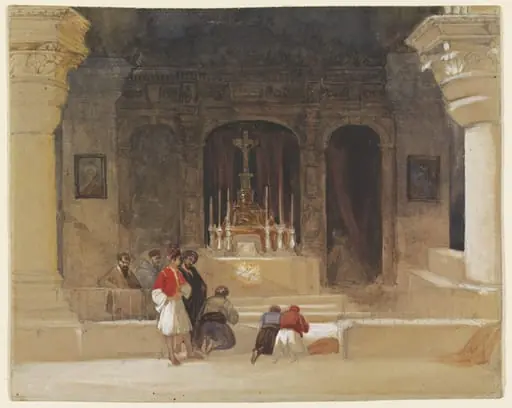 Chapel of St. Helena, Crypt of the Holy Sepulchre, Jerusalem
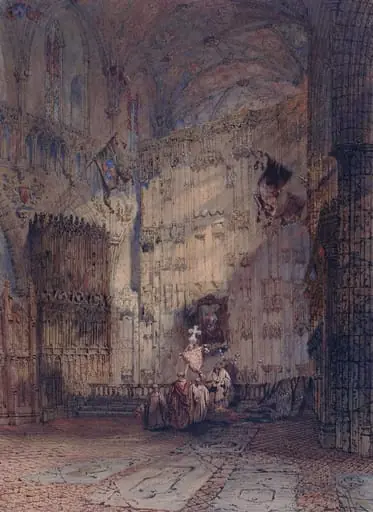 The High Altar Screen, St Albans Abbey
 Absis van de kathedraal van Freiburg
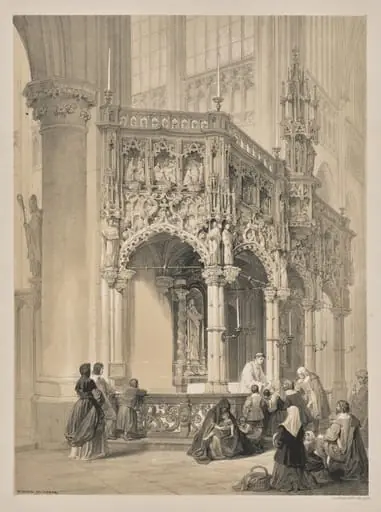 Sketches in Belgium and Germany, Second Series: No. 17 - Screens at Lierre
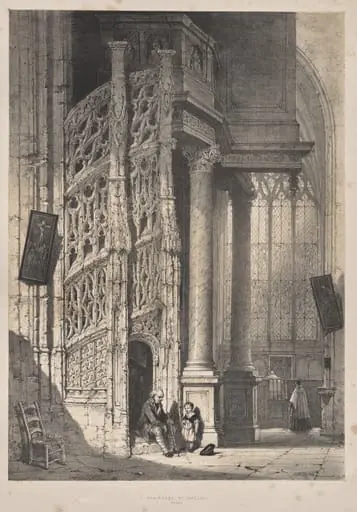 Architecture of the Middle Ages: Staircase, St. Maclou, Rouen
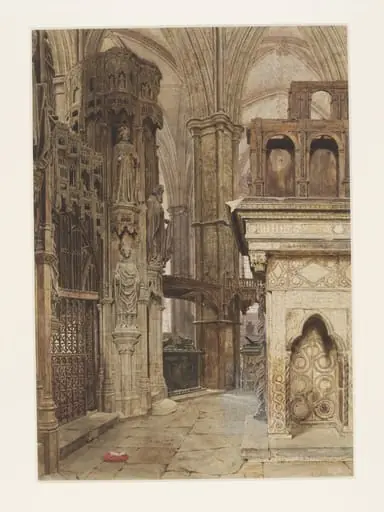 The East End of Edward the Confessor's Chapel and Tomb, As They Now Stand
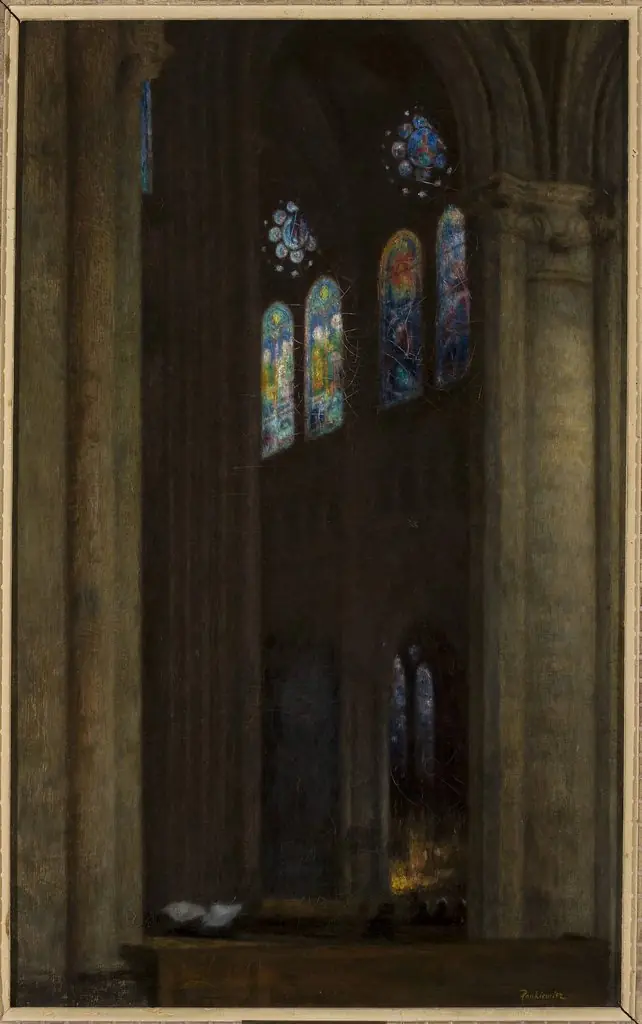 Interior of the cathedral in Chartres
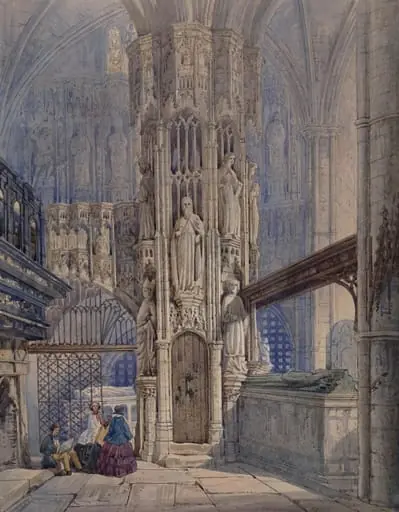 Edward the Confessor's Chapel, Westminster Abbey
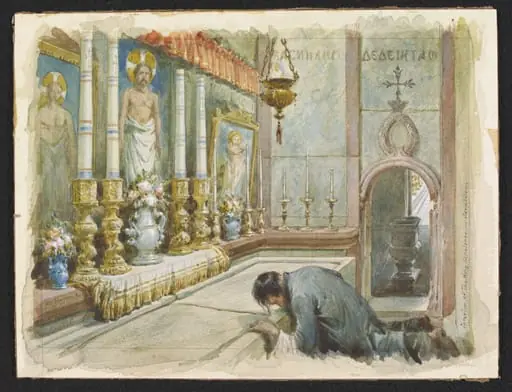 Interior of The Holy Sepulchre, - Jerusalem.
 Interior de iglesia
 The Founder's Tomb, Church of Saint Bartholomew the Great