Artwork
Egypt and Nubia, Volume II: Wady Dabod, Nubia
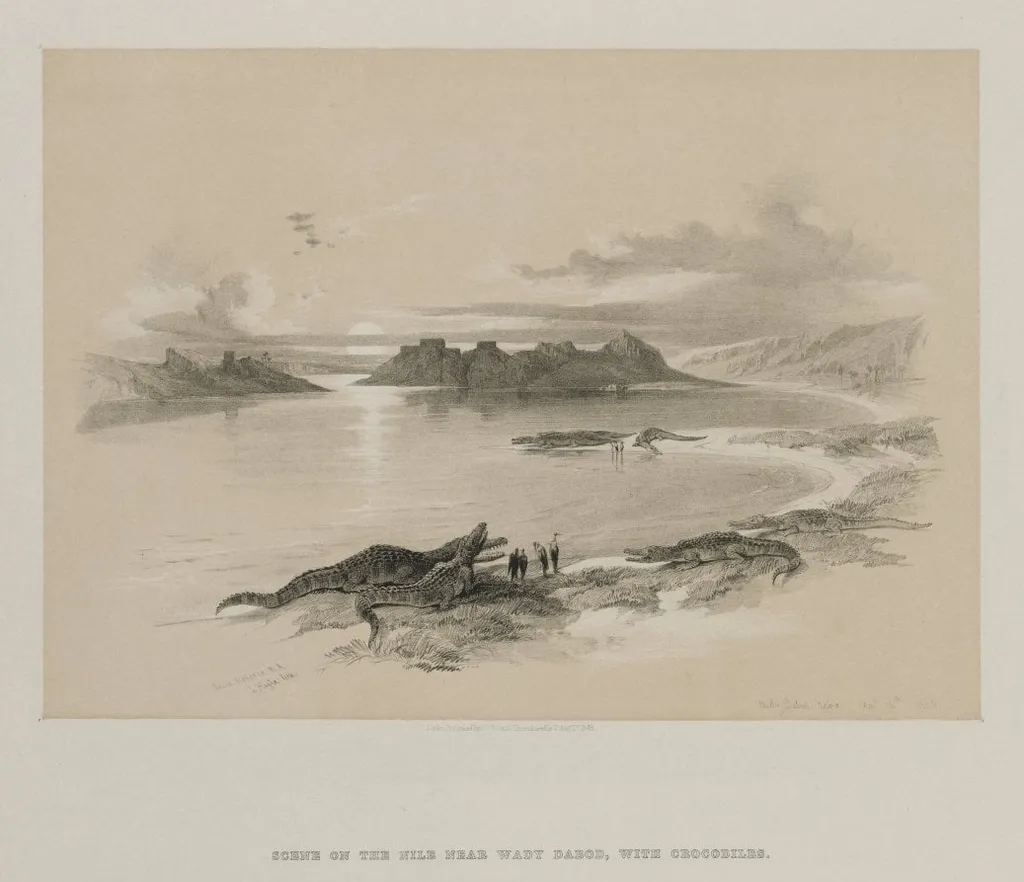
Egypt and Nubia, Volume II: Wady Dabod, Nubia is a print by the Romanticist artist Louis Haghe. It dates from 1848 and is held in the collection of the Cleveland Museum of Art.
About this work
Overview
Haghe, a Belgian-born artist based in London, specialized in lithography and collaborated with the firm Day & Haghe to produce detailed topographical prints.
Created in 1848 by Louis Haghe, this lithograph is part of the second volume of a documentary series on Egyptian and Nubian sites. Haghe, a Belgian-born artist based in London, specialized in lithography and collaborated with the firm Day & Haghe to produce detailed topographical prints. The image captures a tranquil stretch of the Nile near Wady Dabod, emphasizing geological formations and subtle human presence within the landscape.
Subject & Meaning
The scene portrays a quiet riverside with rocky hills receding into the distance. Figures on the bank suggest local activity, while two crocodiles rest on the shore—one large, one smaller—introducing an undercurrent of natural threat. The composition balances serenity with unease, reflecting a 19th-century fascination with the coexistence of beauty and danger in remote regions, without overt romanticization.
Technique & Style
Haghe employed fine-line lithography to render subtle gradations of tone and texture, capturing the roughness of stone, the stillness of water, and the scale of the crocodiles with precision. His background in watercolor informed the delicate handling of light and atmosphere. The print’s clarity and restrained palette align with the documentary aims of the series, prioritizing accuracy over dramatic flourish.
History & Provenance
The lithograph was produced as part of a multi-volume publication commissioned to record archaeological and geographical features of Egypt and Nubia during the mid-19th century. Haghe’s partnership with Day & Haghe enabled widespread distribution of such works in Britain. The print likely circulated among scholars, travelers, and institutions interested in the region’s antiquities and topography.
Context
Produced during a period of heightened European interest in ancient Egypt, the image reflects the era’s scientific and colonial curiosity. While not overtly political, its detailed depiction of Nubia served to map and classify unfamiliar landscapes. The inclusion of crocodiles acknowledges local ecological realities, distinguishing it from idealized Orientalist imagery of the time.
Legacy
Haghe’s work contributed to the visual record of Nubia before extensive modern development and flooding from reservoirs. These lithographs remain valuable as historical documents, offering insight into how 19th-century observers perceived and represented the region’s geography and wildlife. They continue to inform archaeological and environmental studies of the Nile Valley.
Artist & collection
Artist
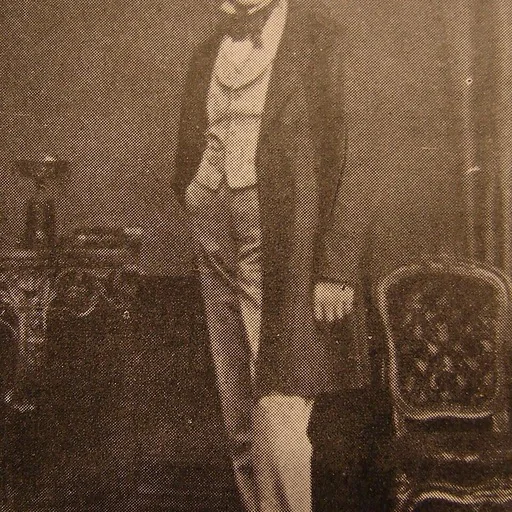
Louis Haghe (17 March 1806 – 9 March 1885) was a lithographer and watercolourist from the Netherlands and then the United Kingdom.

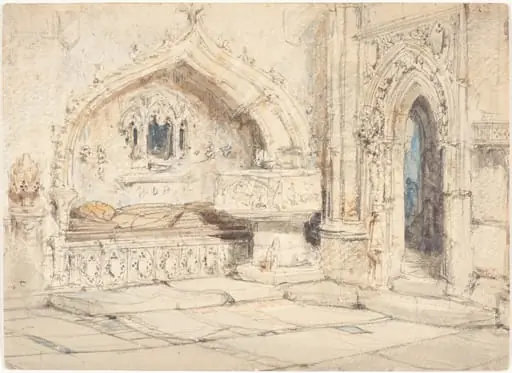 Interior of a Church with a Wall Tomb and Medieval Font
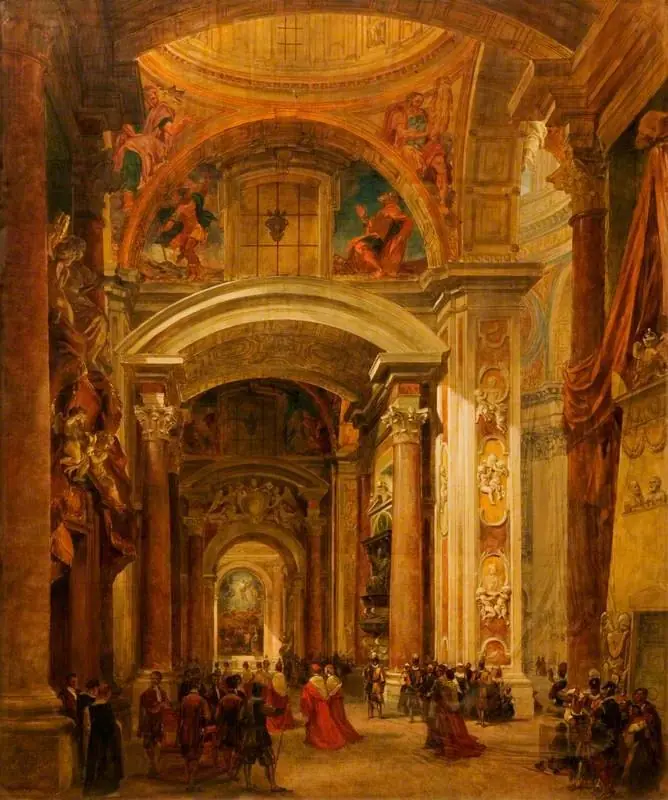 Interior of St Peter's, Rome
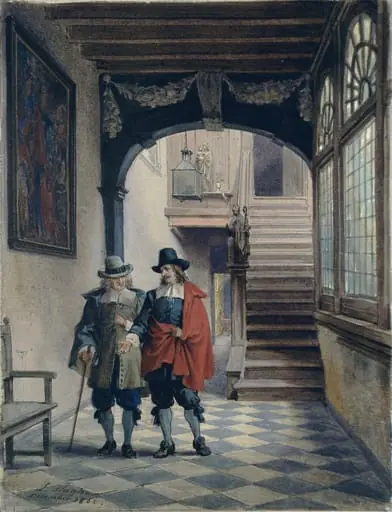 The Corridor, Brewer's Hall, Antwerp
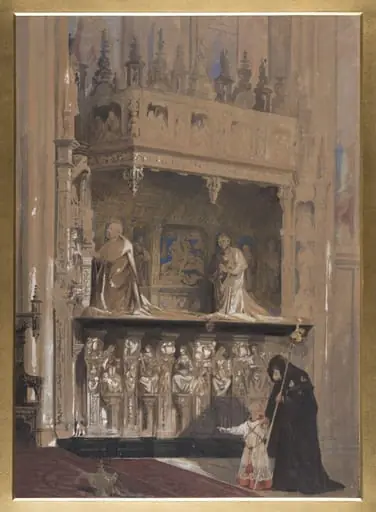 Monument of the Cardinald D'Amboise in Rouen Cathedral
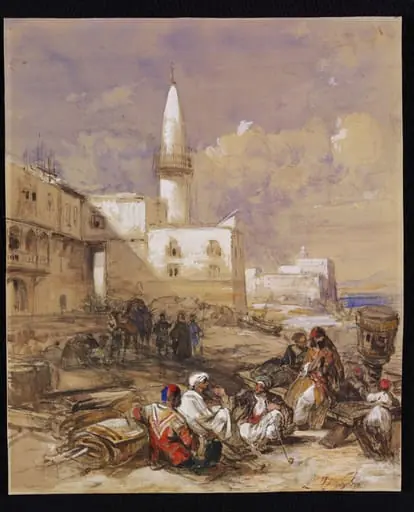 The Quay at Suez
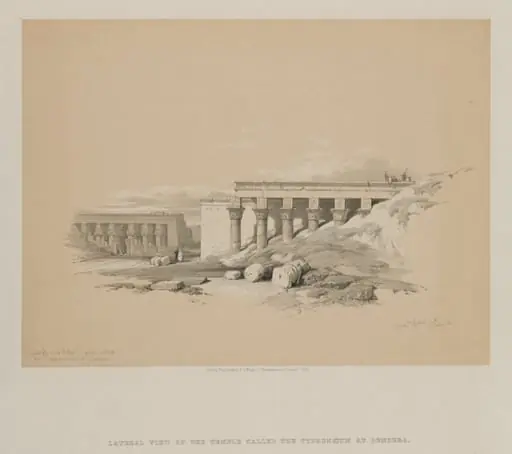 Egypt and Nubia, Volume II: Lateral View of the Temple called The Typhonoeum at Dendera
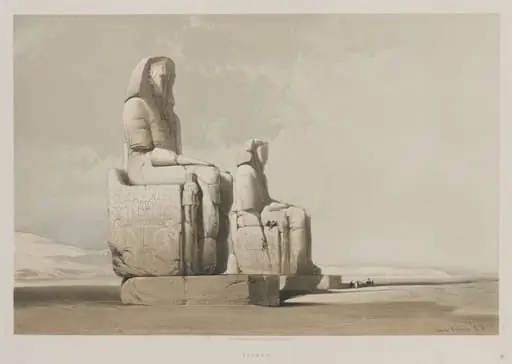 Egypt and Nubia, Volume I: Thebes
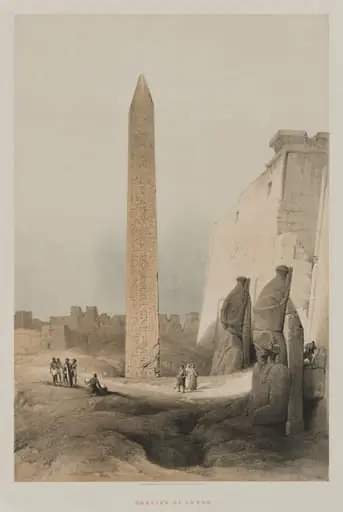 Egypt and Nubia, Volume I: Luxor
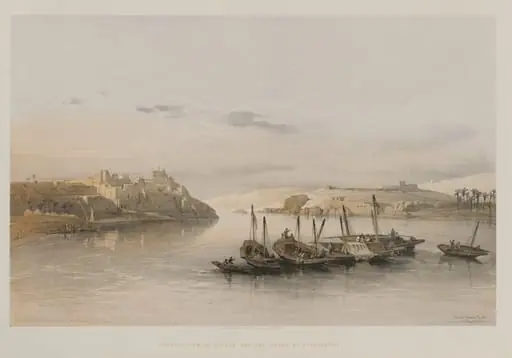
![Lake Shore, Menaggio [recto], by John Singer Sargent](https://artifactworldgallery.com/img/john-singer-sargent--lake-shore-menaggio-recto--2cbfc8ee4d60729d-w320.webp)