Artwork
The Peacock
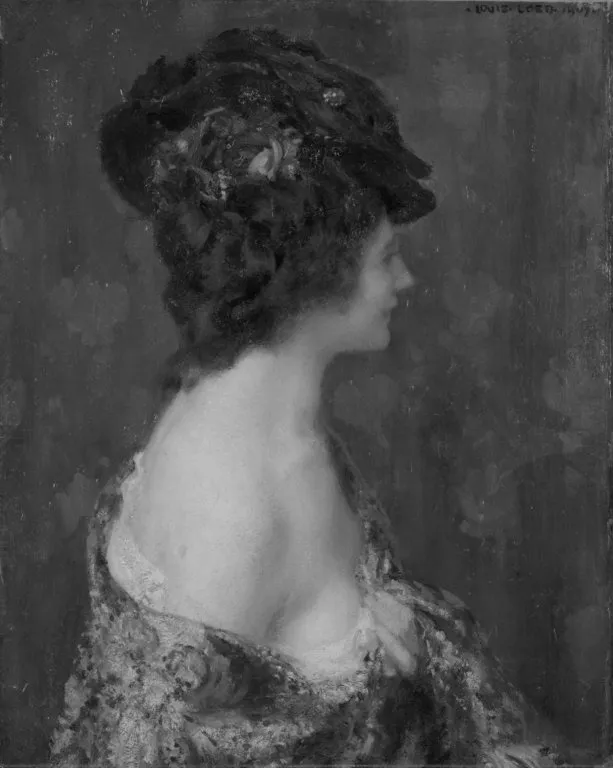
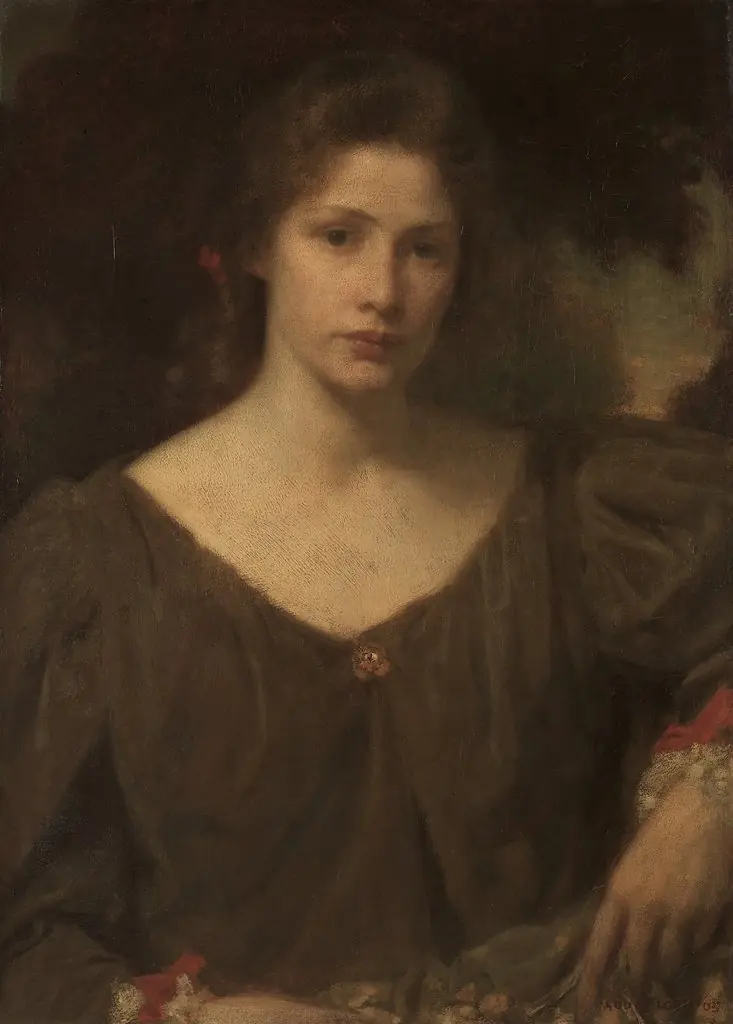
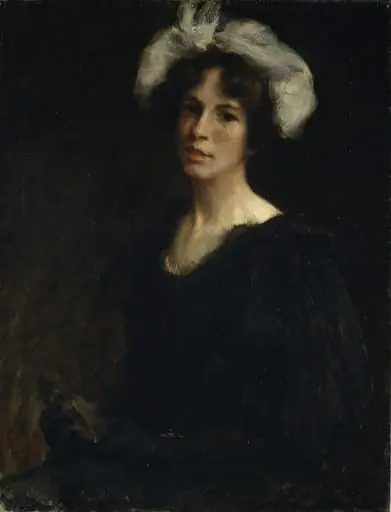
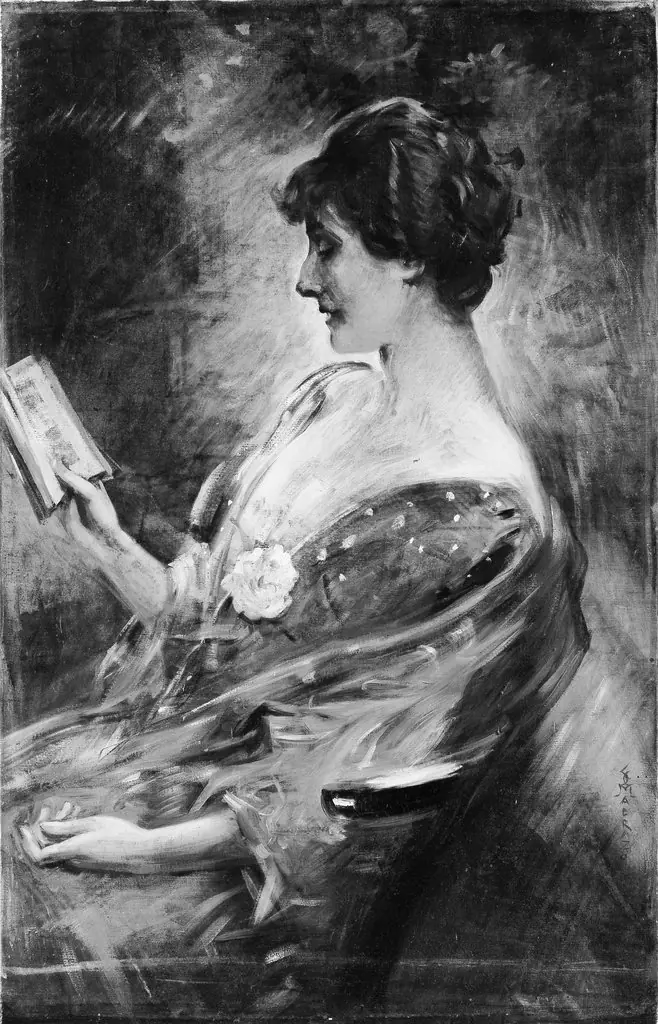
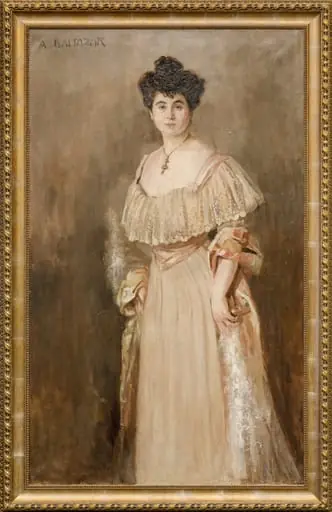
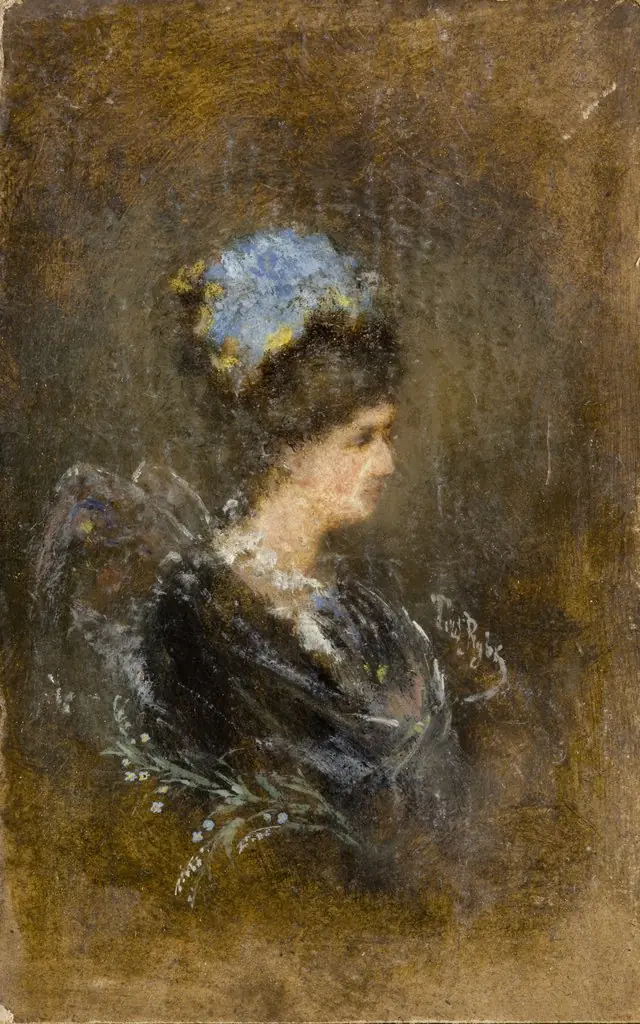
The Peacock is an oil painting by the Post-Impressionist artist Louis Loeb. It dates from 1907 and is held in the collection of the Brooklyn Museum.
About this work
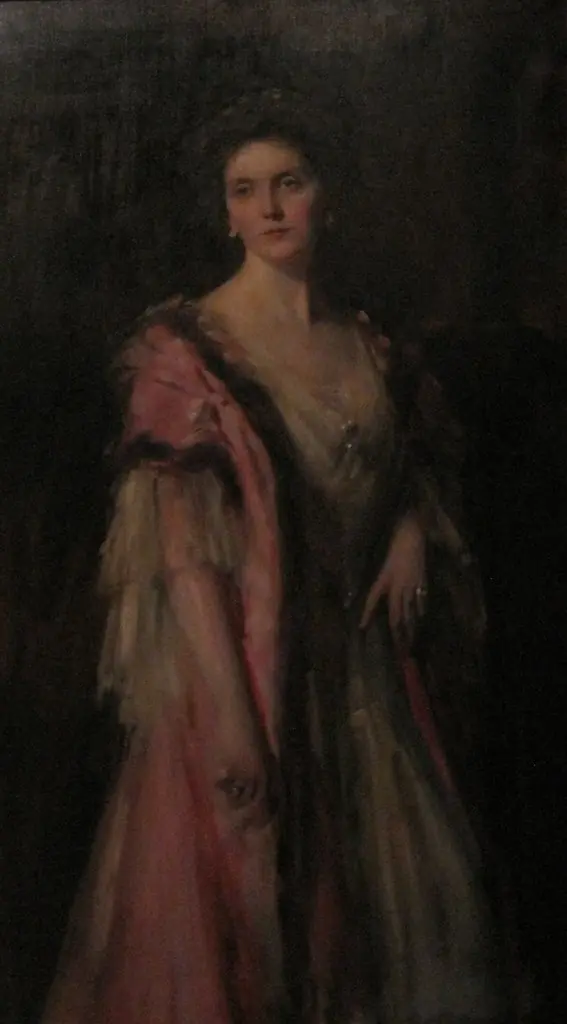
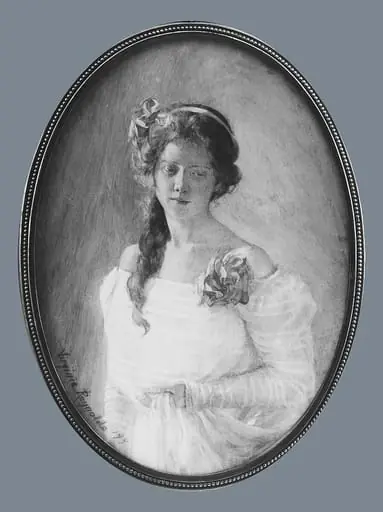
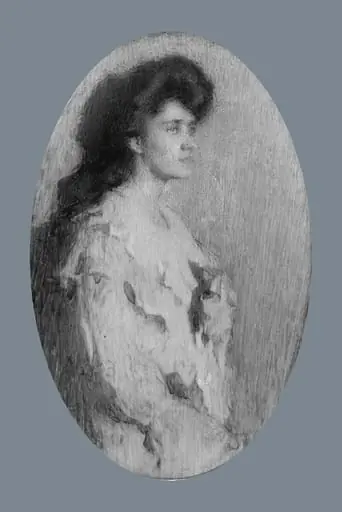
The woman's attire appears to be from the early 20th century, with a lace or floral pattern on her dress.
The painting depicts a woman in profile, facing right. Her dark hair is styled in an updo, and she wears a dress with a low neckline.
The woman's attire appears to be from the early 20th century, with a lace or floral pattern on her dress. The background of the painting is a dark color, which helps to highlight the subject.
This painting is reminiscent of works by artists who use chiaroscuro, a technique that uses strong contrasts between light and dark to create a sense of volume in modeling three-dimensional objects and figures.
Overview
Louis Loeb’s 1907 oil on canvas, titled *The Peacock*, is part of the Brooklyn Museum’s collection. Executed in the post‑impressionist vein, the work reflects the artist’s background as an illustrator and lithographer, combining precise draftsmanship with a vivid palette. The painting presents a single subject rendered against a dark backdrop, allowing the colors to dominate the composition.
Subject & Meaning
The canvas centers on a peacock, its plumage rendered with meticulous attention to the iridescent hues that characterize the bird’s display. Loeb’s treatment emphasizes the creature’s elegance and natural splendor, inviting viewers to contemplate the interplay of beauty and observation that underlies much of his illustrative output.
Technique & Style
Loeb employs a chiaroscuro approach, juxtaposing the luminous, richly colored feathers against a deep, almost black background. This contrast enhances the three‑dimensional modeling of the bird, while the brushwork remains tight and detailed, reflecting the artist’s training in commercial illustration and his affinity for precise rendering.
History & Provenance
Created in 1907, *The Peacock* entered the Brooklyn Museum’s holdings during the early 20th‑century acquisition drive that sought to represent American post‑impressionist work. The painting has remained in the museum’s permanent collection, where it is displayed as an example of Loeb’s transition from commercial art to fine‑art painting.
Context
At the turn of the century, American artists were increasingly engaging with European post‑impressionist ideas while retaining a distinctly illustrative sensibility. Loeb’s work exemplifies this synthesis, merging the decorative qualities of the period’s decorative arts with the observational precision prized by American illustrators of the era.
Artist & collection
Artist
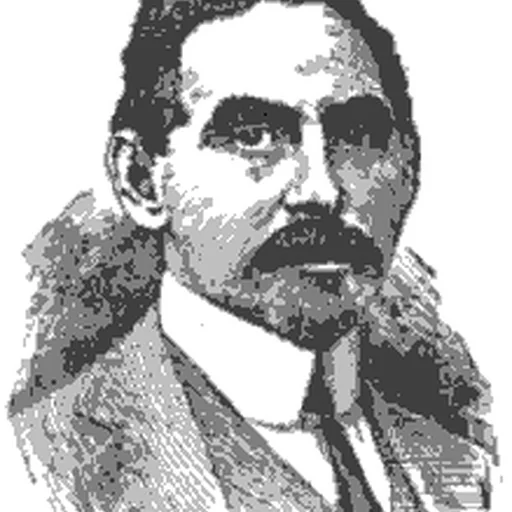
Louis Loeb (November 7, 1866 — July 12, 1909) was an American illustrator. In his time, he was one of the best known in his field. He was also a draftsman, a painter, and a lithographer.