Artwork
Portret de femeie
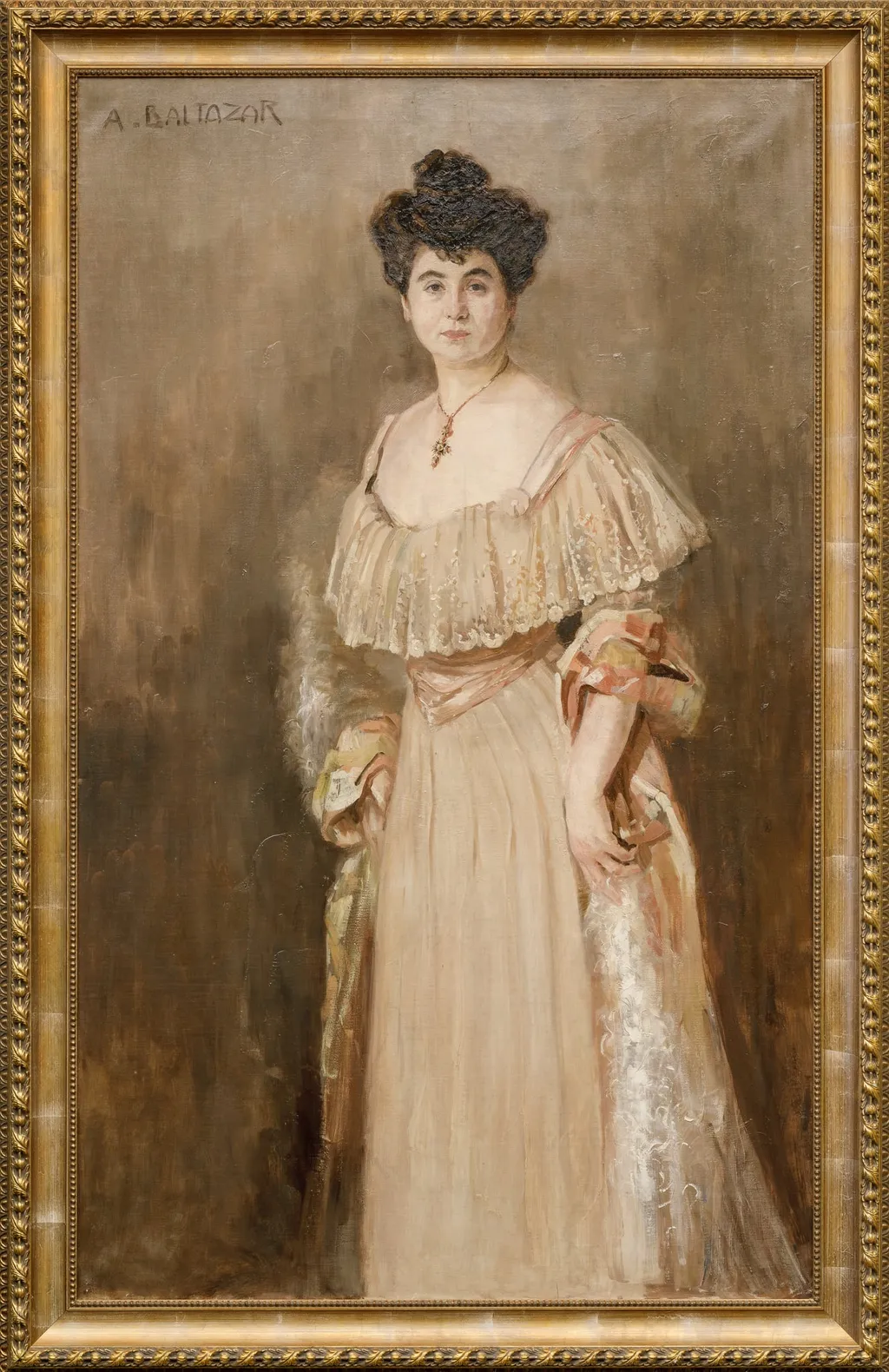
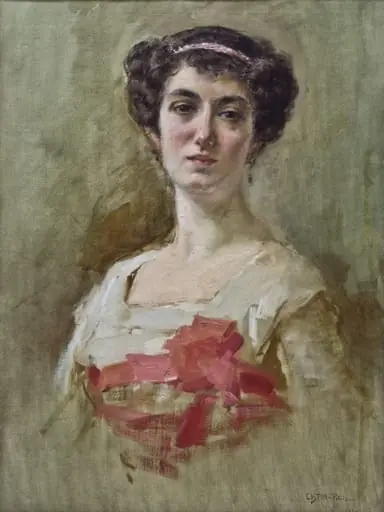
Portret de femeie is an unspecified painting by Apcar Baltazar. It dates from 1894 and is held in the collection of the National Museum of Art of Romania.
About this work
Overview
Portret de femeie, painted around 1894 by Apcar Baltazar, is a modestly scaled portrait depicting a woman in quiet repose.
Portret de femeie, painted around 1894 by Apcar Baltazar, is a modestly scaled portrait depicting a woman in quiet repose. Rendered with a loose, impressionistic hand, the work emphasizes the subject’s presence over narrative detail. The plain background and restrained palette direct attention to the figure, while the artist’s signature in the upper left corner confirms authorship without ornamentation.
Subject & Meaning
The woman stands upright, dressed in a light gown with puffed sleeves and a high collar, her hair arranged in an elaborate updo. She holds a small bouquet in her left hand, a subtle gesture that suggests refinement rather than symbolism. Her expression is neutral, avoiding overt emotion, which lends the portrait a sense of dignified stillness. The composition reflects late 19th-century ideals of feminine composure without romanticizing the subject.
Technique & Style
Baltazar employs fluid, visible brushwork, particularly in the dress and background, creating a soft, atmospheric effect. The paint is applied with a sketch-like economy, avoiding fine detail in favor of suggestive form. The light coloration of the dress contrasts gently with the muted backdrop, enhancing the figure’s silhouette. This approach aligns with emerging impressionist tendencies, prioritizing light and movement over precise definition.
History & Provenance
The painting’s early ownership is undocumented, and it has not been widely exhibited in major institutions. It remains in private hands, with limited scholarly attention. Its survival as a single, unsigned work in a small oeuvre suggests it was likely a personal commission or study. The signature 'A. Baltazar' confirms the artist’s hand but offers no further contextual clues about its original setting or patron.
Context
Created in the 1890s, the portrait reflects the transitional moment in Romanian art when academic traditions began to accommodate looser, more observational techniques. While Baltazar trained in European academies, this work shows a departure from rigid formalism. Similar portraits of the era often emphasized social status through dress and posture, yet here, the absence of props or setting suggests an intimate, perhaps domestic, commission.
Legacy
Though not widely reproduced or studied, Portret de femeie exemplifies Baltazar’s quieter, more personal approach to portraiture. It stands apart from his larger historical or genre scenes, revealing a sensitivity to light and form. The work contributes to a broader understanding of Romanian artists who engaged with international stylistic shifts without fully abandoning local sensibilities.
Artist & collection
Artist


 Portret van mevrouw A. Ganshof van der Meersch
 Portrait of Mrs. W.R.
 Society in the Restaurant. Revers: Study of a Lady in Pink
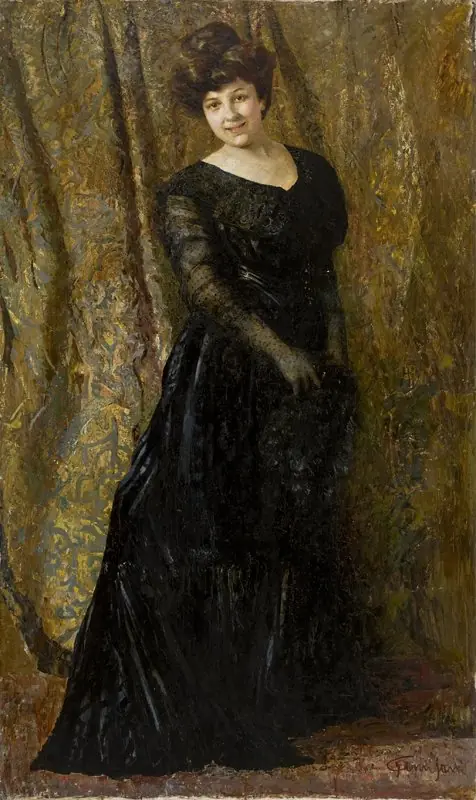 Standing lady
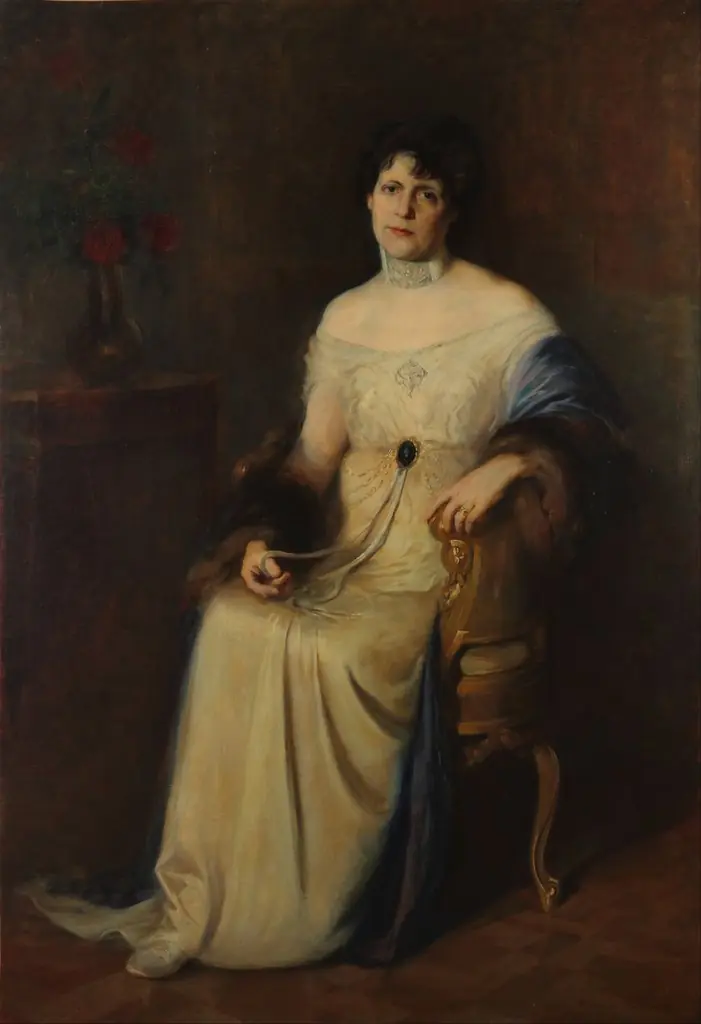 Retrato de la esposa del autor
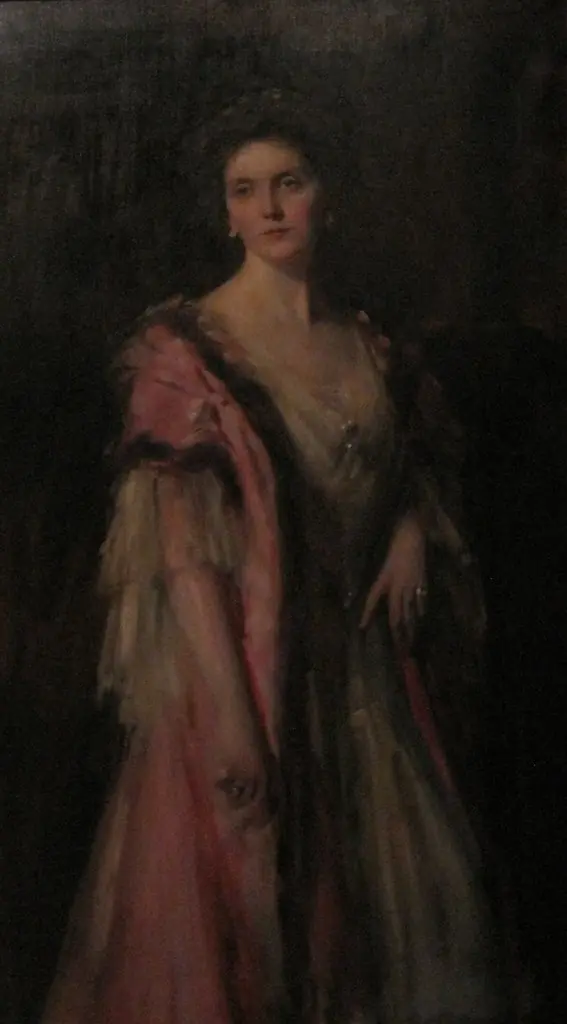 Emily Post
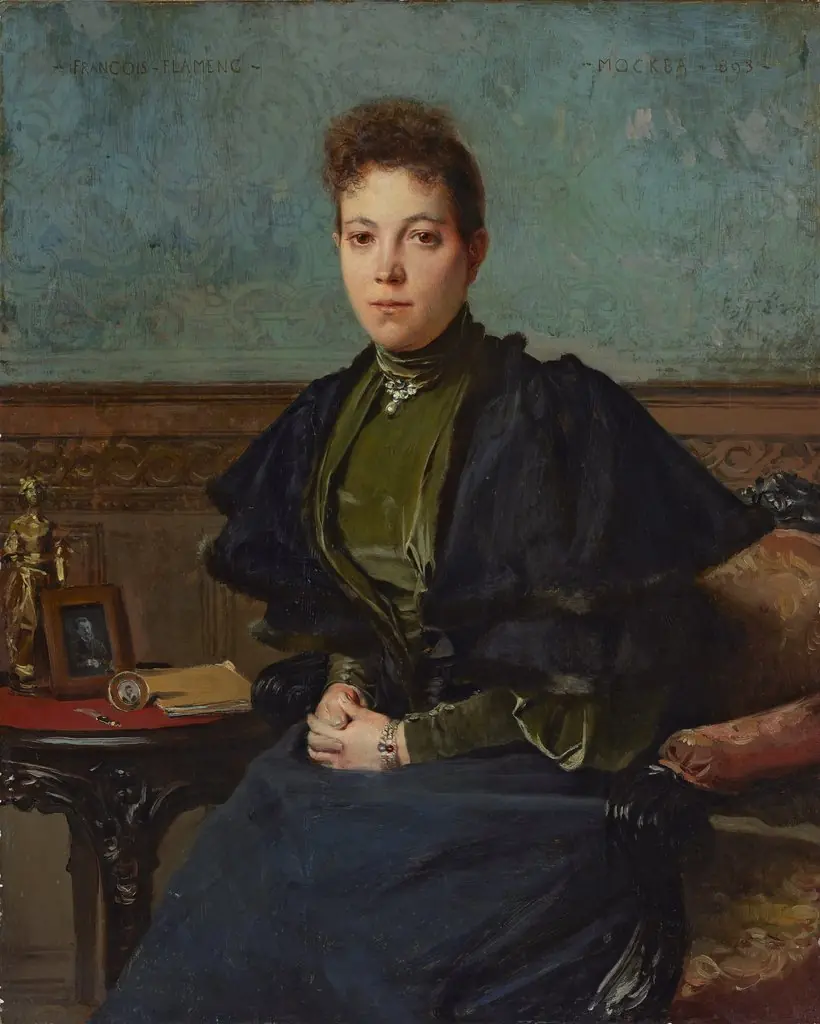 Portrait of Vera Kharitonenko
 Countess Markievicz, artist and revolutionary
 Portrait of Alicja Worms
 Portretul Doamnei Grant
 (Retrato de María del Carmen Reyna y Roballos de Fernández Blanco), Retrato de María Reyna de Fernández Blanco
 Portret de femeie