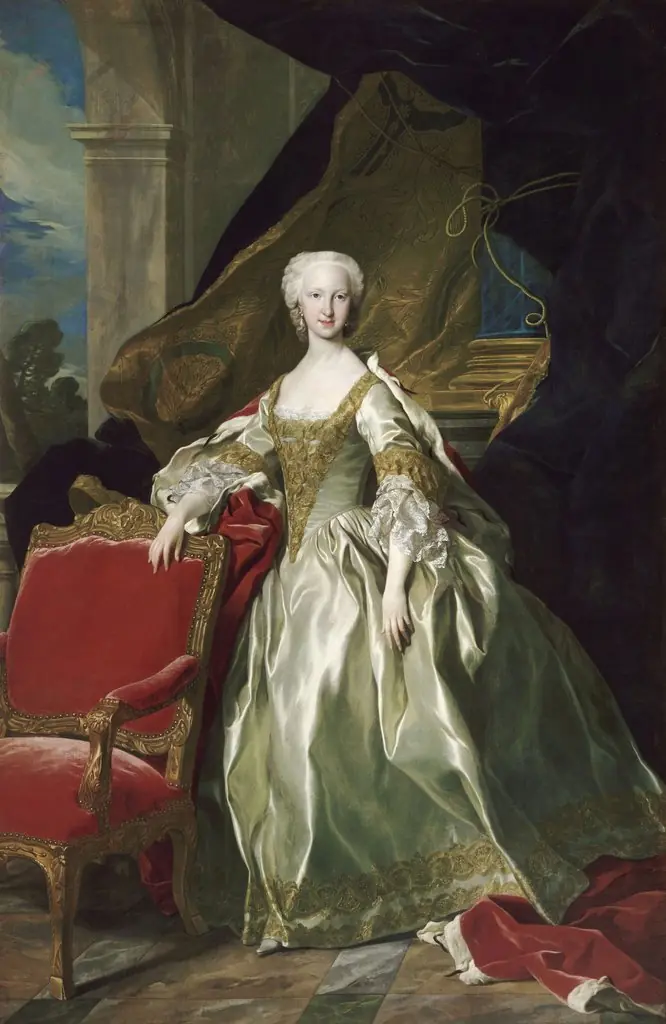
Artwork
Felipe V, King of Spain
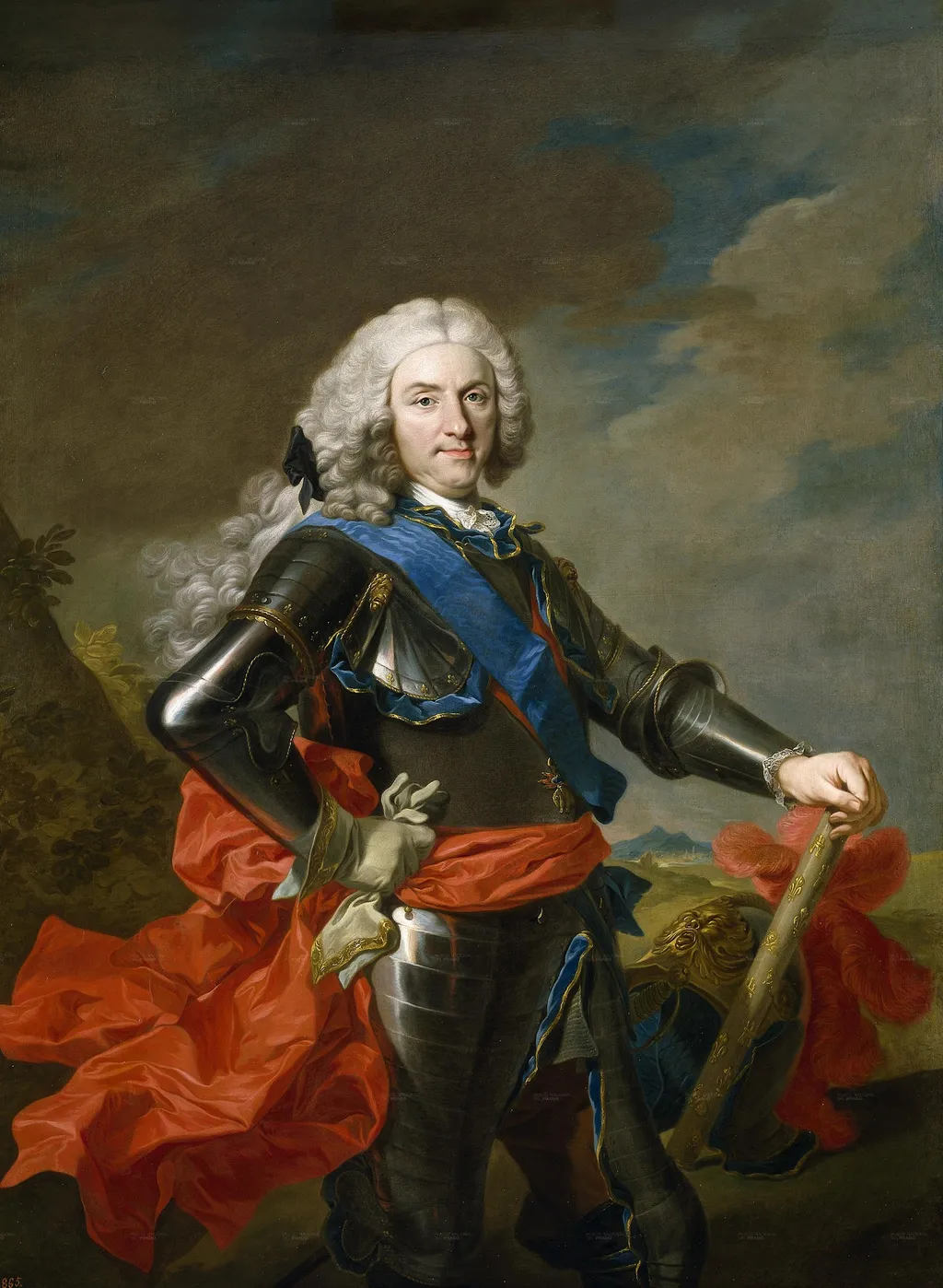
Felipe V, King of Spain is an oil painting by the Rococo painting artist Louis-Michel van Loo. It dates from 1739 and is held in the collection of the Museo del Prado.
About this work
Overview
Louis-Michel van Loo’s 1739 oil portrait presents Felipe V, the first Bourbon monarch of Spain. Executed in the Rococo period, the work now belongs to the collection of Madrid’s Museo del Prado. The king is shown in full regalia, emphasizing his sovereign authority through elaborate costume and insignia.
Subject & Meaning
The portrait foregrounds Felipe V in ceremonial dress, bearing the insignia of the Order of the Golden Fleece and the Order of the Holy Spirit, two chivalric honors that underscored his dynastic legitimacy. A gilded scepter rests in his hand, a conventional emblem of monarchical power.
Technique & Style
Van Loo employs a refined oil technique, rendering the king’s white wig, black coat with blue edging, and polished armor with subtle chiaroscuro. The dark backdrop recedes to a muted sky, allowing the luminous fabrics and metallic surfaces to capture the viewer’s attention.
History & Provenance
Completed shortly after Felipe V’s death, the painting entered the Spanish royal collection and was later transferred to the Prado Museum, where it has been on public display since the museum’s early years. Its provenance reflects the work’s role as an official royal likeness.
Context
The portrait aligns with 18th‑century European court portraiture, where sovereigns were depicted with regalia to convey political continuity. The inclusion of both the Golden Fleece and the Holy Spirit orders links Spanish royal identity to broader Habsburg‑Bourbon networks of honor.
Own this work as a print
Artist & collection