Artwork
A Party Picnicking Near a Village
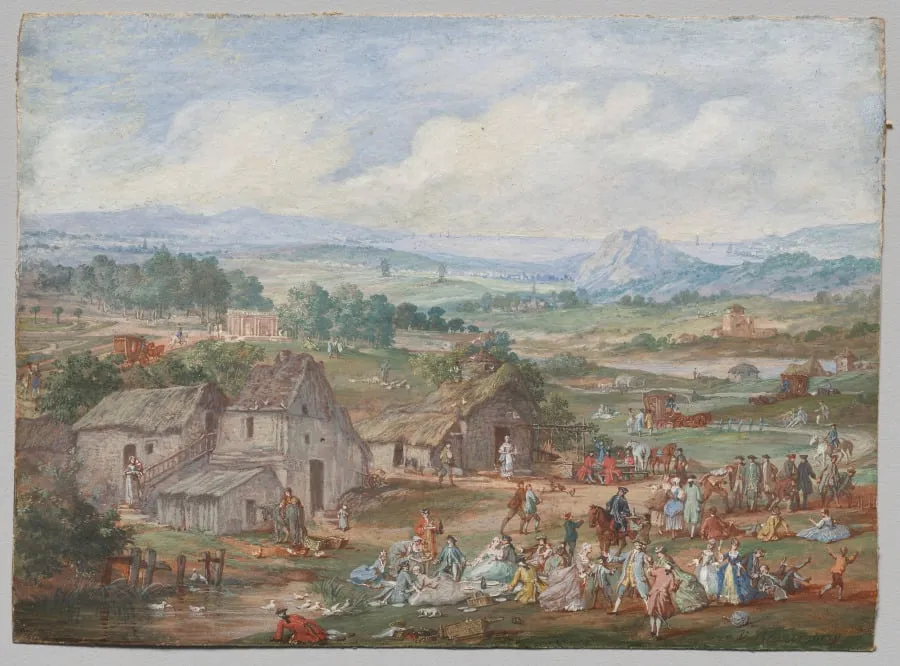
A Party Picnicking Near a Village is a drawing by the Romanticist artist Louis-Nicolas van Blarenberghe. It dates from 1765 and is held in the collection of the Cleveland Museum of Art.
About this work
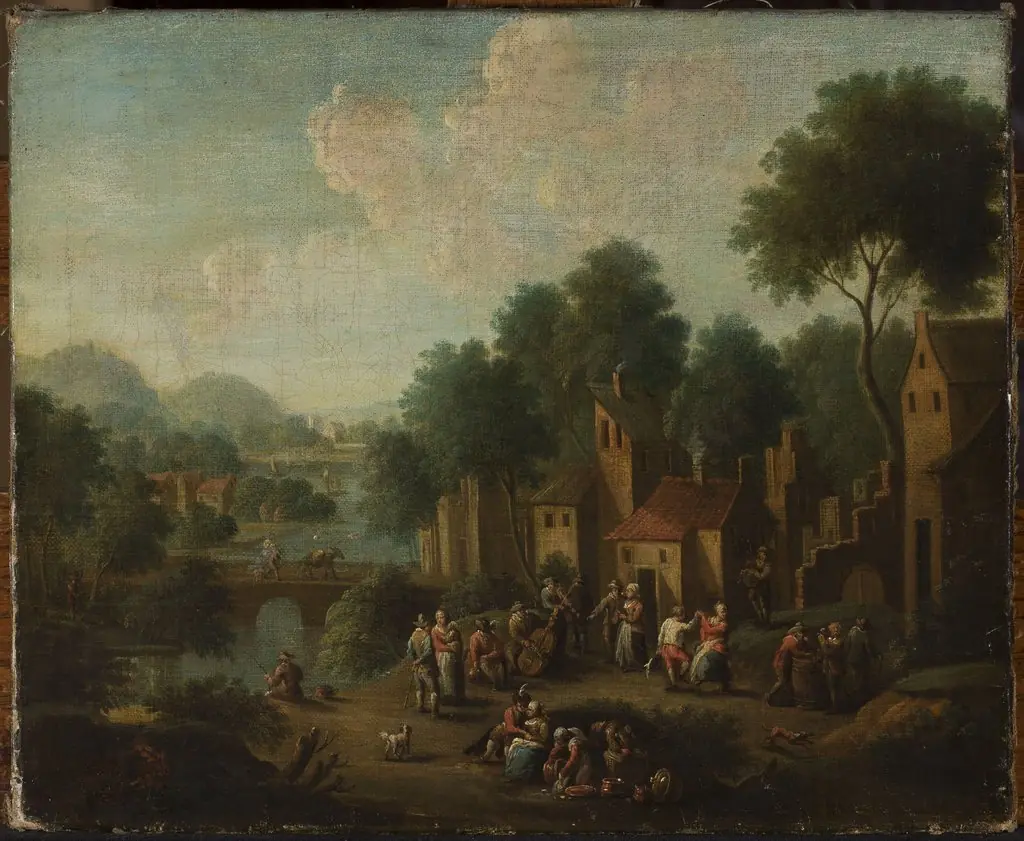
You see a tiny, packed scene: ladies in silk gowns, gentlemen in powdered wigs, servants pouring wine, and a whole village stretching into the distance.
You see a tiny, packed scene: ladies in silk gowns, gentlemen in powdered wigs, servants pouring wine, and a whole village stretching into the distance.
Van Blarenberghe painted this like a jeweler sets a watch—every leaf, button, and dog is sharp. He worked for kings, but here he’s showing ordinary rich people at play, not battles or gods.
If you like this kind of fussy, small-scale crowd, look up the subject “france, 18th century.”
Overview
This miniature drawing captures a lively picnic scene set near a village, populated by elegantly dressed men and women, their attendants, and a spread of animals and foliage. The composition is densely packed, presenting a panoramic view of both the gathering and the surrounding countryside in a single, compact format.
Subject & Meaning
The work portrays members of the affluent bourgeoisie enjoying leisure outdoors, with figures in silk garments and powdered wigs accompanied by servants serving wine. The inclusion of everyday activities rather than mythological or martial themes reflects a focus on social recreation within an 18th‑century French setting.
Technique & Style
Executed with meticulous precision, the drawing renders each element—leaf, button, dog—with a jeweler‑like exactness. Van Blarenberghe’s characteristic miniaturist approach combines fine line work and careful shading to convey texture and depth despite the work’s small scale.
History & Provenance
Louis Nicolas van Blarenberghe, a court artist who received numerous commissions from the French monarchy, produced this piece as part of his series of detailed genre scenes. His reputation for small‑scale, highly detailed drawings attracted royal patronage, though this particular work emphasizes civilian leisure rather than official court subjects.
Context
The drawing reflects the cultural milieu of mid‑18th‑century France, when picnics and countryside outings became fashionable among the wealthy. Such scenes echo contemporary tastes for pastoral idylls and the growing interest in documenting everyday life with precision.
Artist & collection

Artist
Louis-Nicolas van Blarenberghe
Louis-Nicolas van Blarenberghe (1716–1794) was a French artist, born in Lille.