Artwork
Untitled
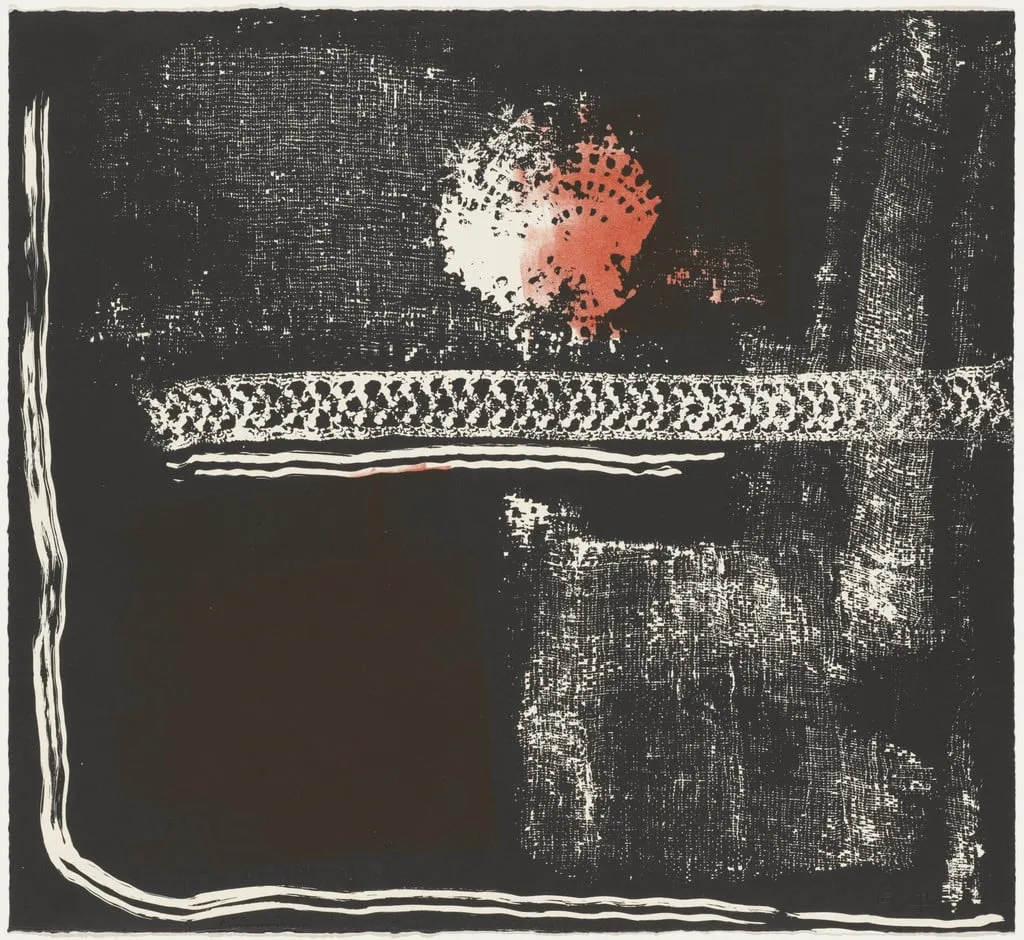
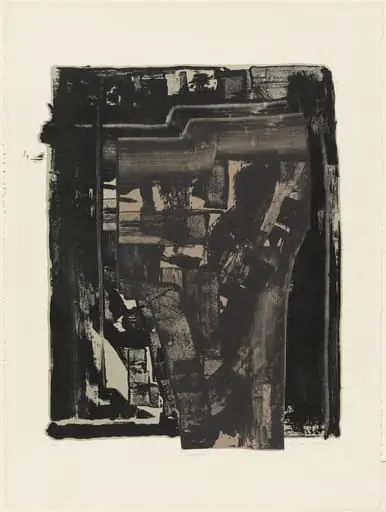
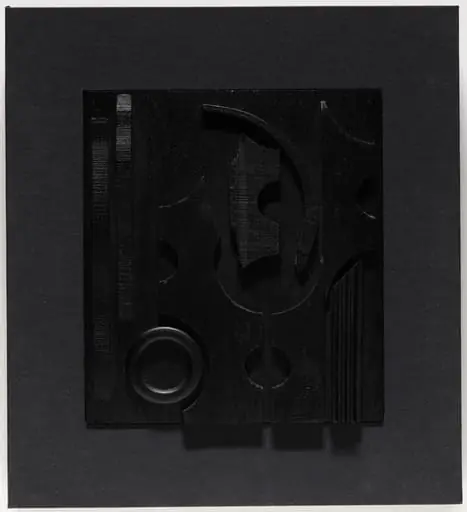
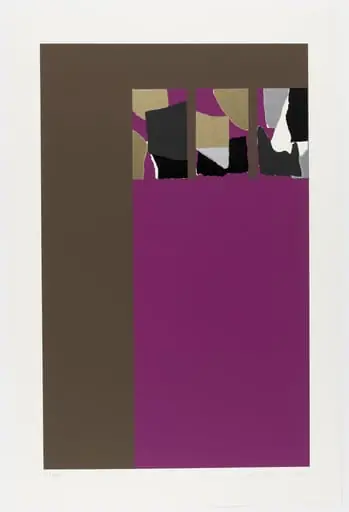
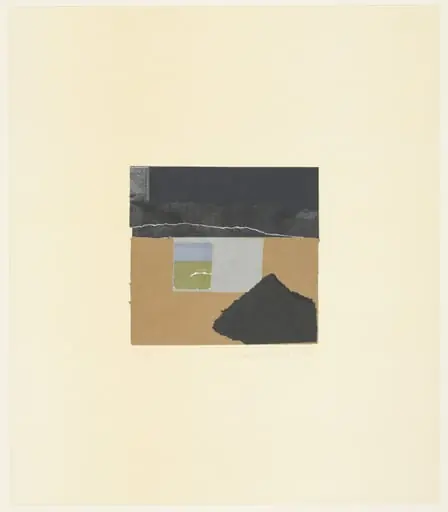
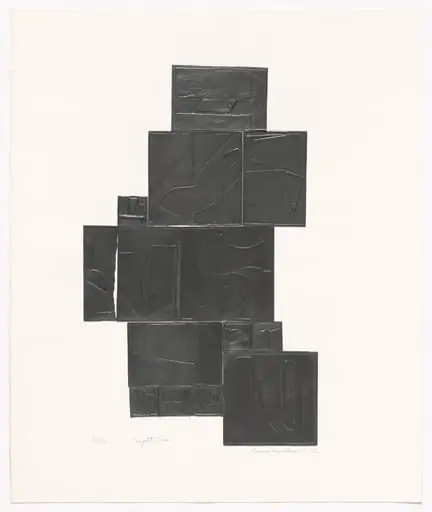
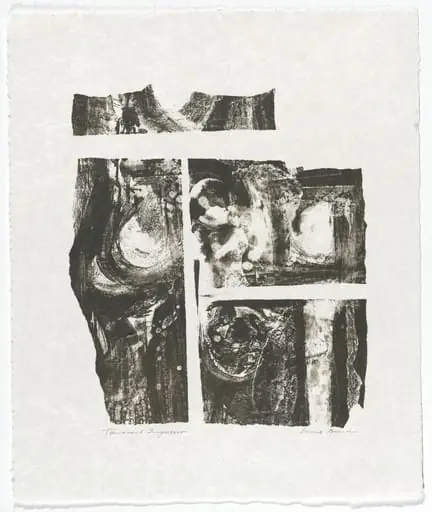
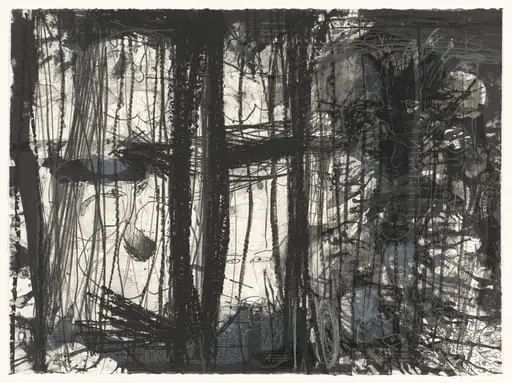
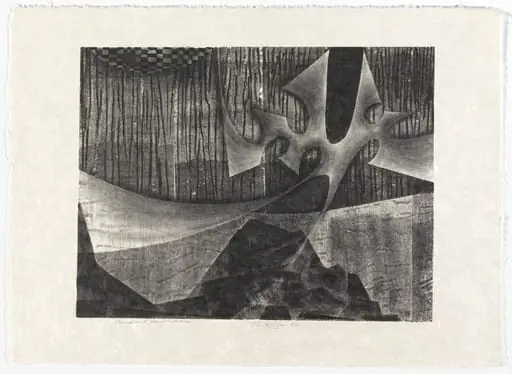
Untitled is an ink print by Louise Nevelson. It dates from 1963 and is held in the collection of the Museum of Modern Art.
About this work
Overview
Created in 1963, this lithograph by Louise Nevelson is part of her broader exploration of form and material beyond sculpture.
Created in 1963, this lithograph by Louise Nevelson is part of her broader exploration of form and material beyond sculpture. Though best known for large wooden assemblages, Nevelson extended her visual language into printmaking, using lithography to translate her interest in texture, layering, and monochrome intensity onto paper. The work retains the tactile, fragmented quality of her three-dimensional pieces, adapted to the flat plane of the print.
Subject & Meaning
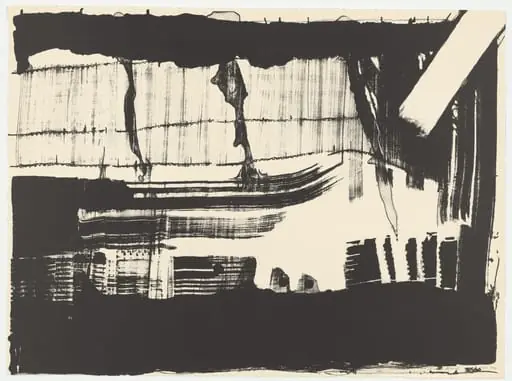
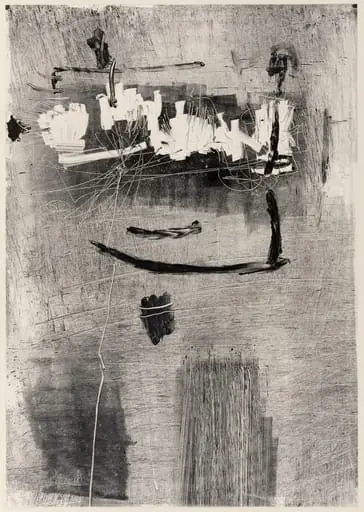
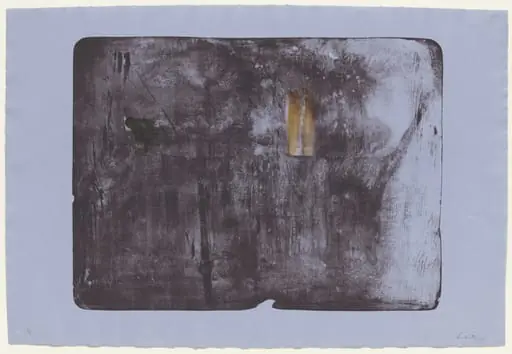
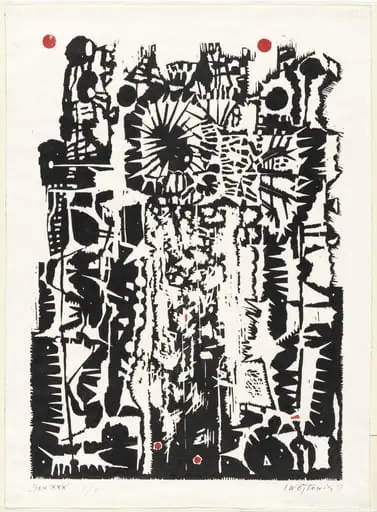
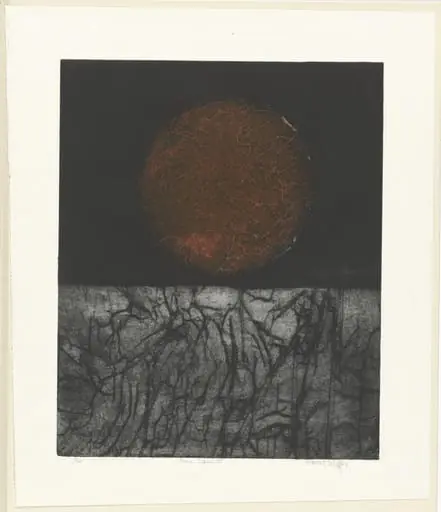
The image resists literal interpretation, instead evoking a sense of contained energy. A vivid red-orange form near the top disrupts the dominant black field, suggesting rupture or emergence. Below, a thin white line and a wavy contour imply structure or boundary, possibly referencing architectural or natural rhythms. The absence of clear symbolism invites focus on emotional resonance rather than narrative, aligning with Nevelson’s interest in abstraction as a vessel for mood.
Technique & Style
Nevelson exploited lithographic processes to achieve dense, gestural textures, using abrasive tools and direct mark-making on the stone to create a rough, uneven surface. The black field is built through layered scraping and wiping, producing a granular depth. The red element was likely applied with a resist or colored ink, standing out sharply against the dark ground. The hand-drawn, irregular border reinforces the work’s handmade character, distancing it from mechanical precision.
History & Provenance
This lithograph was produced during a period when Nevelson was gaining wider recognition in the New York art scene, following her breakthrough with monochromatic wood sculptures in the late 1950s. It was likely made in collaboration with a commercial print workshop, as was common for artists exploring printmaking at the time. Its provenance traces to private collections and institutional holdings focused on postwar American print culture.
Context
Emerging in the early 1960s, this work reflects the broader shift in American art toward abstraction and material experimentation. Nevelson’s use of found objects and monochrome palettes aligned with Minimalist and Process Art tendencies, though her work retained a more expressive, almost theatrical sensibility. Lithography allowed her to explore similar concerns of accumulation and surface in a more accessible medium, bridging sculpture and print.
Legacy
This print exemplifies Nevelson’s ability to extend her sculptural vision into printmaking without diluting its intensity. It influenced later artists interested in the physicality of print and the expressive potential of non-traditional mark-making. While less known than her large installations, works like this underscore her commitment to material transformation across media, reinforcing her role in expanding the boundaries of 20th-century American art.
Artist & collection
Artist
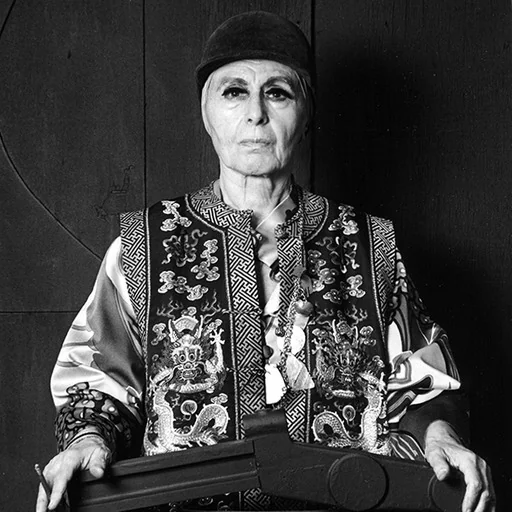
Louise Nevelson (September 23, 1899 – April 17, 1988) was an American sculptor known for her monumental, monochromatic, wooden wall pieces and outdoor sculptures.