Artwork
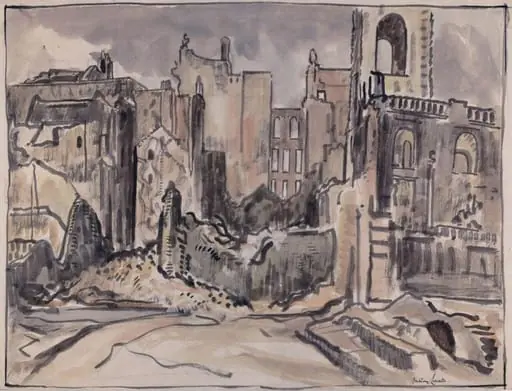
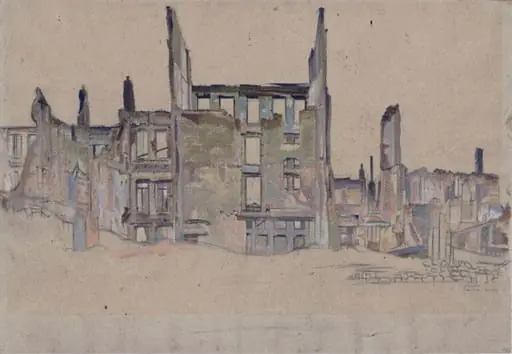
Conduit Street, corner of Saville Row, after bombing
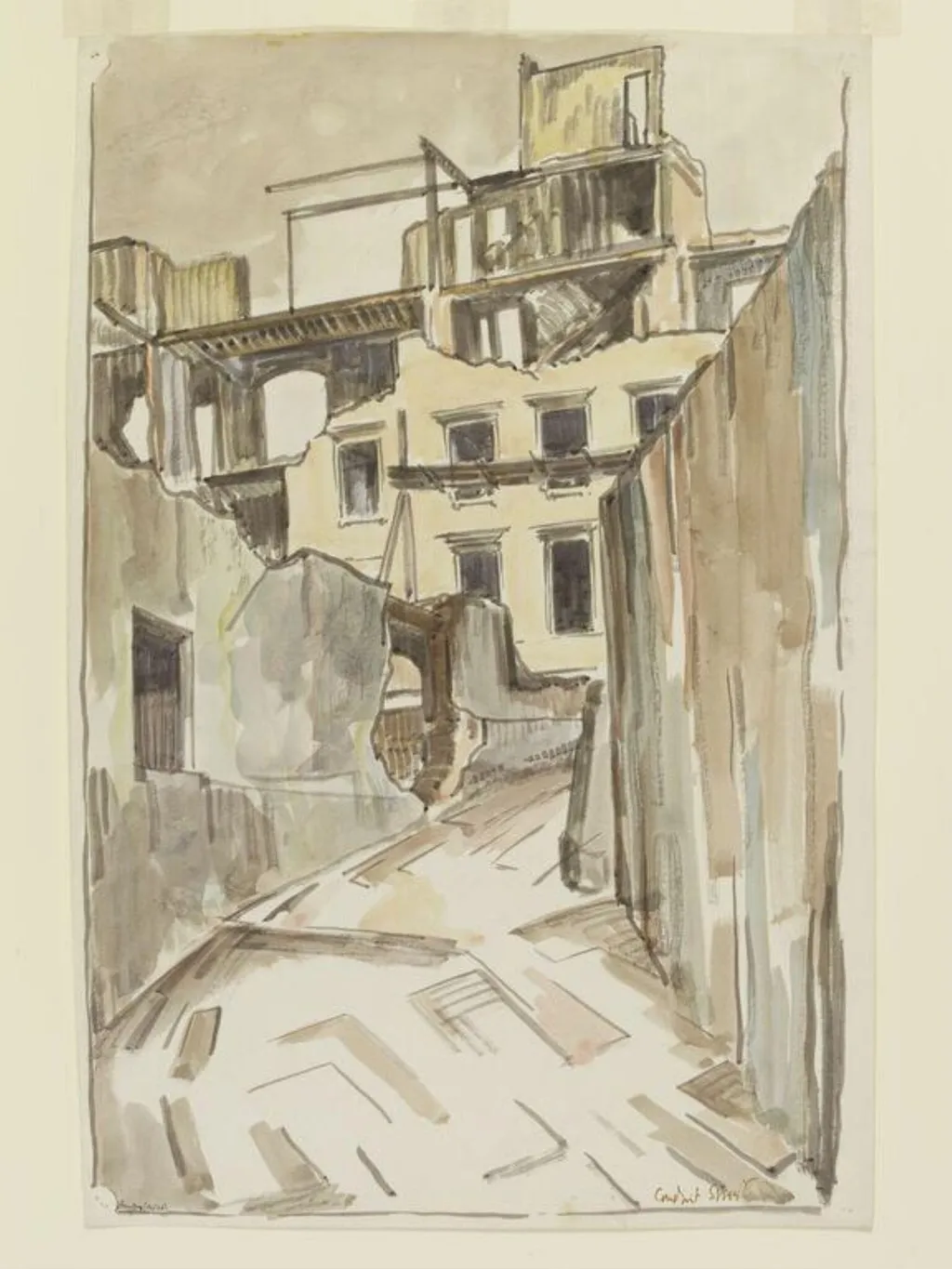
Conduit Street, corner of Saville Row, after bombing is a watercolor work on paper by the Social Realist artist Lousada. It dates from 1941 and is held in the collection of the Victoria and Albert Museum.
About this work
Overview
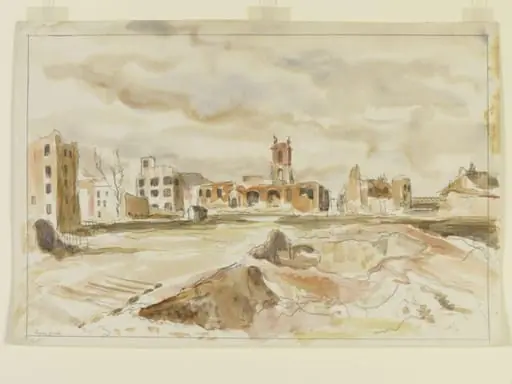
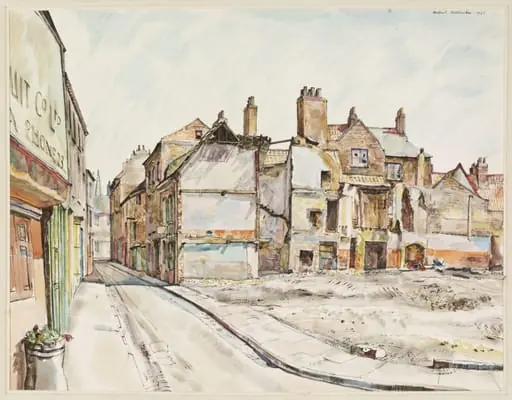
Conduit Street, corner of Saville Row, after bombing is a watercolour depicting the devastation at a London intersection following a World War II bombing raid. The piece captures the immediate aftermath of destruction with muted tones and loose brushwork.
Subject & Meaning
The subject is the war-damaged corner of Conduit Street and Savile Row, with a crumbling building, shattered windows, and debris. The artwork conveys the chaos and destruction wrought by wartime bombing, focusing on the raw, unmitigated aftermath.
Technique & Style
Executed in watercolour, the work features loose, sketchy lines and a predominantly muted palette of grays, browns, and white accents, evoking a sense of raw immediacy and urgency.
History & Provenance
The watercolour bears an official stamp from the Ministry of Information, indicating its approval and dating. Its current location is the Victoria and Albert Museum.
Artist & collection
Artist
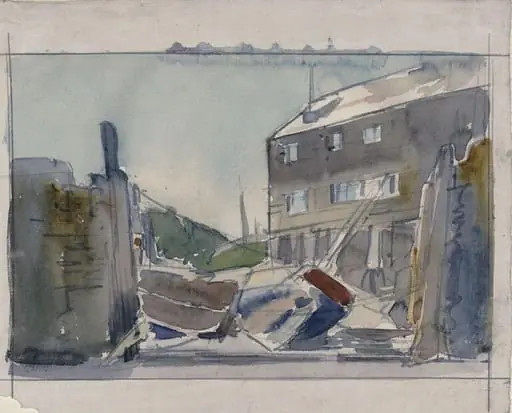
These three watercolours show London landmarks caught in the Blitz. Lousada painted St. Nicholas Cole Abbey, Conduit Street at Savile Row, and St. Giles Cripplegate shortly after the 1941 bombings, their washes still…