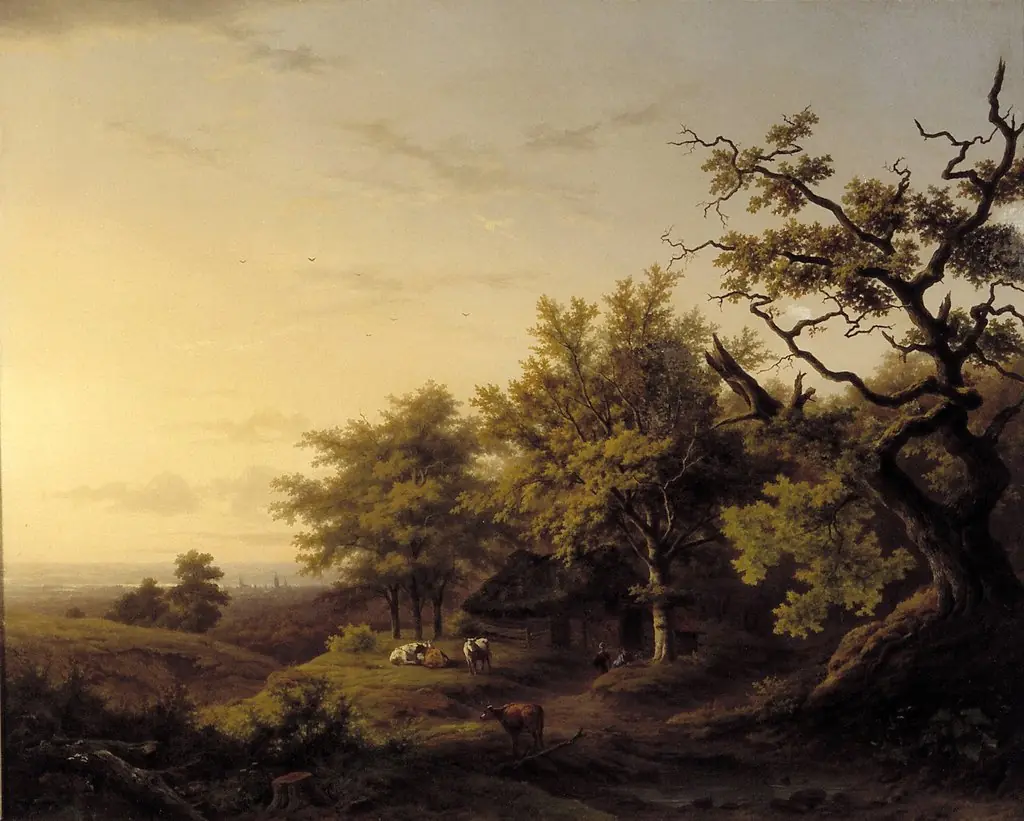
Hilly Landscape with a Ruin
1849
oil
canvas
From the collection of Rijksmuseum
1849
oil
canvas
From the collection of Rijksmuseum
Hilly Landscape with a Ruin is a 1849 oil by Louwrens Hanedoes, depicting Tree, held at Rijksmuseum.
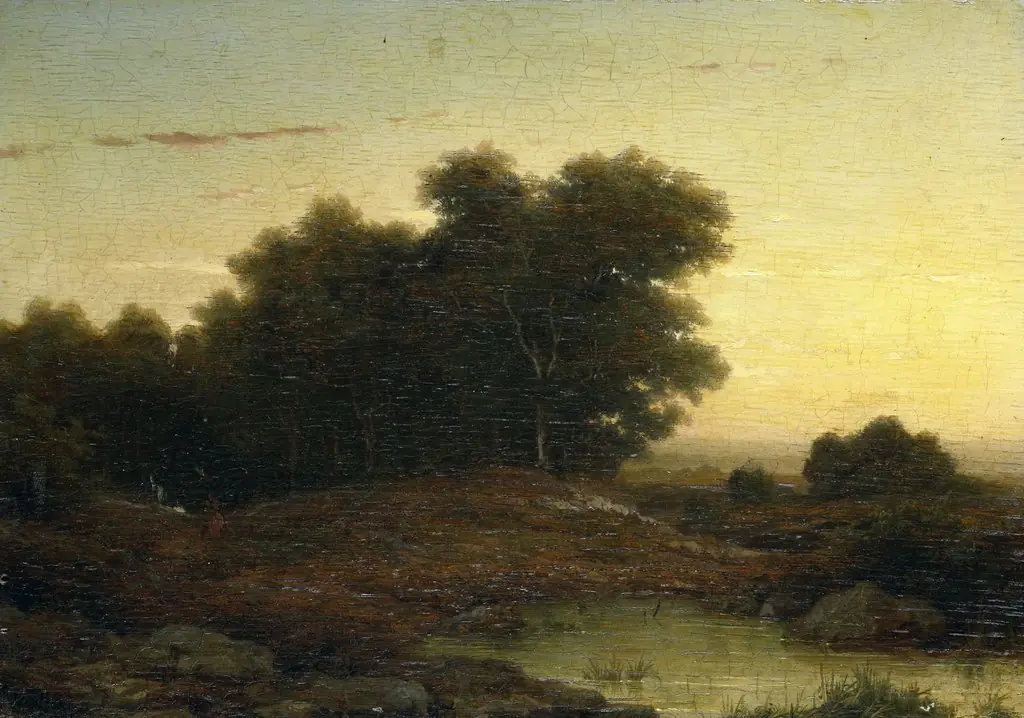
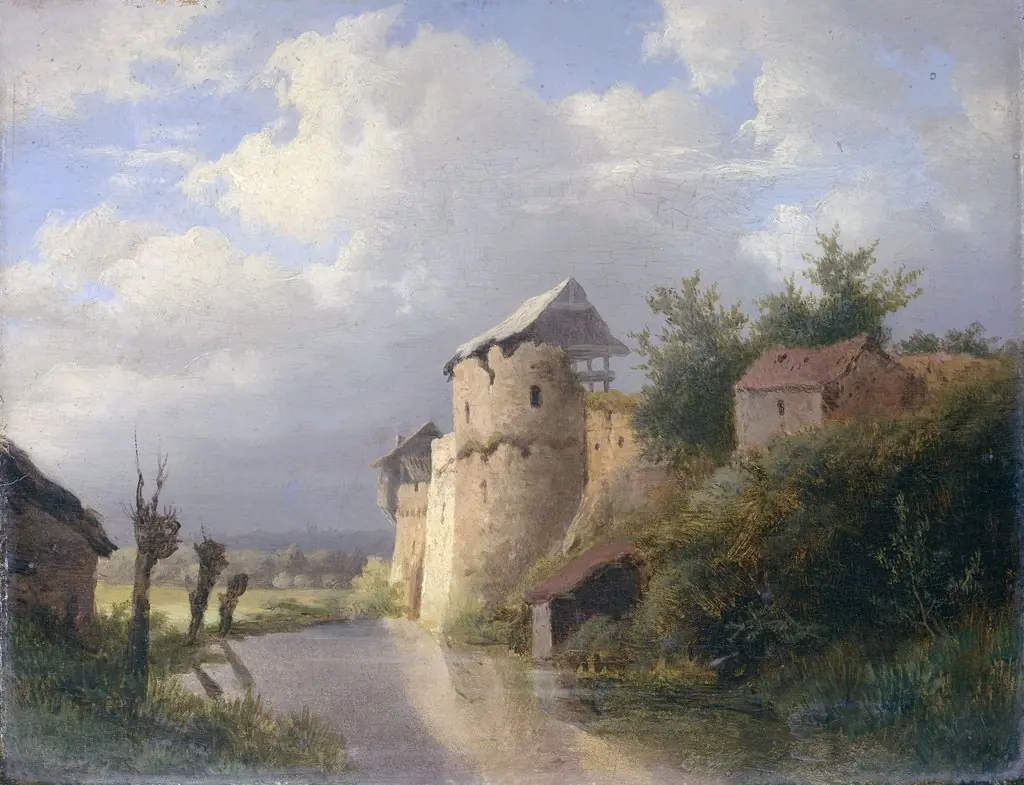
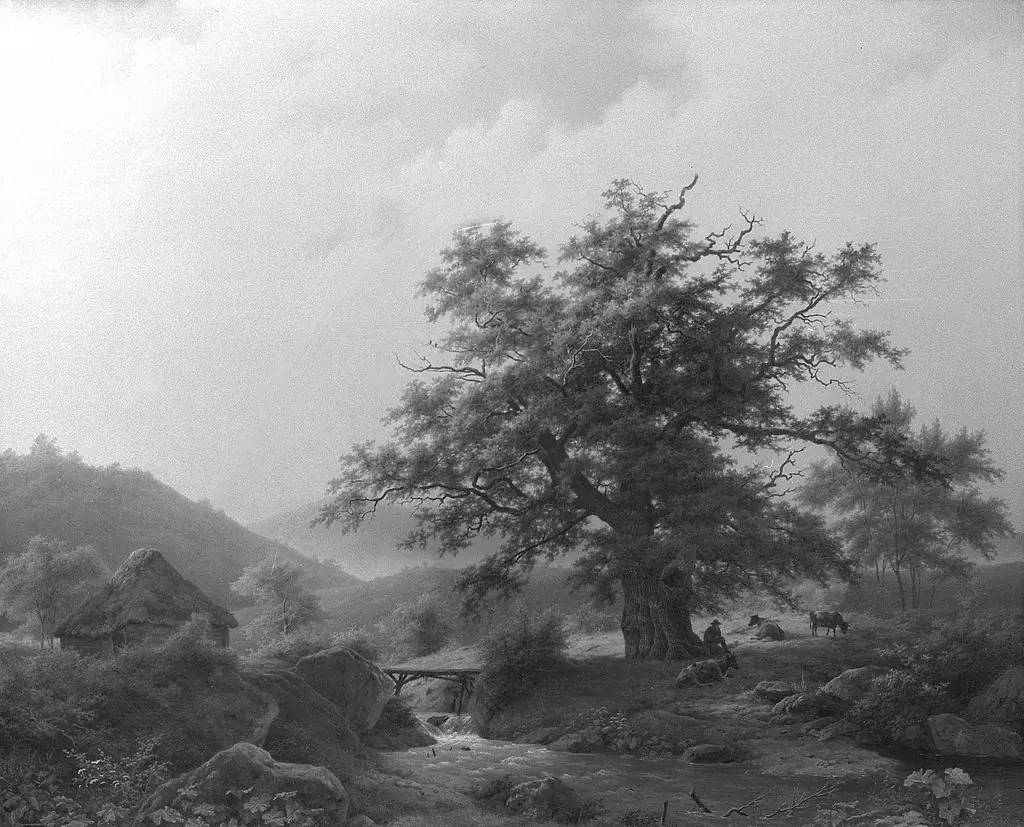
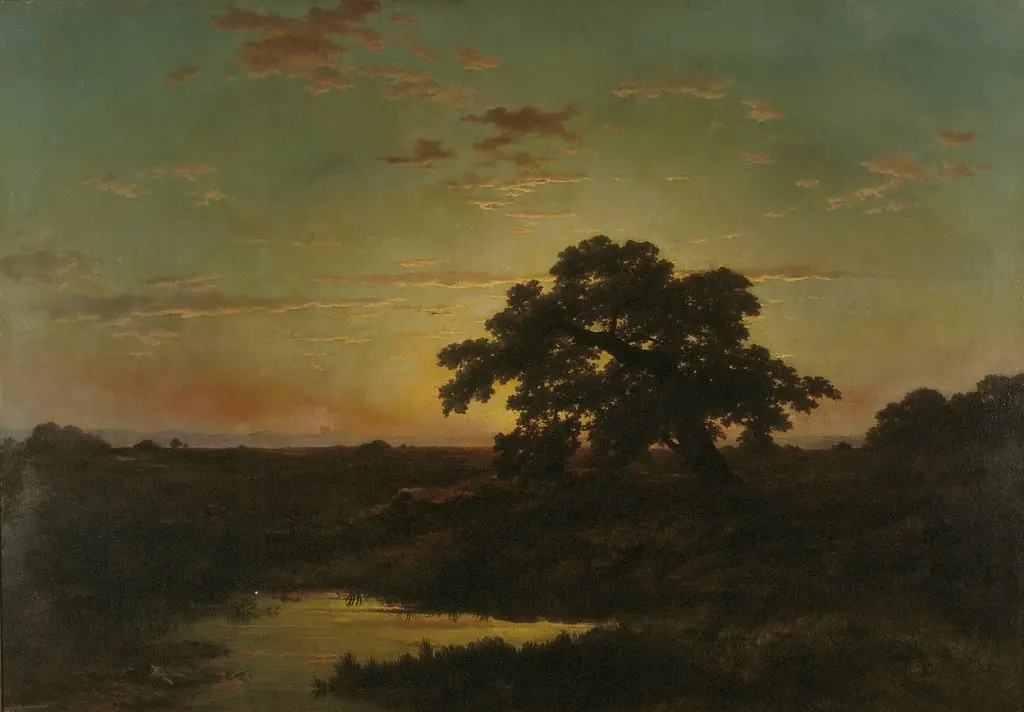
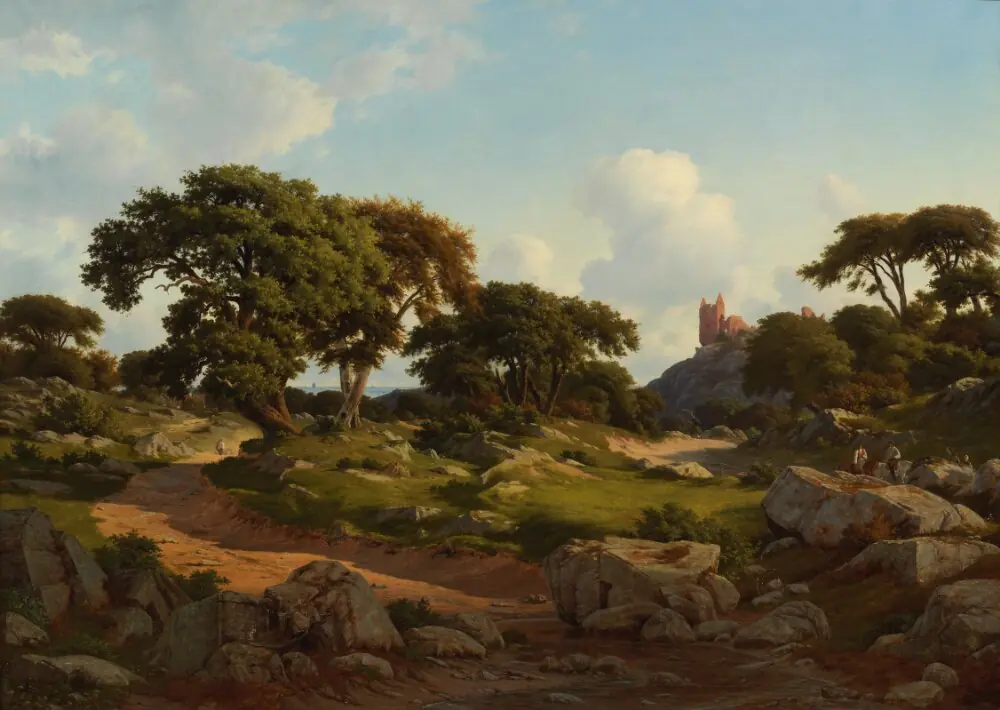
This painting shows a lonely ruin perched on a rocky hill. The stone tower is crumbling, with jagged edges and missing parts. Below, a few tiny figures walk along a winding path through dry grass and scattered bushes. The sky above is soft and cloudy, blending into distant mountains. The artist paid close attention to how light hits the uneven rocks, making some spots glow while others stay shadowy. The colors are mostly earthy browns and greens, with a pale blue sky in the background. Next, look up glazing to see how artists build up layers of transparent paint for depth.
Louwrens Hanedoes painted *Hilly Landscape with a Ruin* in 1849. Executed in oil on canvas, the work portrays a solitary stone tower perched on a rugged hill, surrounded by dry grass, scattered bushes, and a winding path traversed by diminutive figures. The sky is softly clouded, receding toward distant mountains, and the composition is held by the Rijksmuseum.
The scene juxtaposes the decay of the crumbling ruin with the vitality of the surrounding landscape, suggesting a contemplation of time’s passage. The lone figures on the path emphasize human transience against the enduring, albeit weathered, natural forms.
Hanedoes renders the uneven rocks with careful modulation of light, allowing certain facets to glow while others remain in shadow. An earthy palette of browns and greens dominates, punctuated by a pale blue sky. The handling of transparent layers creates depth, a practice reminiscent of glazing techniques common in 19th‑century oil painting.
Created during Hanedoes’s early Romantic phase, the painting later entered the collection of the Rijksmuseum, where it remains on public display. Its acquisition reflects the museum’s focus on Dutch landscape art of the mid‑19th century.
The work sits at the intersection of Romantic idealization of ruins and the emerging Realist attention to natural detail. Hanedoes, known for shifting from Romanticism to Realism, captures both the atmospheric mood of the former and the precise observation characteristic of the latter.
Read the full account in the museum source.
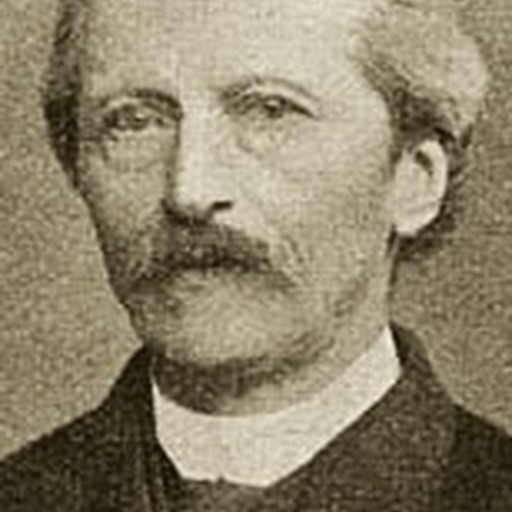
Louwrens Hanedoes (14 July 1822, Woudrichem - 9 February 1905, Woudrichem) was a Dutch landscape painter; in the Romantic style at first, later turning to Realism.
See the richer artist page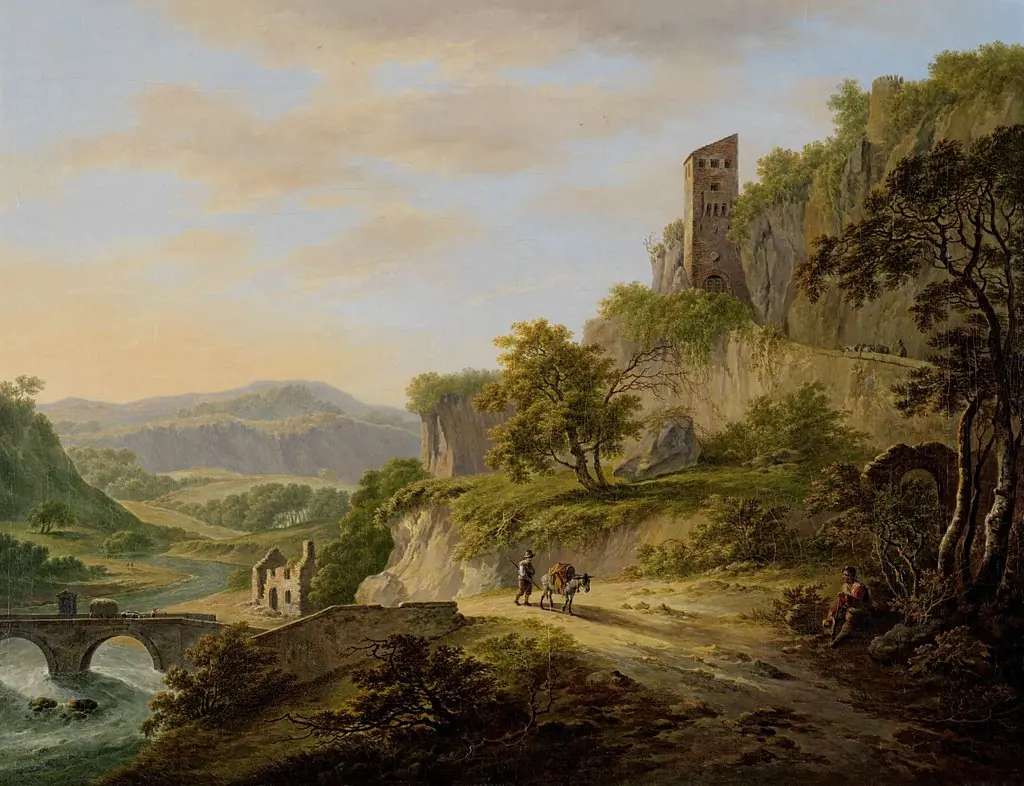
Gezicht op Civita Castellana
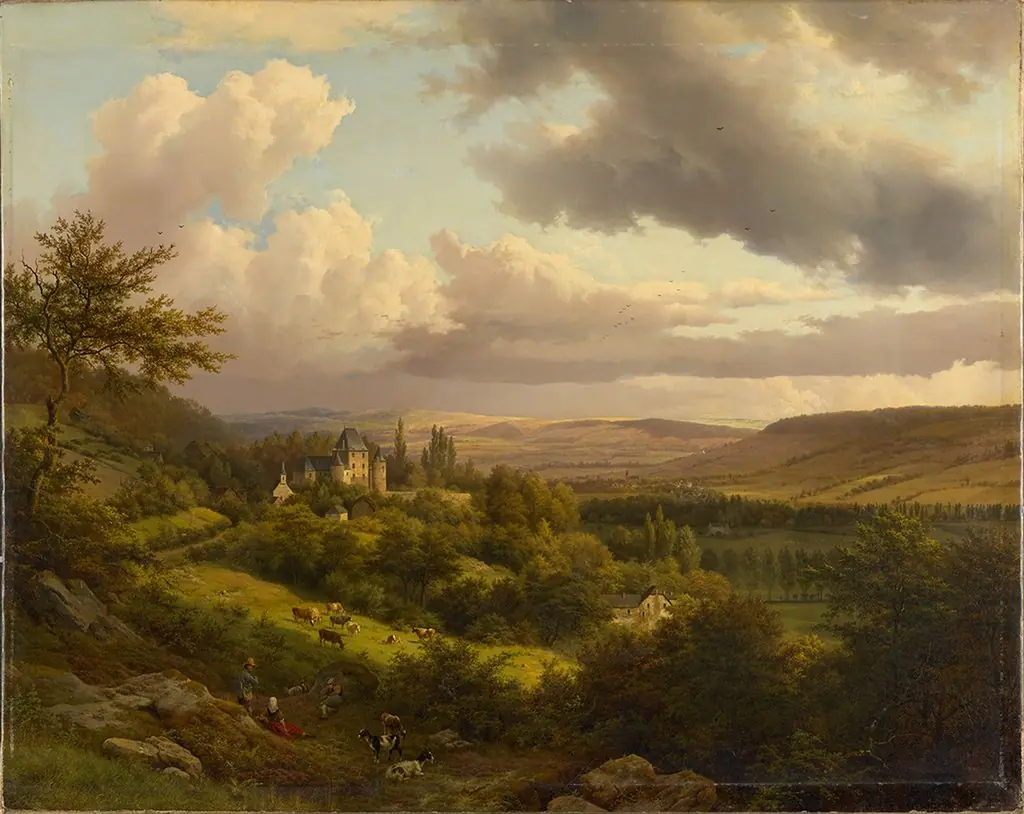
Luxemburgische Landschaft mit Blick auf Schloss Berg
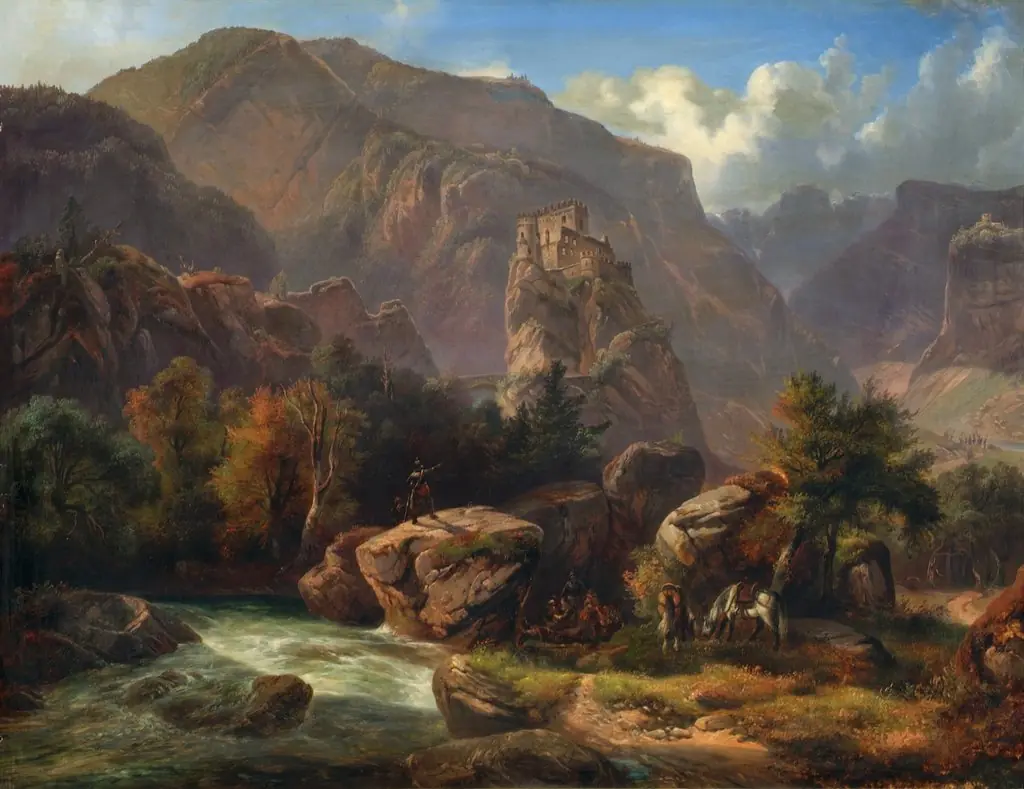
Schloss Salurn in Südtirol
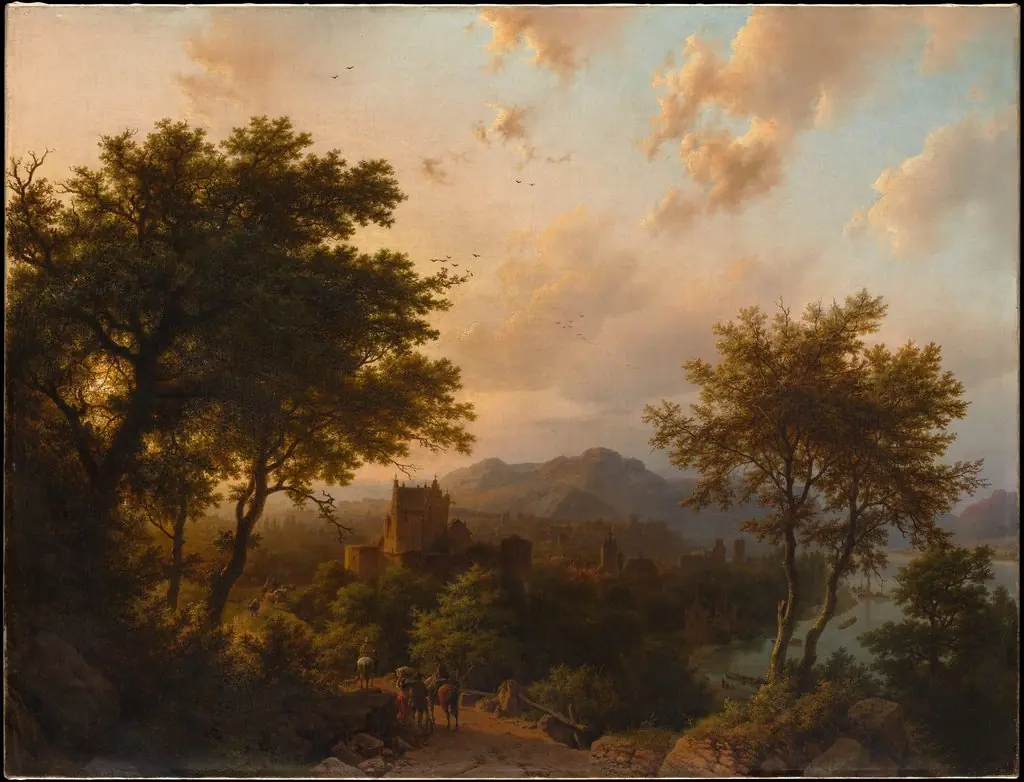
Sunset on the Rhine
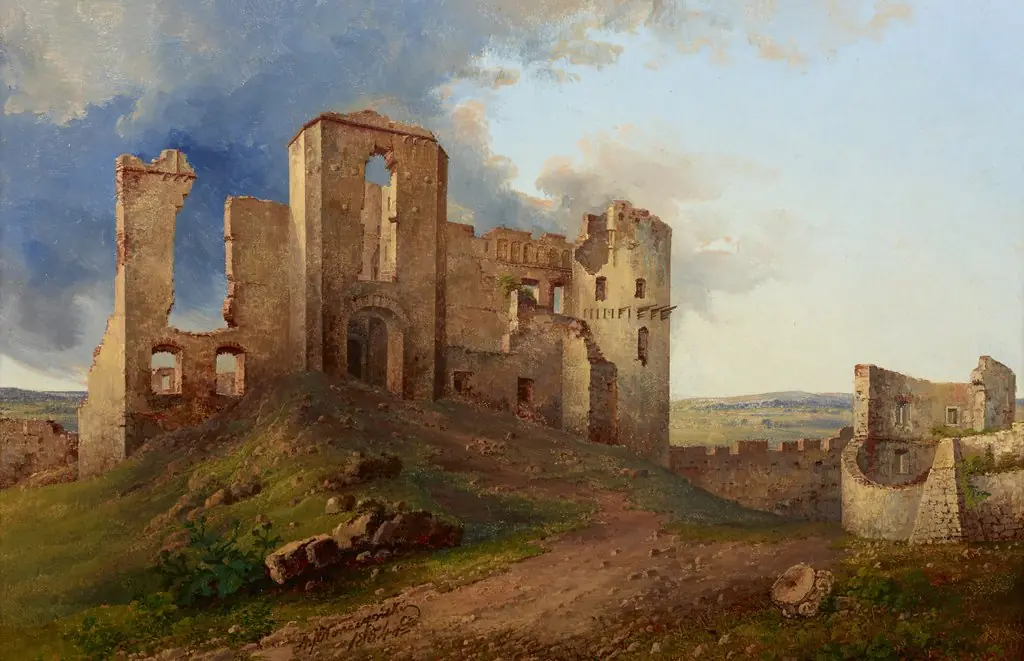
Ruins of the Tenczyn Castle
Slottet Büresheim ved Eifelfloden
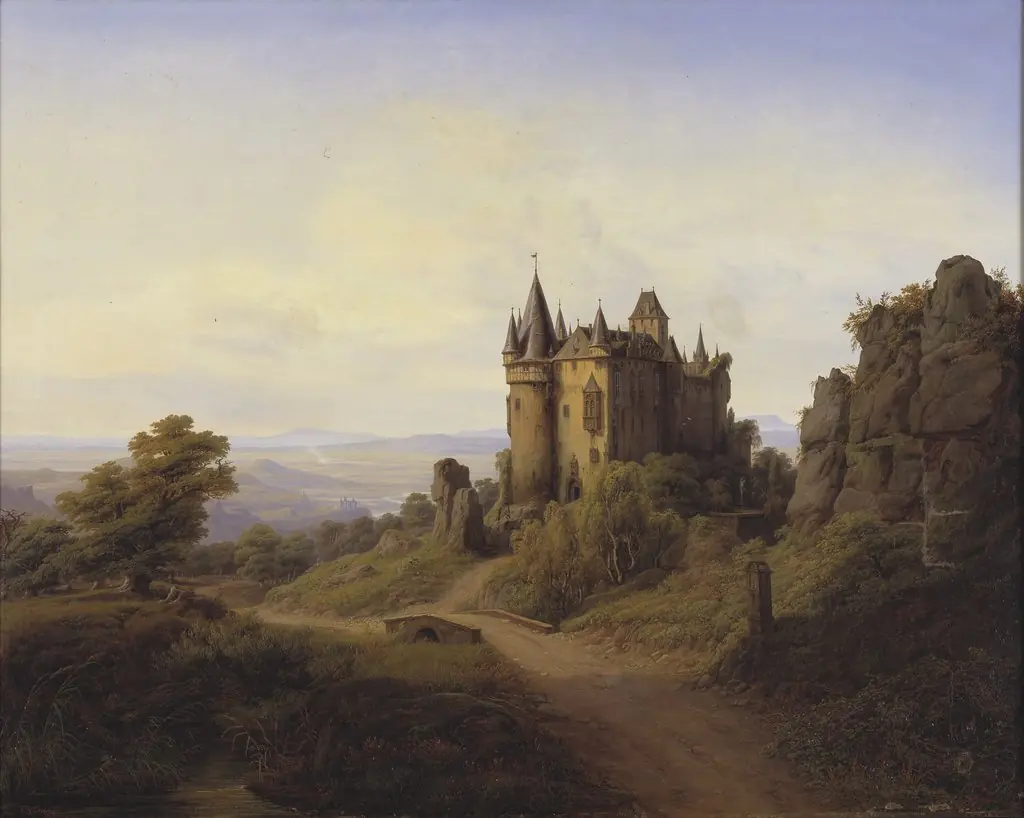
Slottet Büresheim ved Eifelfloden
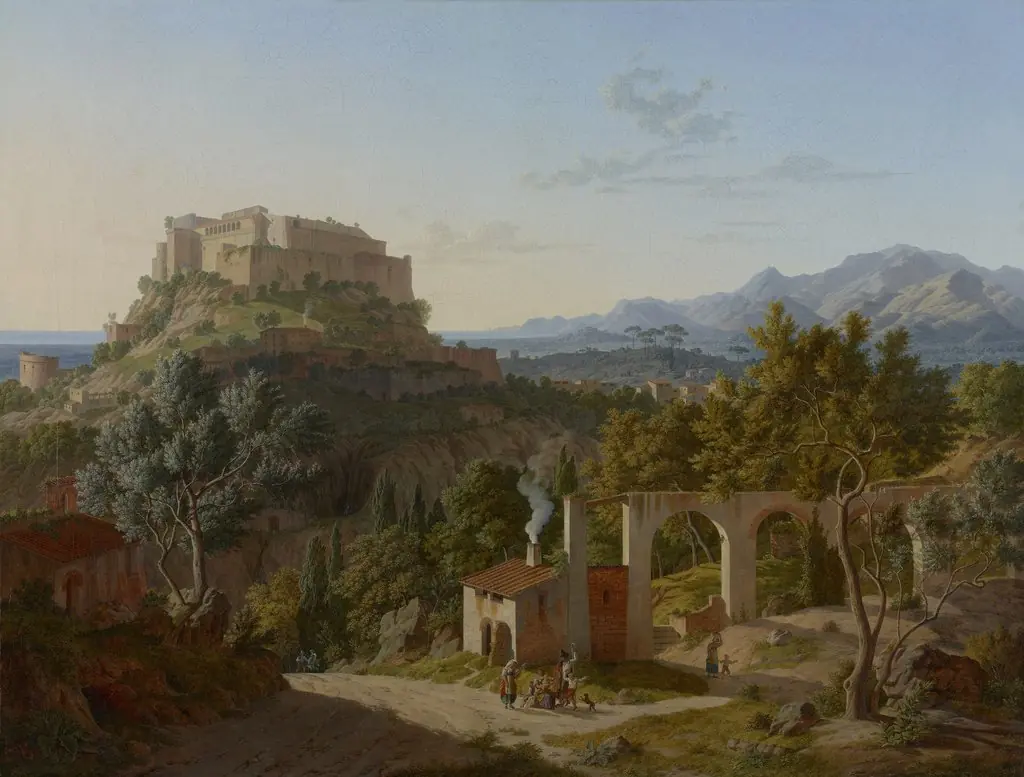
Landscape with the Castle of Massa di Carrara
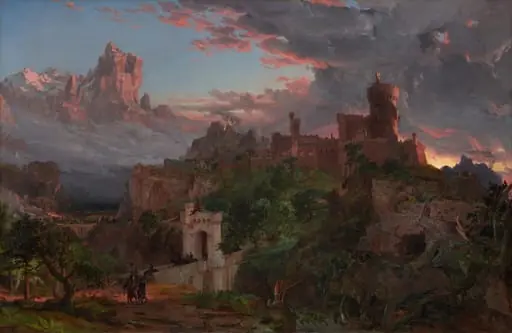
The Spirit of War
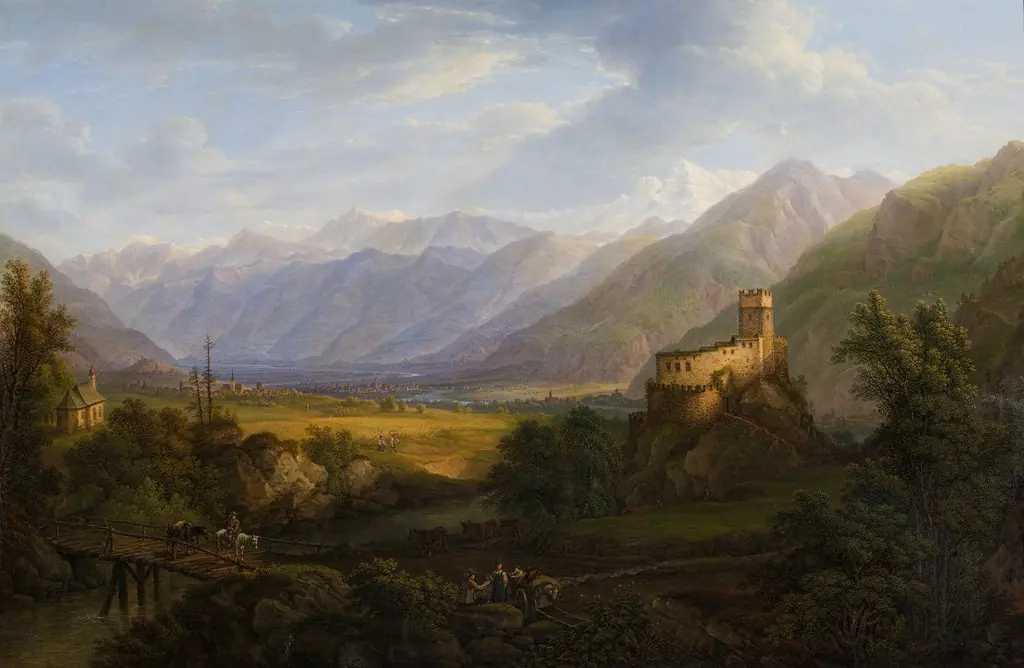
Das Glurnsertal mit der Etsch in Tirol
Landscape with a Ruined Castle, Hammershus on the Island Bornholm
Landscape with Ruined Temple: Sunrise
Your cart is empty
Explore artworks →