Artwork
River Village in a Rainstorm
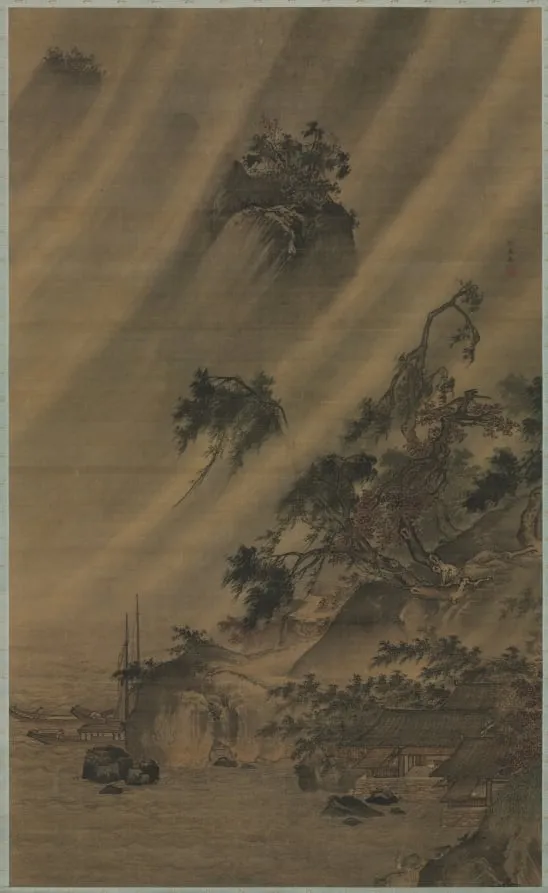
River Village in a Rainstorm is an unspecified painting by the Ming dynasty painting artist Lü Wenying. It dates from 1491 and is held in the collection of the Cleveland Museum of Art. The painting depicts a modest settlement perched on a riverbank during a fierce rainstorm.
About this work
This painting is one of the few surviving works by Lu Wenying, a court artist almost forgotten today.
A small village clings to a riverbank while rain slashes sideways across the scene. Trees bend, roofs glisten, and a single boat rocks in the choppy water.
This painting is one of the few surviving works by Lu Wenying, a court artist almost forgotten today. The way he shows wind and water—without a single person—makes the storm feel alive. Artists in the Zhe school, where Lu trained, loved big, dramatic landscapes like this.
To see how other Ming dynasty painters handled storms, look up *china, ming dynasty (1368–1644)*.
Overview
The painting depicts a modest settlement perched on a riverbank during a fierce rainstorm. Wind-driven rain sweeps across the composition, bending trees, slicking tiled roofs, and tossing a lone boat upon turbulent water. The work captures the immediacy of a summer monsoon, emphasizing the elemental forces rather than human activity.
Subject & Meaning
By omitting figures, the scene foregrounds nature’s dominance over human habitation. The isolated village, clinging to the shore, illustrates vulnerability amid relentless weather, while the solitary boat suggests continued livelihood despite adverse conditions. The composition conveys a contemplative reflection on the relationship between people and the natural world during the Ming period.
Technique & Style
Executed in the Zhe school tradition, the painting employs bold brushwork and expansive spatial organization characteristic of Southern Song academy influences. Dynamic, diagonal strokes render the wind and rain, while subtle washes create the glistening effect on roofs and water. The dramatic scale and emphasis on atmospheric conditions reflect the school’s preference for grand, emotive landscapes.
History & Provenance
Created by Lü Wenying, a Zhejiang-born court painter active during the Hongzhi reign (1488–1505), the work is among the few extant pieces attributed to him. Lü, largely obscure today, served the imperial atelier and adhered to the Southern Song aesthetic filtered through the Zhe school’s regional sensibilities.
Context
The painting emerges from a region frequently battered by summer monsoons, a climate that shaped the visual vocabulary of Zhe school artists. Their landscapes often transformed the poetic serenity of earlier Southern Song scenes into more forceful, large‑scale depictions of weather’s power, reflecting both local experience and courtly taste.
Artist & collection

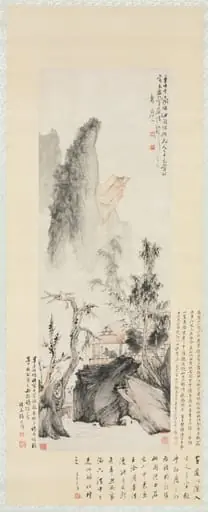 Conversation in Autumn
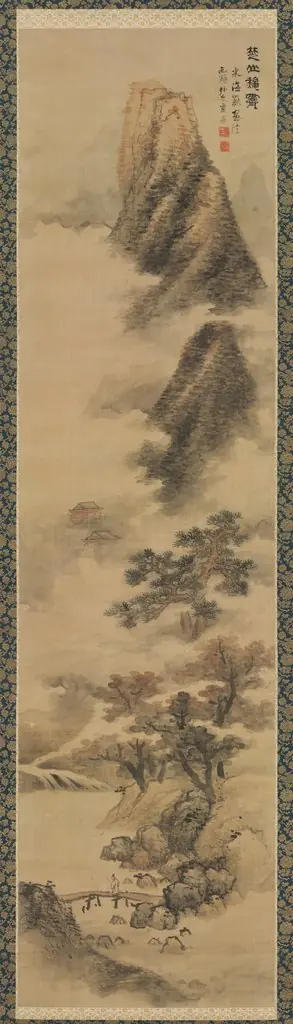 Clearing Autumn Mists in the Chu Mountains
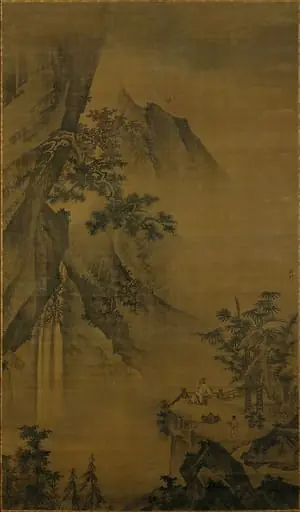 明 鍾禮 觀瀑圖 軸|Li Bai gazing at the waterfall on Mount Lu
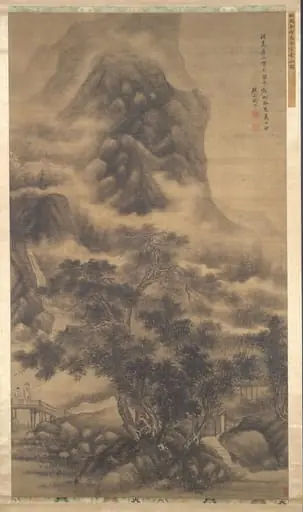 Clouds Visiting a Mountain Retreat
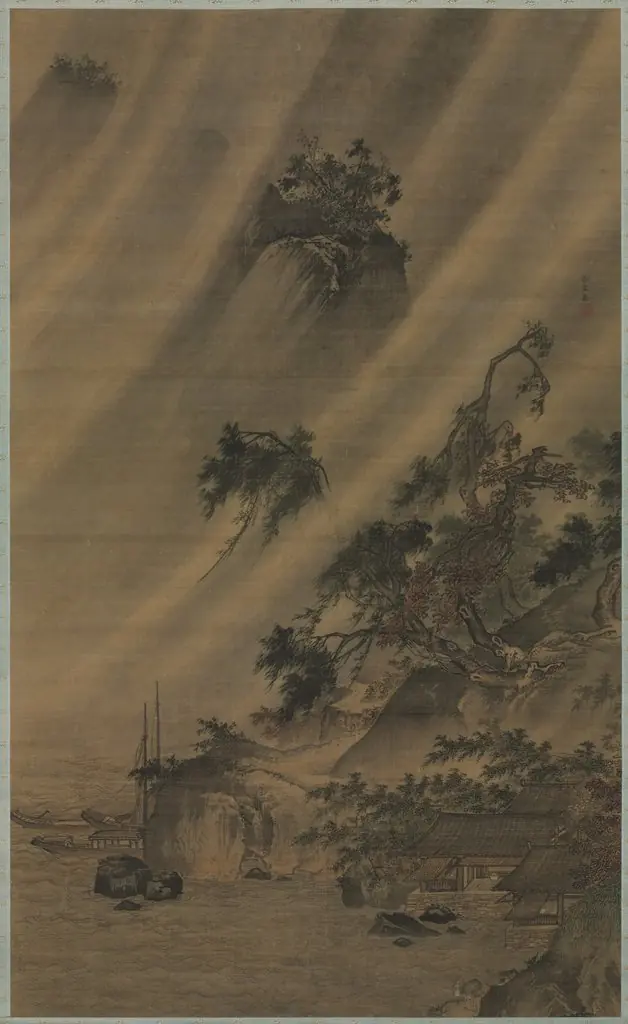 River Village in a Rainstorm
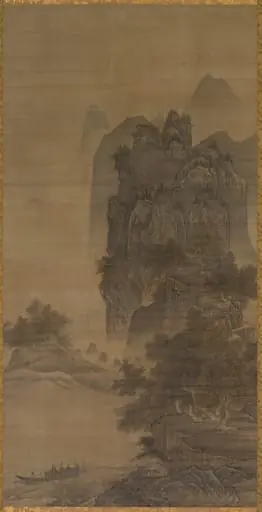 Sunset Glow over a Fishing Village, from Eight Views of Xiao-Xiang
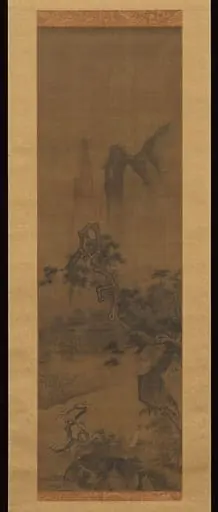 南宋 佚名 賞梅圖 軸|Scholar admiring plum blossoms
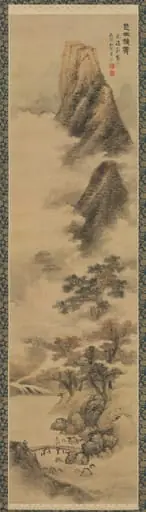 Clearing Autumn Mists in the Chu Mountains
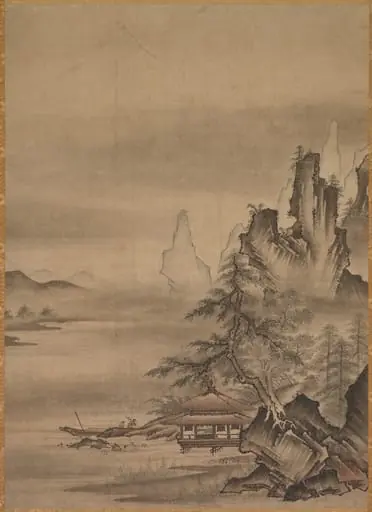 Returning Home
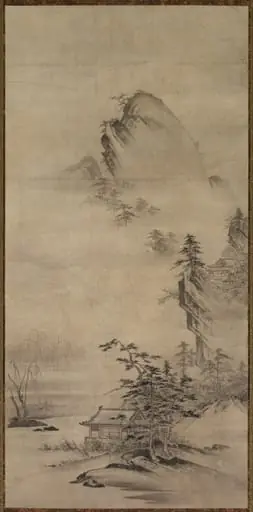 Landscape with a Pavilion