Artwork
Clouds Visiting a Mountain Retreat
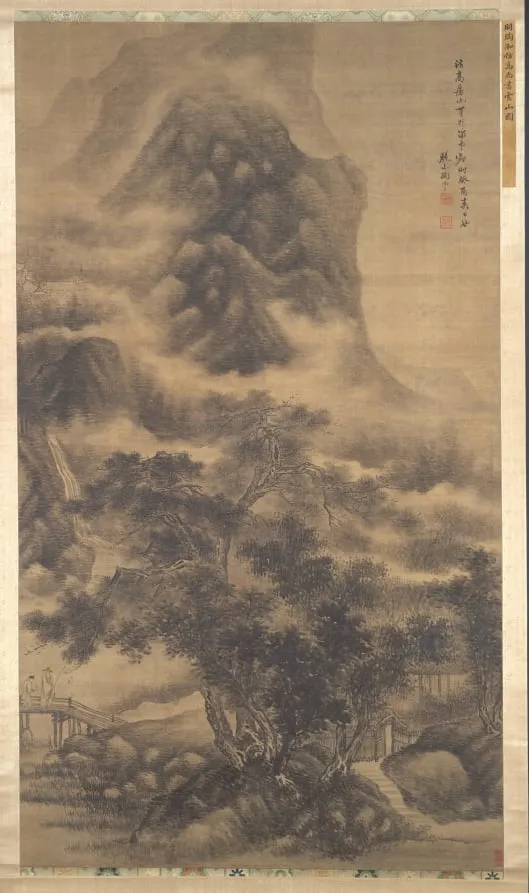
Clouds Visiting a Mountain Retreat is an unspecified painting by the Baroque artist Tao Hong. It dates from 1633 and is held in the collection of the Cleveland Museum of Art.
About this work
This ink painting shows a mountain peak half-hidden in swirling clouds. Soft gray washes fade into white mist around jagged peaks and a lone pine.
Tao Hong painted this in 1633, late in the Ming Dynasty. Only five of his works survive today—just one is bigger than this.
Look up Tao Hong (Chinese, active c. 1610–1640) to see how his work changed after the dynasty fell.
Overview
Tao Hong, active in the early 17th century, was a painter who spent his later years in Nanjing.
Tao Hong, active in the early 17th century, was a painter who spent his later years in Nanjing. His known body of work is extremely limited, with only five paintings surviving today. This piece, dated 1633, is among the largest of those extant. It reflects his style before the political upheavals of the Ming collapse, offering a rare glimpse into his artistic development during a period of cultural transition.
Subject & Meaning
The painting depicts a solitary mountain peak emerging from dense, drifting clouds, with a single pine tree clinging to its rocky flank. The composition evokes solitude and impermanence, common themes in literati painting. The clouds obscure rather than reveal, suggesting the elusive nature of truth or the retreat from worldly affairs—a motif aligned with Daoist ideals and the artist’s later withdrawal from society.
Technique & Style
Executed in ink on paper, the work employs subtle gradations of gray wash to suggest atmospheric depth. The mountain’s jagged contours are defined with restrained brushwork, while the mist dissolves edges into blank paper, creating a sense of spatial ambiguity. This technique, rooted in Southern Song traditions, emphasizes mood over detail, reflecting the literati preference for expressive restraint over ornate representation.
History & Provenance
Painted in 1633, this work predates the fall of the Ming dynasty. Tao Hong later joined the loyalist resistance in Yunnan and fled to Burma after its collapse in 1645, where he died. His relocation and the chaos of war likely contributed to the scarcity of his surviving works. This painting’s survival is exceptional, as most of his output was lost during the turmoil of the transition to Qing rule.
Context
Tao Hong lived during a time when Nanjing was a center for literati culture, and his son’s friendship with Gong Xian situates him within a network of scholar-artists. Though not a leading figure of the Nanjing school, his work shares its introspective tone. The painting’s quiet grandeur reflects the broader Ming literati tradition, even as political instability began to reshape artistic expression across China.
Legacy
Only five paintings by Tao Hong are known, making each a critical reference for understanding late Ming painting beyond its most celebrated figures. This work, as the largest surviving example, provides insight into his technical range and thematic concerns before his exile. His limited output and tragic end underscore how historical upheaval often erased the cultural contributions of lesser-known artists.
Artist & collection

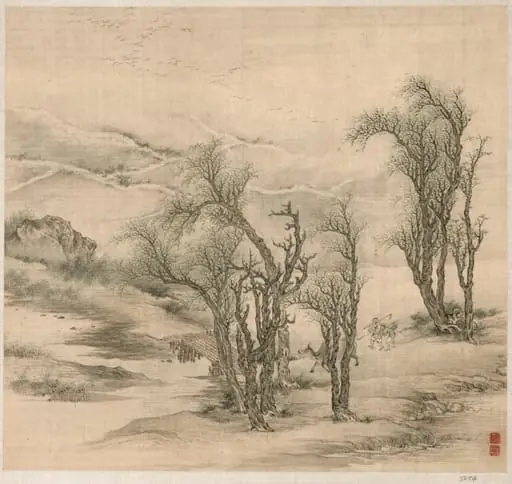
 Cloudy Mountains
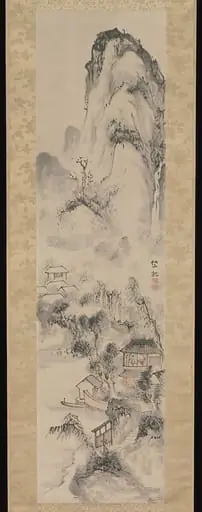 Untitled
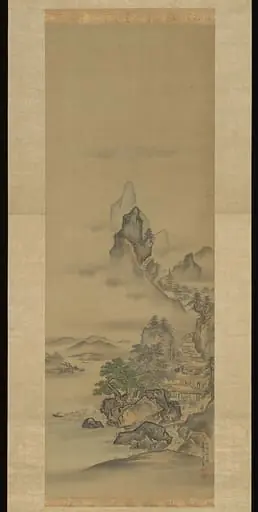 狩野探水守常筆 蓬莱山・瀟湘八景図|Mount Penglai with Eight Views of Xiao and Xiang
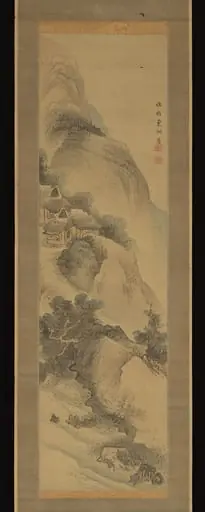 Untitled
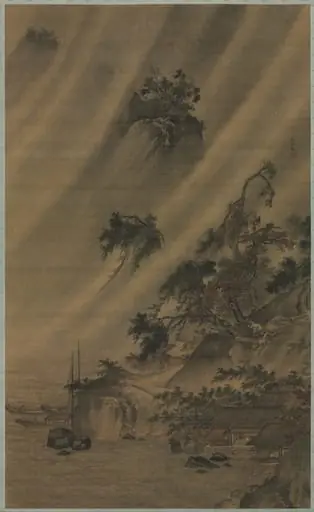 River Village in a Rainstorm
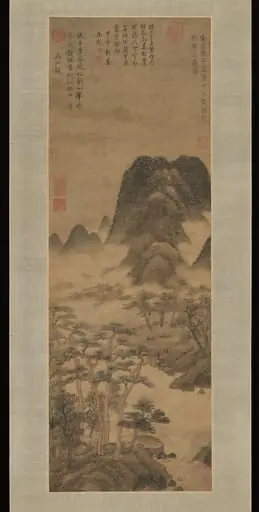 元 張羽 松軒春靄圖 軸|Spring Clouds at the Pine Studio
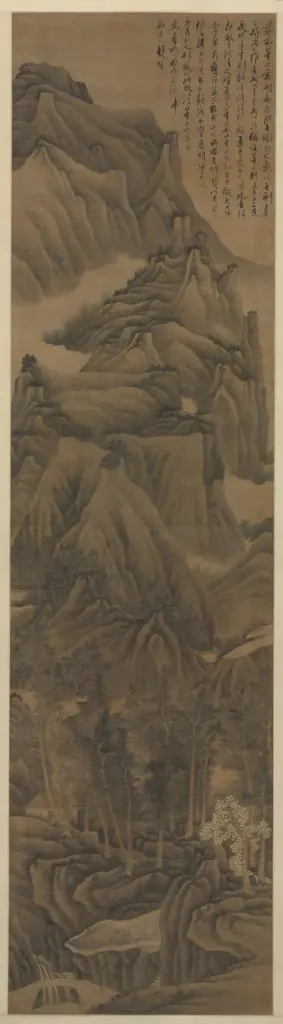 Landscape in the Style of Dong Yuan and Juran
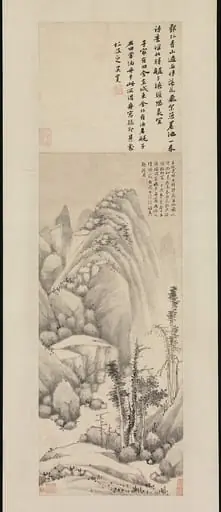 明 沈周 夜雨泊舟圖 軸|Anchorage on a Rainy Night
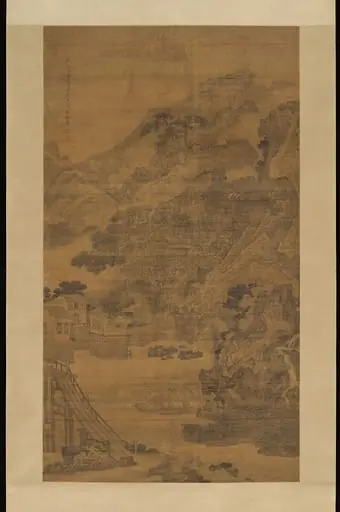 Untitled
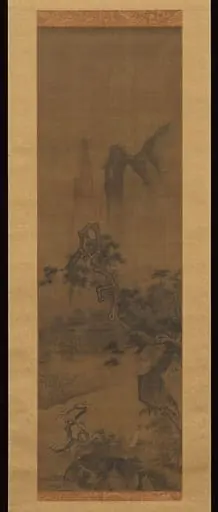 南宋 佚名 賞梅圖 軸|Scholar admiring plum blossoms