Artwork
Vulcan's Forge
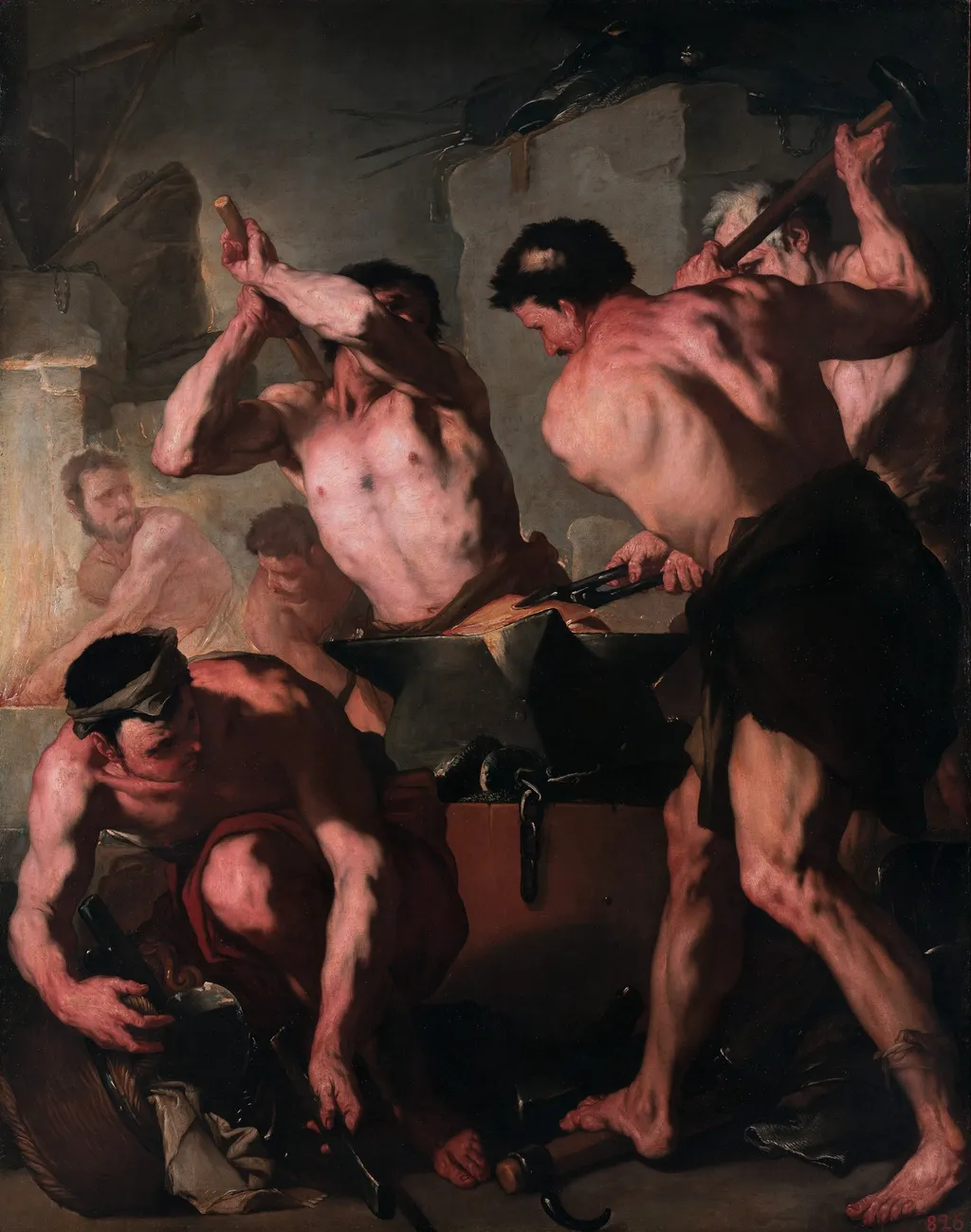
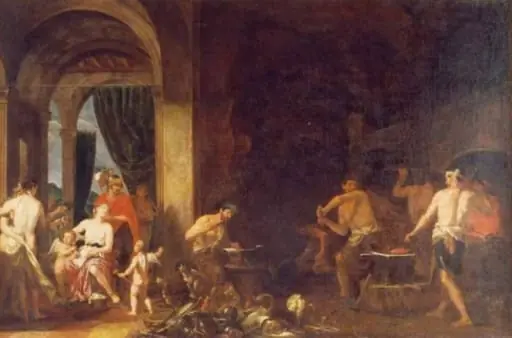
Vulcan's Forge is an oil painting by the Early Baroque Italian artist Luca Giordano. It dates from 1660 and is held in the collection of the Hermitage Museum.
About this work
Overview
The composition centers on the muscular figures of the Cyclopes, who are rendered shirtless in loincloths as they strike glowing metal on an anvil.
Luca Giordano's Vulcan's Forge, painted in 1660, depicts the mythological blacksmith god Vulcan and his Cyclopes assistants laboring within a subterranean workshop. The composition centers on the muscular figures of the Cyclopes, who are rendered shirtless in loincloths as they strike glowing metal on an anvil. Giordano utilizes the intense, localized light emanating from the furnace and the heated metal to model the anatomy of the workers, creating a dramatic contrast against the shadowy stone background. This work exemplifies the artist's early mature style, characterized by dynamic movement and a mastery of chiaroscuro derived from his study of Ribera and the Neapolitan school. Executed when Giordano was approximately twenty-six years old, the painting demonstrates his ability to synthesize Baroque theatricality with classical mythological subjects. The scene captures the physical exertion of the forge, transforming a moment of industrial labor into a powerful narrative of divine craftsmanship. The work stands as a significant example of mid-seventeenth-century Italian Baroque painting, highlighting Giordano's emerging reputation for energetic figural composition and his skill in depicting the interplay of fire and flesh.
Subject & Meaning
The composition centers on a group of shirtless laborers clad only in simple loincloths, their muscular forms straining as one figure hammers a glowing piece of metal on an anvil. The work conveys the raw energy of manual craftsmanship, evoking the mythic association of Vulcan, the Roman god of fire and metalworking, with human industry.
Technique & Style
Giordano employs a rich, buttery application of oil paint to render the flickering light and deep shadows that define the forge’s atmosphere. The chiaroscuro effect highlights the sheen of heated metal and the sweat‑glossed skin, while the loose, dynamic brushwork conveys movement and the heat‑distorted air of the setting.
History & Provenance
Created in the mid‑seventeenth century, *Vulcan’s Forge* entered the State Hermitage Museum’s holdings during the 19th‑century expansion of the Russian imperial collection. The painting has remained in the museum’s permanent display, offering insight into Giordano’s prolific output during his Roman period.
Own this work as a print
Artist & collection

Artist
Luca Giordano was an Italian late-Baroque painter and printmaker in etching. Giordano was one of the most celebrated artists of the Neapolitan Baroque, whose vast output included altarpieces, mythological paintings and…