Artwork
Martin Luther
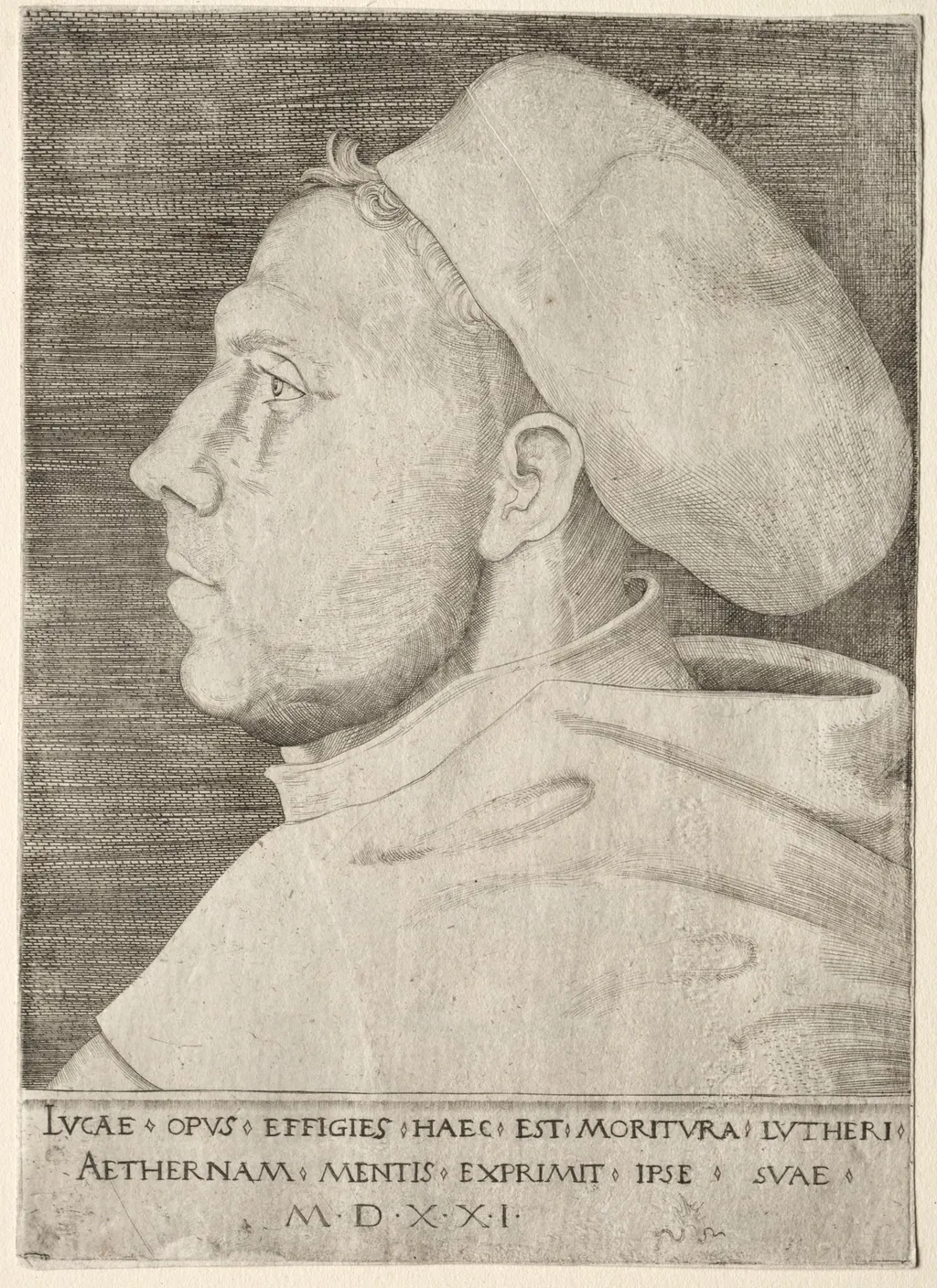
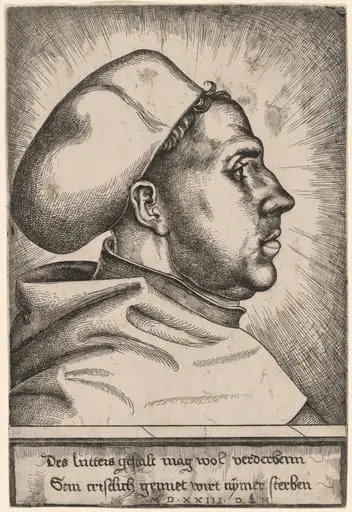
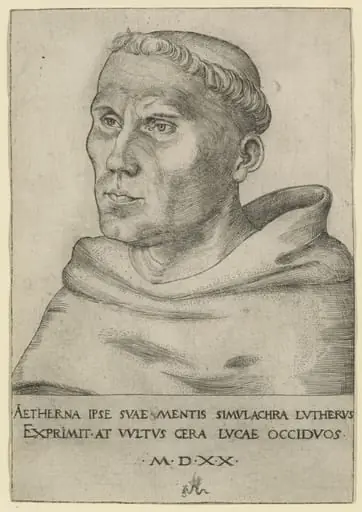
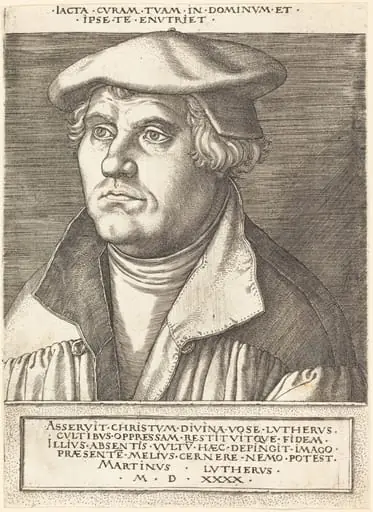
Martin Luther is a print by Lucas Cranach the Elder. It dates from 1522 and is held in the collection of the Cleveland Museum of Art.
About this work
The subject's robes are rendered in intricate detail, with folds and creases that give the impression of weight and volume.
This painting depicts a man with a stern expression, wearing a black robe and a white collar. He is set against a dark background, which contrasts with the lighter tones of his clothing. The man's face is the central focus of the composition, with his eyes cast downward.
The artist has used a range of techniques to create a sense of depth and texture in the painting. The subject's robes are rendered in intricate detail, with folds and creases that give the impression of weight and volume. The background is dark and somber, which serves to emphasize the subject's features.
For more information on the artist's use of chiaroscuro, explore the work of Lucas Cranach (German, 1472–1553).
Overview
Created around 1522 by Lucas Cranach the Elder, this print captures Martin Luther during the early years of the Protestant Reformation. Cranach, a leading German artist of the period, was both court painter to the Electors of Saxony and a personal associate of Luther. His repeated depictions of the reformer reflect their close relationship and the role of visual imagery in spreading Reformation ideals.
Subject & Meaning
The portrait presents Luther in a contemplative pose, his gaze lowered and expression restrained. Dressed in a simple black robe with a white clerical collar, he embodies the reformer’s rejection of ecclesiastical opulence. The absence of symbolic props or elaborate setting directs attention to his humanity and intellectual gravity, reinforcing his identity as a scholar and spiritual leader rather than a figure of divine authority.
Technique & Style
Cranach employs subtle chiaroscuro to model Luther’s face and garments, creating volume through delicate shifts in tone. The fabric of the robe is rendered with precise, linear folds that suggest texture and weight, while the dark, unbroken background isolates the figure and enhances its presence. The composition avoids ornamentation, favoring clarity and psychological immediacy over decorative flourish.
History & Provenance
This portrait emerged from Cranach’s workshop during a period of intense religious and political change in Germany. As Luther’s trusted ally, Cranach produced numerous likenesses of him for distribution among supporters, helping to shape public perception. The work likely originated as a woodcut or engraving, intended for wide circulation, though surviving versions may include painted variants from his studio.
Context
In the early 1520s, printed images of Luther became vital tools for the Reformation, countering Catholic iconography with portraits that emphasized literacy, piety, and moral authority. Cranach’s depictions aligned with Lutheran theology by avoiding saintly attributes, instead presenting Luther as a relatable, grounded figure—part theologian, part citizen—reflecting the movement’s emphasis on individual conscience.
Legacy
Cranach’s portraits of Luther established a visual archetype that endured for centuries. His restrained, direct style influenced subsequent depictions of Protestant leaders and contributed to the normalization of secular portraiture in religious contexts. These images helped cement Luther’s public identity, ensuring his likeness became as widely recognized as his writings.
Artist & collection
Artist
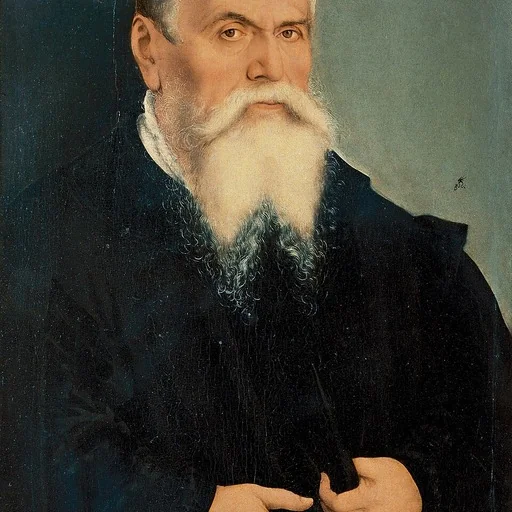
Lucas Cranach the Elder was a German Renaissance painter and printmaker in woodcut and engraving.