Artwork
Martin Luther
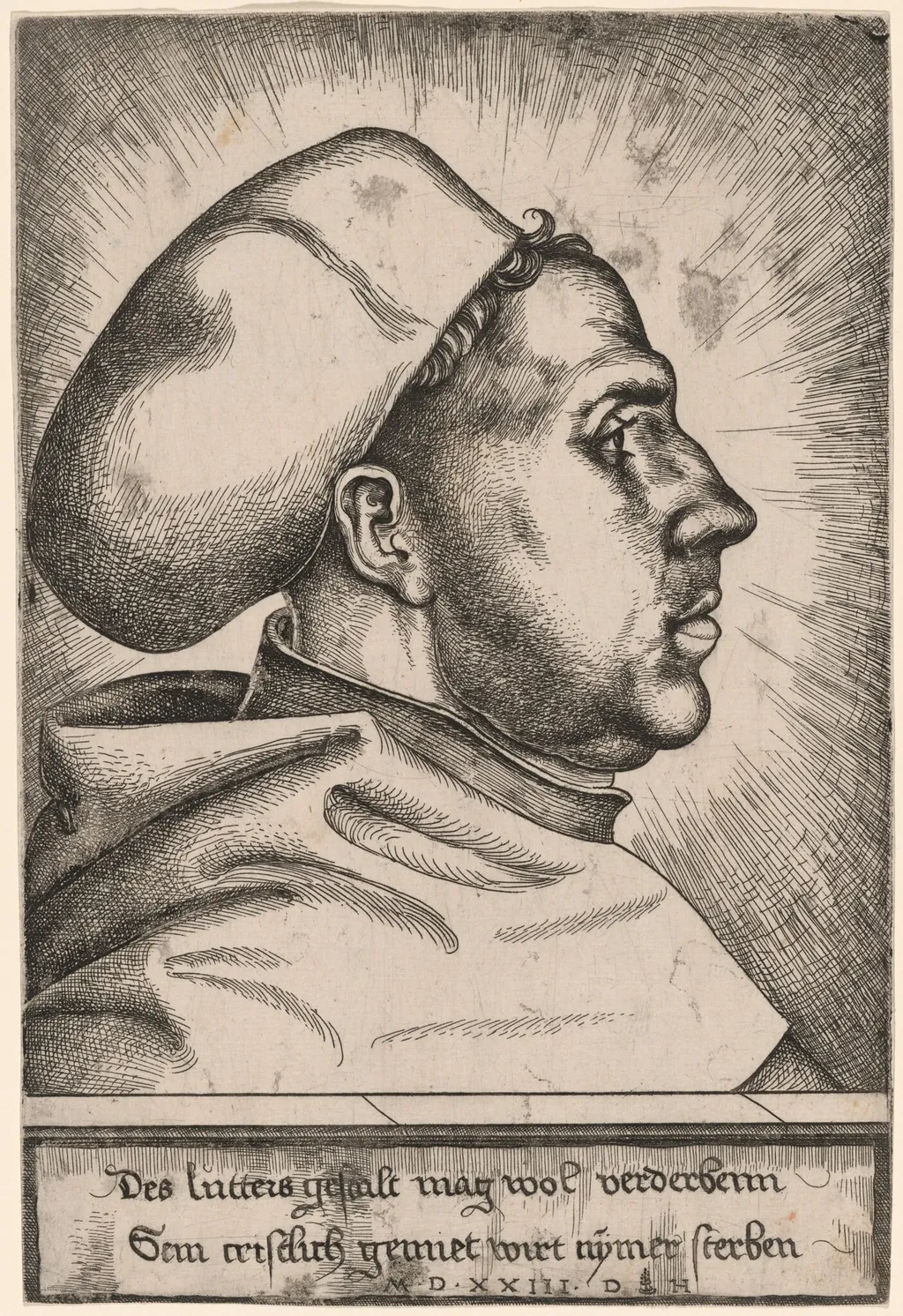
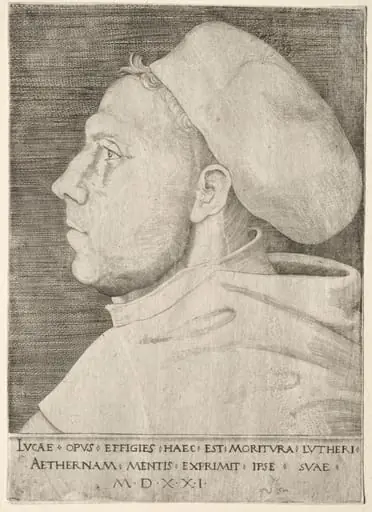
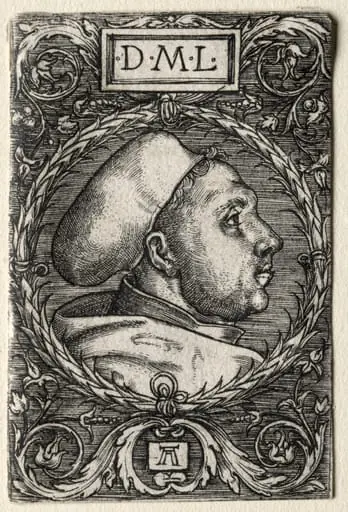
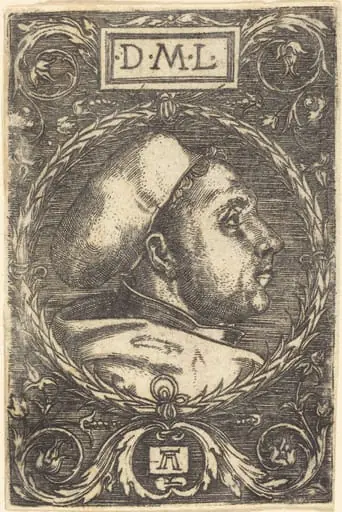
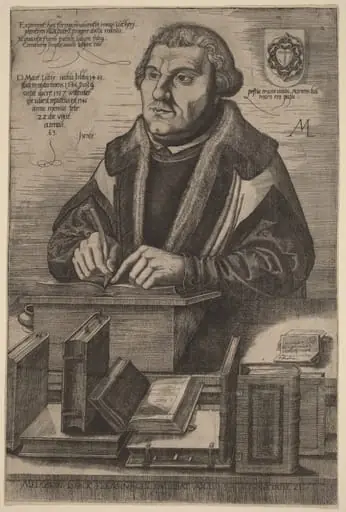
Martin Luther is an ink print by the Renaissance artist Daniel Hopfer. It dates from 1523 and is held in the collection of the National Gallery of Art.
About this work
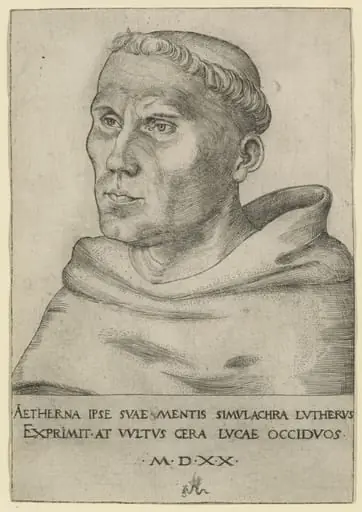
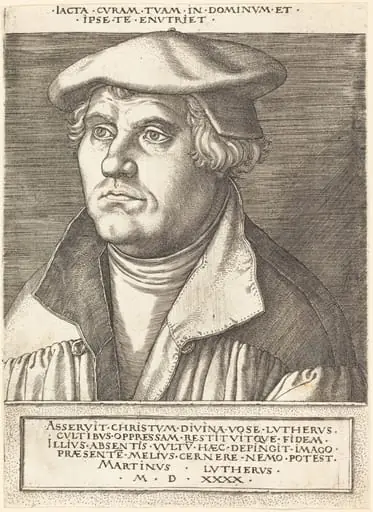
This is a black-and-white portrait of a man’s head and shoulders turned slightly to the side.
This is a black-and-white portrait of a man’s head and shoulders turned slightly to the side. His hair is short and wavy, and he wears a high-collared shirt with ruffled cuffs. The lines are sharp, with cross-hatching to show shadows and texture.
The picture is signed with a Latin phrase and the date 1523. This was made using a printmaking method that creates fine details with ink on paper.
Next, look up etching to see how this technique works.
Overview
Daniel Hopfer’s 1523 etching depicts the reformer Martin Luther in a half‑length portrait. Rendered in black ink on laid paper, the image shows Luther’s head turned slightly, his short wavy hair and a high‑collared shirt with ruffled cuffs. Sharp lines and cross‑hatching create the impression of shadow and texture, while a Latin inscription and the date appear in the lower margin.
Technique & Style
The work was produced with an iron plate, a material Hopfer favored due to his experience as a maker of steel armor. By covering the plate with a wax ground, drawing the design, and then immersing it in acid, he achieved fine, controlled lines and delicate tonal variation. The cross‑hatching and crisp contours exemplify early Northern European etching, emphasizing detail over painterly effect.
Context
Hopfer is credited with introducing etching to German printmaking at the close of the 15th century, adapting a technique originally used for decorative metalwork. His practice helped shape the emerging print‑publisher model, allowing images to be reproduced and distributed more widely than hand‑drawn manuscripts. The portrait of Luther reflects the rapid spread of Reformation ideas through such affordable prints.
History & Provenance
The etching is part of the National Gallery of Art’s collection in Washington, D.C. Acquired through the museum’s print and drawing department, it remains a key example of early 16th‑century German printmaking and of Hopfer’s role in the development of the etching medium.
Artist & collection

Artist
Daniel Hopfer (c. 1470 – 1536) was a German artist who is widely believed to have been the first to use etching in printmaking, at the end of the 15th century. He also worked in woodcut. Although his etchings were…

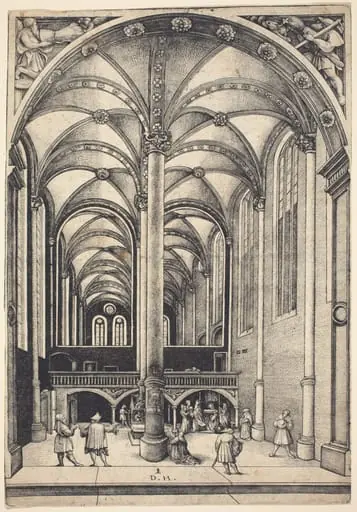 Interior of the Church of Saint Maria Magdalena with the Parable of the Offering of the Widow
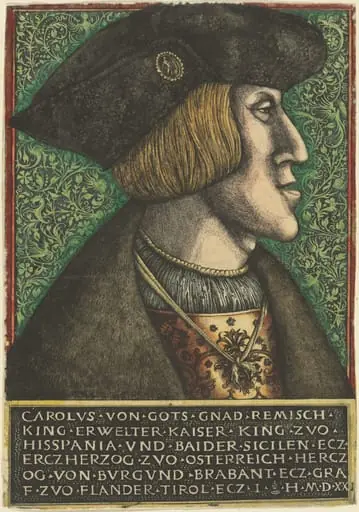 Emperor Charles V
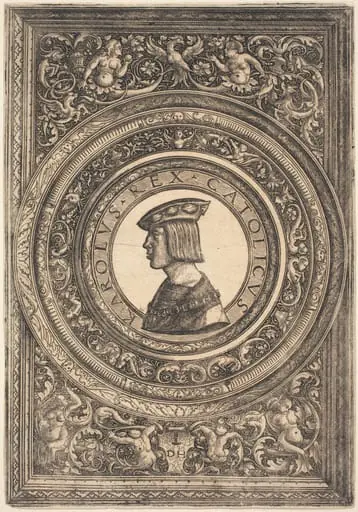 Emperor Charles V
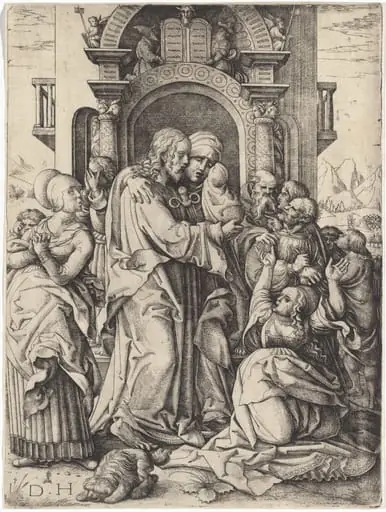 The Virgin Mary Taking Leave of Christ
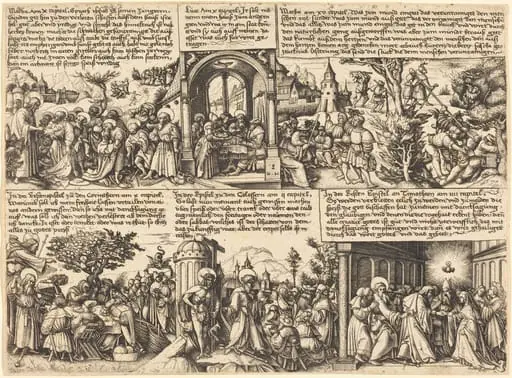 Jesus Christ Giving the Mission to the Apostles and Other New Testament Scenes
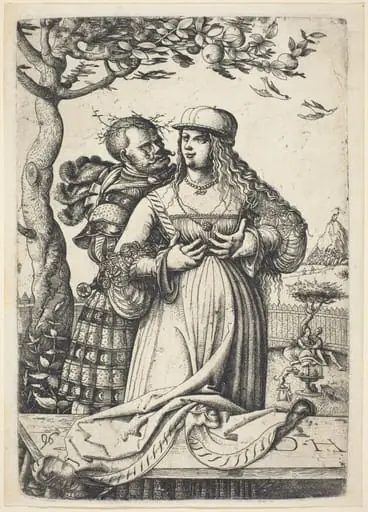 Soldier Embracing a Woman
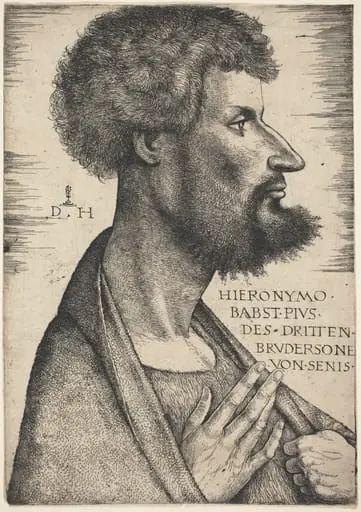 Girolamo da Siena
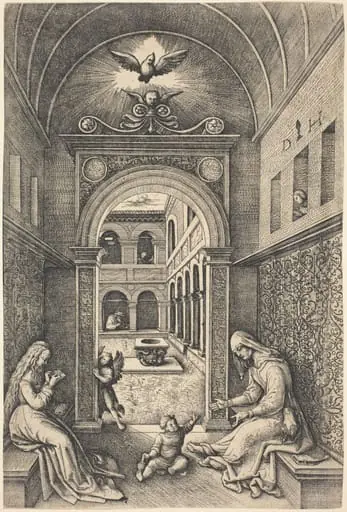 The Virgin and Child with Saint Anne by a Portal