Artwork
St. Christopher
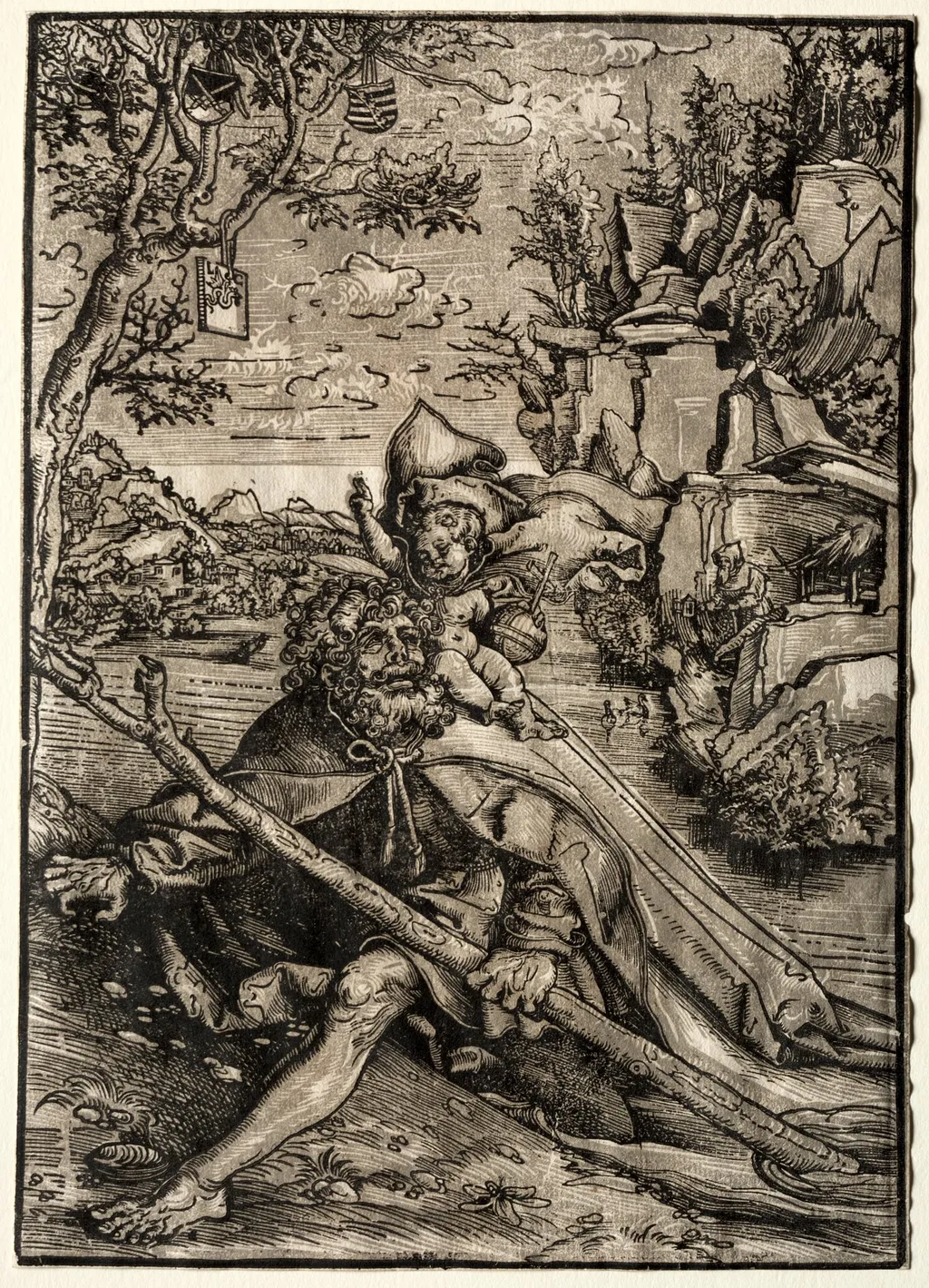
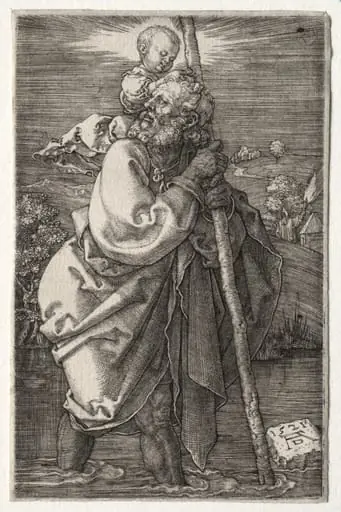
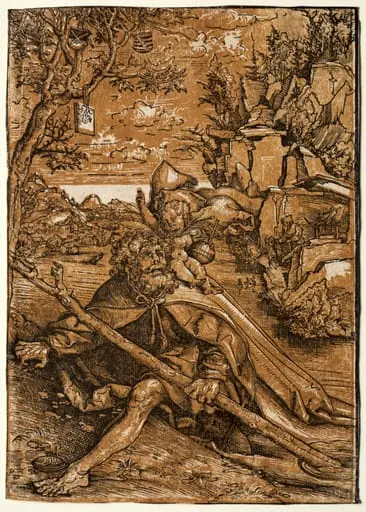
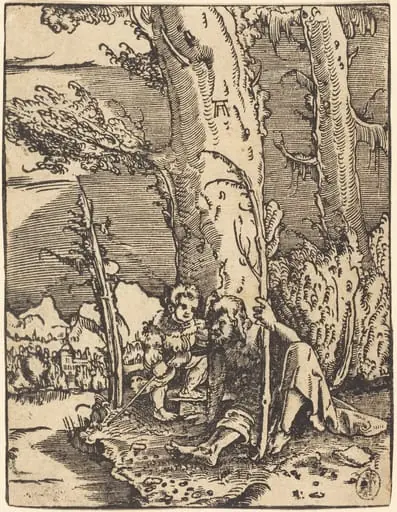
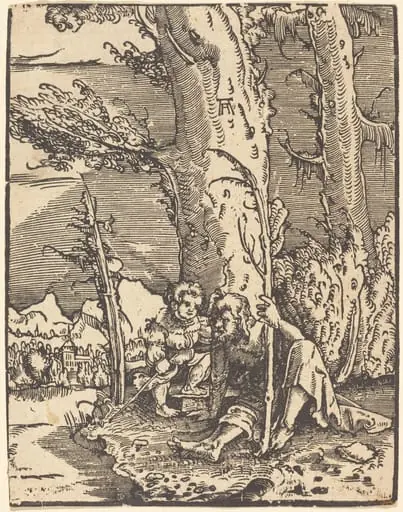
St. Christopher is a print by the Renaissance artist Lucas Cranach the Elder. It dates from 1509 and is held in the collection of the Cleveland Museum of Art.
About this work
Overview
The print reflects his skill in detailed line work and narrative compression, characteristic of Northern Renaissance printmaking.
Created around 1509 by Lucas Cranach the Elder, this woodcut portrays Saint Christopher bearing the Christ Child across a river. As court painter to the Electors of Saxony, Cranach produced numerous religious and secular works during the early Reformation. The print reflects his skill in detailed line work and narrative compression, characteristic of Northern Renaissance printmaking. Its compact composition conveys both physical labor and spiritual significance.
Subject & Meaning
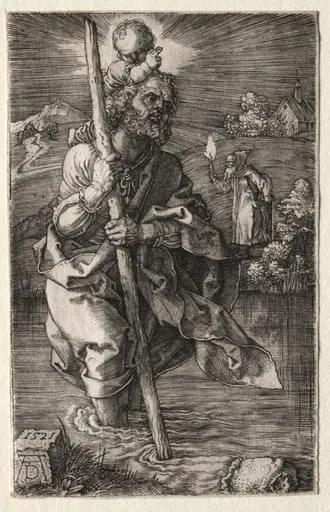
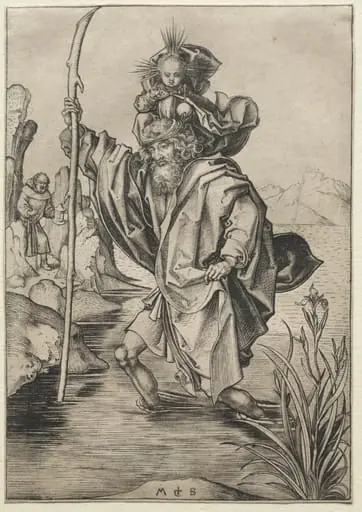
The scene illustrates the legend of Saint Christopher, a giant who carried travelers across a dangerous river and unknowingly bore the weight of the world in the form of the Christ Child. The staff he holds symbolizes his role as guide and protector. Surrounding elements—such as the strange figures in the trees and the winding path—suggest spiritual trials and the presence of divine mystery, reinforcing the saint’s role as an intermediary between earthly and sacred realms.
Technique & Style
Cranach employed fine, dense linework typical of Northern woodcut traditions, using contrast and intricate patterning to suggest texture and depth. The figures are rendered with muscular solidity, while the landscape is densely packed with trees, buildings, and swirling clouds, creating a sense of claustrophobic movement. Shadows are implied through cross-hatching rather than tonal gradation, emphasizing the graphic nature of the medium and the artist’s control over visual rhythm.
History & Provenance
The print was made during Cranach’s tenure at the Saxon court, where he produced religious imagery for both Catholic and emerging Protestant audiences. Though originally intended for devotional use, such prints were widely circulated, serving as portable icons. No specific early ownership records are documented, but similar works by Cranach appear in ecclesiastical and private collections across Germany by the mid-16th century.
Context
In early 16th-century Germany, images of Saint Christopher were popular as protective talismans, believed to ward off sudden death. Cranach’s version adapts medieval iconography to the emerging Renaissance aesthetic, blending symbolic detail with naturalistic observation. The work coincides with the rise of print culture, allowing religious narratives to reach broader audiences beyond church walls, even as theological debates reshaped their interpretation.
Legacy
Cranach’s *St. Christopher* exemplifies how Northern artists adapted traditional religious subjects through precise graphic techniques. While the cult of Saint Christopher declined after the Reformation, the print’s compositional clarity and symbolic density influenced later generations of German printmakers. Its endurance lies in its ability to merge narrative immediacy with layered meaning, reflecting the transitional spiritual landscape of its time.
Artist & collection
Artist
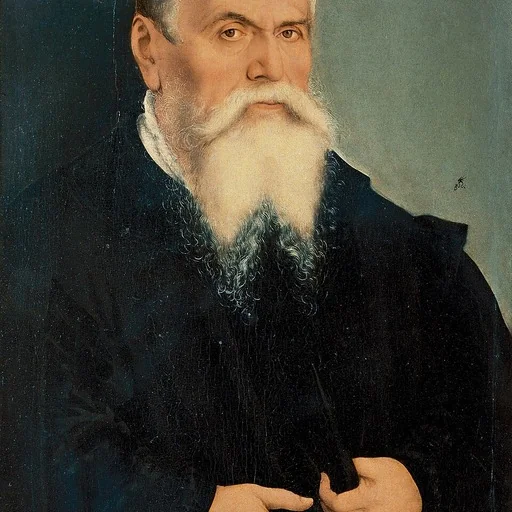
Lucas Cranach the Elder was a German Renaissance painter and printmaker in woodcut and engraving.