Artwork
Two Mercenaries and a Woman
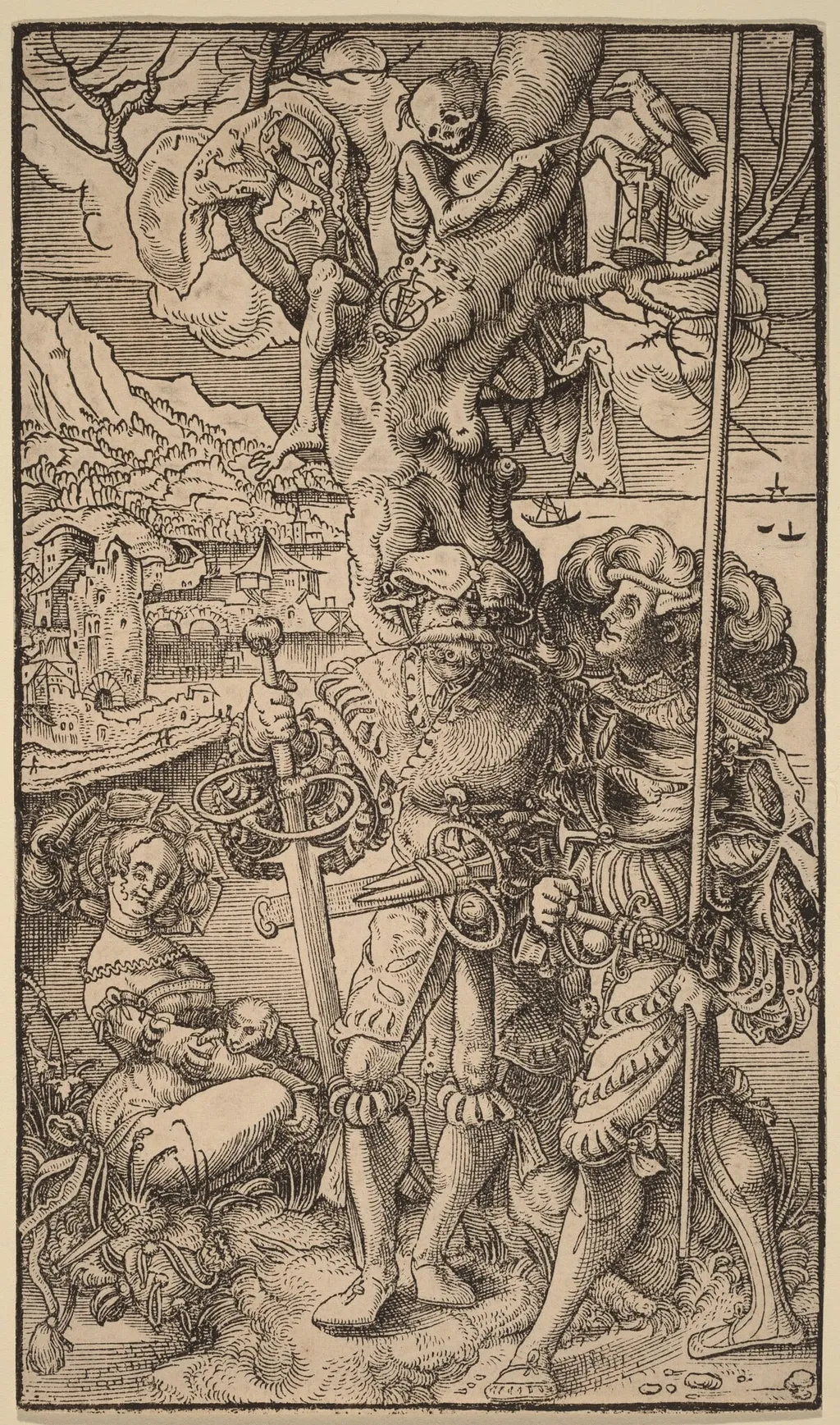
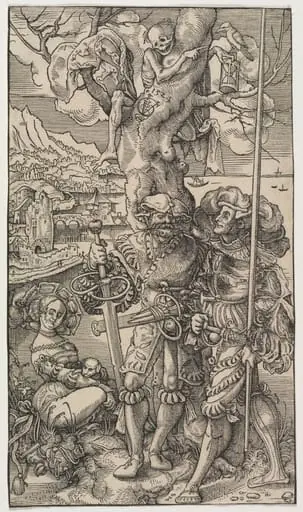
Two Mercenaries and a Woman is an ink print by the Renaissance artist Urs Graf I. It dates from 1524 and is held in the collection of the National Gallery of Art.
About this work
Overview
Created in 1524 by Urs Graf I, this woodcut depicts a tense, crowded scene centered on two armed men and a woman. The composition is densely packed with fragmented figures and surreal elements, suggesting disorder rather than narrative clarity. Graf’s use of bold, incised lines and deep shadows heightens the sense of unease, transforming a simple moment into a symbolic vortex of human chaos.
Subject & Meaning
The scene resists clear interpretation, inviting viewers to see it as a commentary on human brutality rather than a literal event.
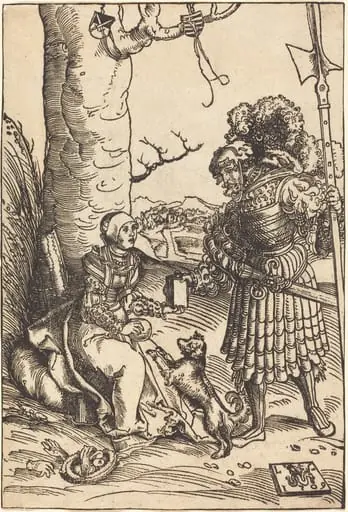
The central figures—a man wielding a sword and another gripping a woman’s arm—suggest violence or abduction, but their exaggerated, mask-like faces imply allegory over realism. Surrounding chaos, including distorted faces, animals, and a shipwreck, may symbolize moral decay or societal collapse. The scene resists clear interpretation, inviting viewers to see it as a commentary on human brutality rather than a literal event.
Technique & Style
Graf employed sharp, angular lines and heavy tonal contrasts typical of Swiss woodcut traditions. The figures are rendered with crude, expressive contours, emphasizing emotion over anatomical accuracy. Background elements are compressed into a swirling mass, using minimal detail to suggest motion and disarray. The technique amplifies psychological tension, turning the print into a visual storm of fragmented forms.
History & Provenance
Produced in the early 1520s, the print emerged from Graf’s workshop in Basel, a hub of Reformation-era print culture. It was likely circulated among urban elites as a moral or satirical image. No early ownership records survive, but its survival in multiple institutional collections suggests it was valued for its striking imagery and technical vigor during its time.
Context
Created amid religious upheaval and mercenary warfare in early 16th-century Switzerland, the print reflects anxieties about social instability. Graf, who had served as a soldier, infused his work with firsthand observations of violence and disorder. The chaotic composition echoes contemporary broadsheets and moralizing prints that warned of sin and chaos, blending observation with symbolic allegory.
Legacy
Though not widely reproduced in later centuries, the woodcut remains a key example of Swiss Renaissance printmaking’s capacity for psychological intensity. Its raw expressiveness influenced later artists exploring themes of violence and alienation. Today, it is studied for its fusion of documentary realism and symbolic abstraction, standing apart from more polished Northern European prints of the era.
Artist & collection


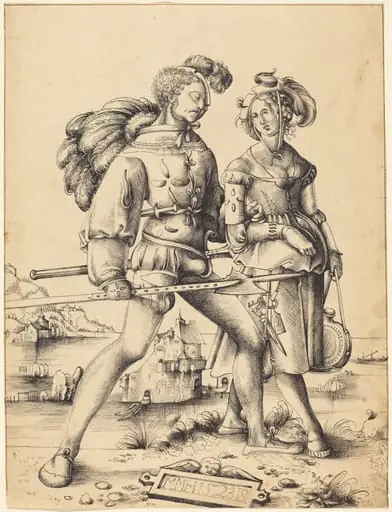 A Soldier Walking with a Camp Follower
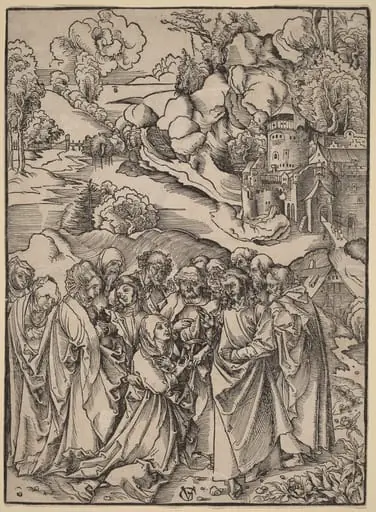 Christ and the Apostles and the Holy Women
![The Madonna with Saint Ulrich and Saint Afra [recto], by Urs Graf I](https://artifactworldgallery.com/img/urs-graf-i--the-madonna-with-saint-ulrich-and-saint-afra-recto--563a13dc2b4b63a3-w320.webp) The Madonna with Saint Ulrich and Saint Afra [recto]
The Madonna with Saint Ulrich and Saint Afra [recto]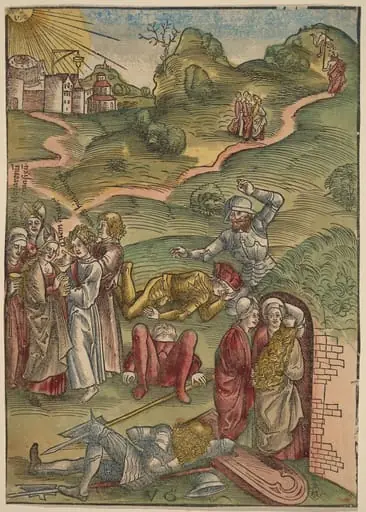 Three Marys at the Tomb
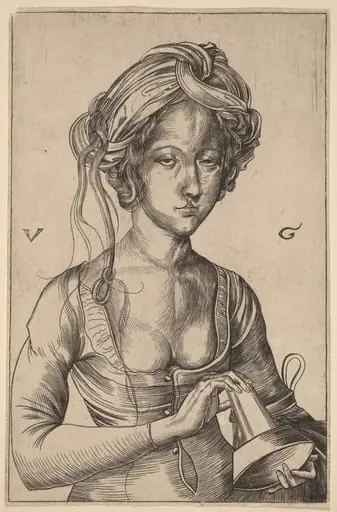 A Bust Figure of a Foolish Virgin Holding Her Inverted Lamp
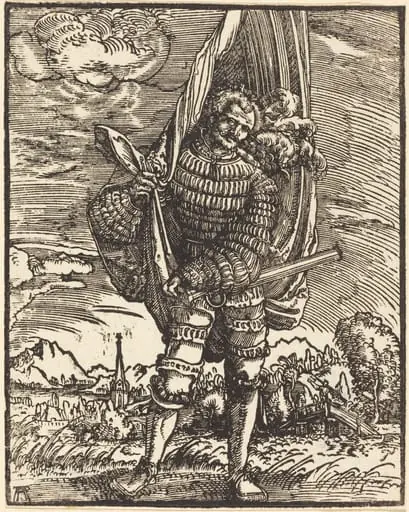
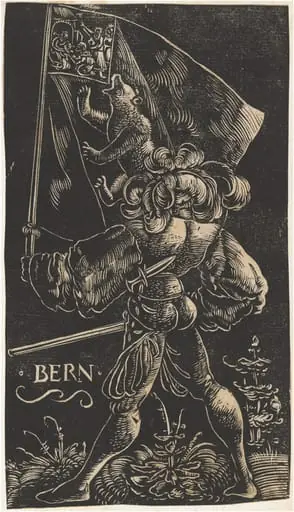 Standard-Bearer for the Canton of Bern
![Title Page for a Missal, with Satyr and Putti Border [verso], by Urs Graf I](https://artifactworldgallery.com/img/urs-graf-i--title-page-for-a-missal-with-satyr-and-putti-border-verso--df26a3e076a25bf5-w320.webp) Title Page for a Missal, with Satyr and Putti Border [verso]
Title Page for a Missal, with Satyr and Putti Border [verso]